
From Existing Parts to Next-Generation Products: The Strategic Power of Reverse Engineering in Mechanical Design
Reverse Engineering Mechanical Design does not always begin with a blank sheet of paper. In many cases, breakthrough improvements emerge from carefully studying existing products, understanding how they function, and identifying opportunities for enhancement. This is where reverse engineering in mechanical design becomes a valuable practice. It allows engineers to analyze physical components, decode their design principles, and transform that knowledge into improved products, optimized systems, and advanced manufacturing solutions.
In today’s rapidly evolving industrial landscape, organizations face constant pressure to innovate while controlling costs and reducing development time. Reverse engineering provides an effective pathway to achieve these objectives. By examining existing machinery, assemblies, or components, engineers can uncover design details that may otherwise remain hidden. Modern technologies such as 3D scanning, CAD software, simulation tools, and digital manufacturing systems have further elevated the importance of reverse engineering across various industries. From automotive and aerospace sectors to consumer goods and industrial equipment, this approach helps companies accelerate innovation while maintaining engineering accuracy. Understanding the role of Reverse Engineering Mechanical Design reveals why it has become a cornerstone of modern product development and manufacturing excellence.
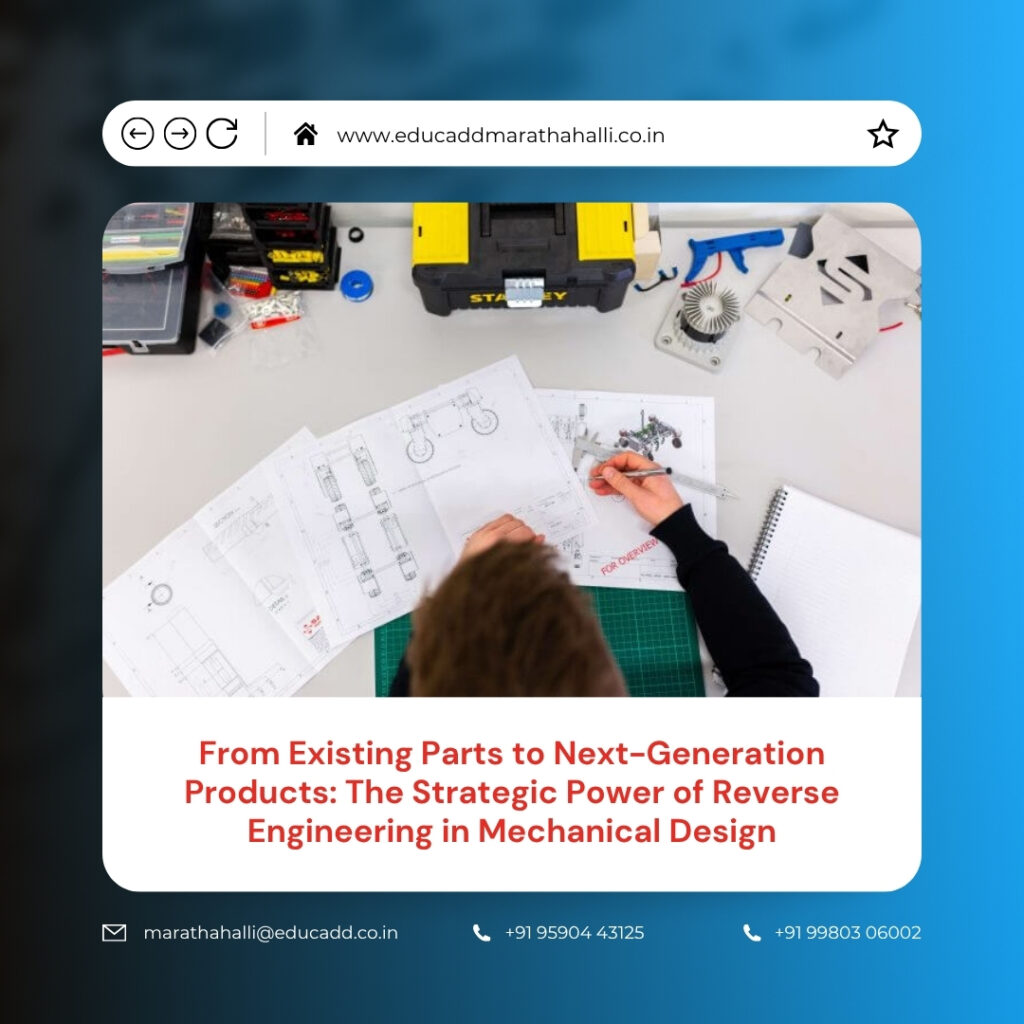
Reverse Engineering Mechanical Design
Understanding the Fundamentals of Reverse Engineering in Mechanical Design
Reverse Engineering Mechanical Design is the process of examining a physical product to determine its dimensions, functionality, materials, and manufacturing methods. Unlike conventional design processes that move from concept to finished product, reverse engineering starts with an existing object and works backward to uncover its design details. Engineers use specialized tools and technologies to collect data and create accurate digital representations of physical components.
This process serves multiple purposes across engineering disciplines. Companies may reverse engineer products to replace obsolete components, improve performance, reduce manufacturing costs, or gain deeper insights into complex systems. In many situations, original design documentation may no longer exist, making reverse engineering the only practical method for recreating critical parts. As industries continue embracing digital transformation, reverse engineering has become increasingly valuable because it bridges the gap between physical products and digital engineering environments. Consequently, engineers can preserve important design knowledge while creating opportunities for future innovation.
Why Reverse Engineering Has Become Essential in Modern Manufacturing
The manufacturing sector operates in an environment where efficiency, quality, and innovation determine competitive success. Reverse engineering helps organizations meet these demands by providing a faster route to understanding and improving existing products. Instead of investing extensive time and resources into developing entirely new designs, companies can build upon proven concepts and focus their efforts on optimization.
Many manufacturers also rely on reverse engineering to support maintenance and repair activities. Equipment that has been operating for decades often contains components that are no longer available from original suppliers. Through reverse engineering, organizations can recreate these parts and keep valuable machinery functioning efficiently. Additionally, the approach supports continuous improvement initiatives by allowing engineers to analyze real-world products and identify areas for enhancement. Therefore, reverse engineering has evolved from a specialized engineering activity into a strategic business tool that drives productivity, innovation, and long-term operational success.
The Step-by-Step Process Behind Successful Reverse Engineering Projects
A successful reverse engineering project follows a structured methodology that ensures accuracy and reliability. The process typically begins with a detailed examination of the component or assembly being studied. Engineers assess its physical condition, identify critical features, and establish project objectives before collecting any measurement data.
After the initial evaluation, engineers capture dimensional information using advanced measurement technologies. The collected data is then processed and converted into digital formats suitable for analysis and modeling. Once digital models are created, engineers validate the accuracy of the design through comparison and testing procedures. Finally, the resulting models and documentation support manufacturing, redesign, optimization, or maintenance activities.
Key stages commonly include:
- Component inspection and project planning
- Dimensional data acquisition and measurement
- Digital model development and refinement
- Engineering analysis and validation
- Documentation and manufacturing preparation
By following a systematic approach, organizations can achieve consistent results while minimizing errors throughout the reverse engineering workflow.
The Growing Importance of 3D Scanning Technologies
One of the most significant advancements in reverse engineering has been the adoption of 3D scanning technology. Traditional measurement methods often required engineers to manually record dimensions, a process that consumed considerable time and effort. Modern 3D scanners have transformed this workflow by capturing millions of measurement points within a matter of minutes.
These scanners generate highly detailed digital representations of physical objects, including complex curves, intricate surfaces, and irregular geometries. Engineers can then use this information to create accurate CAD models that closely match the original component. Furthermore, 3D scanning reduces the risk of measurement errors and improves project efficiency. As scanner technology continues to advance, organizations gain access to higher levels of precision, faster data acquisition, and greater flexibility when working with complex mechanical components. Consequently, 3D scanning has become a fundamental tool within modern reverse engineering environments.
Converting Physical Components into Intelligent CAD Models
The transformation of scan data into CAD models represents one of the most critical stages of reverse engineering in mechanical design. Raw scan data alone cannot support manufacturing or engineering analysis. Therefore, engineers use specialized software to convert point clouds and mesh files into fully functional CAD models.
These digital models provide more than geometric representations. They serve as intelligent engineering assets that support simulation, design modification, manufacturing planning, and quality verification. Parametric CAD models allow engineers to adjust dimensions, optimize features, and evaluate alternative design concepts with ease. Additionally, digital models facilitate collaboration among design teams, manufacturing departments, and quality control specialists. As a result, CAD modeling acts as the bridge that transforms captured physical information into practical engineering solutions capable of driving innovation and product improvement.
Reverse Engineering Mechanical Design as a Tool for Product Innovation
Many organizations view reverse engineering solely as a method for reproducing existing components. However, its true value extends far beyond replication. Reverse engineering often serves as a catalyst for innovation by providing engineers with detailed insights into product functionality and design efficiency.
When engineers analyze existing products, they gain a clearer understanding of strengths, weaknesses, and performance limitations. This knowledge creates opportunities to introduce new materials, optimize structural designs, improve manufacturing methods, and enhance overall product performance. Instead of simply copying an existing component, organizations can use reverse engineering as a foundation for creating superior solutions. Therefore, companies that integrate reverse engineering into their innovation strategies often achieve faster development cycles and stronger competitive advantages within their respective markets.
Applications Across Automotive Engineering
The automotive industry represents one of the largest users of reverse engineering technologies. Vehicle manufacturers and suppliers regularly employ reverse engineering to support product development, maintenance, and performance optimization initiatives. Engineers frequently analyze components to understand design characteristics and identify opportunities for improvement.
In addition, reverse engineering plays an important role in restoring classic and vintage vehicles. Many older automobiles lack original engineering drawings, making replacement parts difficult to obtain. Engineers can recreate these components through digital scanning and modeling processes, ensuring accurate reproduction and continued vehicle operation. Automotive organizations also leverage reverse engineering to evaluate real-world performance and refine future designs. Consequently, the technology contributes significantly to innovation, maintenance, and product enhancement throughout the automotive sector.
Supporting Aerospace Engineering and Critical Infrastructure
Aerospace systems demand exceptional reliability, precision, and safety. Reverse engineering helps aerospace organizations maintain aging aircraft, replace obsolete components, and modernize legacy systems without compromising performance standards. Engineers use advanced scanning and modeling techniques to recreate parts that may no longer be available from original manufacturers.
The ability to reproduce critical components provides substantial operational benefits. Airlines, defense organizations, and maintenance providers can extend equipment life while reducing replacement costs. Furthermore, reverse engineering supports system upgrades by enabling engineers to integrate modern technologies into existing platforms. This combination of preservation and modernization makes reverse engineering an indispensable capability within aerospace engineering and other infrastructure-intensive industries.
Material Evaluation and Performance Enhancement
Understanding geometry alone is not sufficient when reverse engineering mechanical components. Material properties also influence performance, durability, and manufacturing requirements. Therefore, engineers often conduct detailed material analysis as part of reverse engineering projects.
Through laboratory testing and advanced analytical techniques, engineers can determine material composition, hardness, strength, wear resistance, and thermal characteristics. This information helps identify suitable replacement materials and supports performance improvement initiatives. In many cases, modern materials offer advantages that were unavailable when the original product was developed. As a result, reverse engineering creates opportunities to combine proven designs with advanced materials, producing components that outperform their predecessors while maintaining compatibility with existing systems.
Quality Control and Manufacturing Accuracy Through Reverse Engineering
Quality assurance has become increasingly important as manufacturing tolerances continue to tighten across industries. Reverse engineering contributes significantly to quality control by enabling detailed inspection and verification processes. Engineers can compare manufactured components against digital reference models to identify deviations and ensure compliance with design specifications.
Important quality-related benefits include:
- Improved dimensional verification and tolerance analysis
- Enhanced consistency across production batches
Additionally, reverse engineering helps organizations identify manufacturing variations that may affect product performance. By understanding these variations, companies can implement corrective actions and strengthen process control measures. Consequently, reverse engineering not only supports product development but also plays a crucial role in maintaining manufacturing excellence and customer satisfaction.
Challenges Organizations Must Address
Despite its numerous advantages, reverse engineering presents several technical and operational challenges. Complex components often generate large volumes of digital data that require significant processing resources and engineering expertise. Maintaining measurement accuracy throughout the project is essential because even minor errors can affect final outcomes.
Organizations must also consider intellectual property regulations when conducting reverse engineering activities. Compliance with applicable laws protects companies from legal disputes while ensuring ethical engineering practices. Additionally, successful projects require skilled professionals who understand scanning technologies, CAD modeling techniques, material science principles, and manufacturing processes. Therefore, organizations should invest in both technology and talent to maximize the value derived from reverse engineering initiatives.
Emerging Technologies Shaping the Future of Reverse Engineering
The future of reverse engineering in mechanical design continues to evolve through the integration of advanced digital technologies. Artificial intelligence and machine learning algorithms are increasingly capable of recognizing features, automating model generation, and reducing manual engineering effort. These capabilities significantly improve efficiency while accelerating project completion.
Digital twin technology represents another transformative development. By creating virtual replicas of physical assets, engineers can continuously monitor performance and optimize designs throughout the product lifecycle. Cloud-based collaboration platforms further enhance teamwork by enabling engineers across different locations to access and modify shared design data. As these technologies mature, reverse engineering will become even more intelligent, connected, and efficient, creating new possibilities for innovation across manufacturing industries.
Conclusion
Reverse Engineering Mechanical Design has become far more than a method for reproducing existing components. It now serves as a strategic engineering discipline that drives innovation, supports maintenance, enhances quality, and accelerates product development. By converting physical products into detailed digital assets, engineers gain valuable insights that support informed decision-making and continuous improvement.
Modern tools such as 3D scanning, CAD modeling, material analysis, artificial intelligence, and digital twin technology have expanded the capabilities of reverse engineering beyond traditional boundaries. Organizations can preserve critical design knowledge, optimize product performance, reduce operational costs, and extend equipment lifespan through effective reverse engineering practices. As manufacturing continues to embrace digital transformation, reverse engineering will remain a powerful enabler of technological advancement and competitive growth. Companies that invest in these capabilities today will be better positioned to develop innovative products, respond to market demands, and achieve sustainable success in the future.

