
Bridging Planning, Design, and Business Operations: The Future of Primavera Integration with BIM and ERP Systems
The construction industry is rapidly moving toward a fully connected digital environment where information flows seamlessly between design, planning, execution, and business operations. In the past, organizations often managed projects using separate software platforms, resulting in communication gaps, duplicated efforts, and inconsistent data. However, as projects become larger and more complex, companies need integrated solutions that provide real-time visibility and better control over every aspect of project delivery. This need has led to the growing adoption of Primavera BIM ERP Integration, a strategy that combines project scheduling, digital modeling, and enterprise management into a unified ecosystem.
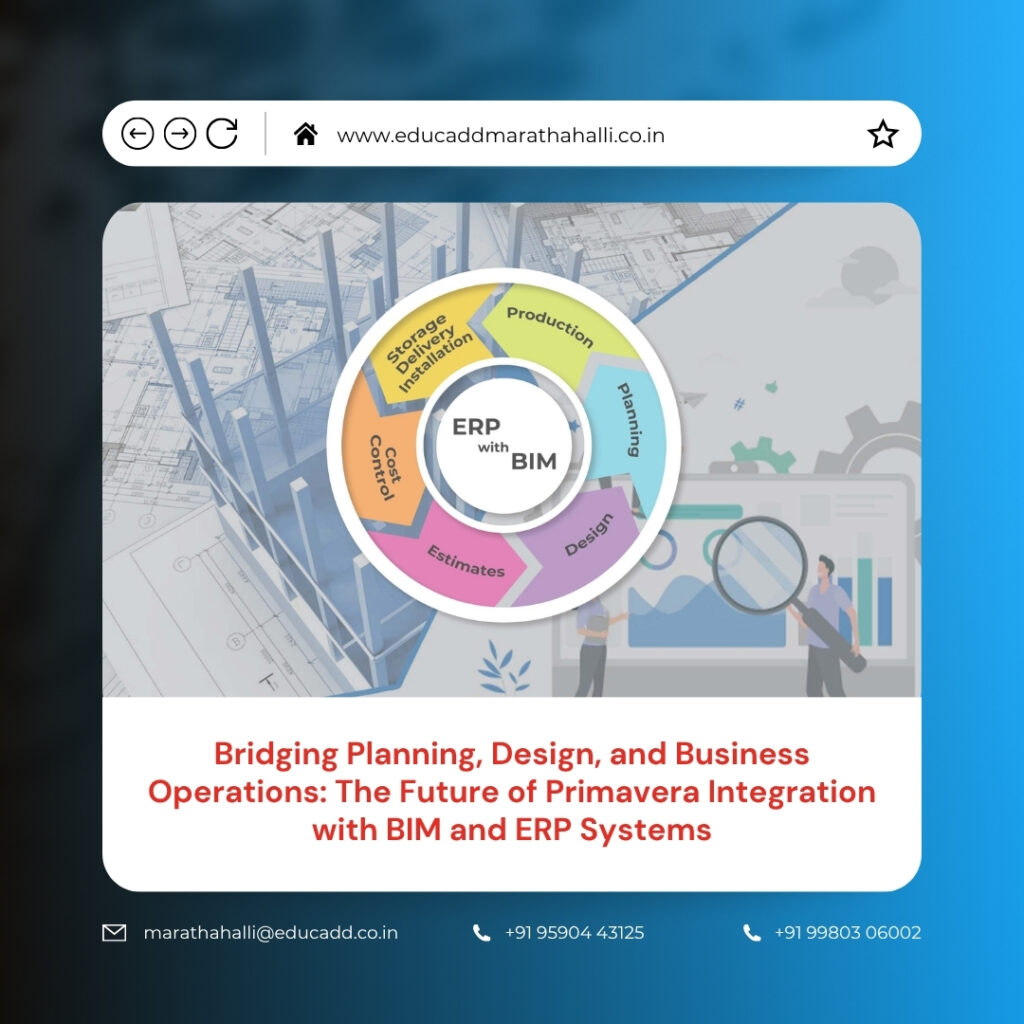
Primavera BIM ERP Integration
By connecting these technologies, organizations can improve collaboration, enhance productivity, reduce project risks, and achieve greater operational efficiency. As digital transformation continues to reshape the construction sector, integrated platforms are becoming essential tools for companies aiming to deliver projects on time, within budget, and with superior quality standards.
The Evolving Role of Primavera in Modern Project Execution
Primavera has established itself as one of the most trusted project management solutions for industries that handle large-scale and resource-intensive projects. Its advanced scheduling capabilities allow project managers to create detailed timelines, allocate resources effectively, track project progress, and monitor performance against planned objectives. Unlike basic scheduling tools, Primavera offers sophisticated features that support multi-phase projects involving numerous stakeholders and interconnected activities. Organizations rely on Primavera to identify critical paths, forecast project delays, and optimize resource utilization. Furthermore, the software provides valuable insights into project health, enabling managers to make informed decisions throughout the project lifecycle. As businesses increasingly seek data-driven management approaches, Primavera serves as a central platform that coordinates project activities while providing the foundation for Primavera BIM ERP Integration.
Understanding BIM as a Digital Construction Framework
Building Information Modeling has transformed how construction professionals plan, design, and execute projects. BIM goes far beyond traditional drafting methods by creating intelligent digital models that contain both graphical and non-graphical information about a building or infrastructure asset. These models allow architects, engineers, contractors, and project owners to collaborate within a shared environment where project information remains accessible and continuously updated. Through BIM, teams can visualize structures before construction begins, detect design conflicts, improve coordination, and reduce costly rework. Additionally, BIM provides detailed information about materials, systems, specifications, and maintenance requirements, making it valuable throughout the entire asset lifecycle. When BIM integrates with Primavera, project schedules become connected to visual project models, allowing stakeholders to better understand construction sequences and monitor project progress with greater accuracy.
The Strategic Importance of ERP Systems in Construction Businesses
Enterprise Resource Planning systems play a crucial role in managing the operational and financial functions of construction organizations. These systems bring together multiple business processes, including procurement, accounting, inventory management, payroll, human resources, vendor management, and asset tracking. By centralizing these functions, ERP platforms eliminate data silos and improve organizational efficiency. Construction companies often handle large volumes of transactions, contracts, and resources, making centralized business management essential for maintaining profitability and compliance. ERP systems provide real-time financial visibility and help management teams monitor performance across departments. However, when ERP platforms operate independently from project management tools, organizations may face reporting delays and inconsistencies. Integrating Primavera with ERP systems ensures that project schedules align with business operations, creating a comprehensive framework for project and enterprise management.
Creating a Unified Digital Ecosystem Through Integration
One of the most significant advantages of Primavera Integration with BIM and ERP Systems is the creation of a unified digital ecosystem. Instead of relying on disconnected software applications, organizations can establish a centralized environment where information flows automatically between departments and project teams. This seamless exchange of data eliminates duplication, reduces manual data entry, and improves information accuracy. For example, updates made within BIM models can influence project schedules in Primavera, while ERP systems can simultaneously track financial impacts and resource requirements. As a result, project managers gain access to comprehensive insights that support faster and more informed decision-making. Moreover, stakeholders across the organization can access the same project information, promoting consistency and improving collaboration throughout the project lifecycle.
Enhancing Project Visualization Through BIM and Primavera Connectivity
Visualization plays a critical role in successful project planning and execution. By integrating BIM models with Primavera schedules, organizations can develop advanced 4D simulations that combine three-dimensional project models with time-based scheduling information. These visual representations allow project teams to understand how construction activities will unfold over time and identify potential issues before they affect project execution.
Key benefits of schedule-linked BIM visualization include:
- Improved understanding of construction sequences and milestones.
- Early identification of scheduling conflicts and site constraints.
These capabilities help project teams optimize workflows, improve stakeholder communication, and reduce uncertainty during project execution. Additionally, visual project simulations make it easier for clients and decision-makers to understand project progress and planned activities.
Improving Cross-Functional Collaboration Across Stakeholders
Construction projects involve numerous participants, including architects, engineers, contractors, consultants, suppliers, and project owners. Effective communication among these stakeholders is essential for maintaining project momentum and achieving successful outcomes. However, fragmented software systems often create barriers that limit information sharing and delay decision-making. Primavera Integration with BIM and ERP Systems addresses these challenges by providing a common platform where all stakeholders can access consistent project information. Changes made in one system can automatically update connected platforms, ensuring that everyone works with accurate and current data. This level of transparency strengthens collaboration, minimizes misunderstandings, and improves accountability. As a result, project teams can coordinate activities more effectively and respond quickly to changing project conditions.
Strengthening Resource Planning and Utilization
Efficient resource management remains a top priority for organizations seeking to maximize productivity and control project costs. Labor shortages, equipment availability, material procurement, and budget limitations all influence project performance. Primavera offers powerful resource planning tools that help managers forecast resource requirements and monitor utilization rates. When integrated with ERP systems, resource management becomes even more effective because organizations gain visibility into inventory levels, procurement schedules, workforce availability, and financial constraints. This integrated approach enables project managers to allocate resources strategically and avoid common challenges such as overutilization or underutilization. Consequently, organizations can improve operational efficiency, reduce project delays, and maintain better control over resource-related expenses.
Advancing Financial Management and Cost Control
Financial control is fundamental to project success, especially in industries where budgets can reach millions or even billions of dollars. Primavera Integration with BIM and ERP Systems creates a strong connection between project progress and financial performance. Project managers can compare planned costs with actual expenditures while monitoring schedule performance and resource utilization. ERP systems contribute detailed financial information, including procurement costs, labor expenses, vendor payments, and cash flow data. By linking this information to Primavera schedules, organizations gain a comprehensive view of project profitability and financial health. Furthermore, integrated reporting enables management teams to identify cost overruns early and implement corrective measures before financial issues escalate. This proactive approach supports better budget management and enhances overall project profitability.
Enabling Real-Time Monitoring and Performance Reporting
In today’s fast-paced project environments, decision-makers require immediate access to accurate information. Traditional reporting methods often depend on manual updates and disconnected spreadsheets, which can result in outdated or incomplete data. Integrated project ecosystems solve this challenge by providing real-time visibility into project performance. Primavera Integration with BIM and ERP Systems allows stakeholders to access current information regarding schedules, budgets, procurement activities, resource utilization, and project milestones. Dashboards and automated reports present critical performance indicators in a clear and actionable format. As a result, project leaders can quickly identify trends, address emerging issues, and maintain alignment with project objectives. Real-time monitoring also enhances transparency, helping organizations build trust with clients, investors, and project partners.
Supporting Risk Management Through Connected Data
Risk management becomes more effective when organizations have access to reliable and comprehensive project information. Construction projects face numerous risks, including schedule delays, cost overruns, supply chain disruptions, design conflicts, and resource shortages. Primavera Integration with BIM and ERP Systems helps organizations identify, analyze, and mitigate these risks by connecting information from multiple sources. For example, if procurement delays threaten critical project activities, integrated systems can immediately highlight the potential impact on schedules and budgets. Similarly, design changes within BIM models can trigger schedule adjustments and financial evaluations. This interconnected approach enables project teams to assess risks proactively and implement mitigation strategies before problems affect project outcomes.
Streamlining Procurement and Supply Chain Operations
Procurement and supply chain management significantly influence project schedules and financial performance. Delayed deliveries or material shortages can disrupt construction activities and create expensive project setbacks. ERP systems manage purchasing activities, supplier relationships, inventory tracking, and logistics operations. When connected to Primavera schedules, procurement activities become aligned with actual project requirements.
Organizations can benefit from integration in several ways:
- Materials and equipment arrive according to project schedules.
- Procurement teams receive advance notice of upcoming resource demands.
This synchronization reduces waste, improves inventory management, and minimizes the likelihood of supply chain disruptions. Consequently, projects maintain momentum while organizations achieve greater operational efficiency.
Accelerating Digital Transformation and Business Innovation
Digital transformation has become a strategic priority for construction and engineering organizations worldwide. Companies that embrace integrated technologies gain a competitive advantage through improved efficiency, enhanced collaboration, and data-driven decision-making. Primavera Integration with BIM and ERP Systems serves as a cornerstone of this transformation by connecting project management, digital design, and enterprise operations within a single ecosystem. Integrated systems support automation, reduce administrative workloads, and provide valuable insights that drive continuous improvement. Furthermore, they create a foundation for adopting emerging technologies such as artificial intelligence, predictive analytics, cloud computing, and digital twins. As organizations continue their digital evolution, integrated project environments will play a vital role in supporting innovation and long-term growth.
Overcoming Integration Challenges for Maximum Success
Although the benefits of integration are substantial, organizations must address several challenges to achieve successful implementation. Data standardization, system compatibility, user adoption, cybersecurity, and change management often require careful planning and execution. Different software platforms may use unique formats and workflows, making integration projects technically complex. Additionally, employees may need training to adapt to new processes and technologies. Successful organizations approach integration as a strategic initiative rather than a purely technical project. They establish clear objectives, involve stakeholders early, invest in employee training, and create governance frameworks that support long-term success. By addressing these challenges proactively, businesses can maximize the value of their integrated technology investments.
Conclusion
Primavera BIM ERP Integration is transforming the way modern construction and engineering projects are planned, managed, and delivered. By connecting scheduling, digital modeling, and enterprise operations, organizations gain a comprehensive view of project performance while improving collaboration, financial control, resource management, and risk mitigation. The integration eliminates information silos and creates a seamless flow of data that supports smarter decision-making at every stage of the project lifecycle. Furthermore, it enables organizations to embrace digital transformation and prepare for future innovations such as artificial intelligence, predictive analytics, and digital twins. As project complexity continues to increase, companies that invest in integrated project ecosystems will be better positioned to improve efficiency, enhance profitability, and achieve sustainable growth in an increasingly competitive industry.

