
From Concept to Creation: How Digital Prototyping is Redefining Mechanical Engineering Excellence
In the modern era of engineering, innovation is no longer limited by physical constraints. Digital Prototyping Mechanical Engineering has emerged as a powerful approach that enables mechanical engineers to design, test, and refine products in a virtual environment before they are physically manufactured. This transformation has significantly improved efficiency, reduced costs, and accelerated product development cycles across industries.
Unlike traditional prototyping, which relied heavily on physical models and repeated testing, digital prototyping provides a smarter and faster alternative. Engineers can now visualize concepts in detail, simulate real-world conditions, and make data-driven decisions with confidence. As a result, organizations can deliver high-quality products while staying ahead in competitive markets.
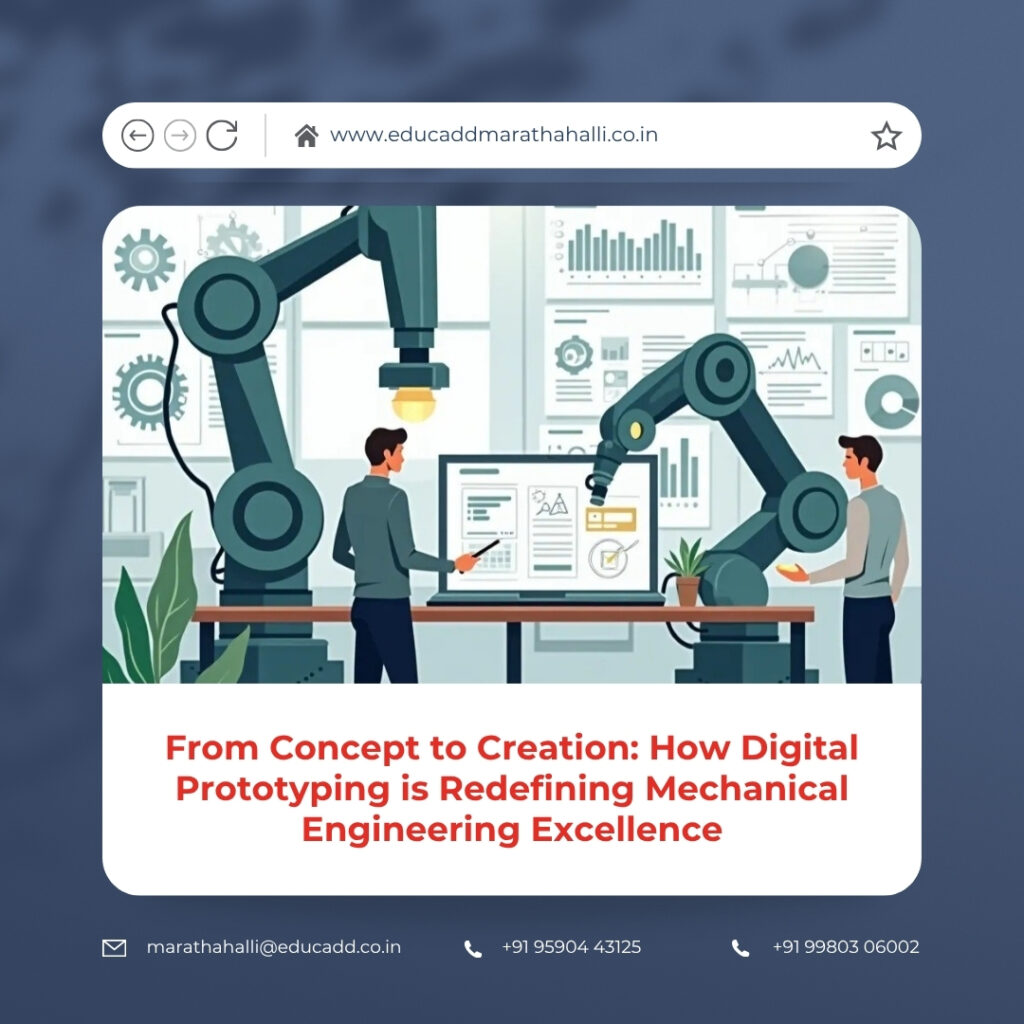
Digital Prototyping Mechanical Engineering
This comprehensive blog explores the concept of digital prototyping in mechanical engineering, its advantages, technologies, applications, challenges, and future potential.
1. What is Digital Prototyping in Mechanical Engineering?
Digital Prototyping Mechanical Engineering is the process of creating a virtual model of a product and analyzing its behavior using advanced engineering software. This approach allows engineers to simulate performance, detect design flaws, and optimize functionality without building physical prototypes.
The virtual model acts as a digital representation of the final product. Engineers can modify, test, and improve the design multiple times in a controlled environment. This flexibility helps in identifying potential issues early in the development stage.
Furthermore, digital prototyping enables better communication among teams. Designers, analysts, and stakeholders can review the same model, ensuring clarity and consistency throughout the project lifecycle.
2. The Transition from Physical to Digital Development
Mechanical engineering has evolved significantly over the years. In earlier times, physical prototypes were essential for testing and validation. However, these methods were expensive and time-consuming, often delaying product launches.
With the introduction of digital tools, the design process has become more streamlined and efficient. Engineers can now perform complex calculations and simulations within minutes. This transition has not only improved accuracy but also reduced dependency on physical testing.
Moreover, digital prototyping supports rapid iteration. Engineers can quickly modify designs based on feedback and test new ideas without incurring additional costs.
3. Core Technologies Behind Digital Prototyping
Several advanced technologies support digital prototyping, making it a reliable and efficient process. These tools help engineers design, simulate, and analyze products effectively.
- 3D modeling software for creating detailed digital designs
- Simulation tools for testing mechanical performance
In addition, technologies such as finite element analysis and fluid dynamics simulation provide deeper insights into product behavior. These tools allow engineers to evaluate stress, heat transfer, and fluid flow accurately.
As technology continues to evolve, digital prototyping tools are becoming more powerful and accessible, enabling engineers to achieve better results.
4. Advantages of Digital Prototyping in Engineering Design
Digital Prototyping Mechanical Engineering offers numerous benefits that improve the overall engineering process. One of the key advantages is cost efficiency. Since fewer physical prototypes are required, companies can save on materials and manufacturing expenses.
Another major benefit is improved design accuracy. Engineers can identify and correct errors early, reducing the risk of costly modifications later. Additionally, digital prototyping enhances product quality by enabling thorough testing and validation.
This approach also accelerates innovation. Engineers can experiment with new ideas and explore different design options without limitations.
5. Driving Innovation Through Virtual Experimentation
Digital prototyping encourages creativity by allowing engineers to test unconventional ideas in a risk-free environment. Since modifications can be made easily, engineers are more willing to explore innovative solutions.
Simulation tools play a crucial role in this process. They provide detailed insights into how a product will perform under various conditions. Engineers can analyze stress, motion, and thermal behavior to ensure optimal performance.
As a result, digital prototyping fosters a culture of innovation, enabling companies to develop advanced and reliable products.
6. Importance of Simulation in Design Validation
Simulation is a vital component of digital prototyping. It allows engineers to evaluate the performance of a design without physical testing. By simulating real-world conditions, engineers can ensure that products meet safety and performance standards.
For example, structural simulations help determine whether a component can withstand external forces. Thermal simulations evaluate how temperature changes affect performance.
This level of analysis reduces uncertainty and ensures that designs are robust and reliable before production begins.
7. Enhancing Team Collaboration and Workflow Efficiency
Digital Prototyping Mechanical Engineering improves collaboration among engineering teams. Since all stakeholders work on a shared digital model, communication becomes more effective and transparent.
Cloud-based platforms further enhance collaboration by enabling real-time access to design data. Engineers can review, edit, and approve designs from different locations, ensuring seamless coordination.
This collaborative approach not only improves efficiency but also reduces errors caused by miscommunication.
8. Accelerating Product Development Cycles
One of the most significant advantages of digital prototyping is the ability to speed up product development. Engineers can quickly create and test multiple design iterations, eliminating delays associated with traditional methods.
Automated tools and workflows streamline the design process, allowing faster decision-making. This efficiency enables companies to bring products to market more quickly.
As a result, organizations can respond to customer demands and market trends with greater agility.
9. Cost Reduction and Resource Optimization
Digital prototyping helps companies optimize resources and reduce overall costs. By minimizing the need for physical prototypes, organizations can save on materials and manufacturing processes.
- Lower production costs through reduced prototype fabrication
- Efficient use of resources with virtual testing methods
Additionally, early detection of design issues prevents expensive rework. This approach ensures that resources are utilized effectively, improving productivity and profitability.
10. Industry Applications of Digital Prototyping
Digital prototyping is widely used across various industries. In the automotive sector, engineers use virtual models to design and test vehicle components. This ensures safety, performance, and efficiency.
In aerospace, digital prototyping helps meet strict regulatory standards by enabling precise simulations. Manufacturing industries also benefit from this approach by optimizing production processes.
The versatility of digital prototyping makes it an essential tool in modern engineering practices.
11. Integration with Modern Manufacturing Techniques
Digital prototyping integrates seamlessly with advanced manufacturing technologies such as 3D printing and CNC machining. Engineers can convert digital designs directly into physical products with high precision.
This integration reduces the gap between design and production. It ensures that the final product matches the digital model accurately.
As a result, companies can achieve faster production cycles and maintain consistent quality.
12. Challenges and Limitations of Digital Prototyping
Despite its many advantages, digital prototyping also presents certain challenges. One of the main limitations is the high initial investment required for software and training.
Additionally, engineers must have the necessary skills to use advanced tools effectively. Data management can also become complex, especially in large projects with multiple stakeholders.
However, with proper planning and continuous learning, these challenges can be managed successfully.
13. Emerging Trends Shaping the Future
The future of digital prototyping is driven by technological advancements such as artificial intelligence and machine learning. These technologies will enhance simulation capabilities and automate design processes.
Virtual reality and augmented reality are also expected to play a significant role. Engineers will be able to interact with digital models in immersive environments, improving visualization and decision-making.
These innovations will further strengthen the impact of digital prototyping in mechanical engineering.
14. Promoting Sustainability Through Digital Innovation
Digital prototyping contributes to sustainable engineering practices by reducing waste and energy consumption. Since fewer physical prototypes are required, the environmental impact is significantly minimized.
Moreover, optimized designs result in more efficient products that consume less energy during operation. This aligns with global efforts to promote eco-friendly solutions.
By adopting digital prototyping, companies can achieve both environmental and economic benefits.
Conclusion
Digital Prototyping Mechanical Engineering has become a cornerstone of modern mechanical engineering. It enables engineers to design, test, and optimize products in a virtual environment, reducing costs and improving efficiency. With the integration of advanced technologies, digital prototyping continues to evolve, offering new opportunities for innovation and growth.
While challenges exist, the advantages of digital prototyping far outweigh its limitations. As industries continue to embrace digital transformation, this approach will play a crucial role in shaping the future of engineering. Organizations that adopt digital prototyping will be better equipped to deliver high-quality products, stay competitive, and drive sustainable development.

