
Design Your Future: Career-Focused Mechanical Design Courses That Lead to Real Jobs
In today’s competitive engineering landscape, having a degree alone is no longer enough to secure a promising career. Industries are rapidly evolving, and they demand professionals who are not only knowledgeable but also highly skilled in practical applications. This is where Mechanical Design Career Courses play a transformative role. These courses are specifically designed to equip learners with hands-on expertise, industry-relevant tools, and real-world problem-solving abilities.
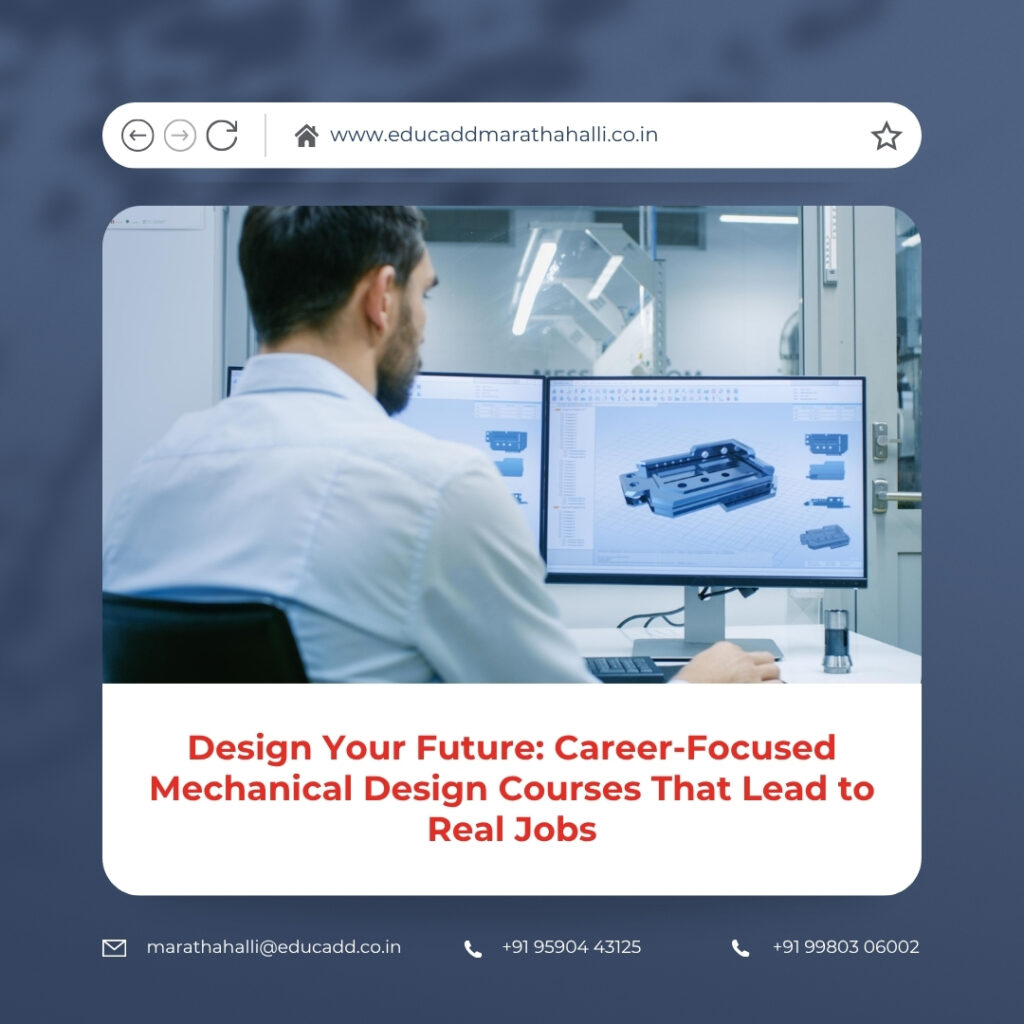
Mechanical Design Career Courses
Mechanical design is at the core of innovation across industries such as automotive, aerospace, manufacturing, and energy. From designing components to optimizing systems, skilled mechanical designers contribute significantly to product development and efficiency. Therefore, enrolling in a career-focused mechanical design course can open doors to numerous opportunities. This blog explores every aspect of these courses, including their structure, benefits, career scope, and how they help you build a successful future.
1. What Are Mechanical Design Courses and Why They Matter
Mechanical Design Career Courses are specialized training programs that focus on the principles and applications of designing mechanical systems and components. These programs combine theoretical concepts with practical exposure, allowing learners to understand how designs are created and implemented in real-life scenarios.
In addition, these courses emphasize the use of advanced tools and software that are widely used in the industry. As a result, students gain the confidence to work on complex projects and deliver efficient solutions. Since industries require professionals who can contribute from day one, these courses have become highly valuable for aspiring engineers.
2. The Shift from Traditional Learning to Job-Oriented Training
Traditional engineering education often focuses heavily on theory, leaving students underprepared for industry challenges. However, job-oriented mechanical design courses bridge this gap by offering practical training aligned with industry requirements.
These programs are structured to ensure that learners gain hands-on experience through real-time projects and simulations. Moreover, they incorporate current industry trends, making the learning process more relevant and effective. Consequently, students who complete such training are better equipped to meet employer expectations and secure jobs faster.
3. Key Subjects Covered in Mechanical Design Training
A comprehensive mechanical design course includes a variety of subjects that build a strong technical foundation. Each subject is carefully designed to enhance both knowledge and practical skills.
Some of the major subjects include:
- Engineering drawing and drafting
- 3D modeling and assembly design
- Finite Element Analysis (FEA)
- Product lifecycle management
- Manufacturing techniques
By mastering these subjects, students develop a holistic understanding of mechanical design. This knowledge helps them tackle real-world challenges with ease and confidence.
4. Industry-Standard Software You Will Master
One of the most important aspects of mechanical design courses is training in professional software tools. These tools are essential for creating accurate designs and conducting detailed analysis.
Learners typically gain expertise in:
- AutoCAD for precise drafting
- SolidWorks for 3D modeling and simulation
- CATIA for advanced product design
- ANSYS for engineering analysis
Proficiency in these tools significantly enhances employability. Furthermore, companies prefer candidates who are already familiar with such software, as it reduces training time and increases productivity.
5. Advantages of Choosing Career-Oriented Mechanical Design Courses
Career-focused mechanical design courses offer several benefits that go beyond traditional education. Firstly, they provide practical exposure, which is crucial for understanding industry workflows. Students work on real-time projects, gaining valuable experience.
Secondly, these courses often include placement support, helping learners connect with potential employers. This guidance makes the transition from education to employment much smoother. As a result, students can start their careers with confidence and clarity.
6. Career Paths You Can Explore After Completion
Mechanical design courses open up a wide range of career opportunities across various industries. With the right skills, graduates can choose from multiple roles based on their interests and expertise.
Some popular career options include:
- Mechanical Design Engineer
- CAD Specialist
- Product Development Engineer
- Simulation Analyst
- Manufacturing Engineer
Each role offers unique challenges and growth opportunities. Therefore, these courses provide a strong foundation for a successful and dynamic career.
7. Growing Demand for Skilled Mechanical Designers
The demand for mechanical design professionals is steadily increasing due to advancements in technology and industrial growth. Companies are constantly looking for skilled individuals who can design efficient and innovative solutions.
Additionally, the rise of automation and smart manufacturing has created new opportunities in the field. Designers are now required to work with advanced systems and technologies. Hence, enrolling in a job-oriented course ensures that you stay relevant in a competitive job market.
8. Importance of Hands-On Training and Live Projects
Practical learning is a key component of mechanical design education. Hands-on training allows students to apply theoretical concepts in real-world scenarios, making learning more effective.
Working on live projects helps students understand industry standards and expectations. It also improves their problem-solving skills and ability to work under pressure. Consequently, they become job-ready professionals who can contribute immediately in the workplace.
9. Certification and Its Impact on Employability
Certifications play a crucial role in enhancing a candidate’s credibility. Employers often prefer candidates who have completed certified courses, as it reflects their commitment to learning and skill development.
A recognized certification validates your expertise and sets you apart from other candidates. It also increases your chances of getting shortlisted during recruitment. Therefore, choosing a course that offers certification is highly beneficial.
10. How to Select the Best Mechanical Design Course
Choosing the right course is an important decision that can shape your career. Several factors should be considered to ensure that you make the best choice.
Key considerations include:
- Updated and industry-relevant curriculum
- Availability of practical training sessions
- Experienced trainers and mentors
- Placement assistance and career support
By carefully evaluating these factors, you can select a course that aligns with your career goals and aspirations.
11. Role of Internships in Building Industry Experience
Internships provide an excellent opportunity to gain real-world experience. They allow students to work in professional environments and understand how industries operate.
Moreover, internships help in developing soft skills such as communication, teamwork, and time management. They also provide exposure to industry practices and standards. As a result, students become more confident and prepared for full-time roles.
12. Salary Trends and Long-Term Career Growth
Mechanical design professionals enjoy competitive salaries and strong career growth prospects. Entry-level positions offer decent pay, which increases with experience and expertise.
Over time, professionals can move into senior roles, leadership positions, or specialized domains. Some may even choose to start their own businesses. Therefore, this field offers both financial stability and long-term growth opportunities.
13. Emerging Trends Shaping Mechanical Design Careers
The future of mechanical design is influenced by several emerging technologies. Innovations such as artificial intelligence, 3D printing, and digital twins are transforming the way designs are created and analyzed.
Engineers must adapt to these changes by continuously upgrading their skills. Job-oriented courses are regularly updated to include these advancements, ensuring that students remain competitive. Consequently, staying updated with trends is essential for career success.
14. Why Mechanical Design Skills Are Essential Across Industries
Mechanical design skills are highly versatile and applicable across multiple industries. From automotive to healthcare, every sector requires efficient and innovative designs.
These skills enable professionals to improve product performance, reduce costs, and enhance efficiency. Additionally, they foster creativity and innovation, which are critical in today’s fast-paced world. Therefore, learning mechanical design is a valuable investment for the future.
Conclusion
To sum up, Mechanical Design Career Courses provide the perfect blend of theoretical knowledge and practical expertise. They prepare individuals to meet industry demands and excel in their careers. With the growing need for skilled professionals, these courses offer a clear pathway to success.
By choosing the right program, gaining hands-on experience, and staying updated with industry trends, you can build a rewarding career in mechanical design. It is not just about learning a skill; it is about creating opportunities and shaping a future filled with growth and innovation.

