
Shape Spaces, Build Futures: The Ultimate Guide to Interior Design Courses with Placement
An Interior Design Course Placement provides a clear pathway from learning to earning. It ensures that students not only gain professional knowledge but also receive support in securing a job after completing their training. Unlike conventional courses, these programs are designed to align with industry needs, making students job-ready from day one. In this detailed guide, you will explore every aspect of such courses, including curriculum, career scope, practical exposure, and the importance of placement support, helping you make an informed decision about your future.
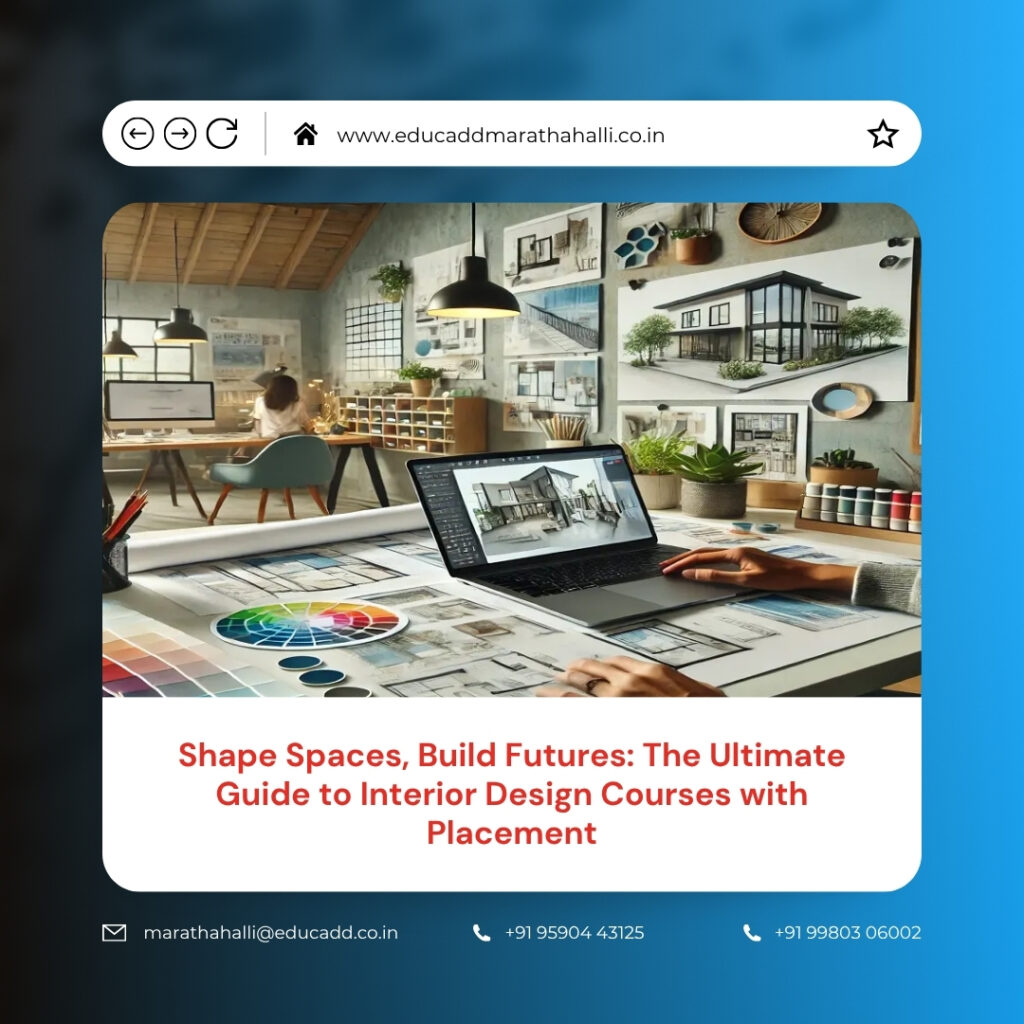
Interior Design Course Placement
Interior design has transformed into a powerful career choice that blends imagination with technical expertise. In today’s fast-changing world, spaces are no longer designed just for appearance; they are created to enhance functionality, comfort, and experience. As urban lifestyles evolve and modern architecture grows rapidly, the demand for skilled interior designers continues to rise across residential, commercial, and industrial sectors. This shift has encouraged many aspiring creatives to pursue structured training that can help them stand out in a competitive market.
1. Understanding Interior Design Courses with Placement
An interior design course with placement is a specialized training program that prepares students for professional roles in the design industry. These courses are carefully structured to include both theoretical learning and practical exposure. Students are guided through essential concepts such as space utilization, color coordination, furniture layout, and lighting techniques.
What makes these programs unique is their focus on employability. Institutes offering placement assistance work closely with industry partners to connect students with job opportunities. As a result, learners gain confidence as they transition from academics to professional environments. Moreover, these courses are often updated to reflect current industry trends, ensuring that students stay relevant in a rapidly evolving field.
2. The Growing Demand for Interior Designers
The demand for interior designers has increased significantly in recent years. With the expansion of real estate, hospitality, and corporate sectors, well-designed spaces have become a necessity rather than a luxury. Businesses are investing more in interiors to improve customer experience, while homeowners are focusing on creating personalized living environments.
This growth has created numerous opportunities for trained professionals. Companies are actively seeking designers who can combine creativity with technical knowledge. Therefore, enrolling in an interior design course with placement can give you a competitive edge. It allows you to enter a market that values innovation and practical skills, ensuring long-term career stability.
3. Skills You Develop During the Course
Interior design courses are designed to help students build a wide range of skills. These skills are essential for handling real-world projects and meeting client expectations. Creativity is at the core of interior design, but it must be supported by technical expertise.
Students learn how to plan spaces effectively, select appropriate materials, and create visually appealing layouts. Additionally, they develop strong communication skills, which are necessary for presenting ideas to clients. Problem-solving abilities are also enhanced, as designers often need to work within constraints such as budgets and timelines. Over time, these skills help students become confident and versatile professionals.
4. Comprehensive Curriculum Structure
The curriculum of an interior design course is structured to cover every aspect of design. It usually begins with basic principles and gradually introduces advanced topics. This step-by-step approach ensures that students build a strong foundation before moving on to complex concepts.
Subjects commonly include design theory, color psychology, furniture design, and lighting techniques. In addition, students are trained in software tools that are widely used in the industry. These tools enable them to create detailed drawings and realistic visualizations. By the end of the course, learners are equipped with both creative and technical knowledge, making them ready for professional challenges.
5. Importance of Hands-On Learning
Practical experience plays a crucial role in interior design education. While theoretical knowledge provides a base, hands-on learning helps students apply their skills in real situations. Many courses include workshops, site visits, and live projects to enhance practical understanding.
Through these experiences, students learn how to handle client requirements and manage projects effectively. They also gain insights into industry standards and workflows. This exposure builds confidence and prepares them for real-world scenarios. As a result, students are better equipped to deliver quality work from the beginning of their careers.
6. Placement Support and Career Guidance
Placement assistance is one of the most valuable aspects of these courses. Institutes offering placement support provide students with opportunities to connect with potential employers. This eliminates the uncertainty that many graduates face after completing their education.
Career guidance services are often included as part of the program. These services help students prepare for interviews and improve their professional profiles.
- Guidance in creating impressive resumes and portfolios
- Access to job opportunities through industry networks
Such support ensures that students are not only trained but also successfully placed in suitable roles.
7. Diverse Career Paths in Interior Design
After completing an interior design course with placement, students can explore a variety of career options. The field offers flexibility and opportunities across multiple industries. Designers can work on residential projects, commercial spaces, retail outlets, or hospitality environments.
Some common roles include interior designer, design consultant, space planner, and project coordinator. Additionally, many professionals choose to work independently as freelancers. This allows them to take on diverse projects and build their own brand. The wide range of career options makes interior design an attractive profession for creative individuals.
8. Advantages of Choosing a Placement-Oriented Course
Opting for a placement-oriented course offers several benefits. It not only saves time but also provides a clear direction for your career. Students can focus on learning without worrying about job hunting after completing the course.
These programs also offer industry exposure, which is essential for understanding market demands.
- Opportunity to interact with industry experts
- Increased chances of securing a stable job quickly
As a result, students gain a strong start in their professional journey.
9. Selecting the Right Interior Design Institute
Choosing the right institute is a critical step in your career. With many options available, it is important to evaluate each one carefully. Factors such as course content, faculty expertise, and placement records should be considered.
Additionally, look for institutes that offer practical training and updated curriculum. Visiting the campus and speaking with current students can provide valuable insights. Making an informed decision ensures that you receive quality education and better career opportunities.
10. Role of Digital Tools in Modern Design
Technology has become an essential part of interior design. Digital tools have changed the way designers plan and present their ideas. Software applications allow them to create detailed layouts and realistic 3D models.
These tools help clients visualize the final outcome before execution. As a result, communication becomes clearer and more effective. Designers can also experiment with different styles and materials quickly. This improves efficiency and enhances creativity, making technology a vital component of modern design education.
11. Building a Strong Portfolio
A portfolio is one of the most important assets for an interior designer. It showcases your skills, creativity, and experience to potential employers. During the course, students work on various projects that contribute to their portfolio.
A well-organized portfolio reflects your design approach and attention to detail. It helps you stand out in a competitive job market. Therefore, students are encouraged to focus on quality and presentation while building their portfolios. This effort plays a significant role in securing job opportunities.
12. Current Trends in Interior Design
Interior design is constantly evolving, with new trends shaping the industry. Staying updated with these trends is essential for success. Sustainable design practices are becoming increasingly popular, as people focus on eco-friendly solutions.
Smart homes and technology integration are also gaining attention. Designers are now creating spaces that combine aesthetics with functionality. Minimalistic designs and multifunctional furniture are in high demand. Understanding these trends helps designers create modern and relevant interiors.
13. Overcoming Challenges in the Design Industry
Interior design can be a rewarding career, but it also comes with challenges. Designers often need to manage multiple projects and meet tight deadlines. Client expectations can sometimes be difficult to handle.
However, these challenges can be overcome with proper planning and communication. Time management and adaptability are key skills that help designers succeed. Continuous learning also plays an important role in staying ahead in the industry. By developing these abilities, professionals can navigate challenges effectively.
14. Future Opportunities in Interior Design
The future of interior design is filled with possibilities. As cities expand and lifestyles change, the need for well-designed spaces will continue to grow. New fields such as virtual design and sustainable architecture are emerging, offering exciting career opportunities.
Globalization has also opened doors for international projects. Designers can now collaborate with clients from different parts of the world. This creates a dynamic and diverse work environment. With the right skills and training, aspiring designers can build successful careers in this evolving industry.
Conclusion
Pursuing an Interior Design Course Placement is a smart step towards a creative and rewarding career. These programs provide a perfect balance of knowledge, practical experience, and job opportunities. They help students develop essential skills while guiding them towards professional success.
As the industry continues to grow, the demand for skilled interior designers will only increase. By choosing the right course and dedicating yourself to learning, you can turn your passion into a successful profession. With placement support and industry exposure, you can confidently begin your journey in the world of interior design and create a future filled with creativity and growth.

