
Design Your Destiny: Unlock a Creative Future with the Best Interior Design Course Near You with Certification
The way we design and experience spaces has changed dramatically in recent years. Interior design is no longer limited to decoration; it has become a powerful profession that blends creativity, technical knowledge, and innovation. From modern homes to luxurious offices and vibrant commercial spaces, the need for skilled Interior Design Course Certification is growing at an impressive pace. People now seek environments that are not only visually appealing but also functional, sustainable, and personalized.
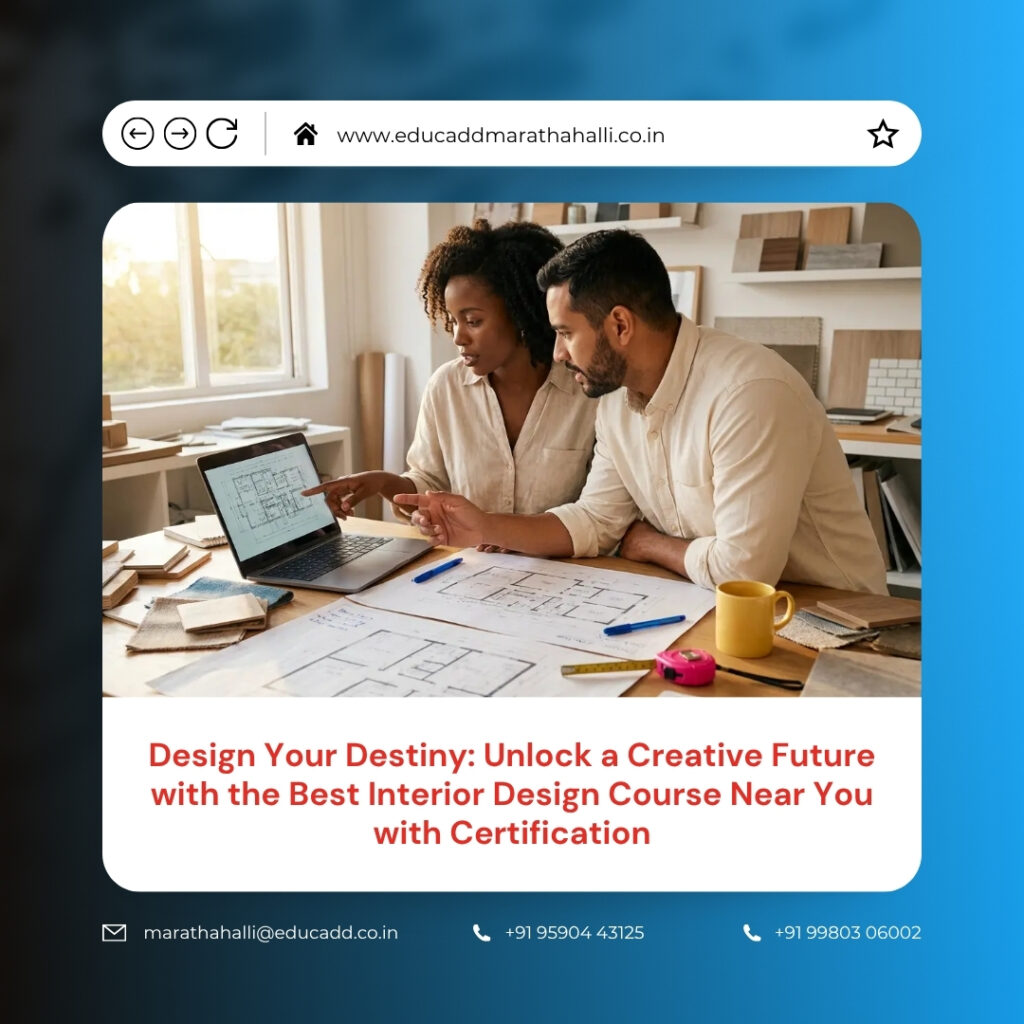
Interior Design Course Certification
If you are someone who enjoys transforming ideas into beautiful spaces, pursuing an Interior Design Course Certification can be the perfect career move. Such courses provide a structured learning path that helps you understand design fundamentals, tools, and real-world applications. Moreover, certification gives you credibility in the industry, making it easier to attract employers and clients. In this detailed guide, you will explore every aspect of choosing the right interior design course, the benefits it offers, and how it can shape your professional journey.
1. Exploring Interior Design as a Modern Profession
Interior design has evolved into a multifaceted profession that combines art, science, and technology. Designers are responsible for creating spaces that are both aesthetically pleasing and highly functional. They work on various projects, including homes, offices, retail stores, and hospitality environments.
This field requires strong creative thinking along with practical knowledge. Designers must understand how to utilize space efficiently while maintaining visual harmony. They also collaborate with architects, engineers, and clients to achieve the desired results. Therefore, professional training becomes essential for mastering these diverse skills and building a successful career.
2. Benefits of Choosing a Nearby Interior Design Course
Selecting a course close to your location offers several practical advantages. One of the biggest benefits is convenience. You can attend classes regularly without spending too much time traveling. This allows you to focus more on learning and skill development.
Another advantage is local exposure. Institutes in your area are often familiar with regional design trends and client preferences. This knowledge can help you understand the local market better. Additionally, studying nearby helps you build a network with local professionals, which can be extremely valuable for internships and job opportunities.
3. Why Certification Matters in Interior Design
Certification plays a crucial role in establishing your credibility as a designer. It serves as proof that you have completed professional training and possess the necessary skills. Employers often prefer certified candidates because they are more reliable and industry-ready.
Furthermore, certification can boost your confidence. It validates your expertise and makes you stand out in a competitive job market. If you plan to work independently, having a recognized certification can also help build trust with clients, leading to more projects and better income opportunities.
4. Essential Skills You Gain Through the Course
An interior design course equips you with a wide range of skills that are essential for success in the field. These skills cover both creative and technical aspects of design.
Some of the key skills you will develop include:
- Space planning and efficient layout creation
- Understanding color combinations and material selection
In addition to these, you will also learn communication skills, project management, and client handling techniques. These abilities are crucial for delivering successful design solutions.
5. Understanding the Course Structure and Curriculum
The curriculum of an interior design course is carefully designed to provide a comprehensive learning experience. It includes both theoretical lessons and practical assignments. Students are encouraged to work on real-life projects to gain hands-on experience.
You will study topics such as design principles, furniture design, lighting concepts, and construction materials. Many courses also include training in design software like AutoCAD and 3D modeling tools. This combination ensures that you are well-prepared for industry demands.
6. Flexible Learning Options for Every Student
Interior design courses are available in various formats to suit different needs. You can choose from short-term certification programs, diplomas, or advanced courses. Each option offers different levels of depth and specialization.
Many institutes provide flexible schedules, including weekend and evening classes. Online learning options are also becoming popular. This flexibility allows students and working professionals to pursue their passion without disrupting their daily routines.
7. Importance of Practical Training and Industry Exposure
Practical learning is a vital part of interior design education. Courses often include workshops, site visits, and live projects. These experiences help students understand how design concepts are applied in real situations.
Working on real projects improves your ability to solve problems and make decisions. It also helps you gain confidence in dealing with clients and managing projects. As a result, you become better prepared to enter the professional world.
8. Diverse Career Opportunities After Certification
Completing an interior design course opens doors to a variety of career paths. You can choose a role based on your interests and strengths.
Some popular career options include:
- Residential interior designer
- Commercial and office space designer
Additionally, you can explore opportunities in set design, exhibition design, and furniture design. With experience, you can also take on leadership roles or specialize in a particular area of design.
9. Freelancing and Independent Design Careers
Interior design offers excellent opportunities for freelancing. Many professionals choose to work independently and manage their own projects. This allows for greater flexibility and creative freedom.
Starting your own design business is another exciting option. With the right skills and certification, you can build a strong reputation in the market. Over time, you can expand your services and grow your brand, leading to increased income and recognition.
10. Role of Technology in Interior Design Today
Technology has become an integral part of modern interior design. Designers use advanced tools to create accurate and detailed designs. Software applications help in visualizing concepts before they are implemented.
Learning these tools during your course gives you a competitive advantage. Clients appreciate designers who can present realistic 3D models and layouts. Therefore, technical knowledge is essential for success in today’s design industry.
11. How to Choose the Best Interior Design Institute Near You
Selecting the right institute is a critical decision. You should consider factors such as faculty expertise, course content, and practical training opportunities. A good institute provides a balance between theory and hands-on learning.
It is also important to check student reviews and placement records. Visiting the institute and interacting with instructors can give you a better understanding of the learning environment. Making the right choice can significantly impact your career growth.
12. Course Fees and Long-Term Benefits
The cost of an interior design course varies depending on the institute and program level. While some courses may require a higher investment, they often provide valuable skills and better career opportunities.
Investing in a quality course can lead to higher earning potential in the future. As you gain experience and build a portfolio, your income can increase significantly. Therefore, it is important to view education as a long-term investment rather than an expense.
13. Growing Demand for Interior Designers
The demand for interior designers continues to rise due to urbanization and changing lifestyles. People are increasingly focusing on creating comfortable and stylish living and working spaces.
This trend is expected to grow even further in the coming years. As a result, interior design offers a stable and promising career path. By acquiring the right skills and certification, you can take advantage of these opportunities and build a successful career.
14. Tips to Build a Successful Career in Interior Design
To succeed in interior design, you need to stay updated with the latest trends and innovations. Continuous learning is essential in this ever-evolving field. Attending workshops and networking with industry professionals can help you grow.
Building a strong portfolio is equally important. It showcases your creativity and skills to potential clients and employers. Consistency, dedication, and passion are key factors that contribute to long-term success in this profession.
Conclusion
Enrolling in an Interior Design Course Certification is a powerful step toward turning your creative passion into a successful career. It provides you with the knowledge, skills, and confidence needed to excel in the industry. Certification enhances your credibility and opens up a wide range of opportunities in both employment and entrepreneurship.
With the increasing demand for skilled designers and the rapid growth of the industry, now is the perfect time to take action. By choosing the right course and dedicating yourself to learning, you can build a rewarding career that allows you to transform spaces and make a lasting impact. Your journey into the world of interior design can begin today, leading you toward a future filled with creativity, growth, and success.

