
Decoding Electrical Symbols and Standards: Your Complete Roadmap to Smarter Electrical Design
Every electrical system, no matter how large or small, is built on a visual language. This language does not use sentences or long descriptions. Instead, it uses symbols, shapes, lines, and structured guidelines. These elements help engineers understand a circuit at a glance. They also ensure that everyone involved in a project follows the same rules. This shared language is known as Electrical Symbols and Standards, and it forms the backbone of electrical design.
Without these symbols, electrical work would become slow and confusing. Blueprints would look like pages of text instead of easy-to-read diagrams. Technicians would take longer to identify components. And safety risks would increase dramatically. That is why learning electrical symbols is not optional. It is one of the strongest skills an electrical professional can develop.
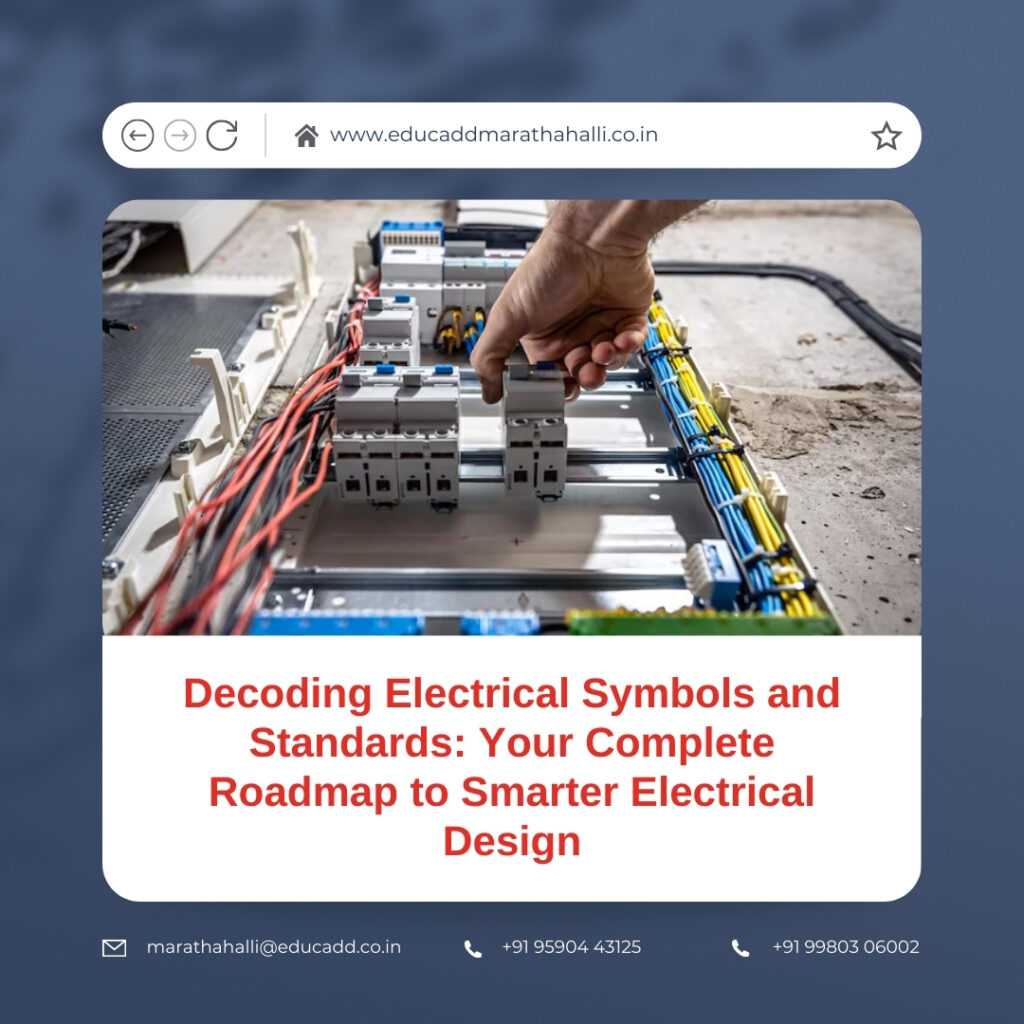
Electrical Symbols and Standards
This detailed guide dives deep into the purpose, value, and application of electrical symbols. It also explains global standards that ensure clarity and consistency across industries. You will discover how symbols improve safety, speed up design, and create a universal structure used by professionals worldwide. This guide also shows you the core symbols you must recognize, along with best practices for creating accurate electrical diagrams.
1. The Real Purpose Behind Electrical Symbols
Electrical Symbols and Standards exist because electrical systems are too complex to describe in words alone. Every circuit includes multiple components. Some control the flow of electricity. Some store energy. Others convert or protect the system. Listing them in sentences would waste time. It would also increase the chance of misinterpretation.
Turning Complexity Into Clarity
Symbols convert complicated components into simple shapes that any trained person can understand. A resistor, for example, has a universal symbol. A capacitor, diode, or relay also has a specific shape. When you place these symbols together on a diagram, the whole system becomes easy to follow.
These visual shortcuts help you:
-
Identify components in seconds
-
Understand how electricity travels
-
Detect missing or faulty parts
-
Create new circuits quickly
-
Explain ideas to other professionals
Because of these benefits, electrical symbols and standards are taught to students, technicians, engineers, and electricians across industries.
Making Collaboration Easier
Large electrical projects often require multiple teams. Designers work on blueprints. Engineers analyze load distribution. Electricians handle installation. Maintenance teams study diagrams years later. All these groups rely on symbols to maintain the same understanding. When everyone uses the same visual language, errors drop and teamwork improves.
Building a Foundation for Future Learning
Once you understand electrical symbols, you gain the confidence to explore more advanced concepts. You can learn control circuits, PLC systems, automation designs, and industrial power layouts. Symbols act as a bridge that carries you from basic circuits to complex engineering systems.
2. Why Electrical Standards Matter and Who Defines Them
Symbols alone would not be enough if each company created its own versions. One business might use a triangle for a resistor. Another might use a circle. A third might use a different shape entirely. This would turn every project into a guessing game.
To avoid this confusion, global organizations create strict rules known as standards. These standards control how every symbol must look and how diagrams must be structured.
IEC – The Global Leader
The International Electrotechnical Commission (IEC) defines the most widely used electrical standards. Many countries follow IEC guidelines. Their symbols are clean, modern, and easy to read. They also reduce visual clutter, which improves clarity in large diagrams.
IEEE – Strong Presence in the United States
The Institute of Electrical and Electronics Engineers (IEEE) sets standards used heavily in North America. Their diagrams focus on electrical design, electronic elements, and communication systems. Most U.S.-based industries follow IEEE guidelines without exception.
ANSI – Supporting National Consistency
The American National Standards Institute (ANSI) works with organizations like IEEE to ensure consistency in engineering projects. It also influences how consumer electronics, industrial machines, and building systems are labeled.
Why Standards Protect You
Standards keep electrical work safe, uniform, and easy to interpret. They reduce the risk of mistakes and protect both workers and users. When your diagrams follow the right standards:
-
Engineers understand your design clearly
-
Inspectors approve projects faster
-
Maintenance teams save time
-
Safety improves significantly
-
Documentation remains consistent for years
You also avoid costly rework or compliance-related penalties. That is why knowledge of electrical symbols and standards is essential for long-term success.
3. The Most Important Electrical Symbols You Must Recognize
There are hundreds of electrical symbols. However, you only need to master a core group to understand most diagrams. These essential symbols appear in nearly every electrical plan, layout, or blueprint.
Power Source Symbols
These symbols show where the circuit receives its power.
-
AC supply represents alternating current.
-
DC supply represents direct current.
-
Battery symbols show storage capacity and orientation.
Understanding these symbols helps you interpret how electricity moves through the system.
Switch Symbols
Switches control current flow. They appear in lighting systems, machinery, and control panels. Common types include:
-
SPST (simple on-off control)
-
SPDT (switch between two outputs)
-
DPDT (two poles, two throws)
-
Momentary push-button switches
These symbols show when and how the user interacts with the circuit.
Resistors, Capacitors, and Inductors
These elements manage electrical behavior:
-
Resistors restrict current
-
Capacitors store and discharge energy
-
Inductors generate magnetic fields
Their symbols appear in power circuits, electronic boards, and automation panels.
Grounding Symbols
Ground symbols ensure excess current flows safely away from the circuit.
Common grounding symbols include:
-
Earth ground
-
Chassis ground
-
Signal ground
These symbols improve user safety and reduce equipment damage.
Motors and Transformers
Industries rely on motors for movement and transformers for voltage control. Their symbols must be understood clearly. Motors may have additional features, including direction arrows or load indicators.
Safety and Protection
These symbols show devices that protect circuits from overload or short circuit conditions:
-
Fuses
-
Relays
-
Circuit breakers
-
Isolators
These symbols help technicians find critical safety components during repairs.
Lighting and Indicators
Diagrams often show lamps, LED indicators, dimmers, and sensor lights. These symbols help engineers design emergency lighting, building wiring, or industrial illumination layouts.
By understanding all these symbols, you can read diagrams faster, interpret complex systems accurately, and build stronger projects that follow electrical symbols and standards.
4. How Electrical Symbols and Standards Guarantee Safer Systems
Electrical safety depends heavily on clear communication. A single misplaced wire or misunderstood symbol can cause damage, downtime, or injury. Standards and symbols reduce these risks.
Better Hazard Awareness
Accurate diagrams help professionals spot danger zones. High-voltage areas, grounding points, and overloaded circuits become easy to identify. This helps workers use the right protective gear and take better precautions.
Faster Troubleshooting
When systems fail, technicians must respond quickly. Symbols guide them to the exact fault. They show which fuse protects which line. They show where breakers connect. They show where sensors or relays control loads. Faster troubleshooting reduces losses and prevents further damage.
Clear Documentation for the Future
Electrical systems often last for many years. During that time, different technicians may work on them. Standardized diagrams ensure that everyone, no matter when they join the project, understands the system clearly.
Smooth Approval and Compliance
Projects must follow government regulations. Authorities check wiring diagrams, equipment placement, grounding methods, and safety systems. If your diagrams follow global standards, approvals happen faster. But if your symbols are incorrect or inconsistent, authorities may reject your design.
Improved Team Coordination
When designers, engineers, installers, and inspectors use the same symbols, communication becomes simple. There is no confusion about component identification or circuit behavior. This reduces errors and keeps the project moving smoothly.
That is why electrical symbols and standards are essential for building safe, compliant, and efficient electrical installations.
5. How to Read and Create Better Electrical Diagrams
Reading electrical diagrams is a skill that grows with practice. But you can accelerate the process by following the right techniques. Creating diagrams also requires consistency and attention to detail.
Start With the Power Source
Locate the power supply first. It sets the starting point for understanding how electricity moves through the circuit.
Trace the Current Flow
Follow the path from the source to the load. This helps you understand how components interact and where control elements sit.
Identify Major Components Early
Find the transformers, motors, switches, and protection devices. After locating these, the rest of the diagram becomes easier to interpret.
Use Standard Symbols Only
When designing diagrams, stick strictly to IEC, ANSI, or IEEE symbols. Avoid hand-drawn variations or unapproved shapes.
Maintain Visual Order
Keep wiring lines clean. Avoid crossing wires unnecessarily. Use spacing to separate sections of the circuit.
Add Labels and Notes
Labels improve clarity. Short notes help others understand special conditions, ratings, or functions.
Review with Fresh Eyes
Check the diagram again after completing it. Look for missing symbols. Confirm alignment. Ensure that every part follows the correct standard. This final review often catches small mistakes that could cause confusion later.
When you master these habits, you create diagrams that look professional, reliable, and compliant with global electrical symbols and standards.
Conclusion
Electrical Symbols and Standards on clarity, accuracy, and safety. All three depend on electrical symbols and standards. These rules and visual cues help professionals understand circuits quickly. They also improve communication among teams and ensure that every project meets global safety guidelines. When you learn these symbols and follow recognized standards, you gain a strong advantage in design, installation, and maintenance. You also build systems that remain reliable for years. Whether you are a beginner, technician, or engineer, mastering electrical symbols strengthens your expertise and elevates the quality of your work.

