
Revolutionizing Renewable Energy Systems with Electrical CAD
Electrical CAD Renewable Systems is witnessing rapid growth, driven by the global need for sustainable power solutions. However, designing efficient and reliable electrical systems for renewable energy projects presents unique challenges. Electrical CAD (Computer-Aided Design) has emerged as a critical tool in this transformation. By enabling precise planning, simulation, and documentation, Electrical CAD ensures renewable energy projects are executed accurately, cost-effectively, and sustainably.
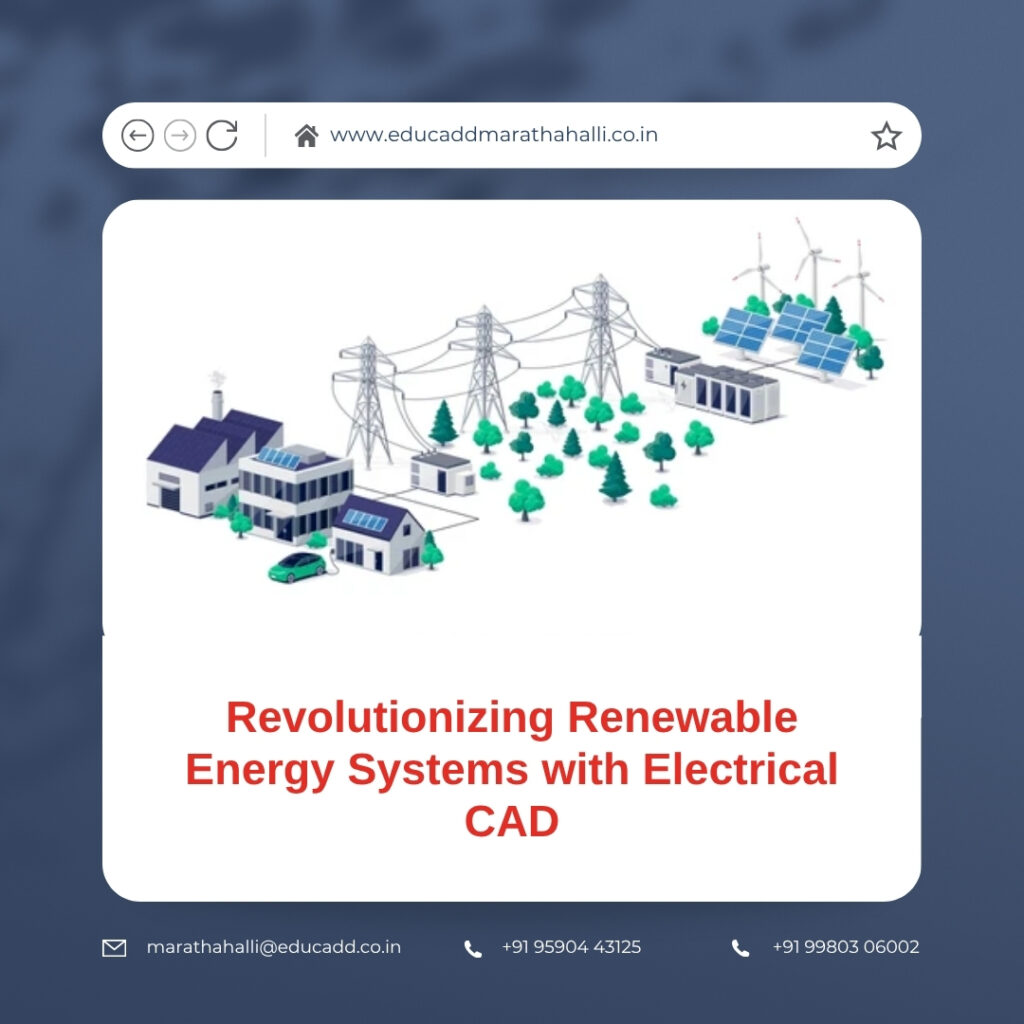
Electrical CAD Renewable Systems
In this article, we explore the significant role of Electrical CAD Renewable Systems, its advantages, applications, and future prospects.
What Electrical CAD Means for Renewable Energy Projects
Electrical CAD refers to specialized software used for designing, modeling, and analyzing electrical systems. In renewable energy projects, CAD tools allow engineers to create detailed circuit diagrams, layout designs, and comprehensive schematics for solar, wind, hydro, and hybrid systems.
Renewable energy projects often involve complex setups with multiple energy sources, storage systems, and distribution networks. Electrical CAD helps engineers manage this complexity by enabling load calculations, voltage analysis, and system simulations before actual implementation. These capabilities reduce errors, enhance system reliability, and ensure compliance with global safety standards.
Key Advantages of Electrical CAD in Renewable Energy
Using Electrical CAD in renewable energy projects provides several practical benefits:
-
Precision in Design
CAD software ensures every component, cable, and connection is accurately placed. This precision minimizes human errors and improves the reliability of electrical systems. -
Optimized System Performance
Simulation features allow engineers to evaluate different layouts, identify inefficiencies, and optimize energy output, which is critical for renewable installations like solar farms or wind turbines. -
Cost Efficiency
Detecting design flaws early prevents expensive reworks and material waste. Efficient planning lowers installation and long-term maintenance costs. -
Speedy Project Execution
Automated drawing, labeling, and reporting tools streamline the design process, enabling faster project completion without compromising accuracy. -
Enhanced Collaboration
Modern Electrical CAD platforms support team collaboration, allowing multiple engineers to work on the same project. Detailed documentation simplifies communication and ensures design consistency across locations.
Applications Across Renewable Energy Projects
Electrical CAD is versatile and applicable to a wide range of renewable energy projects:
-
Solar Energy Systems: CAD tools design photovoltaic layouts, inverter connections, and cable routing to ensure optimal energy generation.
-
Wind Energy Farms: Electrical CAD facilitates the design of turbine wiring, substation connections, and protective circuits to maintain power stability.
-
Hydropower Installations: CAD software helps in creating electrical schematics for generators, switchgear, and distribution systems in hydropower plants.
-
Battery Storage Systems: From battery management to inverter integration, CAD ensures safety and operational efficiency for large-scale energy storage.
-
Hybrid Systems: For projects combining solar, wind, and storage, Electrical CAD ensures integrated designs and coordinated operation for maximum performance.
Essential Features of Electrical CAD for Renewable Energy
Modern Electrical CAD platforms provide features tailored to renewable energy needs:
-
3D Visualization: Allows designers to plan space usage, component placement, and maintenance access efficiently.
-
Load and Performance Analysis: Accurate simulations of electrical loads and system behavior prevent overloads and energy losses.
-
Component Libraries: Ready-made libraries include solar panels, inverters, wind turbines, and transformers to simplify design.
-
Automated Documentation: CAD tools generate wiring diagrams, bills of materials, and schematics automatically, saving time and minimizing errors.
-
Team Collaboration: Cloud-based platforms support simultaneous work by multiple engineers, improving efficiency and design accuracy.
-
Error Detection and Compliance: Built-in checks detect design flaws, ensure voltage stability, and confirm adherence to electrical standards.
Emerging Trends in Electrical CAD for Renewable Energy
As the renewable energy landscape evolves, Electrical CAD is adapting to meet new demands:
-
Integration with BIM: Linking Electrical CAD with Building Information Modeling (BIM) ensures seamless coordination between electrical, mechanical, and structural systems.
-
Artificial Intelligence Assistance: AI helps optimize layouts, detect potential issues, and suggest improvements automatically.
-
IoT and Smart Monitoring: CAD software increasingly integrates with IoT devices, allowing real-time monitoring and predictive maintenance.
-
Cloud Collaboration: Engineers worldwide can collaborate efficiently, share updates instantly, and maintain version control.
-
Eco-Friendly Design Focus: CAD tools now emphasize sustainable materials, energy efficiency, and environmental impact assessment.
Overcoming Challenges in Electrical CAD Implementation
Despite its benefits, there are a few challenges to consider:
-
Skill Requirement: Effective use of Electrical CAD demands training, especially for complex simulations and integrations.
-
Software Investment: High-quality CAD software can be costly, but the long-term efficiency and accuracy benefits outweigh the initial investment.
-
Data Management: Large projects generate extensive data, requiring efficient storage and version control systems.
-
Compliance and Standards: Ensuring designs meet local and international electrical codes requires attention and regular updates to CAD software.
Conclusion
Electrical CAD Renewable Systems are designed and executed. By enabling precision, efficiency, and collaboration, CAD tools reduce errors, optimize performance, and ensure sustainability. Whether for solar, wind, hydropower, or hybrid energy systems, Electrical CAD is an essential tool for engineers striving to create reliable and cost-effective renewable energy solutions.
As renewable energy continues to expand, Electrical CAD will remain at the forefront, empowering engineers to innovate and deliver projects that power a cleaner, greener future.

