
Building Tomorrow Smarter: The Ultimate BIM Course Guide for Construction Professionals
The construction landscape is evolving at an unprecedented pace. Digital transformation is no longer optional, and professionals who fail to adapt often struggle to remain competitive. BIM Course Construction Professionals has become a cornerstone of this transformation, enabling smarter planning, efficient collaboration, and precise execution. As projects grow in complexity, traditional workflows are gradually being replaced by integrated digital systems that offer clarity and control.
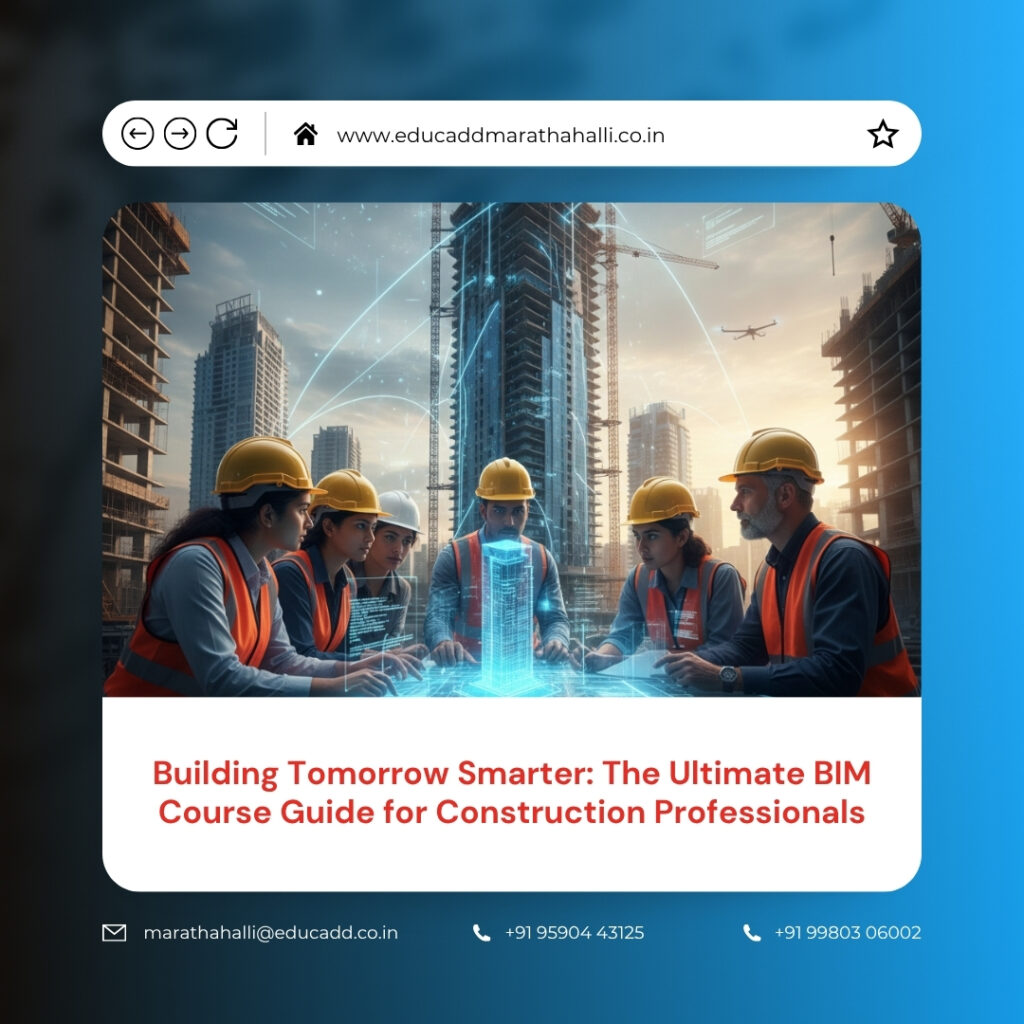
BIM Course Construction Professionals
A BIM Course Construction Professionals serves as a gateway into this new era. It empowers individuals with the knowledge and tools required to handle modern construction challenges effectively. Whether you are an engineer, architect, or project manager, mastering BIM can significantly enhance your ability to deliver successful projects. This blog explores the value of BIM training, its components, and the long-term impact it can have on your professional journey.
What BIM Really Means in Today’s Construction Environment
Building Information Modeling goes far beyond simple 3D modeling. It represents a comprehensive digital process where every aspect of a building is created, analyzed, and managed within a unified platform. This includes geometry, spatial relationships, materials, and even time-based scheduling. As a result, professionals gain a holistic view of the entire project lifecycle.
Unlike conventional drafting methods, BIM ensures that all stakeholders work from a single source of truth. This reduces discrepancies and enhances coordination across teams. Additionally, real-time updates allow professionals to make informed decisions quickly, minimizing delays and errors. The shift toward BIM reflects a broader move toward smarter, data-driven construction practices.
The Growing Demand for BIM Expertise Across the Industry
The demand for BIM-trained professionals has increased significantly in recent years. Construction firms, infrastructure companies, and real estate developers are actively seeking individuals who can manage digital workflows efficiently. This demand is driven by the need for improved project outcomes and reduced operational risks.
Professionals with BIM expertise often enjoy better career prospects and higher earning potential. Their ability to streamline processes and deliver accurate results makes them valuable assets to any organization. Furthermore, BIM knowledge opens doors to global opportunities, allowing professionals to work on international projects with leading companies.
What You Will Learn in a Professional BIM Course
A comprehensive BIM course is designed to cover both foundational concepts and advanced techniques. It typically begins with an introduction to digital modeling and gradually progresses to complex project coordination. Participants learn how to create detailed building models, manage data, and integrate various project components.
The course also focuses on industry-standard software tools that are widely used in construction projects. By gaining hands-on experience with these tools, learners develop practical skills that can be applied directly in their work. This balanced approach ensures that participants are well-prepared to handle real-world challenges.
Practical Training That Bridges Theory and Real Projects
One of the most important aspects of a BIM course is its emphasis on practical learning. Instead of relying solely on theoretical knowledge, participants are encouraged to work on live projects and case studies. This approach helps them understand how BIM is applied in actual construction scenarios.
Through hands-on training, learners gain confidence in using software tools and managing project workflows. They also develop problem-solving skills that are essential for handling complex tasks. This practical exposure ensures that professionals are job-ready and capable of contributing effectively from the start.
Advantages of BIM Training for Construction Professionals
Enrolling in a BIM course offers numerous benefits that extend beyond technical expertise. It enhances productivity, improves collaboration, and supports better decision-making throughout the project lifecycle. Professionals who undergo BIM training often experience significant improvements in their work efficiency.
- Enables accurate planning and reduces costly mistakes
- Improves communication between multidisciplinary teams
These advantages contribute to successful project delivery and increased client satisfaction, making BIM an essential skill in modern construction.
Exploring Career Paths After Completing a BIM Course
A BIM course opens up a wide range of career opportunities for construction professionals. Roles such as BIM Modeler, Coordinator, and Manager are in high demand across various sectors. These positions involve managing digital models, coordinating teams, and ensuring smooth project execution.
In addition to traditional roles, BIM professionals can also explore specialized fields such as sustainability consulting and digital construction management. The versatility of BIM skills allows individuals to adapt to different career paths and grow within the industry. This flexibility makes BIM training a valuable investment for long-term success.
How BIM Enhances Productivity and Project Accuracy
Productivity and accuracy are critical factors in construction, and BIM significantly improves both. By providing a centralized platform for project data, BIM eliminates the need for redundant tasks and manual updates. This leads to faster workflows and more efficient resource utilization.
Moreover, BIM allows professionals to detect potential issues before they arise. Through clash detection and simulation, errors can be identified and resolved during the planning stage. This proactive approach reduces delays and ensures that projects are completed on time and within budget.
Integration of BIM with Modern Technologies
BIM is not a standalone solution; it integrates seamlessly with other advanced technologies. For example, it can be combined with virtual reality to create immersive project visualizations. This helps stakeholders better understand designs and make informed decisions.
Additionally, BIM works alongside data analytics and automation tools to enhance project management. These integrations enable professionals to analyze performance, predict outcomes, and optimize workflows. As technology continues to evolve, the role of BIM will become even more significant in construction.
Why Certification Matters in BIM Training
Certification is a crucial component of any BIM course. It validates your skills and demonstrates your expertise to potential employers. Certified professionals are often preferred because they bring credibility and assurance of quality work.
Having a recognized certification also increases your chances of securing better job opportunities. It serves as proof of your commitment to professional development and your ability to handle complex projects. This makes certification an important step in advancing your career.
Overcoming Common Challenges While Learning BIM
Learning BIM can be challenging, especially for those who are new to digital tools. The complexity of software and the need for precision may seem daunting at first. However, these challenges can be overcome with the right approach and consistent practice.
- Break down learning into manageable steps
- Practice regularly using real-life project examples
By following these strategies, learners can gradually build their skills and gain confidence in using BIM effectively.
The Role of BIM in Promoting Sustainable Construction
Sustainability has become a key priority in the construction industry, and BIM plays a vital role in achieving it. By providing detailed insights into materials and energy usage, BIM helps professionals design environmentally friendly structures.
Furthermore, BIM supports efficient resource management, reducing waste and minimizing environmental impact. This makes it an essential tool for creating sustainable and responsible construction practices. As the focus on sustainability grows, BIM will continue to play a crucial role in shaping the future of the industry.
How to Choose the Best BIM Course for Your Career
Selecting the right BIM course is essential for achieving your professional goals. It is important to consider factors such as course content, practical training, and certification. A well-structured course should provide a comprehensive understanding of BIM and its applications.
Additionally, the quality of instructors and the availability of placement support should not be overlooked. A good course will offer guidance throughout the learning process and help you transition into the workforce. Making the right choice can significantly impact your career growth.
Future Trends and Opportunities in BIM
The future of BIM looks incredibly promising as more organizations adopt digital construction methods. Governments and industry leaders are increasingly mandating the use of BIM for large-scale projects. This trend is expected to drive further demand for skilled professionals.
As technology advances, BIM will continue to evolve and integrate with new tools and methodologies. Professionals who invest in BIM training today will be well-positioned to take advantage of these opportunities. The ability to adapt to changing trends will be key to long-term success in the construction industry.
Conclusion
A BIM Course Construction Professionals is more than just a learning opportunity—it is a pathway to a successful and future-ready career. As the industry continues to embrace digital transformation, the importance of BIM skills cannot be overstated. From improving project efficiency to unlocking new career opportunities, BIM offers numerous benefits.
By gaining expertise in BIM, professionals can stay ahead of the curve and contribute to innovative construction practices. The journey may require dedication and effort, but the rewards are substantial. In a rapidly evolving industry, BIM stands as a powerful tool that enables professionals to build smarter, collaborate better, and achieve greater success.

