Digital Marketing in India 2030: A Transformational Journey Shaping Brands, Consumers, and the Digital Economy
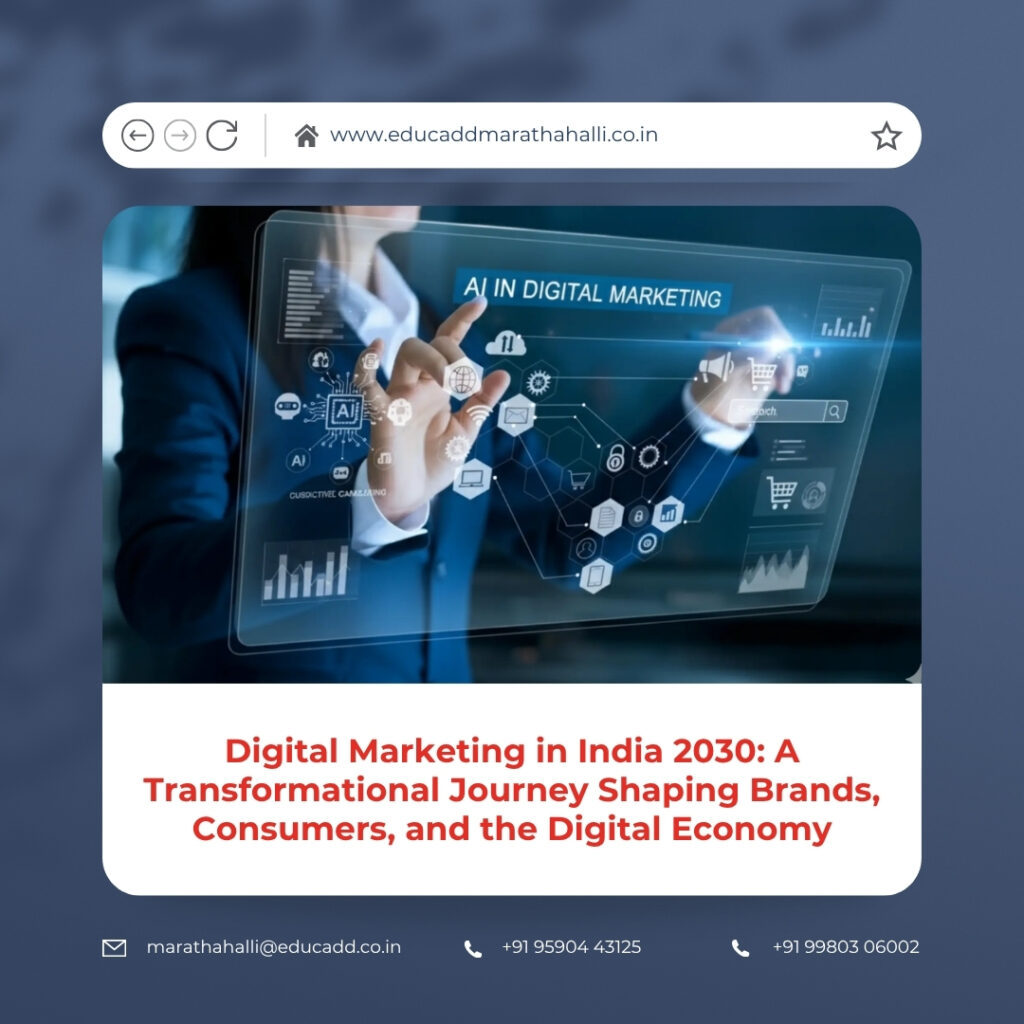
The Digital Marketing India 2030 is evolving at an extraordinary pace, driven by technological innovation, widespread internet adoption, and shifting consumer expectations. Over the past decade, India has transformed into one of the largest digital markets in the world. As more people gain access to smartphones and high-speed internet, digital platforms are becoming deeply embedded in everyday life.
Digital Marketing India 2030
Looking ahead, the Digital Marketing India 2030 will not just be about visibility—it will be about meaningful engagement, personalization, and value creation. Businesses that embrace this evolution will gain a significant competitive advantage. This comprehensive blog explores the upcoming trends, opportunities, and strategies that will define the next phase of digital marketing in India.
1. Explosive Growth of Digital Users Across Urban and Rural India
India continues to witness a dramatic rise in internet users, not only in metropolitan cities but also in smaller towns and rural regions. Affordable data plans and budget-friendly smartphones have made digital access more inclusive than ever before. Consequently, millions of new users are entering the digital ecosystem each year.
This expansion is reshaping how brands approach their target audience. Marketers are no longer focusing solely on urban consumers. Instead, they are designing campaigns that resonate with diverse demographics. As rural users become more digitally active, the demand for localized and relevant content will increase significantly.
2. The Power Shift Towards Vernacular and Regional Content
India’s linguistic diversity is a major factor influencing digital marketing strategies. While English content remains relevant, regional languages are gaining remarkable traction. Consumers prefer engaging with content in their native language, as it builds trust and emotional connection.
Brands are increasingly investing in multilingual campaigns to capture wider audiences. This trend is expected to grow further, as regional content platforms continue to expand. In the future, businesses that effectively communicate in local languages will enjoy stronger engagement and higher conversion rates.
3. Video Content Dominance in Consumer Engagement
Video marketing has become one of the most powerful tools in digital marketing. With the growing popularity of short-form videos, reels, and live streaming, users are consuming video content more than ever before. This shift is influencing how brands communicate their messages.
Video content allows businesses to showcase products, tell stories, and connect emotionally with audiences. It also improves retention and engagement rates. As attention spans shrink, visually appealing and concise videos will dominate the digital space.
- Short-form videos capture attention instantly and boost interaction
- Live streaming builds authenticity and real-time audience connection
4. Influencer Marketing Moving Towards Authenticity and Niche Reach
Influencer marketing in India is evolving beyond celebrity endorsements. Micro and nano influencers are becoming more influential due to their strong connection with specific communities. These influencers often have higher engagement rates and greater credibility.
Brands are now focusing on authenticity rather than just reach. Collaborations are becoming more strategic, with an emphasis on storytelling and genuine recommendations. In the coming years, influencer marketing will become more performance-oriented and data-driven.
5. The Rise of Social Commerce and Integrated Shopping Experiences
Social media platforms are no longer just for communication—they are becoming powerful shopping destinations. Social commerce is transforming the way consumers discover and purchase products. Users can browse, review, and buy products without leaving their favorite apps.
This seamless experience is driving higher conversions. Businesses are leveraging features like shoppable posts, live commerce, and in-app checkout systems. As technology improves, social commerce will play a major role in shaping the future of online shopping in India.
6. Artificial Intelligence Reshaping Marketing Strategies
Artificial Intelligence (AI) is revolutionizing digital marketing by enabling smarter decision-making and automation. From chatbots to personalized recommendations, AI is enhancing customer experiences across various touchpoints.
Marketers are using AI tools to analyze data, predict behavior, and optimize campaigns. This leads to better targeting and improved ROI. As AI technology advances, it will become an essential component of digital marketing strategies.
7. Voice Search Changing the SEO Landscape
The growing use of voice assistants is changing how people search online. Instead of typing keywords, users are asking questions in a conversational manner. This shift is influencing search engine optimization strategies.
Marketers must now focus on natural language and long-tail keywords. Content should be designed to answer user queries directly. Voice search optimization will become increasingly important as more consumers adopt smart devices.
8. Data Privacy and the Need for Ethical Marketing
As digital interactions increase, concerns about data privacy are also rising. Consumers are becoming more cautious about how their personal information is collected and used. This has led to stricter regulations and higher expectations from brands.
Businesses must prioritize transparency and ethical practices. Building trust will be crucial for long-term success. Companies that respect user privacy and communicate openly will stand out in a competitive market.
9. Hyper-Personalization Enhancing Customer Experience
Modern consumers expect personalized experiences tailored to their preferences. Generic marketing messages are no longer effective. Instead, brands must deliver relevant and timely content.
With advanced data analytics, businesses can create highly customized campaigns. This improves engagement and strengthens customer relationships. In the future, hyper-personalization will become a standard practice in digital marketing.
10. Performance Marketing Driving Measurable Results
Performance marketing is gaining popularity because it focuses on measurable outcomes. Businesses can track metrics such as clicks, leads, and conversions in real time. This approach ensures better accountability and efficiency.
Marketers can optimize campaigns based on data insights. This leads to improved ROI and smarter budget allocation. As competition increases, performance marketing will become a key strategy for success.
- Enables precise tracking of campaign effectiveness
- Helps allocate budgets based on real-time performance
11. Immersive Technologies: AR and VR Transforming Experiences
Augmented Reality (AR) and Virtual Reality (VR) are introducing new ways for brands to engage with consumers. These technologies create immersive experiences that enhance product interaction.
For example, customers can visualize products in their environment before making a purchase. This reduces uncertainty and increases confidence. As these technologies become more accessible, they will play a bigger role in marketing strategies.
12. Continuous Evolution of Search Engine Optimization
Search engine optimization is constantly evolving to keep up with changing algorithms and user behavior. Search engines now prioritize quality content, user experience, and relevance.
Marketers must stay updated with the latest trends to maintain visibility. Mobile optimization, page speed, and user intent are becoming increasingly important. SEO will continue to be a critical component of digital marketing.
13. Content Marketing as the Foundation of Digital Success
Content marketing remains at the heart of digital strategies. High-quality content helps brands educate, inform, and engage their audience. It also plays a crucial role in building trust and authority.
Businesses are investing in diverse content formats, including blogs, videos, podcasts, and infographics. The focus is shifting towards value-driven content that addresses user needs. In the future, content will continue to drive digital growth.
14. Expanding Career Opportunities in Digital Marketing
The rapid growth of digital marketing in India is creating numerous career opportunities. Skilled professionals are in high demand across industries. Roles such as SEO specialists, content marketers, and social media managers are becoming increasingly important.
Educational institutions and training centers are also expanding their offerings to meet this demand. As businesses continue to invest in digital strategies, career prospects in this field will grow further. Learning digital marketing skills can open doors to a wide range of opportunities.
Conclusion
The Digital Marketing India 2030 is dynamic, innovative, and full of potential. As technology continues to advance and consumer behavior evolves, businesses must adapt to stay relevant. Trends such as AI, video marketing, social commerce, and personalization are reshaping the industry.
Success in this evolving landscape will depend on creativity, adaptability, and a deep understanding of the audience. Companies that embrace change and invest in digital strategies will thrive in the coming years.
Ultimately, digital marketing in India is not just growing—it is transforming the way businesses connect with consumers. By staying informed and proactive, marketers and entrepreneurs can unlock immense opportunities and drive sustainable growth in the digital era.

