
Mapping Moments That Matter: A Strategic Guide to Customer Journey Mapping for Digital Campaign Excellence
Customer Journey Mapping Strategy for digital campaigns offers a structured way to visualize and analyze this complex behavior. It helps marketers see their brand through the eyes of the customer, uncovering valuable insights that would otherwise remain hidden. When applied strategically, it becomes a powerful framework for enhancing user experience, strengthening brand connections, and driving measurable growth.
In the evolving digital ecosystem, customers no longer follow a predictable path before making a purchase decision. Instead, they navigate through a dynamic network of touchpoints, platforms, and interactions. This shift has made it essential for businesses to understand not only where customers are coming from but also how they engage, what influences them, and why they choose one brand over another.
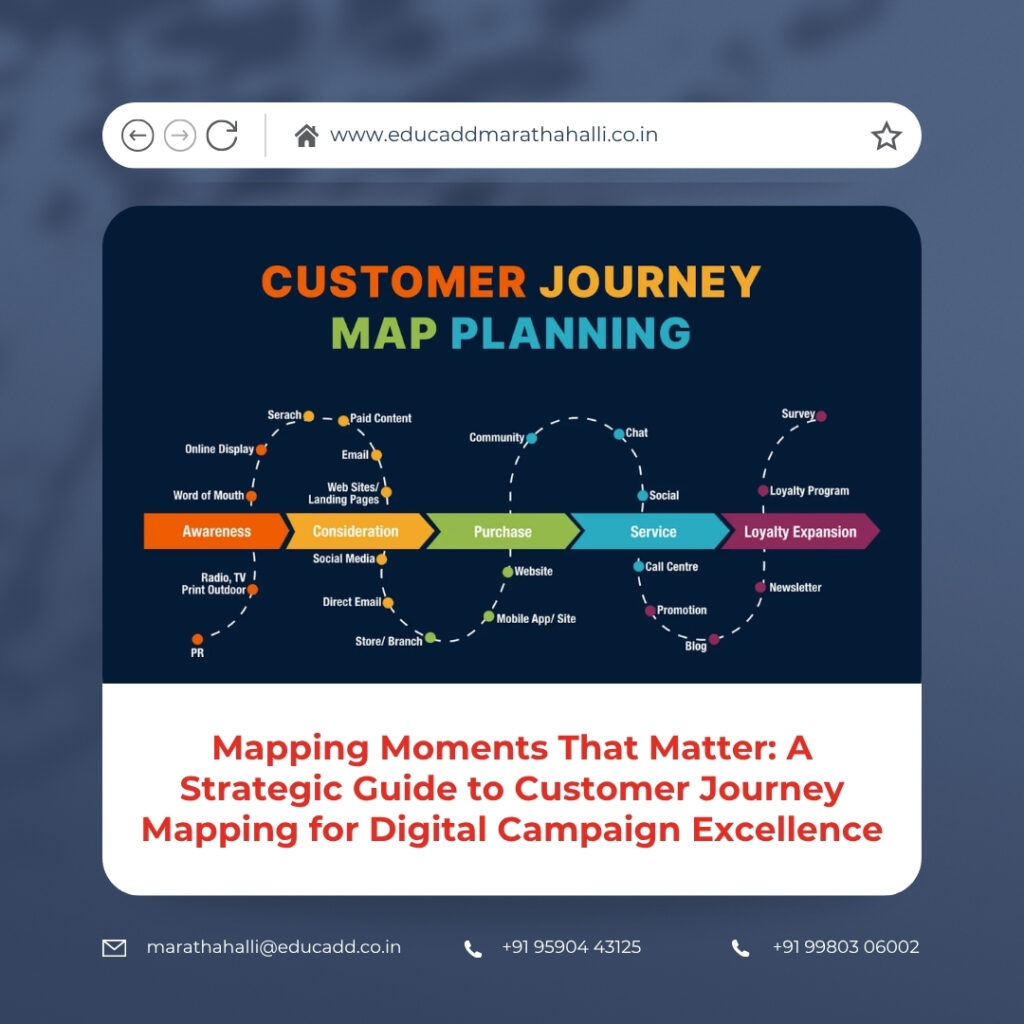
Customer Journey Mapping Strategy
This blog presents a detailed and reimagined exploration of customer journey mapping, highlighting its significance, components, and practical implementation for high-performing digital campaigns.
1. Defining Customer Journey Mapping in a Digital Context
Customer Journey Mapping Strategy is the process of outlining the complete experience a customer goes through when interacting with a brand online. It includes every stage, from initial discovery to post-purchase engagement. Unlike traditional marketing methods that focus on isolated campaigns, this approach connects all interactions into one cohesive narrative.
The digital context makes this process even more critical. Customers engage with brands through websites, mobile applications, social media platforms, search engines, and email campaigns. Each interaction contributes to their perception of the brand.
By mapping these interactions, businesses can better understand user behavior and identify opportunities for improvement. This clarity allows marketers to create campaigns that are both relevant and impactful.
2. The Strategic Importance of Customer Journey Mapping
Customer Journey Mapping Strategy is not just a visualization tool; it is a strategic asset that guides decision-making. It helps align marketing efforts with customer expectations, ensuring that every interaction adds value.
In digital campaigns, where competition is intense, understanding the customer journey provides a significant advantage. It allows businesses to deliver the right message at the right time through the right channel.
Furthermore, it enables marketers to:
- Enhance customer engagement through targeted communication
- Improve conversion rates by optimizing critical touchpoints
As a result, journey mapping becomes a cornerstone for building effective and efficient digital marketing strategies.
3. Breaking Down the Stages of the Customer Journey
The customer journey typically unfolds in multiple stages, each representing a different level of interaction and intent. The awareness stage marks the beginning, where potential customers first encounter a brand. This interaction could occur through advertisements, search results, or social media content.
The next phase is consideration. Here, users actively explore their options, compare alternatives, and seek more information. They might visit websites, read reviews, or watch product demonstrations.
Finally, the decision stage involves taking action, such as making a purchase or signing up for a service. Some models also include post-purchase stages like retention and advocacy, which focus on long-term relationships.
Understanding these stages helps marketers design campaigns that guide customers smoothly through the funnel.
4. Discovering and Managing Customer Touchpoints
Customer touchpoints are the various moments where users interact with your brand. These can be direct, such as visiting your website, or indirect, like seeing a review or recommendation.
Identifying these touchpoints is essential for building an accurate journey map. Each touchpoint represents an opportunity to influence the customer’s perception and decision.
For instance, a user may first encounter your brand through a search engine, then engage with a social media post, and later receive an email. Each of these interactions contributes to the overall experience.
Managing these touchpoints effectively ensures consistency and strengthens the brand’s message across all channels.
5. Building Detailed Customer Personas
Customer personas are essential for understanding who your audience is and what they need. These profiles are created using real data, including demographics, preferences, challenges, and behaviors.
A well-defined persona allows marketers to tailor their strategies more effectively. It provides clarity on how different segments of the audience interact with digital campaigns.
For example, a frequent online shopper may prioritize convenience and speed, while a first-time buyer may seek trust and detailed information.
By incorporating personas into journey mapping, businesses can create more personalized and engaging experiences for their customers.
6. Understanding Customer Intent and Emotional Drivers
Customer decisions are often guided by a combination of logic and emotion. Therefore, understanding both intent and emotional drivers is crucial for effective journey mapping.
At different stages, customers experience different emotions. Curiosity may drive them during the awareness phase, while trust and confidence become more important as they move closer to making a decision.
By recognizing these emotional shifts, marketers can craft messages that resonate more deeply with their audience. This emotional alignment enhances engagement and increases the likelihood of conversion.
7. Using Data to Strengthen Journey Mapping
Data is the foundation of accurate customer journey mapping. Without it, decisions are based on assumptions rather than insights.
Digital analytics tools provide valuable information about user behavior, including how they navigate websites, interact with content, and respond to campaigns. Metrics such as click-through rates, bounce rates, and conversion rates reveal patterns that can guide optimization.
By analyzing this data, businesses can identify what works and what does not. This insight enables continuous improvement and ensures that marketing strategies remain effective.
8. Aligning Content with Each Stage of the Journey
Content plays a vital role in guiding customers through their journey. However, not all content is suitable for every stage.
In the awareness stage, content should focus on attracting attention and generating interest. This includes blog posts, social media updates, and videos. During the consideration stage, more detailed content such as case studies, guides, and comparisons becomes important.
To ensure effectiveness:
- Create informative and engaging content for early-stage users
- Provide persuasive and trust-building content for decision-stage users
By aligning content with the customer journey, businesses can create a seamless and compelling experience.
9. The Power of Personalization in Digital Campaigns
Personalization has become a defining factor in successful digital marketing. Customers expect brands to understand their preferences and deliver relevant experiences.
Customer journey mapping enables this level of personalization by providing insights into user behavior and needs. Marketers can use this information to tailor messages, offers, and recommendations.
This approach not only improves engagement but also builds stronger relationships with customers. When users feel understood, they are more likely to trust and choose a brand.
10. Creating a Seamless Omnichannel Experience
Modern customers interact with brands across multiple platforms. Therefore, delivering a consistent experience across all channels is essential.
An omnichannel strategy ensures that customers receive a unified message, regardless of where they engage with the brand. Whether through social media, email, or a website, the experience should feel connected and cohesive.
Customer journey mapping helps identify how different channels interact and how they can be optimized. This integration enhances the overall effectiveness of digital campaigns.
11. Identifying Barriers and Improving User Experience
Every customer journey includes potential obstacles that can disrupt the experience. These barriers may include slow-loading pages, confusing navigation, or unclear messaging.
Identifying these issues is a key benefit of journey mapping. Once recognized, they can be addressed to improve the overall user experience.
By removing these barriers, businesses can create smoother interactions that encourage customers to continue their journey. This improvement often leads to higher engagement and better conversion rates.
12. Continuous Testing and Optimization
Customer journey mapping is an ongoing process that requires regular updates and refinements. As customer behavior evolves, so must your strategies.
Testing different elements of your campaigns, such as messaging, design, and content, provides valuable insights. Techniques like A/B testing can help determine what resonates most with your audience.
This continuous optimization ensures that your campaigns remain relevant and effective in a changing digital landscape.
13. Measuring Performance and Success Metrics
To determine the success of customer journey mapping, it is important to track relevant metrics. These indicators provide insights into how well your campaigns are performing.
Key performance indicators may include conversion rates, customer retention, and engagement levels. By monitoring these metrics, businesses can evaluate the effectiveness of their strategies.
This data-driven approach allows marketers to make informed decisions and achieve better results over time.
14. Emerging Trends Shaping Customer Journey Mapping
The future of customer journey mapping is being shaped by advancements in technology. Artificial intelligence and automation are enabling more precise analysis and real-time personalization.
Predictive analytics is helping businesses anticipate customer behavior and deliver proactive solutions. Additionally, the integration of advanced tools is making journey mapping more dynamic and interactive.
As these trends continue to evolve, businesses that embrace innovation will gain a competitive edge. Staying ahead of these developments is essential for long-term success.
Conclusion
Customer Journey Mapping Strategy has become an indispensable tool for modern marketers. It provides a clear and detailed understanding of how customers interact with a brand, enabling more effective and targeted campaigns.
By focusing on customer needs, emotions, and behaviors, businesses can create experiences that stand out in a crowded digital space. From improving engagement to increasing conversions, the benefits of journey mapping are far-reaching.
Ultimately, success in digital marketing depends on delivering value at every stage of the customer journey. With a well-crafted journey map, businesses can achieve this goal and build lasting relationships with their audience.

