
Revolutionizing Road Infrastructure: Mastering Civil 3D and InfraWorks Integration for Road Planning
The world of road infrastructure design is undergoing a dramatic transformation as engineering software becomes more sophisticated. Gone are the days of relying solely on 2D drawings, manual calculations, and fragmented workflows. Today, tools like Civil 3D and InfraWorks are changing the landscape of civil engineering by enabling highly accurate, efficient, and visually intuitive road planning. By integrating Civil 3D InfraWorks Integration for road planning, engineers, urban planners, and designers can create a seamless workflow that bridges conceptual design with detailed execution. This integration is reshaping how road projects are conceived, analyzed, and communicated to stakeholders. The following discussion delves into the significance, process, benefits, and practical applications of this integration.
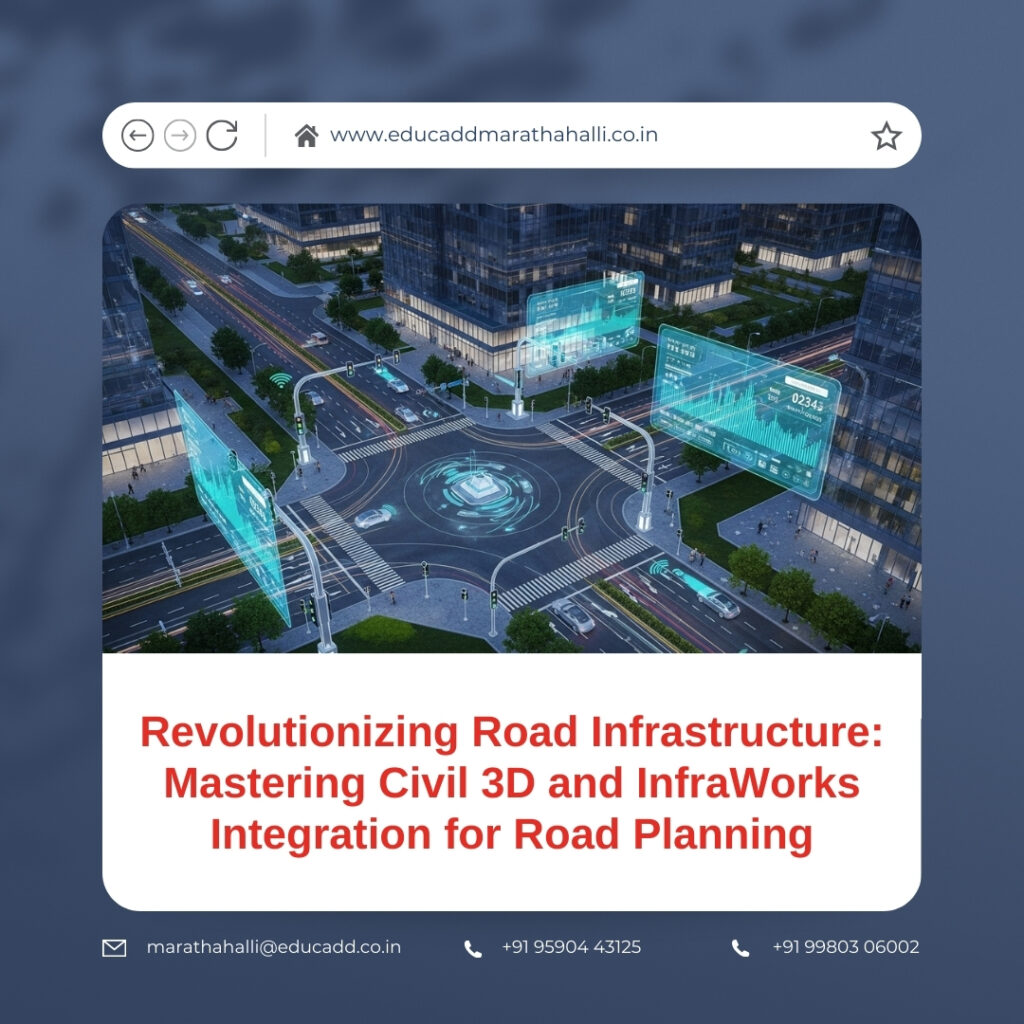
Civil 3D InfraWorks Integration
Civil 3D: The Backbone of Precise Road Design
Civil 3D has become a cornerstone of modern civil engineering. Its robust toolset allows engineers to design corridors, road alignments, grading surfaces, and complex intersections with exceptional accuracy. Integrating Civil 3D with InfraWorks emphasizes precise measurements, automated calculations, and strict adherence to industry standards. The software also enables engineers to create detailed documentation, including cross-sections, plan sheets, and material estimates, which play a crucial role in executing large-scale infrastructure projects. Its strength lies in turning conceptual road ideas into tangible engineering models that meet local regulations, safety standards, and project specifications.
InfraWorks: Bringing Road Designs to Life
InfraWorks complements Civil 3D by emphasizing conceptual design, visualization, and early-stage planning. While Civil 3D delivers technical precision, InfraWorks creates realistic 3D representations of road networks in their actual environments. Planners can overlay terrain data, simulate traffic patterns, and visually assess environmental constraints. InfraWorks helps stakeholders understand how a project interacts with existing infrastructure, topography, and natural features. By integrating Civil 3D with InfraWorks, designers combine accuracy with visualization, giving a complete picture of road projects before construction begins.
The Importance of an Integrated Workflow
Traditional road planning workflows often involve multiple disjointed software platforms. Engineers manually export and import data between programs, which can lead to errors, redundant effort, and miscommunication. Integrating Civil 3D with InfraWorks eliminates these challenges by creating a synchronized workflow. Detailed engineering data from Civil 3D can be visualized in InfraWorks, while conceptual adjustments made in InfraWorks can be fed back into Civil 3D. This continuous feedback loop ensures all teams work with consistent, up-to-date information, reducing errors and enhancing efficiency. It also enables collaborative design, as multiple disciplines can contribute seamlessly to the same project environment.
How Civil 3D and InfraWorks Integration Functions
The integration process involves importing and exporting model data between Civil 3D and InfraWorks, often facilitated by Autodesk’s interoperability tools. Alignments, corridors, surfaces, and grading from Civil 3D can be directly brought into InfraWorks. Within InfraWorks, these elements can be visualized, adjusted, and tested under real-world conditions. Any modifications can be exported back to Civil 3D for precise engineering adjustments. This bidirectional workflow ensures that changes made at either the conceptual or technical stage remain synchronized, minimizing data loss and streamlining design iteration.
Unlocking Visualization Advantages
InfraWorks excels at visualizing road networks in realistic settings. Engineers can simulate terrain, traffic, vegetation, and hydrological impacts on proposed roads. By integrating Civil 3D with InfraWorks for road planning, these visualizations become rooted in accurate engineering models. Designers can predict how earthworks, grading, and drainage will interact with the natural landscape. Stakeholders gain a tangible understanding of project implications, enabling informed decision-making and early conflict resolution. The ability to combine precision with visual realism reduces costly redesigns and enhances communication with clients, governments, and the public.
Accuracy Through Civil 3D Data
Precision is critical in road design, and Civil 3D ensures that all alignments, profiles, and cross-sections adhere to exact engineering standards. This level of detail is invaluable when models are imported into InfraWorks. Accurate Civil 3D data allows planners to simulate earthworks, slope stability, and corridor behavior without relying on estimations. Furthermore, any changes made in Civil 3D automatically update in InfraWorks, maintaining a high degree of accuracy across all design iterations. This integration fosters confidence in engineering decisions, reduces errors, and streamlines project workflows.
Collaboration Across Teams
Road projects are inherently multidisciplinary, involving civil engineers, surveyors, urban planners, environmental analysts, and construction managers. Integrating Civil 3D with InfraWorks enables these teams to collaborate effectively. Civil engineers can focus on technical calculations, while planners explore design alternatives and evaluate environmental impacts. Stakeholders can view interactive 3D models and provide input early in the design process. This collaborative environment enhances efficiency, minimizes misunderstandings, and ensures that all parties are aligned toward a common project vision. A unified workflow facilitates faster approvals and better communication throughout the project lifecycle.
Reducing Time and Costs
Integrating Civil 3D with InfraWorks cuts project timelines and lowers overall costs. Engineers spend less time manually transferring data and more time optimizing designs. Early-stage visualizations help them identify potential issues, preventing costly construction mistakes. By streamlining workflows, removing redundant tasks, and improving accuracy, teams complete projects faster and stay within budget. This efficiency benefits both engineers and clients while supporting better resource management, making road planning more sustainable and cost-effective.
Scenario-Based Design and Analysis
InfraWorks offers powerful scenario-based design capabilities that enhance decision-making. Planners can create multiple alignment options, simulate traffic volumes, and assess environmental constraints for each alternative. Integrating Civil 3D ensures these scenarios rely on precise engineering data, allowing realistic simulations. Scenario planning helps teams evaluate trade-offs, select optimal routes, and anticipate construction challenges. This approach promotes data-driven decisions, reduces risks, and improves the sustainability and feasibility of road infrastructure projects.
Handling Large and Complex Data
Road planning projects often involve massive datasets, including topographical surveys, GIS layers, hydrology data, and traffic simulations. Integrating Civil 3D with InfraWorks allows engineers to manage and analyze these datasets efficiently. Civil 3D organizes detailed engineering models, while InfraWorks provides intuitive visualization and scenario testing. This combination simplifies the management of complex data and ensures consistent project documentation. Engineers can make informed decisions with confidence, reduce errors, and maintain data integrity across every stage of the project.
Environmental Planning and Sustainability
Modern road projects must carefully consider environmental impact. InfraWorks provides tools for watershed analysis, vegetation modeling, and terrain interaction studies. Integrating these tools with Civil 3D data allows engineers to simulate erosion, stormwater runoff, and earthwork requirements with high precision. This integration lets teams incorporate environmental factors from the earliest design stages, supporting sustainable planning and regulatory compliance. By spotting potential environmental challenges early, planners can develop strategies to minimize ecological disruption and ensure long-term project sustainability.
Lessons From Real-World Projects
Several large-scale infrastructure projects worldwide highlight the advantages of integrating Civil 3D with InfraWorks. Urban highways, expressways, and rural road networks have leveraged this integration to enhance workflow efficiency and reduce costs. Case studies show improved design accuracy, faster project delivery, and better stakeholder engagement. By learning from these real-world applications, engineers can adopt proven methods, anticipate challenges, and implement best practices. The success of these projects underscores the transformative impact of combining Civil 3D precision with InfraWorks visualization.
Best Practices for Seamless Integration
To maximize the benefits of integration, teams should follow best practices. They should maintain consistent coordinate systems, use standardized data naming conventions, and validate models before transferring them. Frequent synchronization between Civil 3D and InfraWorks keeps updates accurate. Applying templates, pre-configured styles, and automated workflows further boosts efficiency. Providing training and clear documentation ensures all team members understand the workflow and can fully leverage the software’s capabilities. These practices reduce errors, streamline collaboration, and accelerate project completion.
Overcoming Common Integration Challenges
While the integration of Civil 3D and InfraWorks offers numerous advantages, challenges exist. Large datasets can strain computing resources, version conflicts may occur, and file compatibility must be managed carefully. Addressing these challenges requires clear data protocols, regular backups, and investment in high-performance hardware. By anticipating potential issues and implementing proactive strategies, teams can maintain smooth operations and fully leverage the benefits of integration. Effective planning ensures that integration enhances productivity rather than creating obstacles.
The Future of Road Planning
The future of road infrastructure design closely ties to software integration. Combining Civil 3D and InfraWorks marks a stepping stone toward more advanced workflows, including cloud-based collaboration, AI-assisted design, and BIM for infrastructure. Integration allows engineers to perform predictive modeling, detect conflicts automatically, and engage stakeholders more effectively. Engineers who adopt these technologies gain a competitive edge, delivering projects faster, smarter, and more sustainably. As the industry evolves, mastering integration will become a standard requirement for achieving excellence in road planning.
Conclusion
Civil 3D InfraWorks Integration for road planning represents a paradigm shift in infrastructure development. It merges technical precision with visual realism, fosters collaboration, reduces costs, and improves decision-making. By leveraging this integration, engineers and planners can manage complex projects more efficiently, anticipate challenges, and deliver sustainable, high-quality roads. This synergy between design and visualization tools ensures that every stage of road planning, from conceptual modeling to construction-ready designs, is optimized. The combination of Civil 3D and InfraWorks is redefining how roads are planned, designed, and executed, paving the way for smarter, more efficient infrastructure projects.

