
From Classroom to Construction Site: Transform Your Career with BIM Training and Real-Time Project Experience
The construction industry is no longer limited to blueprints and manual processes. It has evolved into a highly digital, collaborative environment where precision, efficiency, and innovation define success. At the center of this transformation lies Building Information Modeling (BIM), a technology that is reshaping how buildings and infrastructure are designed, executed, and maintained. For students and professionals aiming to build a successful future in this industry, BIM Training Real Projects has become a crucial stepping stone.
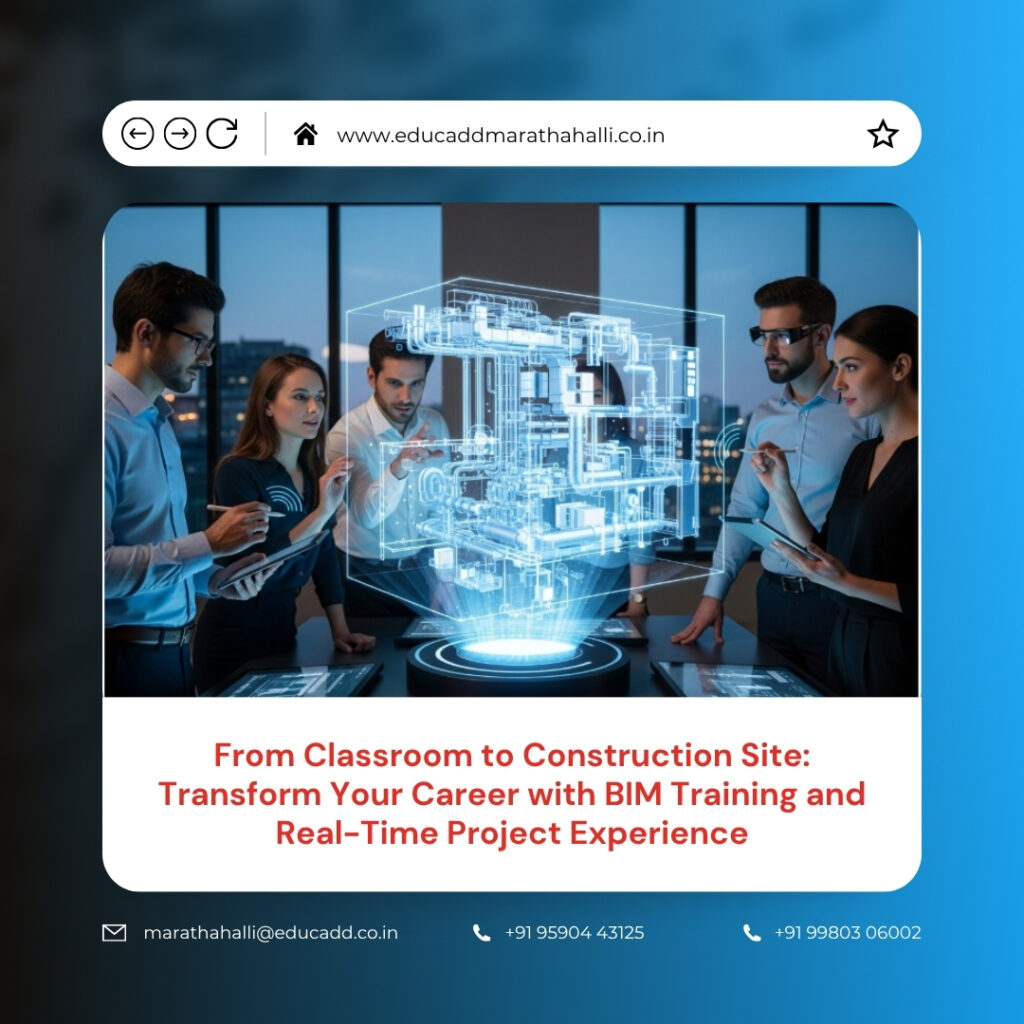
BIM Training Real Projects
This blog provides a detailed and refreshed perspective on how BIM training, combined with hands-on project exposure, can significantly enhance your career prospects. It explains the importance of practical learning, highlights industry expectations, and demonstrates how real-time experience prepares you for actual job roles. Whether you are a civil engineer, architect, or aspiring construction professional, understanding BIM Training Real Projects will set you apart in a competitive market.
1. Understanding BIM in the Modern Construction Landscape
Building Information Modeling is more than just a design tool; it is an intelligent process that integrates data, design, and collaboration into a unified digital environment. It allows professionals to create detailed 3D models that carry information about every component of a project, from materials to timelines.
In today’s construction ecosystem, BIM plays a vital role in improving communication among stakeholders. It ensures that everyone involved in a project works with accurate and updated information. This reduces confusion, minimizes errors, and enhances overall productivity. As the industry continues to adopt digital solutions, BIM has become an essential skill for professionals seeking long-term growth.
2. Why BIM Skills Are in High Demand Globally
The demand for BIM professionals has increased significantly as governments and private organizations adopt digital construction practices. Many countries now require BIM implementation for large-scale infrastructure projects, making it a standard rather than an option.
This growing demand creates a wide range of job opportunities for trained individuals. Companies prefer candidates who have both technical knowledge and practical experience in BIM workflows. As urban development continues to expand, professionals with BIM expertise are expected to play a key role in shaping modern cities.
3. The Importance of Real-Time Projects in BIM Learning
Learning BIM concepts through theory alone does not provide a complete understanding of how the technology works in real scenarios. Real-time projects offer a practical learning environment where students can apply their knowledge to actual construction challenges.
These projects simulate real industry conditions, allowing learners to experience workflows, coordination, and problem-solving in a realistic setting. By working on live assignments, students gain valuable insights into how BIM is used across different stages of a project, from design to execution.
4. Connecting Academic Knowledge with Practical Application
One of the biggest challenges faced by students is translating classroom knowledge into real-world skills. BIM training that includes real-time projects helps bridge this gap effectively. It enables learners to understand how theoretical concepts are applied in practical situations.
Through hands-on experience, students become familiar with industry standards, project requirements, and coordination techniques. This practical exposure enhances their ability to handle complex tasks and prepares them for professional roles in the construction industry.
5. Essential Skills Developed Through BIM Training
BIM training helps learners develop a diverse set of skills that are essential for success in the construction field. These skills go beyond technical knowledge and include problem-solving, communication, and teamwork.
- Advanced 3D modeling and visualization techniques
- Effective coordination and collaboration strategies
In addition to these, learners gain expertise in data management, project planning, and software usage. These skills make them highly valuable to employers and increase their chances of securing rewarding job roles.
6. Software Tools That Shape BIM Expertise
A comprehensive BIM training program introduces learners to industry-standard software tools that are widely used in construction projects. These tools enable professionals to design, analyze, and manage building information efficiently.
Popular software includes Autodesk Revit, Navisworks, and AutoCAD. Mastering these tools allows learners to create accurate models, detect clashes, and streamline project workflows. Proficiency in these applications is often a key requirement for BIM-related job roles.
7. Building Confidence Through Hands-On Experience
Confidence is an important factor in professional success, and it can only be developed through practical experience. Real-time BIM projects provide learners with opportunities to work on actual scenarios, helping them build confidence in their abilities.
By handling real challenges, meeting deadlines, and collaborating with teams, students develop a strong understanding of project dynamics. This experience not only boosts their confidence but also prepares them to perform effectively in a professional environment.
8. Industry-Oriented Curriculum for Career Readiness
An effective BIM training program is designed to meet industry requirements. It includes modules that cover design, modeling, coordination, and project management. The curriculum is structured to provide both theoretical knowledge and practical exposure.
Such programs ensure that learners stay updated with the latest trends and technologies. They also help students develop a comprehensive understanding of BIM processes, making them ready to take on real-world challenges.
9. Diverse Career Paths After BIM Training
BIM training opens doors to a variety of career opportunities in construction, architecture, and engineering. Professionals can choose roles based on their interests and expertise.
- BIM Modeler
- BIM Coordinator
Other career options include BIM Manager, Design Engineer, and Project Consultant. These roles offer excellent growth potential and competitive salaries, making BIM a promising career choice.
10. Enhancing Project Efficiency with BIM Technology
One of the key advantages of BIM is its ability to improve project efficiency. By providing accurate and detailed information, it helps teams identify potential issues before construction begins.
This proactive approach reduces delays, minimizes costs, and ensures better project outcomes. BIM also enhances communication and coordination, leading to smoother project execution and higher client satisfaction.
11. Supporting Sustainable and Smart Construction
Sustainability has become a major focus in the construction industry, and BIM plays a crucial role in achieving it. It allows professionals to analyze energy consumption, material usage, and environmental impact during the design phase.
By optimizing these factors, BIM helps create eco-friendly and cost-effective structures. This not only benefits the environment but also adds value to projects by reducing long-term operational costs.
12. Benefits of Learning BIM with Real-World Exposure
BIM training that includes real-time projects offers several advantages over traditional learning methods. It provides a deeper understanding of concepts and prepares learners for real-world challenges.
Students gain hands-on experience, develop practical skills, and build confidence in their abilities. This combination of knowledge and experience makes them highly attractive to employers and increases their chances of career success.
13. Choosing the Right BIM Training Program
Selecting the right training program is essential for achieving your career goals. It is important to choose an institute that offers practical exposure, experienced trainers, and an updated curriculum.
Look for programs that include real-time projects and provide placement assistance. These factors ensure that you receive quality training and have better opportunities to secure a job in the industry.
14. Future Trends and Opportunities in BIM
The future of BIM is bright, with continuous advancements in technology driving its growth. Integration with artificial intelligence, virtual reality, and cloud computing is expected to enhance its capabilities further.
As the construction industry continues to evolve, BIM professionals will remain in high demand. Those who invest in learning BIM with real-time project experience will be well-positioned to take advantage of emerging opportunities.
Conclusion
BIM Training Real Projects is a powerful way to build a successful and future-ready career in the construction industry. It combines technical knowledge with practical experience, ensuring that learners are fully prepared for professional challenges. As the industry continues to embrace digital transformation, the demand for skilled BIM professionals will only increase.
By choosing the right training program and gaining hands-on experience, you can unlock a wide range of career opportunities and achieve long-term success. BIM is not just a skill; it is a gateway to innovation, growth, and excellence in the modern construction world.

