
Mastering End-to-End Project Execution Through BIM-Driven Phase Management
The construction and infrastructure industry has entered a phase where complexity, speed, and accountability define success. Projects now involve multiple stakeholders, tighter deadlines, advanced technologies, and increasing sustainability expectations. In this environment, traditional project management methods struggle to keep pace. Disconnected drawings, fragmented communication, and delayed decision-making often result in cost overruns and schedule delays. This challenge has driven the widespread adoption of BIM Project Phase Management, commonly known as BIM.
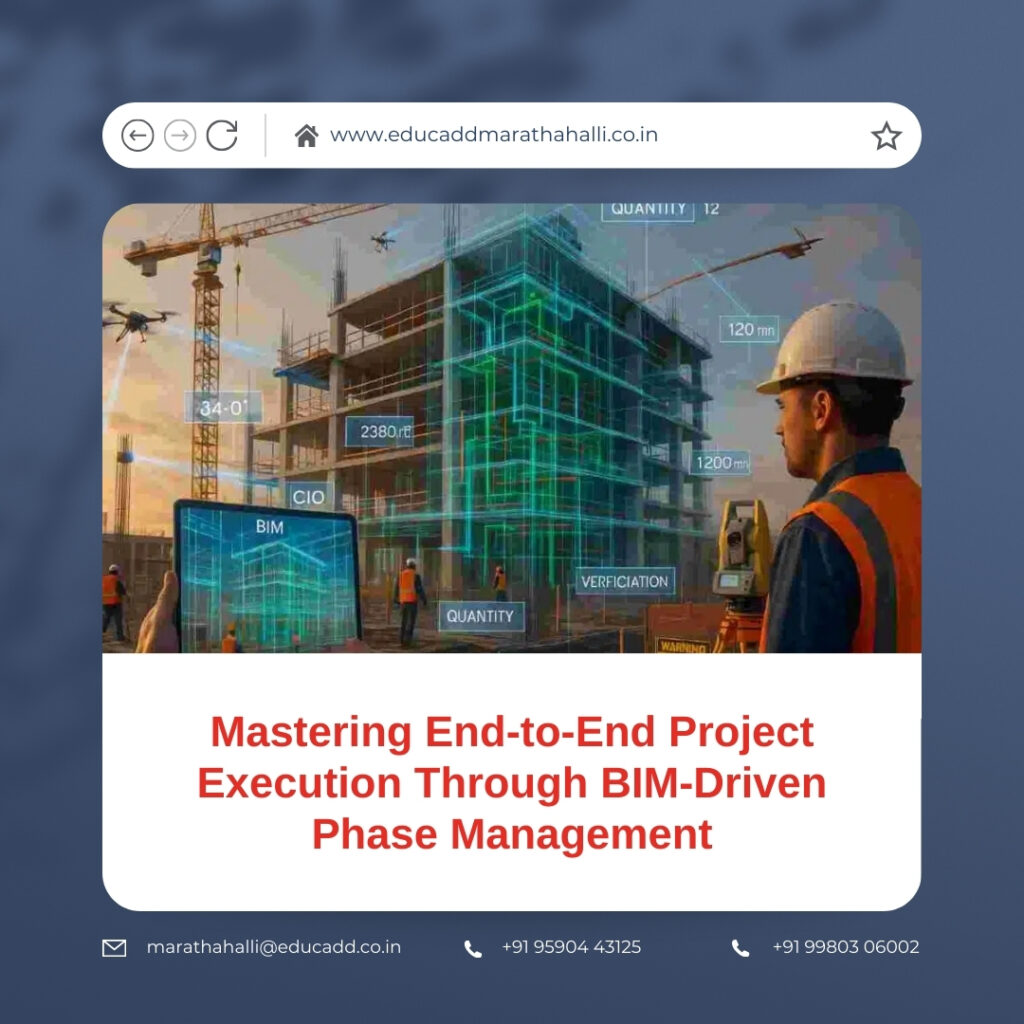
BIM Project Phase Management
Managing project phases using BIM software is no longer a forward-looking idea—it is a practical necessity. BIM Project Phase Managementintroduces a structured, data-centric approach that supports planning, design, construction, and operations within a single digital ecosystem. Instead of reacting to problems as they arise, teams gain the ability to anticipate challenges, test solutions, and maintain control throughout the project lifecycle. This blog explores how BIM software enables seamless management of each project phase, ensuring clarity, collaboration, and consistency from concept to completion.
1. BIM as a Strategic Framework for Lifecycle-Based Project Management
BIM is best understood as a strategic framework rather than a standalone technology. At its core, BIM software creates a centralized digital model that contains both graphical and non-graphical information. This model evolves as the project progresses, making it an ideal tool for managing project phases in a structured manner.
When project teams rely on BIM, they move away from isolated workflows. Instead, they adopt a lifecycle-based approach where decisions made in early phases influence outcomes in later stages. This continuity allows teams to maintain design intent, control costs, and align construction activities with operational goals. As a result, BIM becomes the foundation for integrated project delivery.
2. Concept Initiation Phase: Translating Ideas into Digital Intelligence
Every project begins with an idea, but transforming that idea into a viable plan requires clarity and validation. BIM software supports the concept initiation phase by enabling rapid visualization and feasibility analysis. Stakeholders can explore multiple design scenarios without committing excessive time or resources.
By managing project phases using BIM software at this early stage, teams gain insight into site conditions, spatial requirements, and regulatory constraints. Conceptual models help decision-makers understand the implications of design choices before finalizing project direction. This proactive evaluation reduces uncertainty and establishes a strong strategic base for the project.
3. Schematic Design Phase: Building Alignment Across Disciplines
The schematic design phase focuses on refining the project concept and establishing overall layout and systems. BIM software enhances this phase by allowing architects, engineers, and consultants to work within a shared digital environment. This collaborative process improves alignment and minimizes misinterpretation.
Instead of exchanging static drawings, teams interact with a dynamic model that reflects real-time updates. Managing project phases using BIM software ensures that design intent remains consistent while accommodating feedback from all stakeholders. This coordinated approach reduces revisions and accelerates design approval.
4. Design Coordination Phase: Eliminating Conflicts Before Construction
One of the most critical advantages of BIM emerges during design coordination. BIM software integrates architectural, structural, and MEP systems into a single model, enabling advanced clash detection. This capability allows teams to identify conflicts early and resolve them digitally.
By addressing issues before construction begins, project teams avoid costly delays and on-site modifications. Managing project phases using BIM software at this stage improves constructability and builds confidence among stakeholders. The result is a design that is both efficient and practical to execute.
5. Detailed Design Phase: Enhancing Accuracy and Technical Precision
The detailed design phase transforms coordinated concepts into construction-ready information. BIM software supports this transition by enabling precise modeling of components, materials, and assemblies. Every element within the model carries accurate data that supports fabrication and installation.
Managing project phases using BIM software during detailed design improves documentation quality and reduces ambiguity. Contractors benefit from clear, consistent information that supports efficient execution. This level of precision strengthens the link between design and construction.
6. Pre-Construction Planning Phase: Aligning Time, Cost, and Resources
Pre-construction planning sets the stage for successful execution. BIM software integrates schedule and cost data into the model, creating a comprehensive planning tool. This integration allows teams to simulate construction sequences and evaluate resource allocation.
By managing project phases using BIM software in pre-construction, project managers gain greater visibility into potential risks. They can assess the impact of design changes on time and budget before work begins. This foresight improves planning accuracy and enhances stakeholder confidence.
7. Procurement Phase: Supporting Informed Material and Vendor Decisions
Procurement decisions influence both cost and quality. BIM software supports this phase by providing accurate quantity take-offs directly from the model. This data improves material estimation and reduces waste.
Managing project phases using BIM software ensures that procurement aligns with design intent and construction timelines. Suppliers and vendors receive precise specifications, reducing errors and delays. This structured approach strengthens supply chain coordination and supports timely delivery.
8. Construction Execution Phase: Translating Digital Models into Physical Reality
During construction, BIM software becomes an operational tool that guides daily activities. Site teams use the model to understand sequencing, installation details, and spatial relationships. This clarity improves productivity and reduces errors.
Managing project phases using BIM software during construction enhances communication between office and site teams. Updates flow seamlessly, ensuring that everyone works with the latest information. This real-time coordination improves safety, quality, and efficiency on site.
9. Schedule Control Phase: Visualizing Progress Through 4D BIM
Time management remains a critical challenge in construction projects. BIM software addresses this challenge through 4D modeling, which links project schedules to the digital model. This visual representation improves understanding of construction sequences.
By managing project phases using BIM software for schedule control, teams can monitor progress and identify potential delays early. Adjustments can be made proactively, ensuring that timelines remain realistic and achievable. This visual approach enhances collaboration and accountability.
10. Cost Monitoring Phase: Maintaining Financial Transparency
Cost overruns often result from delayed information and fragmented tracking. BIM software supports continuous cost monitoring by linking quantities and activities to budget data. This integration provides real-time insight into financial performance.
Managing project phases using BIM software for cost control improves decision-making and accountability. Project managers can evaluate the financial impact of changes immediately, reducing uncertainty and protecting profitability. This transparency strengthens trust among stakeholders.
11. Quality Assurance Phase: Ensuring Consistency and Compliance
Quality assurance requires consistent standards and reliable documentation. BIM software supports quality control by maintaining accurate records of design intent, specifications, and approvals. Teams can verify compliance at every stage.
Managing project phases using BIM software enhances traceability and reduces rework. Inspections become more efficient, and issues are resolved systematically. This structured approach ensures that the final outcome meets both regulatory and client expectations.
12. Sustainability and Performance Analysis Phase
Sustainability considerations influence long-term project value. BIM software enables energy analysis, material optimization, and performance simulations. These insights support environmentally responsible decision-making.
By managing project phases using BIM software with sustainability in focus, teams can reduce environmental impact while improving operational efficiency. This integration supports green building goals and enhances asset performance over time.
13. Handover Phase: Delivering Digital Value Beyond Construction
The handover phase marks the transition from construction to operation. BIM software simplifies this process by consolidating as-built information, asset data, and maintenance requirements into a single model.
Managing project phases using BIM software ensures a smooth and transparent handover. Owners receive accurate, actionable information that supports facility management. This digital continuity adds long-term value to the project.
14. Operations and Asset Management Phase: Extending BIM Across the Building Lifecycle
BIM continues to deliver benefits long after construction is complete. Facility managers use the BIM model to manage assets, plan maintenance, and optimize space utilization. This data-driven approach improves operational efficiency.
By managing project phases using BIM software beyond completion, organizations maximize return on investment. The model evolves into a living digital asset that supports informed decisions throughout the facility’s lifecycle.
Conclusion
Managing project phases using BIM Project Phase Management a fundamental shift in how projects are delivered and managed. BIM replaces fragmented workflows with an integrated, data-driven approach that enhances collaboration, accuracy, and control. From early planning to long-term operations, BIM supports informed decision-making at every stage.
As projects grow more complex and expectations rise, BIM stands out as a critical enabler of success. Organizations that adopt BIM-driven phase management gain resilience, efficiency, and competitive advantage. In an industry defined by precision and performance, BIM is no longer optional—it is the future of project management.

