
Build with Precision: Mastering Your Future with a BIM Course for Civil Engineers
Civil engineers shape cities, bridges, and infrastructures that define a nation’s progress. Yet, as projects grow complex, the need for advanced tools to manage, design, and execute them becomes crucial. This is why enrolling in a BIM course for civil engineers is no longer optional but a strategic move for career advancement.
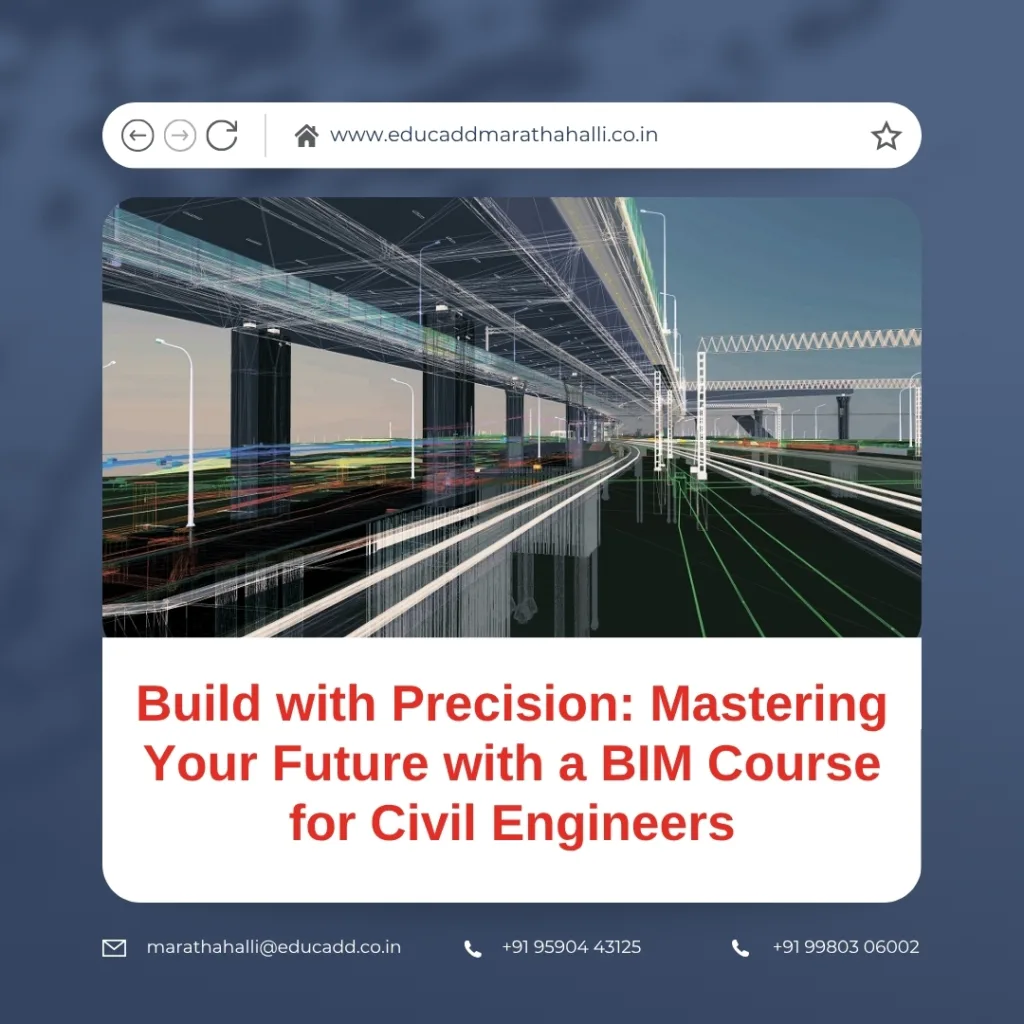
BIM course for civil engineers mastering design skills
BIM, or Building Information Modeling, enables engineers to visualize and manage construction projects with accuracy. It integrates every detail of a project—design, cost, time, and sustainability—into a collaborative digital environment, ensuring minimal rework and efficient execution. For engineers eager to stay relevant and in demand, gaining expertise in BIM will transform your workflow and open new opportunities in India’s fast-growing infrastructure sector.
The Rising Demand for BIM in Construction
While traditional CAD tools provide visual representations, BIM takes project management to a different level. It allows engineers to simulate a building’s performance before construction begins. Moreover, it helps identify design conflicts early, enabling corrective measures before they escalate into expensive mistakes.
Across India, large construction firms are actively adopting BIM to enhance accuracy and collaboration in projects. Government agencies and private infrastructure companies now prefer engineers who can handle BIM workflows. As the need for sustainable and smart city projects grows, the demand for BIM-trained engineers will only increase. Therefore, a BIM course for civil engineers is a proactive investment to align with these emerging demands.
Additionally, BIM’s data-rich environment enables quantity take-off, cost estimation, and project phasing, which improves communication between stakeholders. Since engineers can track each stage virtually, it becomes easier to stick to deadlines and budgets, leading to client satisfaction and project success.
Core Skills You Gain from a BIM Course for Civil Engineers
When you enroll in a BIM course for civil engineers, you gain practical and technical knowledge that allows you to manage complex projects confidently. Here is what you typically learn:
-
BIM Principles: Understanding the workflow differences between CAD and BIM and how it improves collaboration.
-
Software Proficiency: Training on tools like Autodesk Revit, Navisworks, Civil 3D, and BIM 360 for real-world applications.
-
Modeling and Documentation: You will learn to create accurate 3D models and generate detailed documentation required for approvals and construction.
-
Clash Detection: Identifying and resolving design conflicts before execution to save costs and time.
-
4D and 5D BIM Integration: Linking project timelines and budgets with the models for effective project management.
-
Sustainability Assessments: Using BIM for environmental simulations and energy analysis to ensure green compliance.
-
Practical Projects: Most courses involve live projects, allowing you to apply concepts practically and gain confidence.
With these skills, you can contribute actively to projects, reduce errors, and handle the complexities of modern construction environments with ease.
Career Opportunities After Completing a BIM Course for Civil Engineers
Today’s infrastructure projects demand engineers who can manage designs, costs, timelines, and sustainability metrics efficiently. Completing a BIM course for civil engineers qualifies you for a range of promising roles such as:
-
BIM Modeler
-
BIM Coordinator
-
BIM Engineer
-
Project Engineer with BIM specialization
-
Design Engineer with BIM expertise
Moreover, the BIM skillset is globally relevant, providing you the opportunity to work on international projects remotely or abroad. Even within India, metro rail projects, smart city developments, and large-scale infrastructure works require engineers with BIM expertise.
Additionally, professionals with BIM certification often receive higher pay packages compared to their non-certified peers. Whether you wish to secure a role in a reputed construction firm, work with government projects, or pursue freelance BIM modeling, this skill significantly enhances your employability and earning potential.
Choosing the Right BIM Course for Civil Engineers
With various options available, selecting the right BIM course for civil engineers can feel challenging. However, considering the following factors will help you choose wisely:
-
Comprehensive Curriculum: Ensure that the course covers essentials such as Revit, Navisworks, project simulation, and BIM documentation aligned with the latest industry practices.
-
Practical Application: Look for programs offering hands-on project simulations to strengthen your learning.
-
Experienced Mentors: Trainers with practical experience in handling BIM projects can share real-world insights, preparing you for industry challenges.
-
Flexible Timings: Working professionals can opt for weekend or online classes to balance work and learning.
-
Placement Support: Institutes with strong industry connections help you secure internships and job placements upon course completion.
Additionally, check reviews, alumni testimonials, and the success rate of the institute’s placements to ensure your investment delivers the best return.
Take the First Step Toward a Future-Ready Career
Whether you are a final-year student or a professional in the civil engineering sector, starting a BIM course for civil engineers will help you stay ahead in a competitive market. While the learning curve may seem challenging initially, structured training and practical exposure will help you master the tools quickly.
Once you develop proficiency in BIM, you can handle design management, cost estimation, and project scheduling seamlessly, making your role vital in any project. Moreover, your skillset will allow you to contribute actively to sustainable design practices, a key focus area in today’s construction industry.
As India continues to advance its infrastructure landscape, engineers equipped with BIM will be in demand to lead projects, ensuring quality and efficiency. Therefore, taking the initiative now will position you for leadership roles in the near future.
Final Thoughts
A BIM Course Civil Engineers is not just about learning software; it is about transforming how you approach your projects, improving your efficiency, and expanding your career possibilities. From reducing project risks to enhancing collaboration and delivering quality results, BIM empowers you to excel in your field.
If you want to future-proof your engineering career and stay aligned with industry demands, now is the perfect time to enroll in a BIM course for civil engineers. By doing so, you will gain the technical knowledge and practical confidence required to contribute meaningfully to India’s growing infrastructure sector and beyond.

