
AI-Driven Digital Marketing: Unlocking Smarter Growth in a Data-First World
Artificial Intelligence is reshaping the way brands communicate, compete, and convert in the digital ecosystem. What once relied heavily on intuition and manual execution is now powered by intelligent systems that analyze, predict, and automate marketing activities with remarkable precision. As businesses face increasing pressure to deliver personalized experiences and measurable results, AI Driven Digital Marketing has emerged as a powerful ally in crafting high-impact strategies.
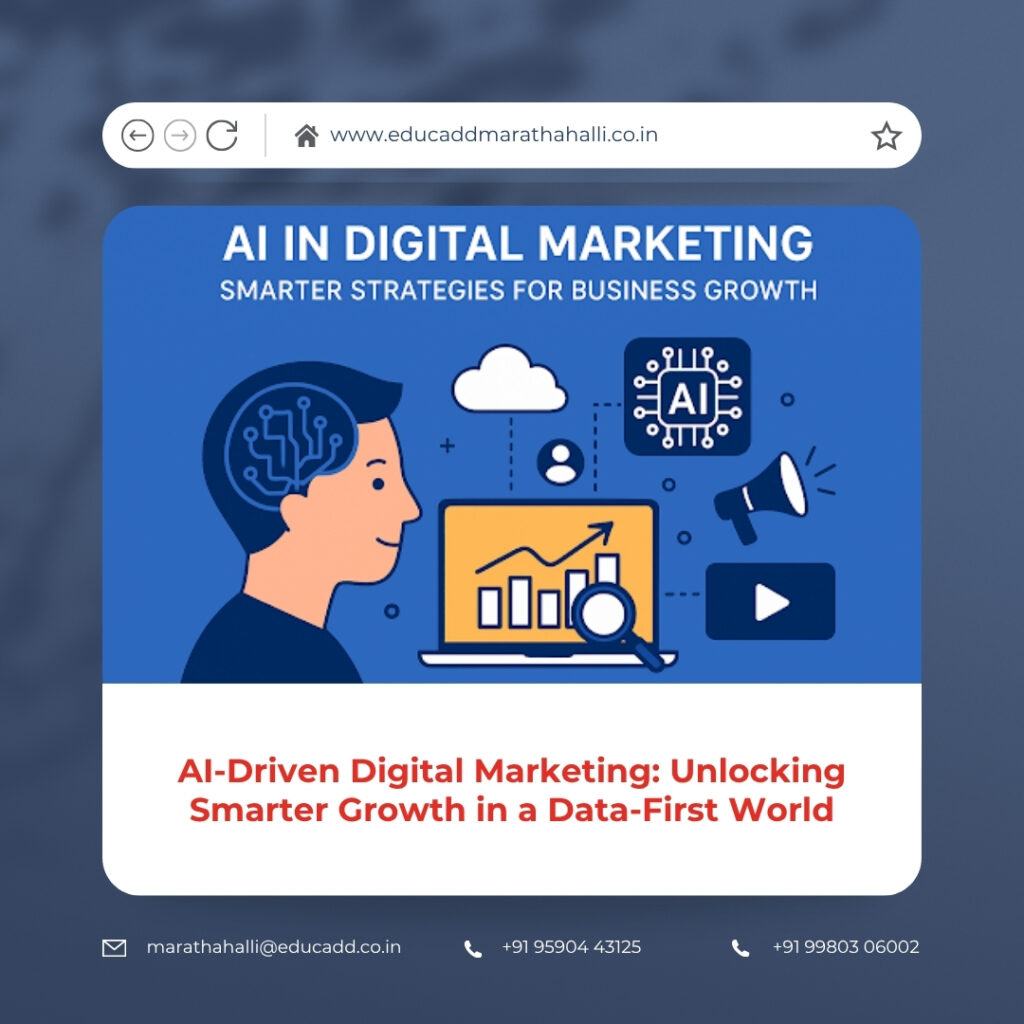
AI Driven Digital Marketing
In today’s fast-moving environment, consumers expect relevance, speed, and value at every touchpoint. AI Driven Digital Marketing helps marketers meet these expectations by turning raw data into actionable insights and automating complex processes. From enhancing customer journeys to optimizing campaigns in real time, AI is no longer optional—it is essential. This comprehensive blog explores how AI is transforming digital marketing strategies and why businesses must embrace it to stay ahead.
1. The Evolution of Digital Marketing Through AI
Digital marketing has undergone a massive transformation over the years, and AI is at the center of this evolution. Earlier, marketers relied on traditional methods such as mass advertising and broad targeting. However, AI has introduced a more refined approach that focuses on precision and personalization.
With AI, marketers can analyze user data, track behavior patterns, and create targeted campaigns that deliver better outcomes. This shift allows businesses to move away from guesswork and adopt data-backed strategies that improve efficiency. As a result, digital marketing has become more intelligent, responsive, and results-oriented.
2. How AI Enhances Data Analysis and Customer Understanding
Data plays a critical role in digital marketing, and AI takes data analysis to the next level. Businesses generate vast amounts of information from websites, social media, and customer interactions. AI processes this data quickly and identifies trends that may not be visible through manual analysis.
By understanding customer preferences, behaviors, and interests, marketers can design campaigns that truly resonate with their audience. AI enables deeper segmentation, allowing businesses to tailor messages for specific groups. This level of understanding leads to better engagement and stronger customer relationships.
3. Personalization: The Core Strength of AI Marketing
Personalization has become a defining factor in successful marketing strategies, and AI makes it scalable. Instead of delivering generic content, businesses can now create experiences tailored to individual users.
AI analyzes browsing habits, purchase history, and engagement patterns to provide personalized recommendations. Whether it is a product suggestion, email content, or website layout, AI ensures that each user receives relevant information. This approach enhances customer satisfaction and increases conversion rates significantly.
4. AI-Powered Content Creation and Strategy Development
Content remains a key component of digital marketing, and AI is transforming how it is created and optimized. Marketers can use AI tools to generate ideas, draft content, and refine messaging for better impact.
AI also helps identify trending topics and high-performing keywords, ensuring that content stays relevant and competitive. By analyzing audience behavior, AI suggests improvements in tone, structure, and readability. This not only saves time but also improves the overall quality of content.
5. Conversational Marketing with AI Chatbots
AI-powered chatbots have revolutionized the way businesses interact with customers. They provide instant responses, assist users with queries, and guide them through the buying process seamlessly.
- Chatbots ensure round-the-clock customer support without delays
- They streamline communication and improve user experience
By integrating chatbots into websites and messaging platforms, businesses can engage customers effectively and enhance satisfaction levels. This form of conversational marketing builds trust and encourages conversions.
6. Predictive Analytics: Anticipating Customer Behavior
Predictive analytics is one of the most powerful applications of AI in digital marketing. It uses historical data to forecast future actions and trends. Marketers can anticipate customer needs, identify potential leads, and plan campaigns accordingly.
This proactive approach allows businesses to stay ahead of the competition. Instead of reacting to trends, marketers can act on insights before they fully develop. Predictive analytics improves decision-making and maximizes return on investment.
7. Transforming Social Media Marketing with AI
Social media platforms are rich sources of data, and AI helps marketers extract valuable insights from them. AI tools analyze user interactions, engagement metrics, and content performance to guide strategy.
Marketers can identify the best times to post, understand audience preferences, and create content that drives engagement. AI also monitors brand mentions and sentiment, helping businesses manage their online reputation effectively. This makes social media marketing more strategic and impactful.
8. Smarter Email Marketing Through AI Integration
Email marketing continues to deliver strong results, and AI enhances its effectiveness. By analyzing user behavior, AI enables businesses to send personalized and timely emails that capture attention.
- AI optimizes subject lines to improve open rates
- It determines the best time to send emails for maximum engagement
These improvements lead to higher click-through rates and better conversions. AI ensures that email campaigns are relevant, targeted, and efficient.
9. AI in Digital Advertising and Campaign Optimization
Digital advertising has become more efficient with the integration of AI. Advertising platforms use AI algorithms to deliver ads to users based on their interests and online behavior.
Marketers can monitor campaign performance in real time and make necessary adjustments instantly. AI helps optimize budgets, refine targeting, and improve ad placements. This reduces unnecessary spending and ensures better results from advertising efforts.
10. Voice Search and AI: A Growing Trend
Voice search is gaining popularity as more users rely on voice-enabled devices. AI plays a crucial role in understanding and processing voice queries, which are often conversational in nature.
To adapt to this trend, marketers must focus on natural language and user intent. Optimizing content for voice search helps businesses remain visible in search results. As this technology continues to grow, it will become an integral part of digital marketing strategies.
11. Search Engine Optimization in the Age of AI
Search engines are increasingly using AI to deliver accurate and relevant results. This has changed how SEO strategies are developed and implemented. Marketers must now focus on creating high-quality content that aligns with user intent.
AI tools assist in keyword research, competitor analysis, and content optimization. They provide insights that help improve search rankings and visibility. By leveraging AI, businesses can stay competitive in the ever-changing SEO landscape.
12. Marketing Automation for Efficiency and Scale
AI-driven automation has simplified many aspects of digital marketing. Tasks such as email campaigns, social media scheduling, and performance tracking can be handled automatically.
This allows marketers to focus on creative and strategic activities. Automation increases efficiency, reduces errors, and enables businesses to scale their marketing efforts without additional resources. It also ensures consistency across all marketing channels.
13. Challenges and Ethical Considerations of AI in Marketing
While AI offers numerous benefits, it also presents certain challenges. Businesses must invest in the right tools and ensure that their teams are trained to use them effectively. Data privacy and security are also major concerns that must be addressed.
Ethical use of AI is essential to maintain customer trust. Companies must be transparent about how they collect and use data. By addressing these challenges, businesses can fully leverage AI while maintaining credibility.
14. The Future of AI in Digital Marketing Strategies
The future of digital marketing is closely tied to advancements in AI technology. Innovations in machine learning, natural language processing, and automation will continue to shape the industry.
Businesses that embrace AI early will gain a significant advantage. As AI becomes more accessible, it will empower companies of all sizes to compete effectively. The integration of AI into marketing strategies will drive innovation, improve efficiency, and deliver better customer experiences.
Conclusion
AI Driven Digital Marketing by making it smarter, faster, and more personalized. It enables businesses to understand their audience, optimize campaigns, and deliver meaningful experiences that drive results. From automation to predictive analytics, AI is transforming every aspect of marketing.
As competition continues to grow, adopting AI is no longer a choice but a necessity. Businesses that leverage AI effectively will not only enhance their performance but also build stronger relationships with their customers. The future belongs to those who embrace innovation, and AI is leading the way in digital marketing success.

