
Digital Simulation or Real Prototype? The Future of Smarter Product Development
The world of engineering and product development has evolved dramatically over the last decade. Companies now operate in a highly competitive market where speed, innovation, quality, and cost control determine long-term success. Because of this shift, businesses continuously search for smarter ways to design, test, and improve products before launching them into the market. Among the most important discussions in modern manufacturing is the comparison between Digital Prototype Simulation.
In earlier years, engineers depended almost entirely on physical models to evaluate product performance. While this approach produced reliable results, it consumed significant time, money, and resources. Today, advanced digital technologies allow organizations to simulate product behavior using powerful software systems before creating actual prototypes. This transformation has changed the way industries develop vehicles, machinery, construction projects, electronics, and consumer products.
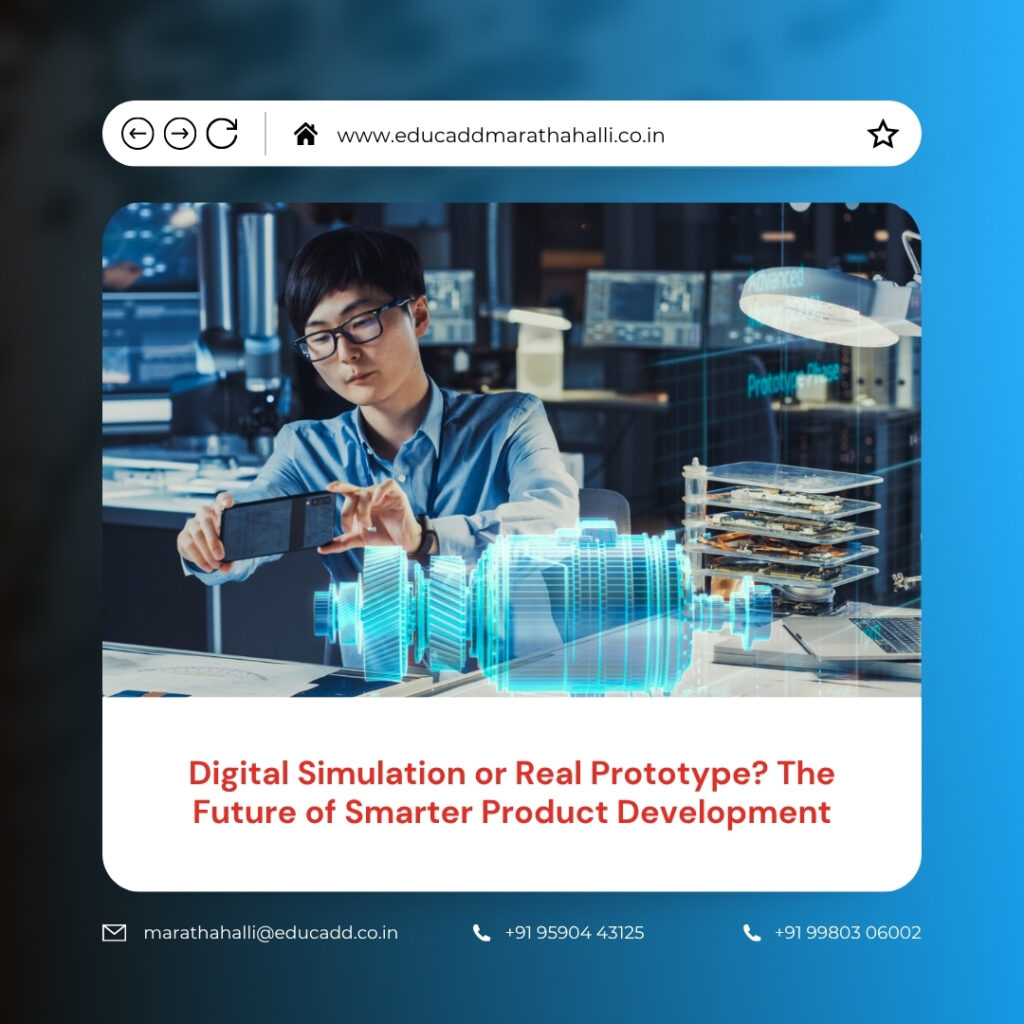
Digital Prototype Simulation
However, despite the rise of digital testing, physical prototypes still play a critical role in ensuring reliability and functionality. Many organizations now combine both approaches to improve efficiency while maintaining product quality. Understanding the strengths, weaknesses, and practical applications of each method helps companies build better products with fewer risks and faster turnaround times.
Understanding the Concept of Digital Prototype Simulation
Digital simulation refers to the process of testing and analyzing a product in a virtual environment using computer-based tools and engineering software. Engineers create detailed 3D models and use simulation platforms to evaluate how products react under different operating conditions. These conditions may include pressure, heat, vibration, airflow, structural stress, and motion analysis.
Modern industries use digital simulation extensively because it allows engineers to study product behavior before investing in manufacturing. Automotive companies test vehicle safety through crash simulations, while aerospace firms evaluate aircraft performance digitally before production begins. Construction companies also use simulation tools to analyze structural integrity and environmental impact during building design.
One major advantage of digital simulation is the ability to make rapid design changes. Engineers can instantly modify dimensions, materials, or structural components and rerun tests within minutes. This flexibility significantly improves product optimization and reduces the likelihood of expensive design errors later in the development process.
Why Real Prototyping Still Matters Today
Although digital technologies continue advancing rapidly, real prototyping remains an essential part of product development. A physical prototype provides a tangible version of a product that engineers, clients, and customers can inspect directly. Unlike digital models, physical prototypes allow users to touch, operate, and interact with the product in real-world conditions.
Real prototyping helps organizations evaluate product functionality more practically. Certain characteristics such as texture, weight distribution, ergonomics, comfort, and material quality become easier to understand through physical interaction. For this reason, industries such as consumer electronics, furniture manufacturing, healthcare equipment, and automotive design still rely heavily on physical models.
Physical prototypes also reveal manufacturing challenges that digital simulations may overlook. Issues related to assembly, material behavior, component fitting, and structural tolerance often become visible only after a product is physically built.
Cost Reduction Benefits of Digital Testing
One of the strongest reasons companies prefer digital simulation is its ability to reduce development costs significantly. Traditional prototyping requires raw materials, machinery, labor, transportation, and repeated manufacturing adjustments. These expenses can increase rapidly, especially for complex engineering projects.
Digital testing minimizes many of these costs because engineers can conduct multiple experiments virtually without producing physical models repeatedly. A single software platform allows teams to analyze numerous product variations while consuming minimal resources.
Organizations save money in several ways:
- Reduced material consumption during early development stages
- Lower redesign and manufacturing expenses
Furthermore, digital simulation shortens project timelines. Faster development means companies can introduce products into the market earlier and gain a competitive advantage. Startups and small businesses particularly benefit from this approach because they can validate ideas without making large manufacturing investments initially.
Speed and Flexibility in Virtual Product Development
Speed has become one of the most valuable assets in modern business environments. Companies that develop products quickly often achieve stronger market visibility and customer engagement. Digital simulation plays a major role in accelerating product development cycles.
Unlike physical prototyping, virtual testing allows engineers to experiment with hundreds of design variations in a short period. Software systems automate calculations and provide instant feedback regarding performance improvements or design weaknesses.
This flexibility supports innovation because engineering teams can explore creative ideas without worrying about material waste or manufacturing delays. Engineers simply adjust digital models and rerun simulations immediately.
Industries such as automotive manufacturing and consumer electronics depend heavily on this rapid development process because market trends change quickly. Faster product releases help businesses remain competitive and meet evolving customer expectations effectively.
Limitations and Accuracy Concerns in Digital Simulation
Despite its advantages, digital simulation is not perfect. The accuracy of simulation results depends heavily on software quality, engineering expertise, and the reliability of input data. Incorrect assumptions or inaccurate material properties can produce misleading outcomes.
Real-world environments often contain unpredictable variables that are difficult to reproduce digitally. Factors such as sudden environmental changes, material inconsistencies, and unexpected user behavior may affect product performance differently than simulations predict.
Another challenge involves overreliance on virtual testing. Some organizations may trust simulations too much and overlook the importance of practical validation. This approach can create serious risks, especially in industries where safety and reliability are critical.
The Practical Value of Physical Product Models
Physical product models provide practical insights that digital simulations cannot fully replace. Engineers often discover hidden design improvements while interacting directly with prototypes. Hands-on testing encourages creativity and problem-solving in ways that virtual environments sometimes fail to achieve.
Real prototypes allow businesses to gather valuable customer feedback before mass production begins. Users can evaluate comfort, usability, functionality, and appearance more effectively through physical interaction. This feedback helps organizations refine products according to actual market preferences.
Physical testing also improves quality assurance. Engineers can analyze wear and tear, mechanical durability, and environmental resistance under realistic operating conditions. These practical evaluations strengthen product reliability and reduce future performance risks.
Automotive Industry Transformation Through Simulation Technology
The automotive sector represents one of the most advanced users of Digital Prototype Simulation technology. Vehicle manufacturers now rely extensively on virtual testing to improve safety, fuel efficiency, aerodynamics, and structural durability.
Before producing actual vehicles, engineers simulate crash scenarios digitally to study passenger protection and impact resistance. These virtual crash tests reduce the number of expensive physical experiments required during development.
Electric vehicle manufacturers also use simulation tools to optimize battery systems, thermal management, and energy efficiency. Engineers analyze vehicle performance under different driving conditions to improve reliability and driving range.
This balanced approach improves safety standards while reducing development costs and accelerating innovation within the automotive industry.
Aerospace Engineering and the Need for Physical Validation
Aerospace engineering requires extremely high precision and reliability because even small design failures can create serious safety risks. For this reason, aerospace companies depend on both digital simulation and physical validation during aircraft development.
Engineers use virtual testing to analyze airflow dynamics, structural performance, engine efficiency, and fuel consumption before manufacturing aircraft components. These simulations improve design optimization and reduce unnecessary production costs.
Aircraft materials also behave differently under extreme temperatures, pressure variations, and long-term operational stress. Physical prototypes allow engineers to evaluate these factors more accurately.
Space exploration programs further demonstrate the importance of combining both methods. Satellites, rockets, and spacecraft systems must survive harsh environments where simulation alone cannot guarantee complete reliability.
Combining Digital and Physical Testing Approaches
Modern companies increasingly adopt a hybrid development strategy that combines digital simulation with physical prototyping. Instead of viewing these methods as competitors, organizations now recognize their complementary strengths.
Digital simulation usually supports early-stage design optimization. Engineers identify structural weaknesses, improve performance, and eliminate obvious design flaws before manufacturing begins. Once virtual testing produces positive results, physical prototypes confirm real-world functionality.
This combined strategy provides several important advantages:
- Faster product development with improved efficiency
- Greater confidence in product quality and reliability
The hybrid approach also improves communication between engineering, manufacturing, and marketing teams. Digital reports provide technical analysis, while physical prototypes offer visual and practical demonstrations.
Sustainability Advantages in Modern Product Development
Sustainability has become a major priority for industries worldwide. Companies increasingly focus on reducing environmental impact while maintaining productivity and profitability. Both digital simulation and physical prototyping contribute to sustainable product development in different ways.
Digital simulation reduces waste by minimizing the number of physical prototypes required during early development stages. Fewer prototypes mean lower material consumption, reduced energy usage, and decreased manufacturing waste.
Transportation needs also decline because digital files can be shared instantly across global engineering teams. This reduction lowers fuel consumption and carbon emissions associated with shipping physical models repeatedly.
Organizations that combine eco-friendly prototyping practices with advanced digital testing create more responsible and environmentally conscious production processes.
Challenges Businesses Face While Choosing the Right Method
Selecting between digital simulation and physical prototyping depends on multiple business factors. Budget, project complexity, industry standards, customer expectations, and product functionality all influence development strategies.
Large corporations often invest heavily in advanced simulation software because they manage highly technical engineering projects regularly. Smaller businesses, however, may depend more on physical prototypes due to lower software investment requirements.
Overdependence on either method can also create problems. Excessive reliance on simulations may overlook practical manufacturing issues, while relying only on physical prototypes can slow development and increase costs significantly.
Therefore, companies must evaluate project requirements carefully before selecting the most suitable product development approach.
Emerging Technologies Shaping Future Innovation
The future of product development will likely involve even stronger integration between virtual simulation and physical prototyping technologies. Emerging innovations such as artificial intelligence, digital twins, augmented reality, and smart manufacturing systems continue transforming engineering processes worldwide.
Artificial intelligence now improves predictive analysis by identifying design patterns and optimizing simulations automatically. Engineers can detect potential failures earlier and improve product performance more efficiently.
Digital twin technology also creates exciting opportunities. Companies can monitor real products continuously and compare operational data with virtual models for ongoing optimization and predictive maintenance.
As these technologies evolve further, the connection between virtual and physical development methods will become even stronger, improving innovation speed and product reliability simultaneously.
Conclusion
The comparison between Digital Prototype Simulation highlights the importance of balance in modern product development. Digital testing offers speed, flexibility, cost reduction, and rapid innovation opportunities, while physical prototypes provide practical validation, user interaction insights, and real-world reliability assessment.
Industries across the world increasingly recognize that combining both methods creates the most effective engineering strategy. Virtual tools help identify problems early, while physical models confirm whether products perform successfully under actual operating conditions.
Ultimately, the future of engineering does not depend on choosing one method over the other. Instead, long-term success comes from blending digital simulation and physical prototyping intelligently to create smarter, safer, and higher-performing products for the modern world.

