
Master BIM in Bangalore: The Ultimate Guide to Choosing the Right Institute for a Future-Ready Career
The construction and infrastructure industry is undergoing a major transformation, driven by digital innovation and smarter project execution methods. One of the most impactful technologies leading this evolution is Building Information Modeling (BIM). It has redefined how projects are designed, visualized, and managed from start to finish. BIM Course Bangalore Institute technology meets rapid urban development, the demand for BIM professionals is steadily increasing. From large infrastructure projects to modern architectural developments, BIM has become an essential skill for engineers, architects, and construction professionals. As a result, enrolling in a high-quality BIM training institute has become a crucial step for anyone looking to build a strong career in this field.
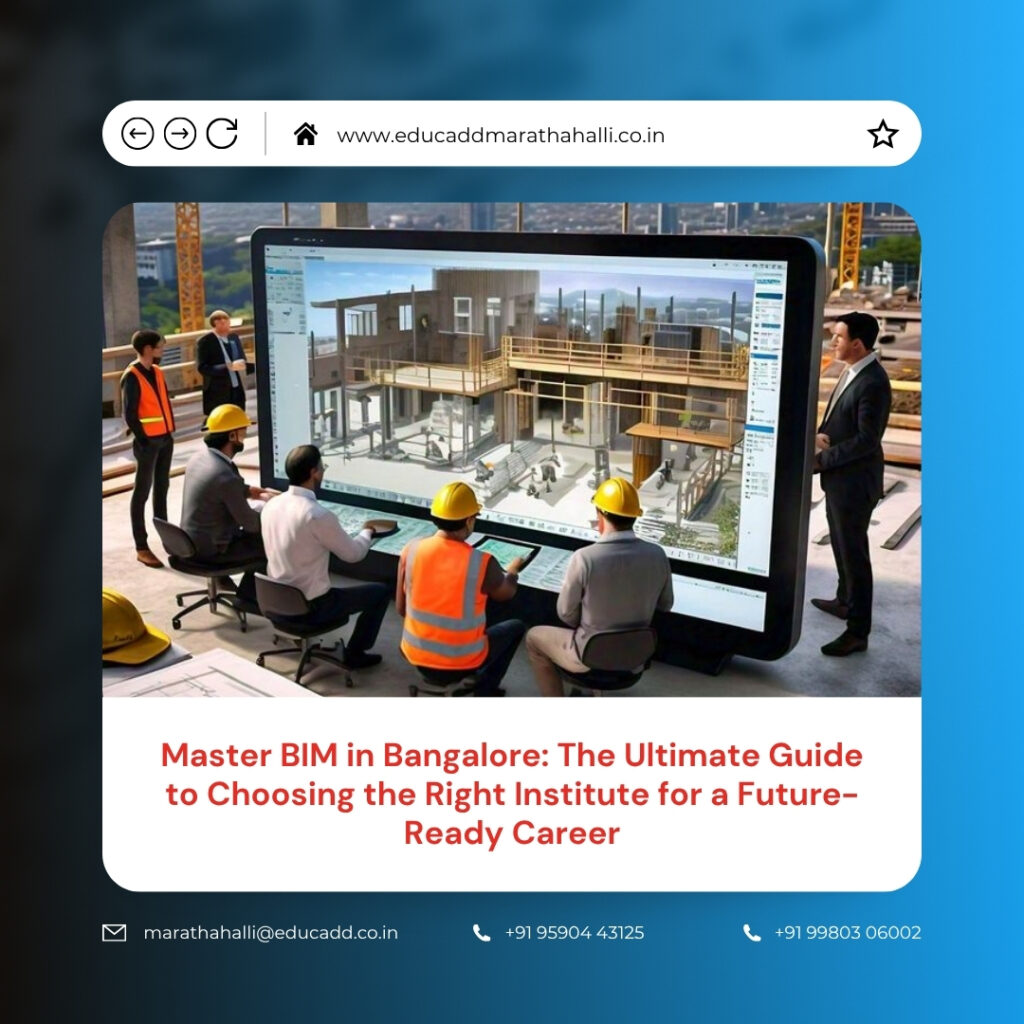
BIM Course Bangalore Institute
However, with numerous training centers offering BIM courses, choosing the right institute can be challenging. This detailed guide will help you understand what makes a BIM institute stand out, what to expect from a good course, and how to make the best choice for your career growth.
1. Understanding BIM and Its Industry Relevance
Building Information Modeling is not just a software tool; it is a comprehensive process that enables professionals to create intelligent 3D models integrated with project data. These models help teams collaborate effectively and make informed decisions throughout the project lifecycle.
BIM improves coordination among architects, engineers, and contractors, reducing errors and enhancing efficiency. It also enables better visualization, allowing stakeholders to identify potential issues before construction begins.
Today, BIM is widely used in residential, commercial, and infrastructure projects. Its growing adoption has made it an essential skill for professionals aiming to stay competitive in the industry.
2. Why Bangalore is a Hub for BIM Careers
Bangalore is known for its thriving IT ecosystem, but it is also a rapidly growing center for construction and infrastructure development. With the rise of smart city initiatives and large-scale projects, the need for skilled BIM professionals is increasing significantly.
Many multinational companies and design firms operate in Bangalore, offering excellent career opportunities for trained candidates. The presence of these organizations has created a strong demand for professionals who can handle advanced BIM workflows.
As a result, pursuing a BIM course in Bangalore provides access to better job opportunities, networking possibilities, and career advancement options.
3. Key Qualities of a Top BIM Course Bangalore Institute
Not all training institutes deliver the same level of education. The best BIM institutes focus on practical learning, industry alignment, and student success.
Here are some qualities that define a top institute:
- Updated curriculum based on current industry standards
- Strong emphasis on hands-on training
In addition, institutes with experienced faculty and good placement support tend to provide better learning outcomes.
4. Importance of a Well-Structured Curriculum
A comprehensive curriculum is the backbone of any successful training program. It ensures that students gain both theoretical knowledge and practical skills.
Top BIM courses cover essential tools such as Revit, Navisworks, AutoCAD, and project coordination techniques. They also include modules on clash detection, 3D modeling, and construction documentation.
A well-designed curriculum prepares students to handle real-world challenges and enhances their confidence in professional environments.
5. Role of Expert Trainers in Skill Development
Trainers play a vital role in shaping your learning experience. Experienced instructors bring industry knowledge and practical insights that go beyond textbooks.
They simplify complex concepts and provide real-world examples, making learning more engaging and effective. Their guidance helps students understand industry expectations and develop problem-solving abilities.
Learning from skilled trainers ensures that you are well-prepared to face real-time project challenges.
6. Hands-On Learning and Project Exposure
Practical training is essential for mastering BIM tools and workflows. Institutes that focus on hands-on learning provide students with the opportunity to work on real-time projects.
This approach helps learners understand how different elements of a project come together. It also improves their ability to manage tasks, collaborate with teams, and deliver accurate results.
Real-world exposure gives students a competitive advantage in the job market and boosts their confidence.
7. Placement Support and Career Guidance
A good BIM institute does not just focus on training; it also supports students in building their careers. Placement assistance is a key factor to consider when choosing an institute.
Career support services often include:
- Resume preparation and mock interviews
- Job referrals and recruitment drives
Institutes with strong industry connections can help students secure positions in reputed companies.
8. Certification and Its Professional Value
Certification plays an important role in validating your skills and knowledge. Completing a BIM course from a reputed institute adds credibility to your profile.
Employers prefer candidates who have recognized certifications, as it reflects their commitment to professional development. It also increases your chances of getting hired and advancing in your career.
Some certifications are globally recognized, opening doors to international opportunities.
9. Flexible Learning Options for Different Needs
Every learner has unique requirements, and flexibility in course delivery is essential. Top BIM institutes offer various learning modes to accommodate different schedules.
Students can choose from full-time, part-time, weekend, or online classes. This flexibility allows working professionals to upgrade their skills without affecting their current jobs.
Flexible learning options make it easier for individuals to pursue their career goals.
10. Infrastructure and Learning Facilities
The quality of infrastructure can significantly impact your learning experience. Institutes with modern facilities provide a more effective and engaging environment.
Well-equipped labs with updated software ensure that students get hands-on experience with the latest tools. Interactive classrooms and collaborative spaces further enhance the learning process.
A supportive environment encourages creativity, innovation, and continuous learning.
11. Course Fees and Return on Investment
The cost of BIM courses varies depending on the institute and course level. While affordability is important, it should not be the only deciding factor.
Investing in a high-quality course can lead to better career opportunities and higher earning potential. Many institutes offer flexible payment options to make courses more accessible.
Evaluating the return on investment helps you make a smarter decision.
12. Career Paths After Completing a BIM Course
A BIM certification opens up a wide range of career opportunities in the construction and engineering sectors.
Some of the popular job roles include:
- BIM Modeler
- BIM Coordinator
- BIM Engineer
- Project Manager
These roles are in demand across architecture firms, construction companies, and infrastructure organizations.
13. Skills You Develop Through BIM Training
A BIM course helps you acquire a combination of technical and soft skills. These skills are essential for professional success.
You will learn advanced modeling techniques, project coordination, and data management. Additionally, communication and teamwork skills are also enhanced.
These capabilities make you a valuable asset to employers and improve your career prospects.
14. Tips to Select the Right BIM Institute in Bangalore
Choosing the right institute requires careful research and evaluation. It is important to consider factors such as reputation, course content, and placement support.
Reading student reviews and visiting the institute can provide valuable insights. Interacting with trainers and understanding the teaching methodology can also help you make an informed decision.
Selecting the right institute can significantly influence your career growth and success in the BIM field.
Conclusion
Building Information Modeling is transforming the construction industry, and its importance will continue to grow in the coming years. Professionals with BIM expertise are highly sought after, making it a valuable skill for career advancement.
Enrolling in the right BIM Course Bangalore Institute can set the foundation for a successful career. A good institute provides industry-relevant training, practical exposure, and strong career support.
As the demand for BIM professionals increases, investing in quality education will help you stay ahead of the competition. By making the right choice, you can unlock new opportunities and achieve long-term success in this evolving industry.

