
Beyond Aesthetics: Transformative Hospitality Interior Design Concepts That Redefine Guest Experiences
Hospitality Interior Design Concepts have moved far beyond decoration and visual appeal. Today, they shape the entire guest journey, influencing emotions, comfort, and even brand loyalty. From luxury hotels to modern cafés, design plays a defining role in how guests perceive a space. It acts as a silent storyteller, communicating identity, values, and purpose without a single word.
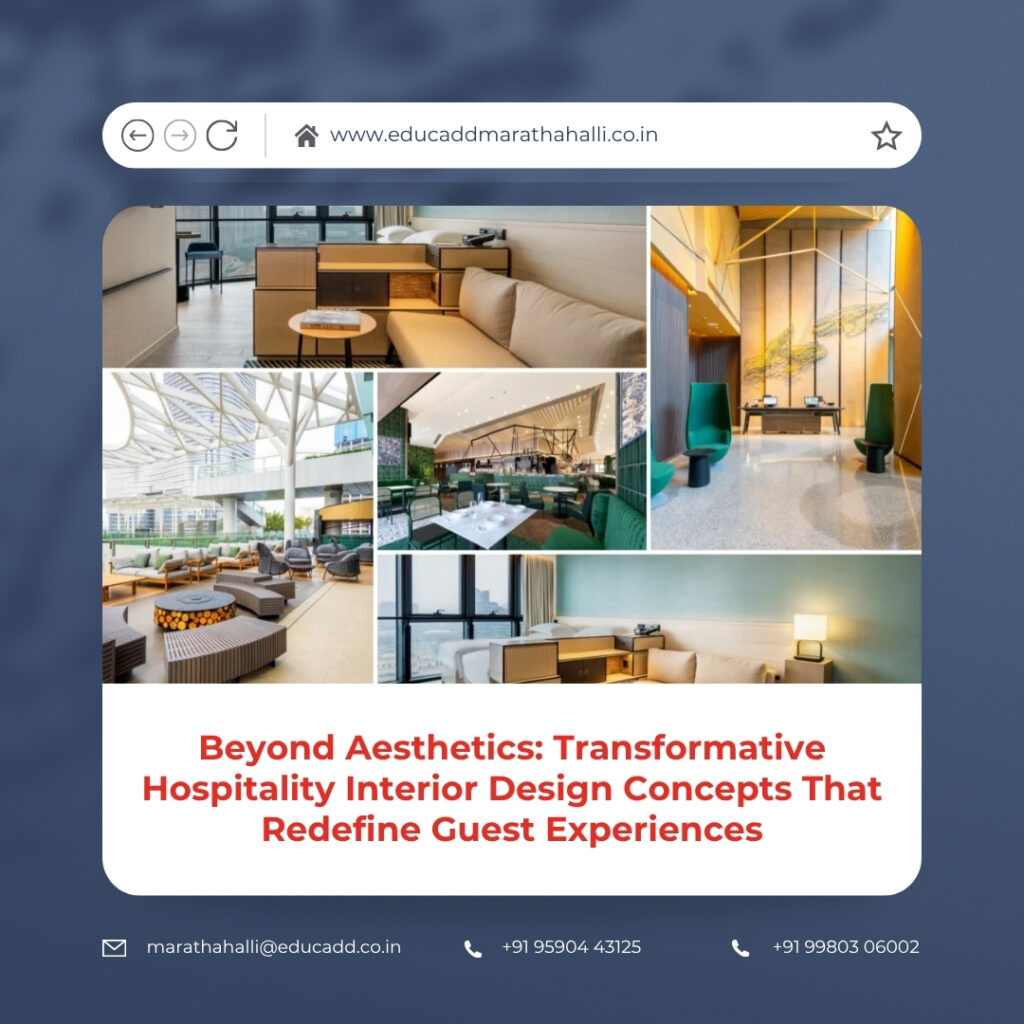
Hospitality Interior Design Concepts
In an era where experiences matter more than ever, well-crafted interiors can become a powerful competitive advantage. Guests seek environments that feel immersive, functional, and memorable. Therefore, designers must strike a balance between creativity and practicality. This blog explores advanced Hospitality Interior Design Concepts that elevate spaces into unforgettable destinations while ensuring seamless functionality.
1. Crafting Impactful Entry Points That Capture Attention
The entrance is the first interaction between a guest and a hospitality space. It creates an immediate impression that often determines expectations for the rest of the visit. A thoughtfully designed entryway uses scale, lighting, and materials to create a sense of arrival.
Designers often focus on visual focal points such as artistic installations, grand reception desks, or signature lighting fixtures. These elements not only attract attention but also communicate the brand’s personality. Additionally, smooth navigation from the entrance to other areas ensures that guests feel comfortable and oriented right from the start.
2. Storytelling Through Thematic Design Approaches
Every successful hospitality space tells a story. A well-defined theme ensures that all elements, from furniture to décor, align with a central narrative. This approach creates consistency and strengthens the overall experience.
Themes can be inspired by local culture, natural landscapes, or contemporary trends. For instance, a nature-inspired resort might incorporate earthy tones, organic materials, and open spaces. As a result, guests feel connected to their surroundings, making their stay more meaningful and engaging.
3. Strategic Lighting for Mood and Function
Lighting is one of the most influential aspects of hospitality interior design concepts. It has the ability to transform the atmosphere instantly. Soft, warm lighting can create a relaxed and intimate setting, while bright lighting supports active and social environments.
Layering different types of lighting adds versatility. Ambient lighting provides general illumination, task lighting ensures functionality, and accent lighting highlights architectural features. Together, they create a dynamic and visually appealing environment that adapts to various needs throughout the day.
4. Intelligent Space Planning for Seamless Movement
Effective space planning ensures that guests can navigate the environment comfortably. A well-organized layout enhances both aesthetics and usability. Poor planning, on the other hand, can lead to congestion and discomfort.
Designers divide spaces into functional zones such as seating, dining, and relaxation areas. They also consider circulation paths to maintain smooth movement. This thoughtful arrangement improves operational efficiency while enhancing the guest experience.
5. Using Color Psychology to Shape Emotions
Colors play a significant role in influencing how guests feel within a space. Different hues evoke different emotional responses. Warm tones like orange and red create energy and excitement, while cool shades like blue and green promote calmness.
A balanced color palette ensures visual harmony. Designers often use neutral tones as a base and introduce vibrant accents for contrast. This approach creates an inviting atmosphere without overwhelming the senses.
6. Selecting Furniture That Balances Comfort and Style
Furniture is a critical component of hospitality interiors. It must combine durability, comfort, and aesthetic appeal. Guests expect seating and furnishings that support relaxation while enhancing the overall design.
Important considerations include:
- Choosing materials that can withstand frequent use
- Ensuring ergonomic design for maximum comfort
Additionally, flexible furniture options allow spaces to adapt to changing needs. This adaptability ensures long-term functionality and guest satisfaction.
7. Celebrating Local Identity and Cultural Influence
Incorporating local culture into design adds authenticity and uniqueness. Guests often appreciate spaces that reflect the character of their location. This approach transforms interiors into cultural experiences rather than generic environments.
Designers use locally sourced materials, traditional patterns, and handcrafted elements to achieve this effect. As a result, the space feels rooted in its surroundings, offering guests a deeper connection to the destination.
8. Embracing Sustainability for Responsible Design
Sustainability has become a key focus in hospitality interior design concepts. Eco-friendly practices not only reduce environmental impact but also appeal to conscious travelers.
Common sustainable strategies include:
- Using renewable and recycled materials
- Implementing energy-efficient lighting and systems
In addition, incorporating greenery and natural elements enhances both aesthetics and well-being. Sustainable design creates healthier environments while supporting long-term operational efficiency.
9. Integrating Technology for Enhanced Convenience
Modern hospitality spaces rely on technology to deliver seamless experiences. From automated lighting to smart room controls, technology enhances comfort and personalization.
Designers must integrate these features without disrupting the visual appeal. Hidden installations and minimalist interfaces ensure that technology blends seamlessly with the overall design. This balance creates a modern yet elegant environment.
10. Designing Flexible and Multi-Use Spaces
Versatility is essential in today’s hospitality environments. Spaces must serve multiple functions to maximize efficiency. For example, a lounge area may double as a workspace or social hub.
Designers achieve flexibility through modular furniture, movable partitions, and adaptable layouts. This approach allows spaces to evolve based on guest needs and usage patterns, making them more dynamic and functional.
11. Enhancing Interiors with Texture and Materials
Texture adds depth and character to hospitality interiors. Combining different materials creates a rich and engaging sensory experience. Guests not only see the design but also feel it through touch.
For instance, pairing smooth surfaces with textured fabrics or natural materials creates contrast and balance. Thoughtful material selection ensures durability while maintaining visual interest.
12. Reinforcing Brand Identity Through Design Elements
Interior design serves as a visual representation of a brand. Every detail, from color schemes to decorative elements, should align with the brand’s identity. Consistency helps build recognition and trust among guests.
Signature design elements, such as unique patterns or custom furniture, can make a space instantly recognizable. This cohesive approach strengthens the brand’s presence and enhances the overall experience.
13. Prioritizing Acoustic Comfort for Better Experiences
Sound plays a crucial role in guest comfort. Excessive noise can disrupt relaxation and negatively impact the experience. Therefore, acoustic design is an essential consideration.
Designers use sound-absorbing materials such as carpets, curtains, and panels to control noise levels. Proper layout planning also helps reduce sound interference. These measures create a calm and enjoyable environment.
14. Personalizing Spaces for Guest Satisfaction
Personalization has become a defining trend in hospitality design. Guests appreciate spaces that cater to their individual preferences. Customized lighting, seating arrangements, and décor enhance comfort and engagement.
Attention to detail makes a significant difference. Unique design elements and thoughtful touches create a sense of exclusivity. As a result, guests feel valued and are more likely to return.
Conclusion
Hospitality Interior Design Concepts have evolved into a sophisticated blend of creativity, functionality, and innovation. Each element, from lighting and color to layout and materials, contributes to the overall guest experience. When executed effectively, these elements create spaces that are both visually stunning and highly practical.
In a competitive market, exceptional design sets a brand apart. It not only attracts guests but also builds lasting impressions and loyalty. By embracing modern trends such as sustainability, technology, and personalization, hospitality spaces can redefine comfort and luxury. Ultimately, great design transforms ordinary environments into extraordinary experiences that guests remember long after their visit.

