
From Blueprint to Reality: Civil CADD Training That Transforms Site Engineers
In today’s fast-evolving construction landscape, precision, speed, and coordination define the success of every project. Site engineers are no longer limited to supervising construction activities; they are expected to interpret complex drawings, collaborate with multidisciplinary teams, and ensure flawless execution. This transformation has made Civil CADD Training Engineers an essential skill rather than an optional upgrade.
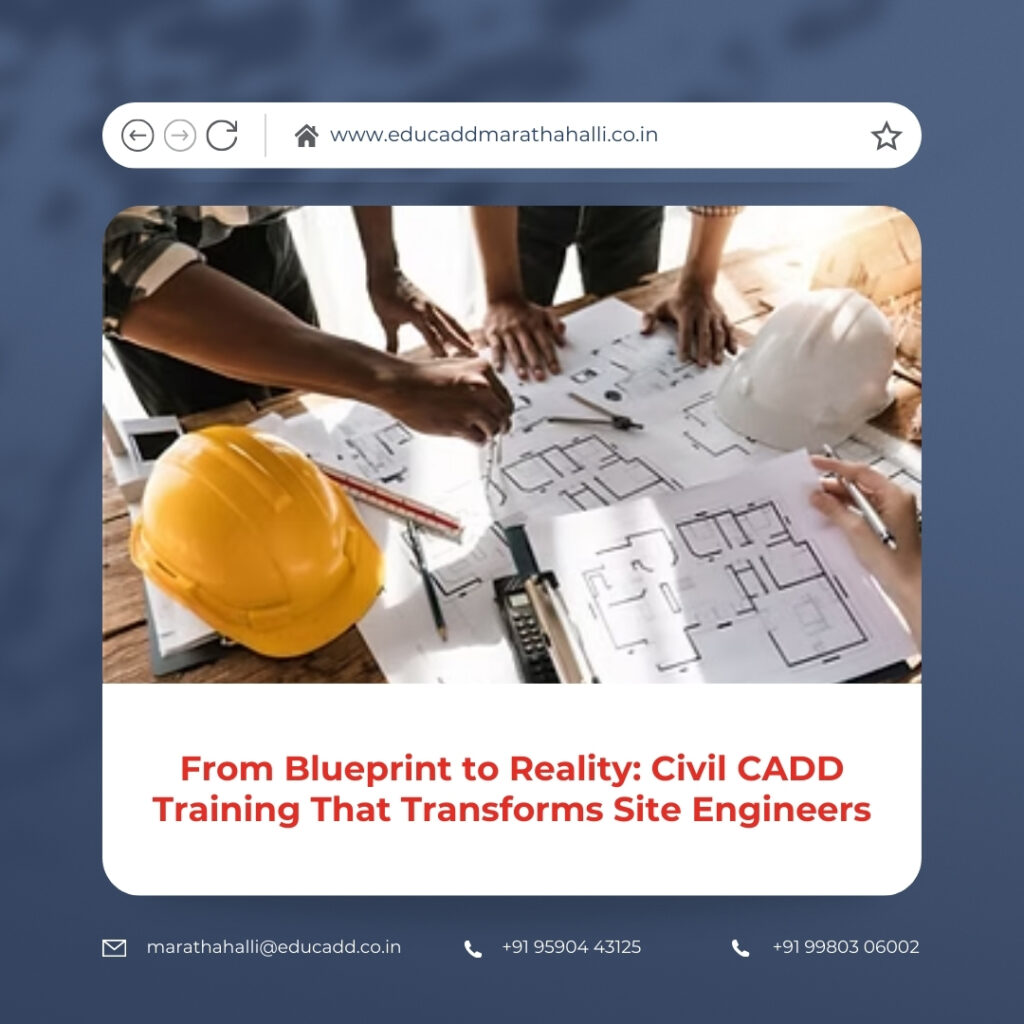
Civil CADD Training Engineers
Civil CADD Training Engineers enables site engineers to move beyond traditional methods and embrace digital tools that streamline planning and execution. By mastering design software, engineers gain the ability to visualize projects before they are built, identify potential challenges, and deliver results with confidence. As infrastructure demands continue to rise, professionals equipped with these skills stand out and contribute more effectively to project success.
1. What Civil CADD Means in Modern Engineering
Civil CADD, or Computer-Aided Design and Drafting, refers to the use of advanced software tools to create detailed engineering drawings and layouts. Unlike manual drafting, which relies heavily on human precision, CADD tools provide automated accuracy and efficiency.
For site engineers, this shift represents a major improvement in how projects are planned and executed. Digital drafting ensures that every line, dimension, and detail is precise. Moreover, engineers can quickly modify designs without redrawing entire plans. This capability significantly reduces time and effort, making Civil CADD a cornerstone of modern engineering practices.
2. Why Site Engineers Need Civil CADD Skills
The responsibilities of site engineers have expanded considerably in recent years. They are expected to understand technical drawings, manage resources, and ensure compliance with design specifications. Without proper training, interpreting complex plans can become challenging.
Civil CADD Training Engineers equips engineers with the knowledge required to read and create detailed drawings. As a result, they can communicate more effectively with architects and designers. This improved understanding helps in minimizing errors and ensures that construction activities align perfectly with the intended design.
3. Essential Software Tools Covered in Training
A comprehensive Civil CADD training program introduces engineers to a variety of industry-standard software tools. These tools are designed to handle different aspects of construction design and analysis.
Common software included in training programs:
-
AutoCAD for precise 2D drafting and detailing
-
Civil 3D for infrastructure design and land development
-
STAAD Pro for structural analysis and design
Learning these tools not only enhances technical proficiency but also increases confidence in handling real-world projects. Engineers who are skilled in these applications are often preferred by employers.
4. Practical Skills Gained Through Civil CADD
Civil CADD training focuses on developing practical skills that can be directly applied on-site. Engineers learn how to prepare detailed drawings, interpret layouts, and manage design changes efficiently.
In addition, they gain strong analytical abilities that help in solving construction challenges. The training also improves coordination skills, as engineers must work closely with multiple teams. These competencies play a crucial role in ensuring smooth project execution.
5. Advantages of Learning Civil CADD for Site Engineers
There are several advantages to acquiring Civil CADD skills. One of the most significant benefits is improved accuracy in design and execution. Engineers can create detailed plans that reduce the chances of errors during construction.
Another key advantage is increased productivity. Tasks that once required extensive manual effort can now be completed quickly using digital tools. This efficiency allows engineers to focus on more critical aspects of the project, ultimately leading to better outcomes.
6. Improving Construction Workflow with CADD
Civil CADD Training Engineers has a direct impact on the overall workflow of construction projects. By providing accurate and up-to-date drawings, it ensures that all team members are on the same page.
Furthermore, any design changes can be updated instantly and shared with the entire team. This real-time collaboration minimizes confusion and prevents delays. As a result, projects are completed more efficiently and within the planned schedule.
7. Real-Life Applications of Civil CADD
Civil CADD is widely used in various types of projects, ranging from residential buildings to large-scale infrastructure developments. It plays a crucial role in creating site layouts, structural designs, and detailed construction plans.
For site engineers, understanding these applications is essential for effective project execution. They can use their knowledge to ensure that every aspect of the construction process aligns with the design. This practical application of skills enhances their value in the industry.
8. The Role of Precision in Engineering Success
Precision is a critical factor in any construction project. Even minor errors in design can lead to significant issues during execution. Civil CADD training helps engineers achieve a high level of accuracy in their work.
By using advanced tools, engineers can ensure that every detail is correctly represented. This level of precision not only improves the quality of the project but also reduces the need for rework. Consequently, both time and resources are saved.
9. Career Growth Opportunities After Training
Civil CADD Training Engineers opens up numerous career opportunities for site engineers. With the right skills, they can transition into roles such as design engineers, CAD technicians, or project planners.
Some popular career options include:
-
CAD design engineer
-
Structural analyst
-
Project coordination specialist
These roles offer better career growth and higher earning potential. Additionally, experienced professionals can move into leadership positions within the organization.
10. Growing Demand for Skilled CADD Professionals
The construction industry is increasingly adopting digital technologies, leading to a growing demand for skilled CADD professionals. Companies are looking for engineers who can handle both design and execution tasks efficiently.
Civil CADD training provides this dual capability, making engineers more versatile and valuable. As infrastructure projects continue to expand, the demand for trained professionals is expected to rise further.
11. Integration with Advanced Engineering Technologies
Civil CADD is often integrated with other advanced technologies such as Building Information Modeling (BIM). This integration allows engineers to create comprehensive models that include all aspects of a project.
For site engineers, this means better visualization and improved decision-making. It also enhances collaboration among different teams, ensuring that projects are executed smoothly. This combination of technologies represents the future of construction.
12. Limitations Without Civil CADD Knowledge
Engineers who lack Civil CADD skills may face several challenges in their careers. Manual drafting methods are time-consuming and prone to errors, which can impact project quality.
Moreover, the inability to use modern tools can limit career growth. Engineers may struggle to adapt to industry changes, making it difficult to stay competitive. Therefore, acquiring Civil CADD skills is essential for long-term success.
13. Selecting the Best Civil CADD Training Program
Choosing the right training program is crucial for gaining maximum benefits. A good program should offer comprehensive coverage of essential software and provide hands-on experience.
It should also include practical projects that simulate real-world scenarios. Experienced instructors and updated course content are additional factors that contribute to effective learning. By selecting the right program, engineers can build a strong foundation for their careers.
14. Future Scope of Civil CADD in Construction
The future of Civil CADD looks promising, with continuous advancements in technology. New tools are being developed to enhance design accuracy and improve project management.
Online learning platforms are also making it easier for engineers to access training from anywhere. As the construction industry evolves, Civil CADD will remain a vital skill for site engineers. Those who invest in learning these tools will be better prepared for future challenges.
Conclusion
Civil CADD Training Engineers has become a vital component in shaping the careers of modern site engineers. It provides the technical expertise needed to handle complex projects with confidence and efficiency. From improving accuracy to enhancing collaboration, the benefits are far-reaching.
As the industry continues to embrace digital transformation, the importance of Civil CADD will only increase. Engineers who invest in this training not only improve their current performance but also secure their future in a competitive job market. Ultimately, mastering Civil CADD is a step toward building smarter, faster, and more reliable construction projects.

