
Blueprints of Power: Your Complete Roadmap to Mastering Industrial Electrical Layouts with Educadd
Industries thrive on systems that deliver uninterrupted, stable, and safe power. Whether it is a manufacturing plant, processing unit, warehouse, or automation facility, nothing functions without well-planned electrical infrastructure. This brings Modern Commercial Interior Design into the spotlight as a major pillar of industrial engineering. These layouts help manage power distribution, ensure equipment safety, and support smooth workflow. When the layout is designed correctly, machines perform with maximum reliability. When the layout is poorly planned, the entire operation becomes unpredictable.
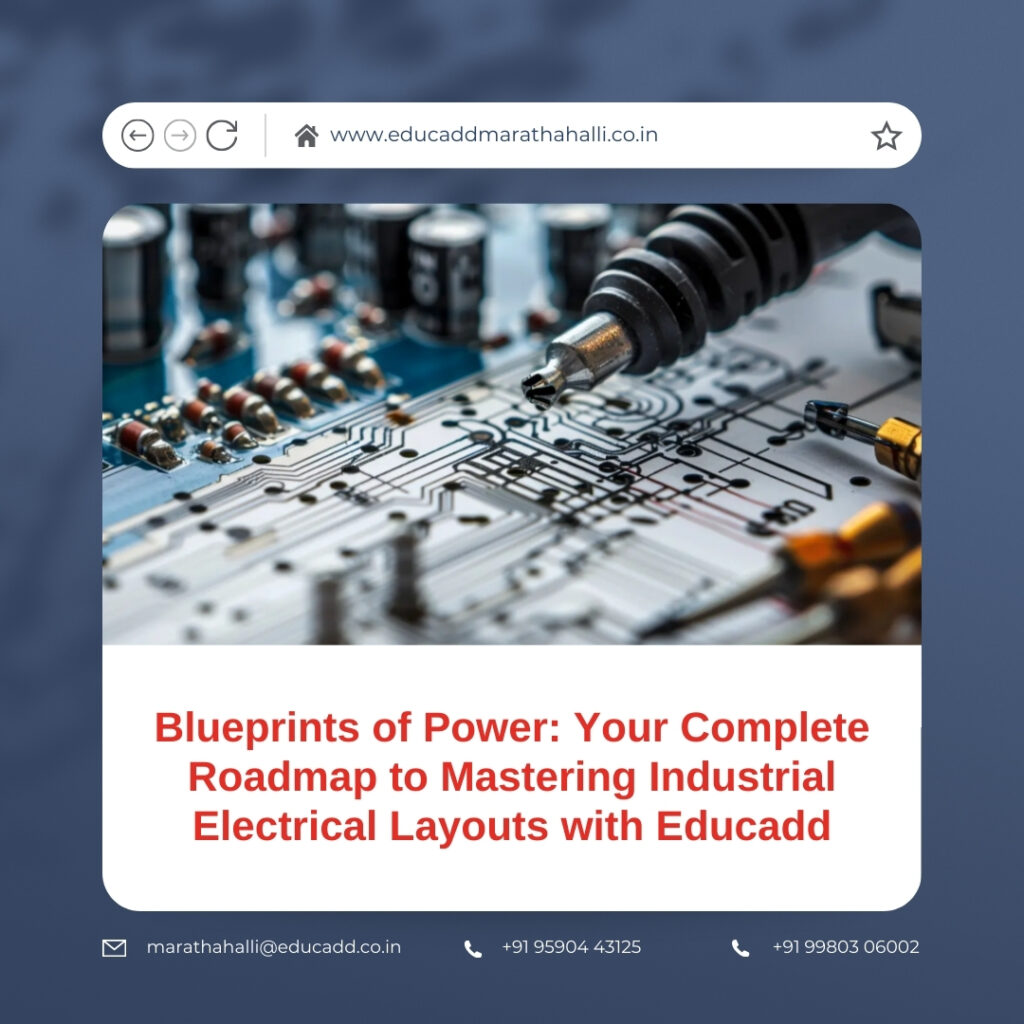
Modern Commercial Interior Design
Many learners step into the electrical design field with strong theoretical knowledge but limited real-world exposure. They know formulas but cannot convert ideas into functional designs. Educadd works to fill this industry gap. Their structured training blends concepts, practical assignments, software skills, and hands-on understanding of real project workflows. This blog offers a complete roadmap to mastering Industrial Electrical Layouts from scratch. You will learn the basics, explore essential components, follow the design methodology, understand industry applications, and discover how Educadd transforms learners into skilled professionals.
1. The Core Principles Behind Industrial Electrical Layouts
Every powerful industrial setup begins with a strong electrical foundation. Modern Commercial Interior Design define how power reaches different zones, machines, and control systems across the facility. Understanding the core principles helps designers create layouts that remain stable even under high load. Before designing anything, you must study the site layout, machine arrangement, and industrial operations. This helps you evaluate the distance between equipment, identify power-critical zones, and plan distribution lines with clarity.
A major part of the foundation includes estimating electrical load requirements. Every motor, panel, pump, conveyor, and machine consumes power differently. Some have high starting current. Others require stable, low-disturbance voltage. Educadd teaches you how to calculate these loads accurately. You learn how to classify loads based on usage frequency, operational cycles, and power demand. With this understanding, you can create a system that delivers balanced and reliable power.
Finally, understanding industrial protection systems strengthens your foundation. Industries face threats like overloads, short circuits, equipment failures, and lightning surges. Well-designed Industrial Electrical Layouts integrate protective devices at every level. Educadd helps you understand how relays, breakers, isolators, and interlocks function. This clarity prepares you to create reliable systems capable of handling critical industrial demands.
2. Major Components Every Designer Must Know in Industrial Electrical Layouts
Industrial Electrical Layouts depend on numerous components that work together to form a complete electrical network. Each component has a specific purpose and must be selected carefully. When you understand these components well, your designs become more accurate and safer.
Transformers are the first major link between utility power and the industry. They adjust voltage levels to match operational needs. Designers must consider transformer ratings, cooling methods, vector groups, and installation zones. Educadd trains learners to read transformer specification sheets and select suitable transformers for different load profiles.
Once power is transformed, it moves through switchgear. This includes the Power Control Center (PCC), which houses circuit breakers, measuring instruments, and control devices. You learn how to choose suitable breakers based on fault level calculations and peak demand. Educadd ensures that you understand how switchgear design impacts safety, maintenance, and future upgrades.
Motor Control Centers (MCCs) form the next major component. Motors power essential equipment like conveyors, blowers, compressors, mixers, and pumps. MCC panels contain feeders, contactors, relays, and overload protection. Educadd teaches how designers should plan MCC sections, choose motor starters, and design feeder arrangements. This is a vital part of Industrial Electrical Layouts since motors often dominate the plant load.
Safety systems hold equal importance. Earthing networks protect equipment and workers from electric shock. Lightning protection prevents damage from atmospheric surges. Emergency lighting, fire-rated cables, isolators, and alarms improve workplace safety. Educadd explains these components with real case studies, helping you understand where and how these devices should be placed within Industrial Electrical Layouts.
3. Step-by-Step Workflow for Designing Industrial Electrical Layouts
Designing Industrial Electrical Layouts becomes easier when you follow a structured approach. A clear workflow guides you from concept to final documentation. Educadd trains learners to use a professional design methodology similar to what major engineering firms follow.
The first step is requirement collection. You gather machine details, study the industrial process, and inspect the building layout. You also identify critical power consumption areas. This gives you a complete picture of how the facility will operate daily. Educadd helps you analyze this data and convert raw information into technical inputs.
The next step involves load analysis. You calculate total connected load, demand load, maximum demand, and diversity factors. All these calculations influence transformer selection, cable sizing, and distribution panel ratings. Educadd simplifies these steps with practical worksheets and guided exercises.
After the SLD, you start working on the layout planning. You decide the locations of PCCs, MCCs, distribution boards, lighting panels, and emergency systems. You design routes for cable trays and conduits. Factors like temperature, accessibility, and maintenance influence placement. Educadd provides hands-on practice with actual industrial layout drawings to help you understand real-world design challenges.
The next step involves selecting and coordinating protective devices. You determine breaker ratings, relay settings, and fuse capacities. Proper coordination ensures that only the faulty circuit trips while the rest of the system runs smoothly. Educadd guides learners through fault level calculations and protection coordination methods.
The final step is documentation. Engineers prepare BOQs, cable schedules, load lists, panel schedules, and final layout drawings. Educadd trains you to create professional reports and drawings that match industry standards. This makes you fully prepared for job roles in electrical design firms.
4. Real-World Importance of Industrial Electrical Layouts in Today’s Industries
Industrial Electrical Layouts play a crucial role in the success of modern industries. Their importance goes far beyond power distribution. A well-designed layout improves efficiency, reduces downtime, and increases the life of machines. A poorly designed layout leads to voltage drops, overheating, breakdowns, and energy waste.
In manufacturing industries, efficiency depends on how well machines receive power. Motors require balanced loads and stable voltage. Automation systems need clean power with minimal fluctuations. Heating systems and compressors rely on steady current. Industrial Electrical Layouts bring harmony to all these elements. Educadd explains these interactions through practical examples so learners understand how design decisions influence real performance.
Safety remains one of the biggest reasons Industrial Electrical Layouts matter. Industries deal with high-voltage equipment and hazardous environments. Strong safety design prevents electrical fires, short circuits, arc flashes, and shocks. Educadd highlights common causes of electrical accidents and teaches preventive design strategies.
Energy efficiency is another real-world priority. Industries face rising electricity costs. Efficient layouts reduce power losses and improve machine performance. Educadd introduces energy-saving techniques like optimized routing, power factor correction, and load balancing. This helps learners design layouts that support sustainability goals.
Scalability adds long-term value. Most industries expand over time. A flexible layout allows new machines, additional feeders, or upgraded panels without major redesign. Educadd’s training modules explain how to predict future requirements and leave scope for expansion. This ensures that your design remains useful for many years.
5. How Educadd Builds Strong Careers in Industrial Electrical Design
Educadd stands out because it emphasizes real-world learning. Its curriculum focuses on application-based training instead of theory-heavy explanations. Students gain practical exposure, work on real designs, and learn using industry-grade tools. This prepares them to step confidently into technical job roles.
Training at Educadd covers essential software like AutoCAD Electrical, Revit MEP, and calculation tools. These tools help you create professional-level drawings, SLDs, layout plans, and technical documentation. Since most engineering companies rely on these tools, mastering them gives you a huge advantage during interviews and job assignments.
Another key aspect of Educadd’s training is real project case studies. You learn how industries plan electrical rooms, route cables, choose protective devices, and overcome site challenges. You work with sample drawings, interpret site photographs, and redesign layouts based on real issues. This sharpens your decision-making skills and exposes you to authentic engineering scenarios.
Educadd trainers provide personal guidance and constructive feedback. They help you correct mistakes, optimize designs, and improve technical accuracy. This mentorship plays a major role in shaping your confidence and creativity as a designer.
Educadd’s training does not limit your career to one industry. You can work in manufacturing, construction, renewable energy, infrastructure, facility management, and automation. Since electrical systems are everywhere, your skill set stays relevant and valuable.
Conclusion
Modern Commercial Interior Design shape the backbone of every modern industry. They manage power flow, protect equipment, support automation, and ensure workplace safety. When designed thoughtfully, these layouts improve efficiency, reduce downtime, and support long-term industrial growth. Learning how to design them opens the door to strong career opportunities.
Educadd offers a structured and practical learning approach that helps you master concepts step-by-step. You gain technical clarity, software skills, and real project experience. This equips you to design dependable electrical layouts for any industrial environment. As industries continue to grow and adopt advanced technologies, the demand for skilled electrical layout designers will keep rising.
If you want a career with strong growth, stability, and technical depth, mastering Industrial Electrical Layouts with Educadd is the right decision. This is your moment to build a future powered by knowledge, skill, and confidence.

