
“Redefining Living: The Interior Design Waves Shaping 2025”
The world of interior design is going through a major transformation in 2025. Spaces are becoming more personal, more conscious, and far more innovative than ever before. A new era of design is emerging—one that blends nature, technology, sustainability, craftsmanship, and emotion with remarkable balance. As lifestyles evolve, people expect their homes to do more than look beautiful. They must feel meaningful, functional, expressive, and restorative. The Interior Design Trends 2025 highlight this shift clearly, presenting design directions that cater to modern needs and future possibilities.
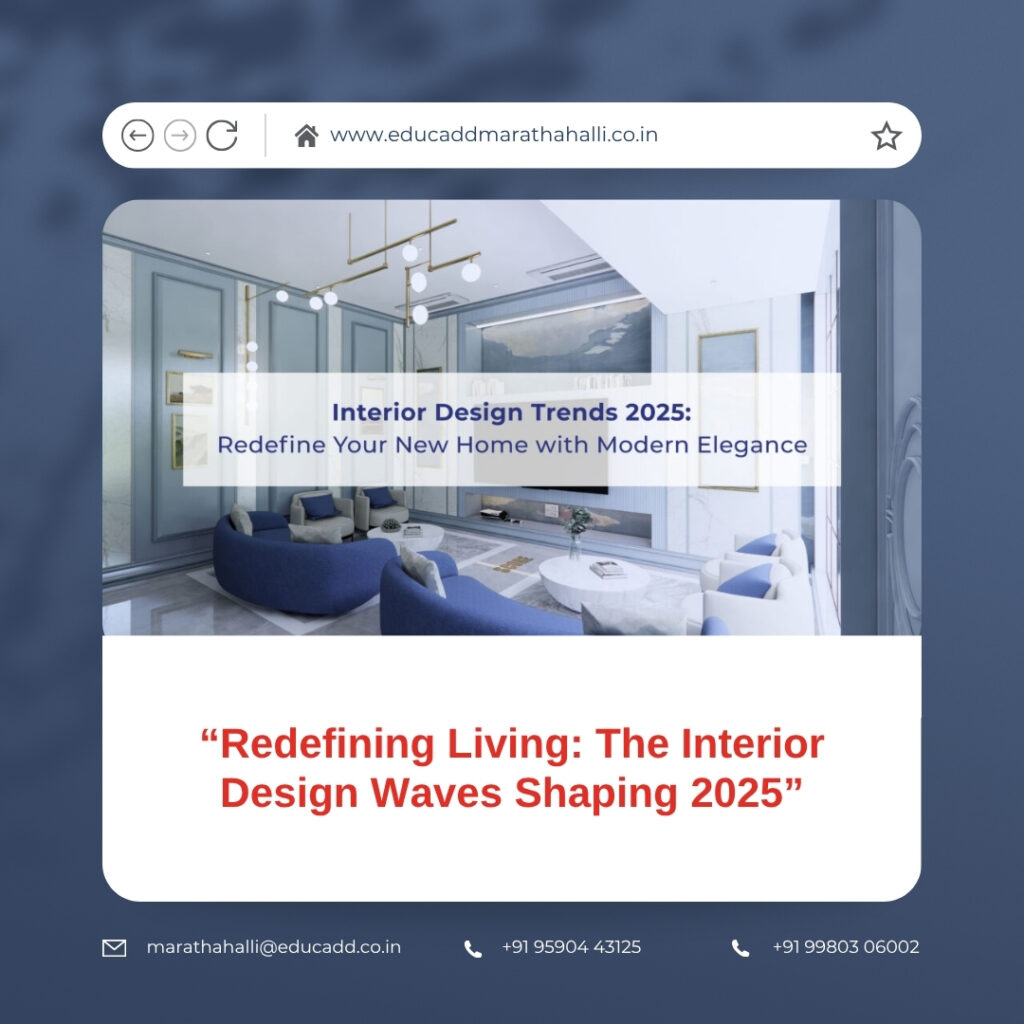
Interior Design Trends 2025
These trends are not temporary. They reflect long-term changes in how people live, work, and connect with their surroundings. From immersive tech integration to deeper eco-awareness and personalized styling, 2025 is setting a strong foundation for the future of interiors. This blog explores the leading design movements shaping the year and reveals how these ideas transform everyday living.
1. Earth-Connected Interiors: A New Relationship With Nature
A major highlight among the Interior Design Trends 2025 is the growing obsession with nature-driven interiors. Modern homes now aim to blur the line between the inside and outside, creating environments that feel organically connected. Natural elements provide a calm foundation, helping people unwind from fast-paced lifestyles. Homes now include wide glass windows, open layouts, and spaces that welcome abundant sunlight. Light is used as a design tool rather than just a need. It brings warmth, balance, and energy into every room.
This trend embraces biophilic design. Indoor plants, vertical gardens, moss walls, and botanical corners have become essential. However, 2025 takes it further by emphasizing large indoor trees, miniature courtyards, and green-filled partitions. These additions don’t just offer beauty. They improve air quality, enhance mood, and create a sense of calm inside busy settings.
Natural textures and materials remain at the core of this movement. Raw wood, rattan, woven fibers, slate, river stone, clay, and natural fabrics dominate furniture and décor. Their tactile appeal and earthy tones help create soothing environments that feel grounded. Shades like sand beige, forest green, sunset orange, olive, and matte brown shape the visual character of interiors. These tones pair perfectly with soft fabrics such as linen, hemp, and cotton.
This nature-inspired approach extends into architecture as well. Skylights, patio extensions, and sliding glass walls connect interiors to outdoor areas like balconies, decks, and gardens. The goal is seamless continuity. Homes feel larger, brighter, and more breathable. The Interior Design Trends of 2025 encourage people to embrace calmness, reconnect with their surroundings, and adopt a lifestyle rooted in wellness and serenity.
2. Intelligent Homes: The Rise of Seamless Smart Living
Technology continues to redefine domestic life, and the Interior Design Trends of 2025 showcase its evolution in remarkable ways. Smart home features now blend smoothly into the design instead of feeling like separate add-ons. Homes respond instantly to voice, motion, and personalized settings. Lights adjust automatically throughout the day to align with natural rhythms. Smart windows change opacity for privacy or sunlight control. Temperature adjusts based on user habits. Every digital feature works silently in the background to improve comfort and efficiency.
Furniture also embraces innovation. Smart sofas with embedded chargers, height-adjustable tables, flexible shelving, and automated storage solutions are becoming mainstream. These elements help maximize space, create convenience, and support new-age lifestyles. Since many people work from home, ergonomic design has become a priority. Adjustable lighting, optimized desk setups, and soundproofed corners help boost productivity.
One of the standout developments is the rise of experiential rooms. Media lounges now include immersive sound experiences, intelligent projectors, and acoustic walls that enhance entertainment. Game zones combine digital interactions with physical comfort. Wellness rooms incorporate mood-based lighting, meditation pods, and soothing ambient technology. These spaces allow users to shift between work, relaxation, entertainment, and creativity effortlessly.
Energy-conscious design is another essential part of 2025 trends. Smart systems track usage, reduce waste, and optimize efficiency. Solar integration and automated cooling systems help maintain eco-friendly living. Homes are designed to think and adapt. This evolution shows how the Interior Design Trends of 2025 prioritize intelligence, sustainability, and user-centered experiences without compromising on beauty.
3. Refined Eco-Living: Sustainable Design With High-End Appeal
Sustainability has evolved far beyond being a trend. It has become a design standard in 2025. But what makes this year unique is the blending of eco-friendly principles with luxurious style. The Interior Design Trends of 2025 show a clear shift toward high-end sustainable choices. Homeowners love the idea of spaces that feel premium while still respecting the environment.
Reclaimed wood, recycled glass, and upcycled metal are now used in sophisticated ways. Designers craft bespoke furniture from restored materials, turning imperfections into artistic statements. Recycled stone countertops, nature-friendly textiles, and artisanal ceramics add character and authenticity to homes. These choices give interiors a refined yet meaningful look.
Sustainable luxury also encourages durability. People no longer invest in fast décor that becomes outdated quickly. They prefer long-lasting, well-crafted products that age gracefully. Handmade carpets, traditional weaving, organic paints, and custom pieces dominate modern interiors. Their craftsmanship and longevity make them valuable.
Natural insulation solutions, green-certified materials, and energy-efficient lighting enhance this trend further. In bathrooms, organic stone basins, recycled tile work, and spa-inspired fixtures create an elegant but conscious environment. Kitchens now emphasize water-saving systems, compost-friendly designs, and eco-smart appliances.
Circular design is another major highlight. It encourages users to repair, reuse, or reimagine furniture instead of discarding it. Modular furniture supports long-term usability. Accessories can be reshaped or redesigned. This mindset reduces waste while giving homeowners more creative freedom.
Ultimately, the Interior Design Trends of 2025 prove that luxury and sustainability are no longer opposites. They work together to create homes that are environmentally aware, beautifully crafted, and emotionally fulfilling.
4. Human-Centered Minimalism: A Softer, Warmer Approach
Minimalism has matured significantly in 2025. Instead of the cold and stark approach of earlier years, the new version focuses on emotion, comfort, and purpose. The Interior Design Trends of 2025 introduce “mindful minimalism,” a style that favors softness, warmth, and calmness while keeping excess out of sight. Every piece in the room has meaning, either emotional or functional.
The color palette plays a major role in this transformation. Soft neutrals such as cream, almond, shell white, cloud grey, and muted caramel help create gentle environments. These shades reflect light beautifully, making spaces appear open and serene. Smooth textures, curved furniture edges, and natural fabrics enhance comfort without adding clutter.
Instead of empty corners and flat surfaces, minimalism now embraces statement décor that feels purposeful. A sculptural lamp, a handcrafted vase, or an artisanal wall piece can act as focal points. They add personality without overwhelming the room. Well-designed storage ensures that everyday items remain hidden, so surfaces stay clean and breathable.
Functional design takes center stage. Modular pieces, multifunctional furniture, and flexible layouts help maximize space. This is especially useful in compact homes. The trend also supports mental well-being. Calm and clutter-free spaces promote relaxation, clarity, and emotional balance. People feel more centered in such environments.
Minimalism blends smoothly with other 2025 trends, especially nature-inspired and sustainable design. It provides a harmonious, airy foundation that supports countless personalization options. The Interior Design Trends of 2025 show that minimalism is evolving into a lifestyle that values simplicity, comfort, and intentional living.
5. Personal Identity in Design: Spaces That Celebrate Individuality
The final movement shaping interiors in 2025 focuses on personal expression. Homes are no longer built around generic styles. Instead, they reflect the stories, passions, and cultural influences of the people who live in them. Self-expression is at the heart of the Interior Design Trends of 2025.
Bold colors, custom furniture, and signature pieces help define a homeowner’s personality. Accent walls with textured paints, hand-drawn murals, or layered finishes bring rooms to life. People love displaying personal collections—books, art, travel souvenirs, musical instruments, or handmade pieces. These details add emotional depth and uniqueness.
Cultural influence plays a major role. Designers blend global styles to create richly layered interiors. Patterns, crafts, and traditional elements from different cultures bring authenticity and meaning to the space. This mix creates vibrant environments with character.
Rooms are also becoming multi-functional. A space might double as a reading corner, relaxation area, home office, or creative studio. Movable partitions, modular seating, and foldable desks support this flexibility. Personal lifestyles guide space planning more than ever before.
Emotional design shapes this trend deeply. Homes are crafted to support positivity, inspiration, and well-being. Warm lighting, cozy textures, personalized décor, and sensory elements create uplifting atmospheres. These choices ensure the environment supports both comfort and creativity.
The Interior Design Trends of 2025 show that personalization is no longer optional. It is a defining element of modern interiors. Spaces now express identity, celebrate memories, and create meaningful connections between people and their surroundings.
Conclusion
The Interior Design Trends 2025 reveal a powerful shift toward spaces that blend beauty, intelligence, sustainability, emotion, and identity. Homes now adapt to individual needs, support well-being, and reflect personal values. From nature-focused layouts to intelligent technologies, from sustainable luxury to expressive minimalism, every trend shapes a richer and more thoughtful way of living.
As design moves forward, these trends will continue to influence how people build, decorate, and experience their spaces. The future of interiors is more human, more conscious, and more connected than ever before—and the year 2025 marks an exciting step into this new era.

