
Engineering Reliable Power Networks: Circuit Protection and Electrical CAD Training
Electrical systems power homes, industries, and infrastructure. But without proper safety measures, they can be unpredictable and hazardous. This makes Reliable Power Network Design vital for engineers, designers, and technicians who aim to design safe, efficient, and fault-resistant systems.
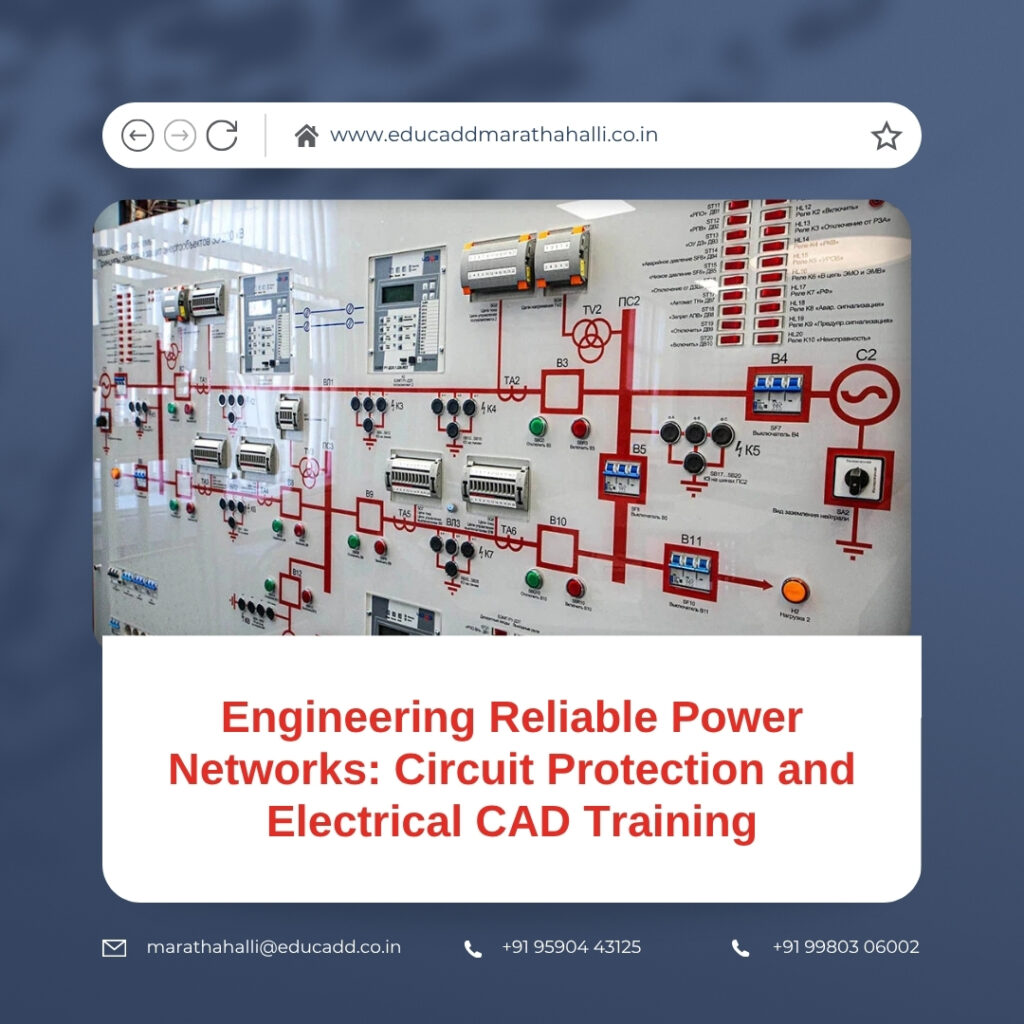
Reliable Power Network Design
In this blog, we explore how protective devices safeguard electrical circuits, how CAD tools streamline design, and why structured training is critical for professional success.
The Role of Circuit Protection in Modern Electrical Systems
Every electrical installation faces potential risks. Short circuits, overloads, and voltage fluctuations can damage equipment or cause accidents. Circuit protection devices—such as circuit breakers, fuses, and relays—act as safety barriers that prevent such incidents.
These devices work by detecting abnormal conditions and disconnecting the circuit before damage occurs. For example, a sudden current surge in a motor can trigger a breaker, preventing wire overheating. Similarly, surge protection devices shield sensitive electronics from voltage spikes.
Training in Reliable Power Network Design equips learners to select appropriate protective devices, calculate their ratings, and integrate them into accurate electrical layouts. Practical exercises ensure professionals can apply knowledge efficiently in real-world scenarios.
Proper training also familiarizes engineers with evolving codes and standards, ensuring compliance and safety in every design.
How Electrical CAD Transforms Design Efficiency
Before CAD, engineers relied on hand-drawn schematics. Mistakes were common, and updates were time-consuming. Today, Electrical CAD software has revolutionized electrical design. Tools like AutoCAD Electrical, EPLAN, and SolidWorks Electrical simplify complex layouts with automated wiring, symbol libraries, and simulation features.
CAD tools allow engineers to create precise schematics quickly. Any change in one part of the circuit updates all related components, saving time and reducing errors. Professionals can simulate fault conditions, verify protection coordination, and visualize protective devices in real-world setups.
When combined with circuit protection knowledge, CAD skills allow engineers to plan systems that are both efficient and safe. These skills are crucial in industries adopting automation and smart technologies.
Essential Training for Practical Expertise
Understanding theory is not enough; practical application is key. Structured training in circuit protection and Electrical CAD combines theory with hands-on practice.
Key areas covered include:
-
Choosing and coordinating protective devices
-
Calculating short-circuit and overload conditions
-
Integrating protective devices in CAD layouts
-
Complying with national and international electrical standards
-
Documenting designs for installation and maintenance
Hands-on exercises, such as designing power distribution panels with protective devices in CAD, bridge the gap between classroom knowledge and industry requirements. Training builds confidence, ensuring engineers can make accurate decisions on breaker sizing, wiring paths, and system safety.
Industry Applications of Circuit Protection and CAD Skills
Skills in circuit protection and Electrical CAD training essentials are widely applicable. Different sectors rely on these competencies to ensure safety, efficiency, and reliability:
-
Industrial Manufacturing – Proper protection reduces machine downtime and prevents electrical hazards.
-
Construction and Building Services – CAD-based layouts ensure safe wiring and efficient power distribution in residential and commercial projects.
-
Renewable Energy – Solar and wind systems require protective devices for inverters, batteries, and converters. CAD tools allow simulation before installation.
-
Automotive and Transportation – Electric vehicles and rail networks rely on precise electrical designs and protection schemes.
-
Oil and Gas – Hazardous environments demand compliance with safety regulations, and training ensures engineers can design fault-tolerant systems.
Understanding how these applications impact industries helps professionals see the real-world value of their training.
Career Opportunities with Circuit Protection and Electrical CAD
Professionals trained in circuit protection and Electrical CAD are in high demand. The combination of safety knowledge and CAD expertise opens multiple career paths:
-
Electrical Design Engineer – Creates layouts, selects protective devices, and ensures compliance.
-
CAD Specialist – Develops and maintains accurate schematics.
-
Maintenance Engineer – Uses protection knowledge to prevent system failures.
-
Project Engineer – Integrates design and execution for large projects.
-
Consultant or Trainer – Guides companies and institutions in safe electrical practices.
As industries move toward smart grids and digital twin systems, the value of skilled professionals grows. Trained engineers reduce operational risks, improve system efficiency, and contribute to safer power networks.
Conclusion: Empowering Electrical Professionals for Safer Systems
Electrical systems will continue to evolve with automation, renewable energy, and intelligent technologies. The foundation of these systems is safety and reliability, provided by proper circuit protection and efficient CAD-based design.
Investing in Reliable Power Network Design equips professionals to design and implement systems that are safe, compliant, and efficient. For students, engineers, and businesses, this training transforms knowledge into practical expertise, shaping a safer and smarter electrical future.

