
Designing Efficient Substations and Power Distribution Systems
Power distribution is a critical part of modern infrastructure. Every home, office, and industry depends on a reliable electrical network. At the heart of this network are substations, which act as hubs for managing and directing electricity. Learning Efficient Substation Power Design equips engineers and designers with the ability to create efficient, safe, and scalable electrical systems.
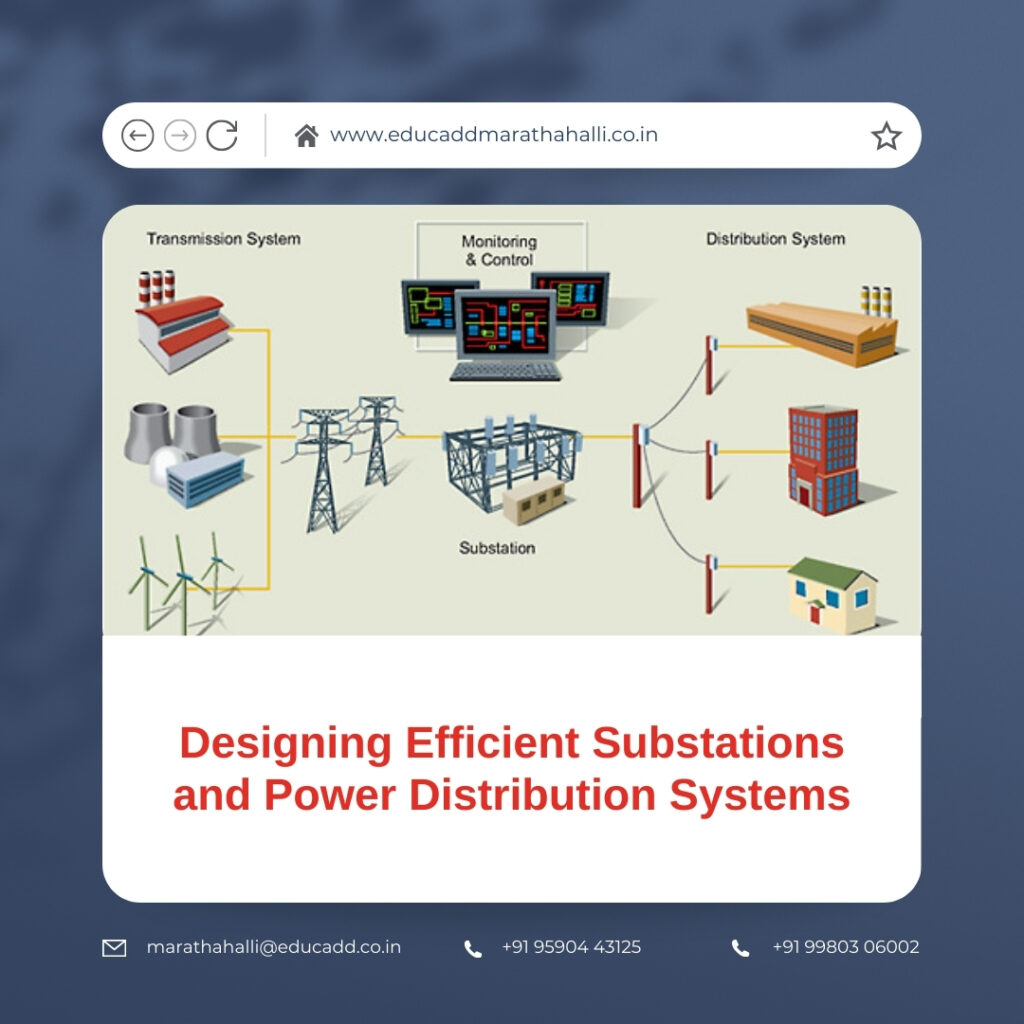
Efficient Substation Power Design
Drafting involves much more than creating technical drawings. It requires understanding electrical components, space planning, and industry standards. Engineers who master this skill can contribute to reliable power delivery and improved system safety. This guide explores the essential aspects of substation layouts, power distribution drafting, and the skills needed to excel in this field.
1. Understanding Substation Layouts
A substation is a key point in the electrical supply chain. Its primary role is to transform voltage levels and distribute power efficiently. Proper Efficient Substation Power Design ensures that all components are positioned optimally for performance and safety.
Typical substation elements include transformers, circuit breakers, busbars, isolators, control panels, and protection devices. Each has a designated location in the layout to prevent interference and improve maintenance access. For instance, transformers are often placed to minimize losses and ensure proper ventilation, while circuit breakers are strategically located for quick isolation during faults.
Learning drafting begins with understanding how these elements interact. CAD software such as AutoCAD Electrical or Revit MEP allows engineers to create accurate representations of substations. Drafting also includes clearance calculations, earthing plans, and provisions for future expansion. A well-planned layout minimizes costs, enhances safety, and reduces downtime.
2. Role of Power Distribution Drafting
Once electricity leaves a substation, it enters the distribution network that delivers power to end-users. Proper substation layout and power distribution drafting is essential for creating a clear, efficient distribution plan.
Drafting tasks include single-line diagrams, feeder planning, pole and cable placement, and underground network design. Each diagram acts as a blueprint for field technicians, ensuring installations are accurate and consistent.
Distribution systems can follow radial, ring, or interconnected designs. Radial systems are simple but vulnerable to faults, while ring systems offer better reliability at the cost of more complex drafting. Interconnected systems combine both, requiring advanced drafting expertise.
Effective drafting also addresses load balancing, voltage drops, and fault protection. Engineers can visualize potential problems on paper before construction begins, saving time and reducing errors.
3. Essential Skills for Drafting Professionals
Success in substation layout and power distribution drafting relies on a combination of technical knowledge and practical skills.
-
Electrical Knowledge: Understanding transformers, switchgear, protective devices, and voltage levels is crucial.
-
CAD Proficiency: Software skills in AutoCAD, EPLAN, or Revit MEP enable precise and professional drafts.
-
Standards Awareness: Knowledge of IEC, IEEE, and local regulations ensures compliance in all designs.
-
Attention to Detail: Minor errors can lead to costly or unsafe installations, making accuracy critical.
-
Spatial Visualization: Engineers must translate real-world equipment into accurate 2D or 3D representations.
Structured training programs, workshops, or hands-on experience in design offices can help engineers develop these skills efficiently.
4. Practical Applications of Drafting Skills
Drafting goes beyond creating drawings. It directly affects the construction, maintenance, and optimization of electrical networks. Substation layout and power distribution drafting has several practical applications:
-
Urban Infrastructure: Layouts guide city planners in expanding electrical networks while maintaining safety.
-
Industrial Installations: Factories require tailored substation designs to handle high-power machinery efficiently.
-
Renewable Integration: Solar and wind projects depend on proper substation and distribution planning for smooth grid connection.
-
Maintenance and Troubleshooting: Drafts provide references for repairs, upgrades, and fault resolution.
-
Educational Use: Drafting diagrams simplify complex systems, helping new engineers understand power distribution.
As electricity demand grows, professionals skilled in drafting are increasingly sought after by utilities, construction firms, and consultancy agencies.
5. Career Opportunities in Drafting for Power Systems
A career in substation layout and power distribution drafting offers growth and variety. Professionals can start as CAD technicians, junior designers, or electrical engineers. With experience, roles can expand to project engineer, design manager, or substation planning specialist.
Salaries vary by region and experience, but professionals with advanced software skills and practical knowledge are highly valued. Modern trends such as Building Information Modeling (BIM) and smart grids further increase demand for skilled drafters.
Freelancing is another avenue, with global companies outsourcing design work to experienced drafters. Continuous learning is essential, as industry standards, software, and technology evolve rapidly. Professionals who adapt quickly can maintain a competitive edge.
Conclusion
Understanding Efficient Substation Power Design is fundamental for creating reliable and safe electrical networks. This skill combines technical knowledge, design expertise, and practical experience to produce layouts that power modern life.
Professionals trained in this field play a vital role in urban expansion, industrial development, and renewable energy integration. With structured learning, practice, and commitment, engineers can build rewarding careers and contribute to efficient, resilient power systems. Drafting is not just about drawing lines—it’s about designing the future of electricity distribution.

