
Designing Harmony: Learn Space Planning in Modern Interior Design
Interior design today is more than arranging furniture or adding colors to walls. It is about building harmony between functionality and style. At the heart of this balance lies Modern Interior Space Planning. Whether it is a compact apartment or a luxurious villa, effective space planning determines how well a room serves its purpose. For modern homes and offices, this skill has become essential.
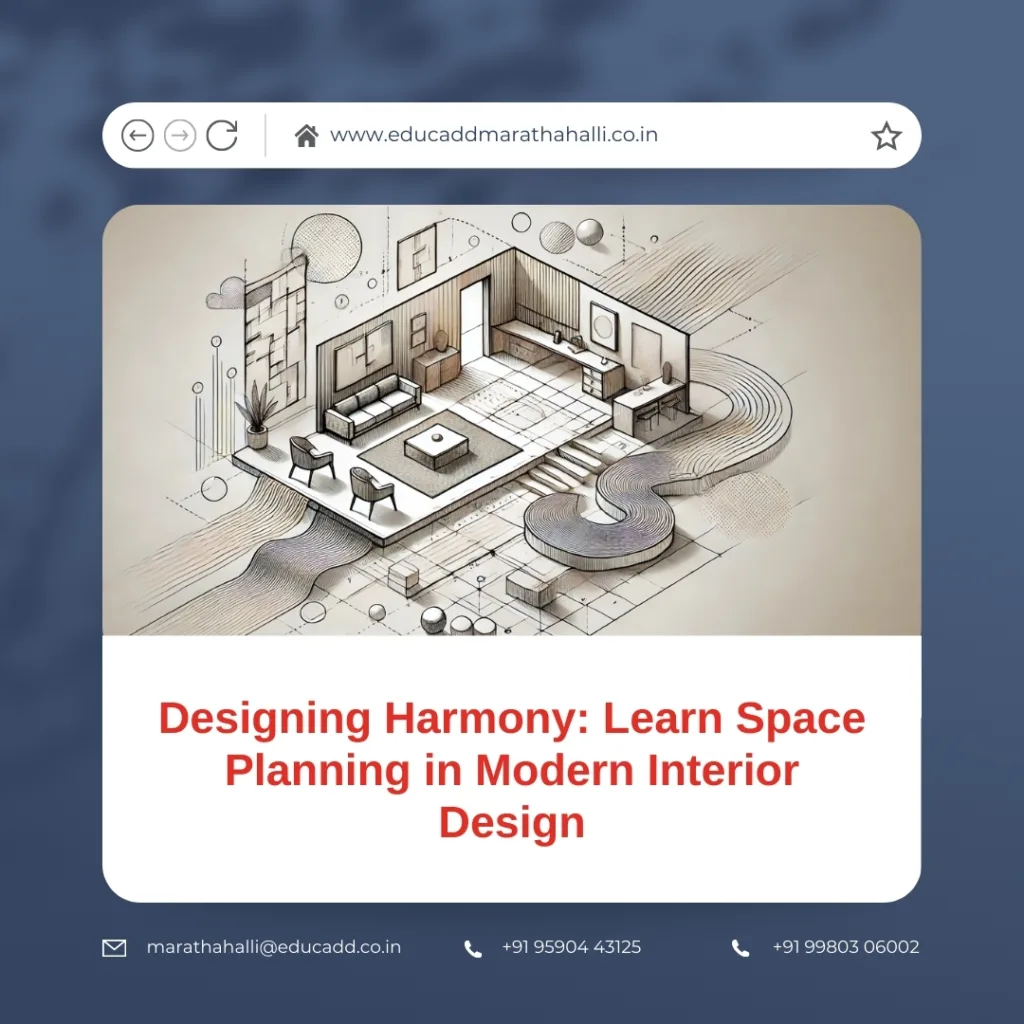
Modern Interior Space Planning
When you learn space planning in modern interior design, you not only enhance aesthetics but also elevate daily living. From creating fluid movement paths to maximizing natural light, thoughtful planning transforms ordinary interiors into inspiring spaces. This blog explores the role of space planning, its principles, techniques, and how you can apply it in modern design projects.
1. Why Space Planning Defines Modern Interior Design
Modern design thrives on simplicity, comfort, and efficiency. Yet, without proper planning, even the most beautiful interiors can feel cluttered or chaotic. Space planning answers a basic but vital question: how will people use this space every day?
For example, an open-concept living room must allow smooth flow between the dining and seating areas. Similarly, a home office should prioritize ergonomics and privacy. By carefully learning space planning in modern interior design, you create rooms that look stunning while remaining practical.
Key benefits of proper planning include:
-
Better flow: People move freely without obstacles.
-
Balanced proportions: Furniture feels aligned with room dimensions.
-
Enhanced comfort: Every element supports lifestyle needs.
-
Improved value: Well-planned interiors increase property appeal.
In essence, space planning is not about filling space but about shaping how people experience it.
2. Core Principles of Space Planning in Modern Interiors
To design spaces that function effortlessly, you need guiding principles. These principles make sure every design choice fits the bigger picture.
Function First
Each space has a purpose—rest, work, dining, or entertainment. When you learn space planning in modern interior design, begin by identifying primary activities. This ensures that furniture and layouts always serve the intended function.
Flow of Movement
Movement paths are invisible lines people follow within rooms. Avoid blocking these lines with bulky furniture. In modern interiors, open flow enhances the sense of spaciousness and connection.
Scale and Proportion
A sleek sofa may look beautiful in a showroom but overwhelm a compact living room. Maintaining proportion between furniture size and room dimensions is critical.
Flexibility
Modern living is dynamic. Spaces must adapt to different needs, such as a living room doubling as a guest room. Multi-functional furniture and modular layouts support flexibility.
Lighting and Ventilation
Planning should never ignore natural light or airflow. Strategic placement of windows, mirrors, and partitions maximizes both.
When you align these principles, your interiors achieve balance, comfort, and timeless appeal.
3. Techniques to Learn Space Planning in Modern Interior Design
Techniques transform abstract principles into practical action. Every designer or homeowner can apply these methods to achieve effective layouts.
Zoning Spaces
Zoning divides a room into functional areas. For instance, an open-plan apartment may include zones for cooking, dining, and relaxation. Rugs, lighting variations, or furniture placement can subtly define each area without walls.
Creating Focal Points
Modern interiors benefit from clear focal points. This could be a statement wall, a fireplace, or a piece of artwork. Aligning furniture around focal points creates visual order.
Layering Furniture
Start with major pieces like sofas, beds, or dining tables. Then add secondary furniture like chairs and side tables. Finally, include accessories. This layering process avoids overcrowding.
Maximizing Vertical Space
Many modern homes face limited square footage. Vertical design solutions—tall shelves, loft beds, or wall-mounted storage—help utilize every inch.
Technology Integration
Smart homes demand careful planning for devices, wiring, and automation systems. Design layouts that conceal technology without compromising accessibility.
By practicing these techniques, you learn how to design spaces that feel modern yet timeless.
4. Space Planning for Different Modern Interiors
Not all spaces are alike. Homes, offices, and retail interiors each demand unique planning strategies. Understanding these differences sharpens your design skills.
Residential Interiors
In homes, comfort and personalization come first. Living rooms require balance between social and private functions. Bedrooms should encourage rest and calm. Kitchens must focus on workflow efficiency, often through the “work triangle” concept—connecting stove, sink, and refrigerator.
Workspaces
Modern offices emphasize collaboration and focus. Space planning should encourage interaction through open layouts while also offering private zones for concentration. Ergonomic furniture is essential to maintain health and productivity.
Retail Environments
In stores, layouts influence customer behavior. A clear circulation path ensures people explore products without confusion. Strategic displays guide attention toward high-value merchandise.
Hospitality Spaces
Hotels, restaurants, and lounges require inviting yet efficient designs. Guest flow, seating density, and ambiance all depend on strong space planning.
By tailoring planning to each context, you create environments that perfectly match their purpose.
5. How to Learn and Apply Space Planning Skills
Developing expertise in space planning for modern interior design requires both study and practice. Fortunately, there are multiple ways to build this skill.
Formal Education
Design schools and training institutes offer structured programs. These courses cover design theory, CAD software, and project-based learning. They provide strong foundations for aspiring interior designers.
Online Learning
E-learning platforms now offer specialized courses on space planning. With flexible schedules and real-world case studies, they make it easier to upskill from anywhere.
Practical Application
Learning is incomplete without practice. Start with small projects, such as redesigning a bedroom or home office. Use digital tools like AutoCAD, SketchUp, or Revit to experiment with layouts.
Internships and Mentorships
Working under experienced designers exposes you to real-world challenges. Observing their planning process enhances both technical and creative abilities.
Continuous Inspiration
Explore design magazines, online galleries, and architecture exhibitions. Analyzing professional projects sharpens your design eye and keeps you updated with modern trends.
As you keep practicing, your ability to combine functionality and beauty grows stronger.
Conclusion
Modern interior design thrives on efficiency, comfort, and style. At its core lies the art of Modern Interior Space Planning. From creating smooth movement paths to designing flexible layouts, it determines how people live, work, and interact within interiors. By learning this skill, you gain the ability to craft spaces that enrich everyday life.
When you learn space planning in modern interior design, you do more than arrange furniture—you design experiences. Whether applied in homes, offices, or commercial spaces, effective planning ensures every square foot has meaning and purpose. Start practicing today, and you will soon transform ordinary rooms into extraordinary spaces.

