
Elevating Electrical Design Safety: CAD-Driven Compliance with Codes
Ensuring electrical safety is no longer just a regulatory formality—it is a professional responsibility that protects lives, property, and the efficiency of modern infrastructure. With electricity powering nearly every aspect of our homes, workplaces, and industrial setups, adherence to safety standards has become non-negotiable. Electrical Safety Codes – Design Compliance with CAD has emerged as a game-changing practice, allowing engineers and designers to merge technical precision with regulatory compliance. In this guide, we explore how CAD tools streamline design workflows, reduce errors, and guarantee that every electrical system meets stringent safety requirements.
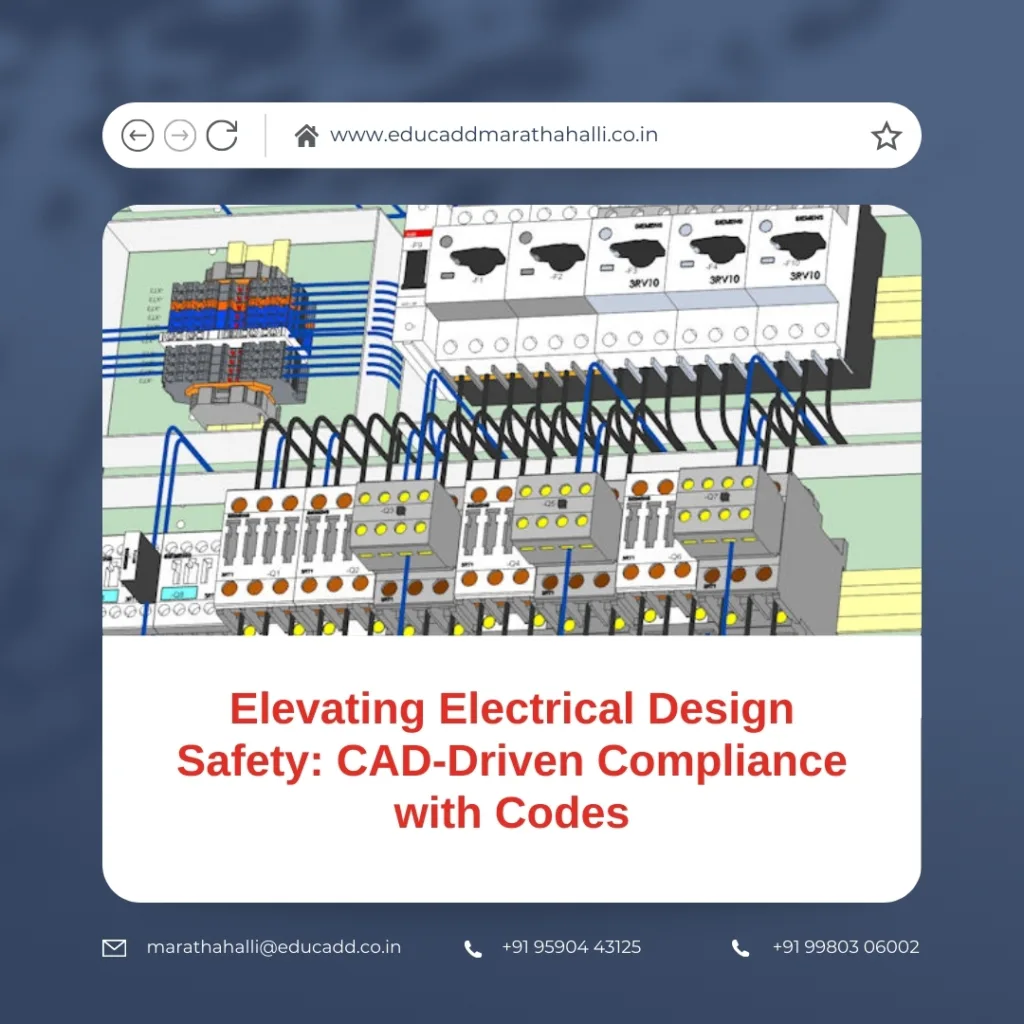
Electrical Design Safety CAD
Why Electrical Safety Codes Are Crucial
Electrical safety codes are carefully crafted standards designed to prevent hazards such as shocks, fires, and system failures. They are published by authorities like the National Electrical Code (NEC), International Electrotechnical Commission (IEC), and local regulatory bodies. Beyond legal obligations, these codes safeguard lives, protect property, and enhance the reliability of electrical systems.
Compliance with electrical safety codes ensures that designs:
-
Minimize the risk of electrical hazards.
-
Promote system reliability by preventing unexpected failures.
-
Meet legal and insurance requirements, avoiding fines and liability.
-
Support sustainable practices, including energy-efficient and low-risk solutions.
Without proper adherence, even a perfectly engineered system can lead to catastrophic consequences. Therefore, integrating code compliance from the earliest design stages is essential.
Harnessing CAD for Code-Compliant Electrical Designs
Computer-Aided Design (CAD) has revolutionized electrical engineering by combining precision, simulation, and compliance capabilities in one platform. CAD allows engineers to create highly accurate 2D schematics and 3D electrical models that automatically align with safety standards.
Advantages of CAD in Ensuring Electrical Safety
-
Reduced Design Errors: Automated detection of circuit overloads, improper grounding, and component conflicts helps prevent costly mistakes.
-
Integrated Code Libraries: Many CAD programs offer templates based on NEC, IEC, and other safety codes, ensuring compliance is built into the design.
-
Simulation and Testing: Virtual testing of electrical systems under various scenarios allows identification of risks before implementation.
-
Detailed Documentation: CAD generates comprehensive compliance reports, essential for audits, approvals, and maintenance.
-
Seamless Collaboration: CAD facilitates coordination among electrical, mechanical, and structural teams, reducing design conflicts and enhancing safety.
In essence, CAD bridges the gap between regulatory theory and practical design execution, making compliance faster, safer, and more reliable.
Key Electrical Safety Standards Designers Should Know
To maintain design compliance with CAD, engineers must stay informed about major safety standards. These codes define safe practices for wiring, grounding, protective devices, and overall system integrity.
National Electrical Code (NEC)
NEC provides detailed requirements for electrical installation, including conductor sizing, circuit protection, and grounding methods. CAD templates aligned with NEC standards reduce human error and simplify design review.
International Electrotechnical Commission (IEC)
IEC standards are globally recognized and cover low- and high-voltage systems. CAD software often includes IEC libraries, ensuring designs comply with international requirements.
Local and Regional Codes
Different regions adopt unique electrical standards. European nations use EN standards, while other areas have local variations. CAD allows designers to incorporate these regional codes seamlessly.
OSHA Guidelines
Occupational Safety and Health Administration (OSHA) standards emphasize workplace safety in environments with electrical hazards. CAD simulations help plan layouts that protect personnel from shocks and accidents.
IEEE Standards
IEEE provides technical standards for wiring, grounding, and system testing. CAD integration with IEEE standards ensures safe and technically accurate designs.
Understanding these codes and embedding them into CAD workflows guarantees that electrical systems meet both safety and legal standards.
Best Practices for Code-Compliant CAD Designs
Achieving full compliance requires systematic practices throughout the design process. Engineers must adopt methods that reinforce safety at every stage.
1. Utilize Code Libraries
Embed NEC, IEC, and regional standards directly into CAD software. This ensures components, connections, and protective devices automatically align with regulations.
2. Implement Automated Compliance Checks
Modern CAD tools offer verification features that check circuit loads, grounding paths, and labeling. Automated checks prevent oversight and accelerate project timelines.
3. Conduct Virtual Load and Fault Testing
Simulate electrical conditions, such as short circuits or overloads, to identify potential hazards before installation. CAD simulations prevent real-world accidents and reduce maintenance costs.
4. Maintain Detailed Documentation
Use CAD to generate schematics, wiring diagrams, and compliance reports. Proper documentation simplifies audits, inspections, and future troubleshooting.
5. Stay Updated with Code Revisions
Electrical codes evolve frequently. Engineers must ensure CAD libraries and templates reflect the latest NEC, IEC, or local updates. Continuous learning, workshops, and online courses are essential to maintain compliance.
Adopting these practices strengthens the reliability and safety of electrical designs while reducing risk and improving efficiency.
Challenges in Maintaining Electrical Safety Compliance
Even with CAD assistance, designers face several challenges in achieving full compliance.
-
Frequent Code Updates: Keeping CAD libraries current with evolving codes requires constant attention.
-
Complex Electrical Systems: Modern infrastructures involve multi-layered electrical systems, increasing the difficulty of compliance.
-
Human Oversight: Manual modifications or errors in legacy designs can compromise safety.
-
Regional Variations: International projects may need multiple code adaptations, complicating CAD design processes.
-
Cost and Time Limitations: Safety compliance sometimes involves extra components or design adjustments, affecting project budgets and schedules.
Awareness of these challenges allows engineers to proactively implement strategies, ensuring safety without compromising efficiency.
Future Trends in CAD-Driven Electrical Safety
The integration of CAD and electrical safety compliance is constantly evolving. Key trends shaping the future include:
AI-Powered Compliance Verification
Artificial Intelligence in CAD can detect code violations, suggest corrective actions, and optimize designs for safety, significantly reducing manual oversight.
IoT and Smart Electrical Systems
IoT devices provide real-time data on electrical loads, faults, and energy efficiency. CAD tools now integrate IoT insights for predictive safety measures.
Cloud Collaboration
Cloud-based CAD platforms allow multi-location teams to coordinate design and safety compliance efficiently, reducing errors and rework.
Energy-Efficient and Sustainable Designs
Electrical codes increasingly prioritize energy efficiency. CAD supports simulation and integration of renewable energy solutions to meet both safety and sustainability goals.
Virtual and Augmented Reality Testing
VR and AR can simulate real-world electrical hazards, helping engineers visualize and address potential risks before implementation.
These innovations ensure that electrical designers can create safe, efficient, and forward-thinking systems.
Conclusion: Achieving Excellence in Electrical Design with CAD
Ensuring Electrical Safety Codes – Design Compliance with CAD is more than a regulatory requirement—it is a professional commitment. CAD software empowers engineers to create designs that are accurate, safe, and fully compliant. By integrating code libraries, conducting automated checks, performing simulations, maintaining documentation, and staying updated on standards, designers can mitigate risks and enhance system reliability.
As technology progresses, incorporating AI, IoT, cloud collaboration, and VR simulations will redefine how engineers approach safety compliance. Ultimately, CAD makes it possible to merge creativity with strict adherence to codes, delivering electrical systems that are both innovative and safe.
By adopting these practices, electrical engineers ensure that every project adheres to the highest safety standards, protecting lives, reducing hazards, and supporting sustainable, efficient designs. Compliance is no longer just a rule—it is an engineering principle that guarantees excellence.

