
Structural Drafting Using Civil CADD: The Blueprint to Smarter, Stronger, and Safer Construction
Structural Drafting Using Civil CADD forms the backbone of modern construction documentation. Every bridge, residential tower, industrial shed, and commercial complex depends on precise structural drawings before execution begins. Engineers calculate loads, materials, and safety factors, yet those calculations become meaningful only when transformed into clear drawings. Structural drafting using Civil CADD converts engineering data into organized, readable, and build-ready plans that guide contractors on site.
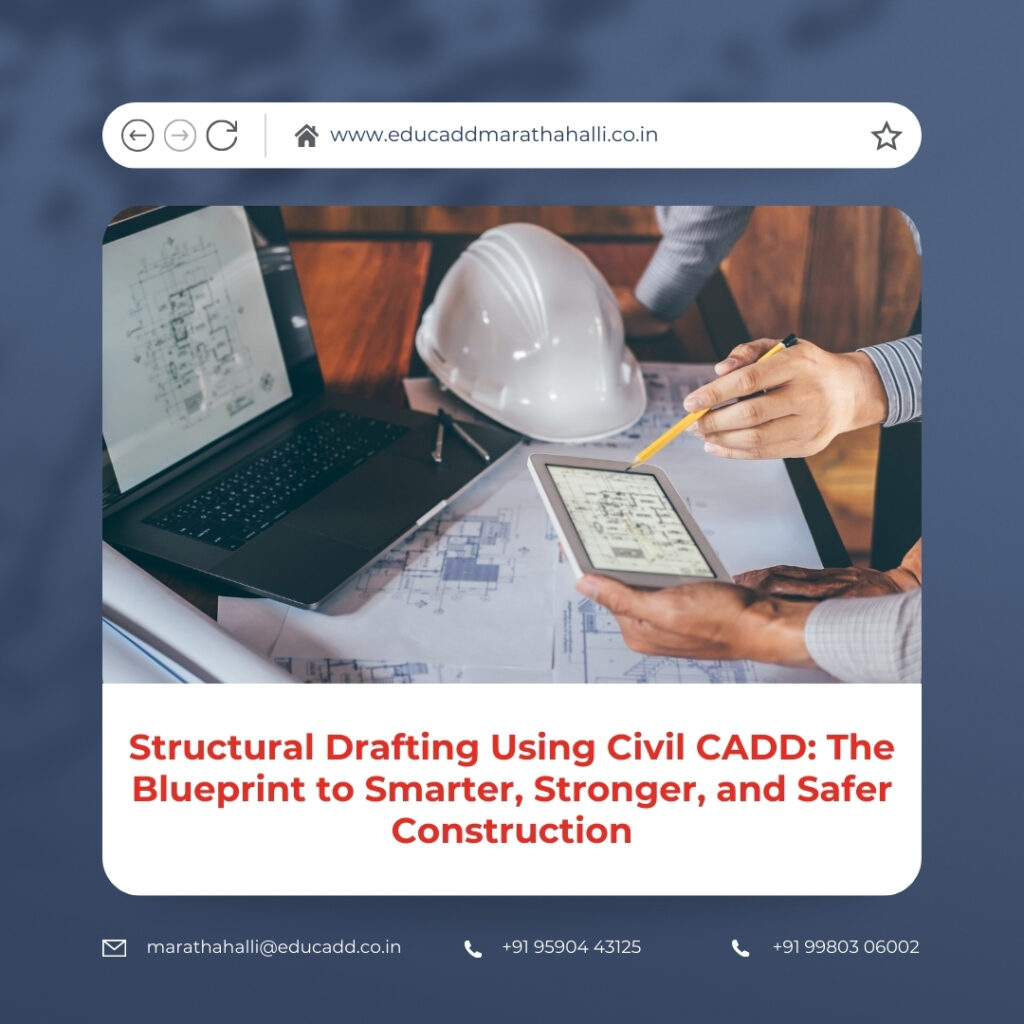
Structural Drafting Using Civil CADD
In today’s fast-moving construction environment, accuracy and speed determine project success. Manual drafting methods once required long hours and repetitive work. However, structural drafting using Civil CADD has redefined how professionals approach design documentation. It enhances clarity, reduces errors, and improves collaboration among engineers, architects, and site supervisors. This comprehensive guide explores concepts, workflows, tools, applications, benefits, and career opportunities connected with structural drafting using Civil CADD in a detailed and practical manner.
1. The Core Concept Behind Structural Drafting Using Civil CADD
Structural drafting using Civil CADD revolves around preparing technical drawings that represent structural components accurately. These drawings include foundation layouts, column grids, beam sections, slab reinforcements, and structural elevations. Each drawing communicates dimensions, material specifications, and construction instructions clearly. Without detailed drafting, even the most advanced structural design cannot move forward effectively.
Civil CADD software provides digital tools that replace traditional drawing boards and manual instruments. Drafters use commands to create precise lines, shapes, and dimensions. The software maintains scale consistency throughout the project. Structural drafting using Civil CADD ensures that measurements remain accurate and easily editable. As a result, designers can update plans quickly whenever engineers revise structural calculations.
Furthermore, digital drafting promotes uniformity. Title blocks, text styles, and dimension formats remain consistent across all drawings. This uniform presentation improves readability and professional appearance. Therefore, understanding the core concept of structural drafting using Civil CADD allows professionals to deliver drawings that meet industry expectations and construction requirements.
2. The Growing Importance of Structural Drafting in Infrastructure Development
Infrastructure development continues to expand globally. Urbanization drives the demand for residential buildings, highways, metro systems, and commercial hubs. In this evolving landscape, structural drafting using Civil CADD plays a central role in project execution. Contractors rely heavily on structural drawings to understand how different elements connect and function together.
Clear drafting reduces confusion during construction. Workers on site follow detailed reinforcement drawings and sectional views to place materials correctly. Structural drafting using Civil CADD ensures that these instructions remain precise and visually understandable. Consequently, construction teams avoid costly mistakes and delays.
Moreover, project timelines often depend on fast documentation. Digital drafting tools allow quick revisions and immediate file sharing. When engineers modify beam sizes or column dimensions, updates reflect instantly in the drawings. This adaptability makes structural drafting using Civil CADD essential for large-scale infrastructure projects where coordination and speed matter significantly.
3. Essential Commands and Drafting Tools in Civil CADD
Mastering the software tools strengthens efficiency and accuracy. Structural drafting using Civil CADD involves commands such as line, polyline, circle, rectangle, trim, extend, mirror, and offset. These tools help create structural layouts with geometric precision. Drafters use snapping options to align elements perfectly.
Layer management stands out as a powerful feature. Each structural component can appear on a separate layer with unique color and line type settings. For example, columns, beams, and reinforcement bars can remain organized within distinct layers. Structural drafting using Civil CADD becomes clearer and easier to edit when layers remain well structured.
Dimensioning tools allow accurate representation of measurements. Annotation features enable drafters to include notes, material specifications, and reinforcement details. Blocks further enhance productivity by allowing repeated use of similar structural elements. These combined tools make structural drafting using Civil CADD both systematic and highly efficient.
4. Drafting Foundation Plans with Precision and Clarity
Foundation drawings serve as the starting point of structural documentation. Structural drafting using Civil CADD ensures that footings, pile caps, and raft foundations appear clearly with proper dimensions and levels. Drafters illustrate depth details, reinforcement placement, and structural grid lines.
Accurate foundation plans prevent structural imbalance. Construction teams rely on these drawings to excavate and place reinforcement accurately. Structural drafting using Civil CADD simplifies corrections when soil reports require design changes. Engineers can revise footing sizes without recreating entire drawings.
Additionally, detailing sections of foundations improves understanding. Cross-sectional views explain reinforcement distribution and concrete cover. With digital tools, structural drafting using Civil CADD enhances both clarity and adaptability during the early stages of construction.
5. Column and Beam Detailing for Load Distribution
Columns and beams transfer loads safely to the foundation. Therefore, structural drafting using Civil CADD must present these components precisely. Column layout drawings indicate positions, sizes, and grid references. Beam drawings specify spans, depths, and reinforcement patterns.
Detailed sectional views improve interpretation. Structural drafting using Civil CADD allows drafters to represent stirrups, main bars, and lap lengths accurately. Engineers review these details to confirm structural integrity before construction begins.
When design revisions occur, digital drafting reduces time consumption. Adjusting beam dimensions or column sizes becomes simple and efficient. Consequently, structural drafting using Civil CADD ensures smooth coordination between design and execution phases.
6. Slab Reinforcement and Structural Floor Plans
Slabs distribute loads across structural frameworks. Preparing slab reinforcement drawings demands careful attention. Structural drafting using Civil CADD enables accurate representation of bar spacing, diameter specifications, and support conditions.
Floor plans show slab thickness, drop panels, and reinforcement directions clearly. Drafters label each area systematically to avoid confusion on site. Structural drafting using Civil CADD ensures that reinforcement details remain readable and logically arranged.
Furthermore, digital drafting allows easy replication of repetitive floor layouts. In multi-storey buildings, similar slab patterns appear across levels. Structural drafting using Civil CADD accelerates this process while maintaining consistency throughout the project documentation.
7. Reinforcement Schedules and Material Estimation
Reinforcement detailing influences structural strength and budget planning. Structural drafting using Civil CADD assists in preparing accurate bar bending schedules. These schedules summarize bar shapes, cutting lengths, and total quantities.
Precise schedules help procurement teams estimate material requirements efficiently. Contractors depend on these documents to order steel accurately. Structural drafting using Civil CADD reduces wastage by aligning reinforcement quantities with design specifications.
In addition, digital calculations minimize arithmetic errors. Drafters can update schedules quickly when design modifications occur. Therefore, structural drafting using Civil CADD strengthens both structural safety and cost control.
8. Coordination Between Structural and Architectural Layouts
Every successful building depends on alignment between structural and architectural drawings. Structural drafting using Civil CADD ensures that structural grids match architectural spaces. Columns must align with walls and functional layouts.
Overlaying drawings helps identify clashes early. Drafters adjust placements before construction begins. Structural drafting using Civil CADD improves interdisciplinary communication and prevents site conflicts.
This coordination enhances project efficiency. Clear documentation reduces misinterpretation among engineers, architects, and contractors. Thus, structural drafting using Civil CADD supports seamless collaboration across project teams.
9. Quality Assurance and Error Prevention Techniques
Maintaining accuracy remains essential in structural drafting. Structural drafting using Civil CADD incorporates systematic checking procedures. Drafters verify dimensions, confirm reinforcement spacing, and review alignment with design calculations.
Layer isolation helps detect missing or overlapping elements. Annotation clarity ensures correct interpretation. Structural drafting using Civil CADD allows easy revision without compromising overall drawing structure.
Regular review sessions strengthen quality control. By combining software tools with disciplined checking, structural drafting using Civil CADD minimizes construction risks and enhances reliability.
10. Advantages of Digital Drafting Over Traditional Methods
Digital drafting revolutionized structural documentation. Structural drafting using Civil CADD eliminates repetitive manual drawing tasks. Edits occur faster and with greater precision.
Files remain easy to store and share. Structural drafting using Civil CADD enables electronic communication among project stakeholders. This approach saves physical storage space and printing costs.
Moreover, software automation increases productivity. Blocks, templates, and reusable elements reduce drafting time significantly. Therefore, structural drafting using Civil CADD delivers clear advantages compared to traditional board drafting methods.
11. Career Scope in Structural Drafting Using Civil CADD
Skilled drafters remain in high demand across the construction industry. Structural drafting using Civil CADD opens opportunities in consulting firms, infrastructure companies, and design studios. Professionals can work as CAD technicians, structural detailers, or project coordinators.
Experience improves career growth. Advanced knowledge in structural drafting using Civil CADD enhances employability and earning potential. Many professionals expand into design coordination and project management roles.
As urban development accelerates, the demand for qualified drafting experts continues to rise. Therefore, structural drafting using Civil CADD offers stable and rewarding career prospects.
12. Integration with Modern Engineering Technologies
Technology continues to reshape construction practices. Structural drafting using Civil CADD integrates with 3D modeling and building information modeling systems. This integration improves visualization and coordination.
Engineers can analyze structural performance before construction begins. Structural drafting using Civil CADD supports data exchange between design platforms. Collaboration becomes more efficient and transparent.
By adapting to new technologies, professionals strengthen their expertise. Structural drafting using Civil CADD remains a foundational skill that complements advanced digital tools.
13. Best Practices for Professional Structural Drafting
Consistency improves professionalism. Structural drafting using Civil CADD benefits from standardized templates, clear layer naming, and organized file structures. Maintaining uniform dimension styles enhances readability.
Effective communication with engineers prevents drafting errors. Structural drafting using Civil CADD requires attention to detail and disciplined workflow management. Regular backups protect project data.
Adopting best practices ensures timely delivery and high-quality output. Professionals who maintain systematic drafting habits excel in structural drafting using Civil CADD.
14. Future Outlook of Structural Drafting in Construction
The future of construction depends heavily on digital innovation. Structural drafting using Civil CADD will continue evolving with automation and intelligent design tools. Cloud collaboration will improve remote coordination.
Artificial intelligence may assist in detecting drafting inconsistencies. Sustainable design considerations will influence detailing methods. Structural drafting using Civil CADD will remain essential despite technological advancements.
Professionals who upgrade their knowledge will stay competitive. Continuous learning strengthens expertise in structural drafting using Civil CADD and ensures long-term success.
Conclusion
Structural Drafting Using Civil CADD stands as a cornerstone of modern structural engineering and construction documentation. It transforms complex engineering calculations into precise drawings that guide construction teams confidently. From foundation detailing to reinforcement schedules, every structural component relies on accurate drafting.
Digital tools improve speed, clarity, and collaboration. Structural drafting using Civil CADD reduces errors, enhances quality control, and supports cost-effective construction. As infrastructure projects grow in complexity, this skill becomes increasingly valuable.
Professionals who master structural drafting using Civil CADD gain strong career opportunities and contribute significantly to safe and efficient construction practices. In an industry driven by precision and performance, this expertise remains indispensable for building stronger and smarter structures.

