
Designing for Comfort and Flow: How EduCADD Teaches Space Planning & Ergonomics
Every space tells a story. Whether it’s a cozy home, a modern office, or a bustling café, the way it’s planned influences how people feel and function inside it. Space Planning & Ergonomics are the tools that help designers shape these experiences. At EduCADD, students learn not just how to arrange furniture or pick colors, but how to design environments where beauty and function go hand in hand.
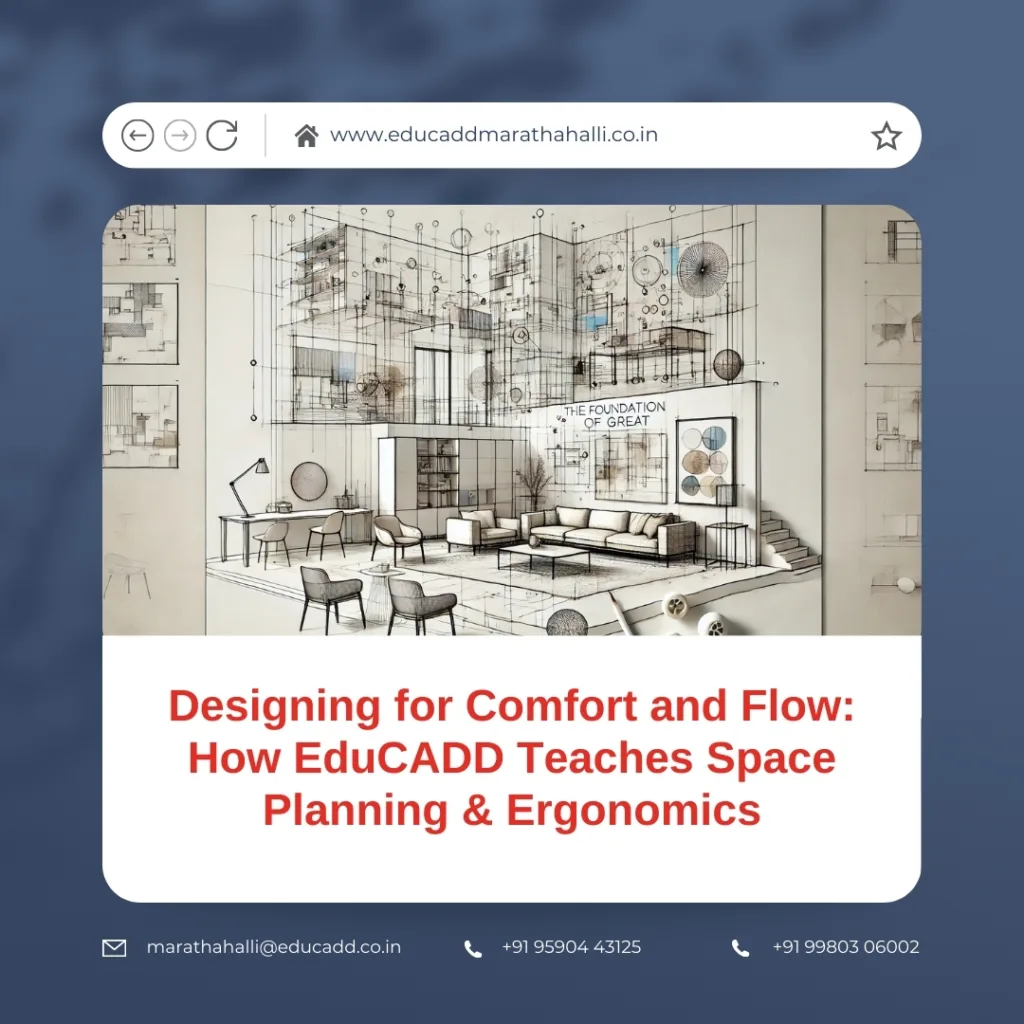
Space Planning and Ergonomics
This training goes beyond surface-level aesthetics. You’ll discover how to optimize layouts, improve human comfort, and ensure that every element works in harmony. With expert guidance, hands-on projects, and the latest design tools, EduCADD prepares you to create spaces that feel good to live and work in.
1. Building the Blueprint: Fundamentals of Space Planning
Space planning is the backbone of any design project. Without a clear plan, even the most beautiful space can feel chaotic or uncomfortable. EduCADD begins with the essentials—how to think about space from a user’s perspective.
Here, you’ll explore:
-
Space zoning to separate private, public, and service areas
-
Circulation flow mapping for smooth movement
-
Maximizing utility without overcrowding or underusing space
The course helps you approach design logically. For example, in a small apartment, a clever arrangement of multipurpose furniture can make a living room double as a workspace without feeling cramped. In commercial spaces, strategic positioning of desks, meeting areas, and pathways can boost productivity and morale.
2. Ergonomics: Designing for Human Comfort
Even the best-planned space falls short if it’s uncomfortable to use. That’s where ergonomics steps in. At EduCADD, you’ll learn how to design with the human body in mind—making sure every element fits the people who use it.
The curriculum covers:
-
Human dimensions and posture-friendly design
-
Optimal heights for furniture and fixtures
-
Lighting that reduces strain and enhances mood
You’ll also explore the consequences of poor ergonomic design—like chairs that cause back pain, desks that strain wrists, or lighting that causes eye fatigue. By understanding both physical and psychological comfort, you’ll be able to design spaces that promote well-being.
3. Balancing Aesthetics with Functionality
Many new designers fall into the trap of choosing looks over practicality, or vice versa. EduCADD teaches you to strike the perfect balance. You’ll see how visual appeal and functionality can work together rather than compete.
In this module, you’ll work on:
-
Using proportion and scale to make spaces feel natural
-
Color theory to influence atmosphere and perception
-
Material selection that combines durability with design appeal
Through case studies, you’ll analyze examples like open kitchens that feel spacious yet remain practical for cooking, or retail stores that attract customers with their layout while encouraging easy navigation.
4. Leveraging Technology for Smarter Designs
Modern designers have powerful tools at their disposal, and EduCADD ensures you can use them effectively. With CAD software, you’ll learn to translate your ideas into precise, workable plans.
Training includes:
-
2D drafting for accurate measurements and layouts
-
3D modeling for visualizing concepts
-
Digital simulations to test lighting, movement, and comfort
The program also introduces emerging tools like VR and AR, which let clients experience a space before it’s built. This technology-driven approach not only improves accuracy but also enhances communication with stakeholders, making your designs easier to understand and approve.
5. From Classroom to Career: Real-World Practice
EduCADD believes learning should be hands-on. That’s why the program includes practical projects that mirror the challenges professionals face in the field.
Students work on:
-
Live design projects with real constraints
-
Collaborative team assignments to develop teamwork and communication
-
Portfolio development to showcase skills to potential employers
By graduation, you’ll be ready for roles like:
-
Interior space planner
-
Workplace designer
-
Residential interior consultant
-
Furniture and product designer
With the growing demand for ergonomic and efficient spaces, these skills are relevant across industries—from residential projects to corporate design and hospitality.
Conclusion – Designing Spaces That Work for People
Mastering Space Planning & Ergonomics means more than arranging furniture or picking colors—it’s about shaping environments that enhance daily life. EduCADD gives you the knowledge, tools, and confidence to create designs that are as functional as they are beautiful.
Whether you want to design homes, offices, or public spaces, the ability to merge planning with human-centered design will set you apart. In a world where comfort and efficiency are essential, the skills you gain at EduCADD will help you create spaces that don’t just look good—they work beautifully for the people who use them.

