
Revolutionizing Urban Development: Innovative Smart Infrastructure Design with BIM Tools
Modern cities demand infrastructure that is not only functional but also intelligent, sustainable, and adaptive. Gone are the days when construction relied solely on traditional methods. Today, smart infrastructure design using BIM tools has emerged as a game-changer. It allows architects, engineers, and project managers to plan, design, and maintain infrastructure with unparalleled precision and efficiency.
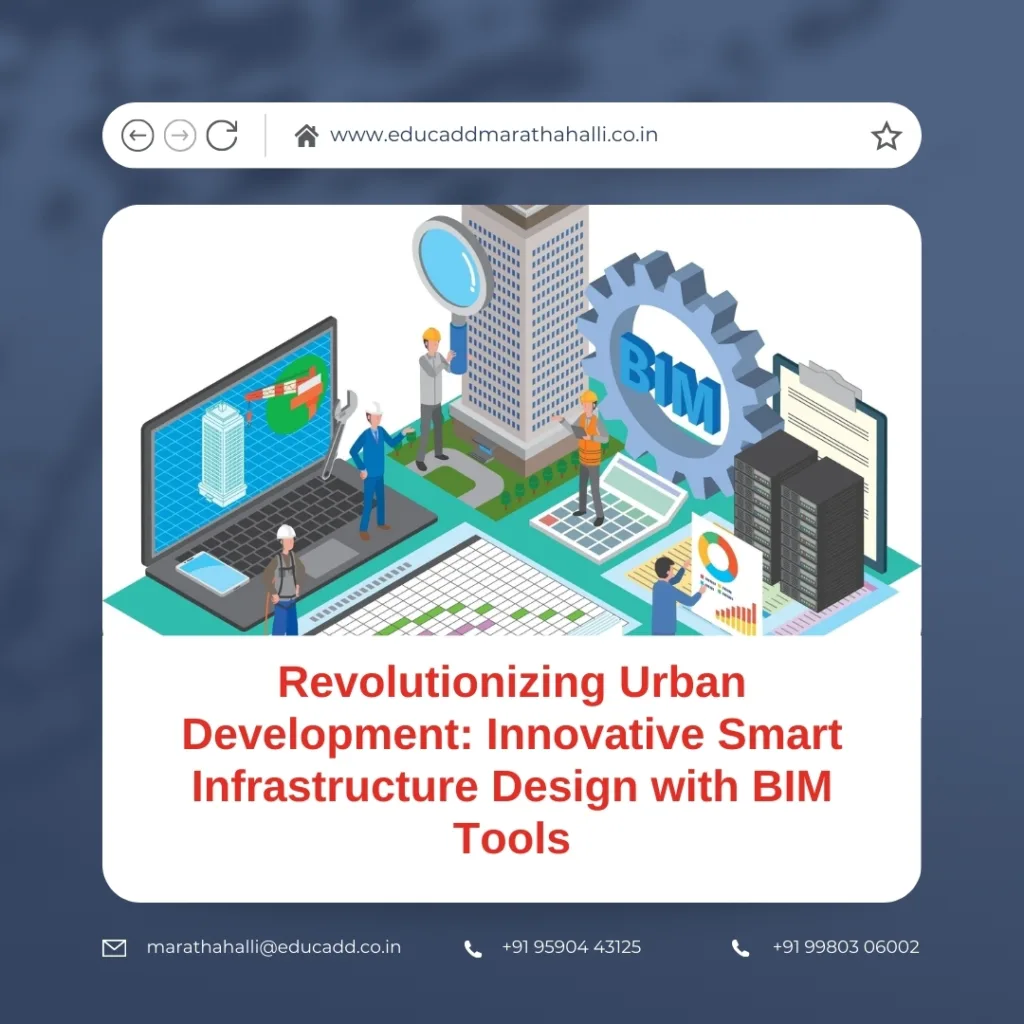
Smart Infrastructure Design BIM
BIM, or Building Information Modeling, is more than just a software solution; it is a comprehensive methodology that integrates 3D modeling, data management, and collaborative workflows. By leveraging BIM tools, infrastructure projects can become smarter, cost-effective, and environmentally responsible. This article delves into the significance, benefits, and implementation strategies of smart infrastructure design using BIM tools, showcasing how it transforms the urban landscape.
What is Smart Infrastructure and the Role of BIM
Smart infrastructure refers to systems designed with intelligence, sustainability, and responsiveness at their core. This includes roads, bridges, public transport networks, energy grids, and water management systems. Unlike conventional infrastructure, smart systems are monitored, analyzed, and optimized continuously using digital tools.
BIM tools provide a digital platform for designing, visualizing, and managing these projects. They enable professionals to develop 3D models enriched with information about materials, geometry, and schedules. In smart infrastructure, BIM helps detect design conflicts, simulate scenarios, and streamline workflows.
Moreover, smart infrastructure design using BIM tools ensures that projects are not only efficient during construction but also maintainable over their entire lifecycle. Digital models track every component, helping in predictive maintenance, energy optimization, and operational management.
Benefits of Smart Infrastructure Design Using BIM
The integration of BIM tools in infrastructure design offers transformative benefits:
-
Improved Collaboration: Multiple teams work on a single digital model, sharing updates in real-time. This reduces miscommunication and prevents costly mistakes.
-
Precision Planning: BIM tools allow project teams to simulate environmental impact, structural load, and workflow efficiency before actual construction begins.
-
Time and Cost Savings: By reducing errors and enabling accurate material estimation, BIM minimizes budget overruns and project delays.
-
Sustainable Design: Tools within BIM help analyze energy consumption, optimize material use, and incorporate renewable resources into projects.
-
Lifecycle Management: From planning to maintenance, BIM supports ongoing monitoring and upgrades, increasing the lifespan of infrastructure.
Transitioning to smart infrastructure design using BIM tools enhances project delivery, reduces risk, and ensures that infrastructure can adapt to future needs.
Leading BIM Tools Transforming Infrastructure Design
Several specialized BIM tools have revolutionized the planning and execution of smart infrastructure:
-
Autodesk Revit: Ideal for architectural and structural modeling, Revit enables precise visualization and construction planning.
-
Navisworks: This tool ensures coordination, detects clashes, and streamlines timelines for multi-disciplinary teams.
-
Bentley Systems: Focused on civil and transportation projects, Bentley offers advanced geospatial analysis and lifecycle management capabilities.
-
Tekla Structures: Known for structural detailing and fabrication planning, Tekla helps engineers create highly accurate models.
-
Civil 3D: Perfect for civil infrastructure like roads, bridges, and drainage systems, Civil 3D automates design and enhances efficiency.
By using these BIM platforms, professionals ensure that smart infrastructure design using BIM tools is precise, collaborative, and adaptable. Each tool contributes uniquely to the project’s digital ecosystem.
Implementation Steps for Smart Infrastructure Using BIM
To maximize the benefits of BIM, infrastructure projects should follow a structured approach:
-
Comprehensive Digital Modeling: Begin with a detailed 3D model that includes environmental data, topography, and structural components.
-
Integrated Collaboration: Engage all stakeholders—architects, engineers, contractors, and facility managers—in a unified BIM workflow.
-
Scenario Simulation: Use BIM to test construction sequences, traffic patterns, and energy efficiency to minimize risks.
-
IoT Integration: Connect BIM models with sensors and IoT devices to monitor traffic flow, energy usage, and structural health in real-time.
-
Continuous Monitoring: Maintain infrastructure using data-driven insights, ensuring timely maintenance, upgrades, and sustainability compliance.
By implementing these steps, organizations can achieve highly efficient, cost-effective, and durable infrastructure solutions. Smart infrastructure design using BIM tools provides the foundation for resilient and intelligent urban spaces.
Emerging Trends in Smart Infrastructure and BIM
The future of infrastructure design is increasingly digital and intelligent. Several emerging trends are shaping this domain:
-
Artificial Intelligence (AI): AI algorithms can optimize design, predict structural issues, and recommend sustainable materials.
-
Digital Twins: Real-time virtual replicas of infrastructure allow continuous monitoring, performance evaluation, and predictive maintenance.
-
Cloud Collaboration: Cloud-based BIM solutions enable global teams to collaborate seamlessly, reducing errors and speeding up workflows.
-
Virtual and Augmented Reality: AR and VR tools provide immersive project visualization, helping stakeholders make informed decisions.
-
Green and Sustainable Focus: Future BIM-enabled projects emphasize energy efficiency, waste reduction, and environmental responsibility.
As technology evolves, smart infrastructure design using BIM tools will continue to enable cities that are adaptive, efficient, and resilient to future challenges.
Conclusion: The Importance of Smart Infrastructure Design
In conclusion, smart infrastructure design using BIM tools is essential for modern urban development. It empowers engineers, architects, and city planners to create sustainable, resilient, and intelligent infrastructure. By integrating data-driven workflows, real-time collaboration, and predictive modeling, BIM transforms traditional construction into a futuristic process.
Adopting BIM tools improves efficiency, reduces errors, and enhances sustainability. It ensures that infrastructure projects are not only functional but also intelligent, adaptive, and environmentally responsible. As cities expand and urban demands grow, mastering smart infrastructure design using BIM tools becomes crucial for creating the resilient urban landscapes of tomorrow.
In essence, embracing BIM in infrastructure design is more than a technological upgrade—it is a transformative approach that shapes smarter, safer, and more efficient cities.

