
Reimagining Construction Excellence: How BIM Powers Smart, Connected, and Future-Ready Projects
The construction landscape is undergoing a powerful transformation, driven by the need for efficiency, sustainability, and precision. Traditional building practices, once dependent on fragmented data and manual coordination, are now being replaced by integrated digital solutions. At the heart of this evolution lies Building Information Modeling (BIM), a technology that has redefined how projects are conceptualized, designed, and executed. Smart BIM Construction Solutions introduces a collaborative ecosystem where information flows seamlessly between stakeholders.
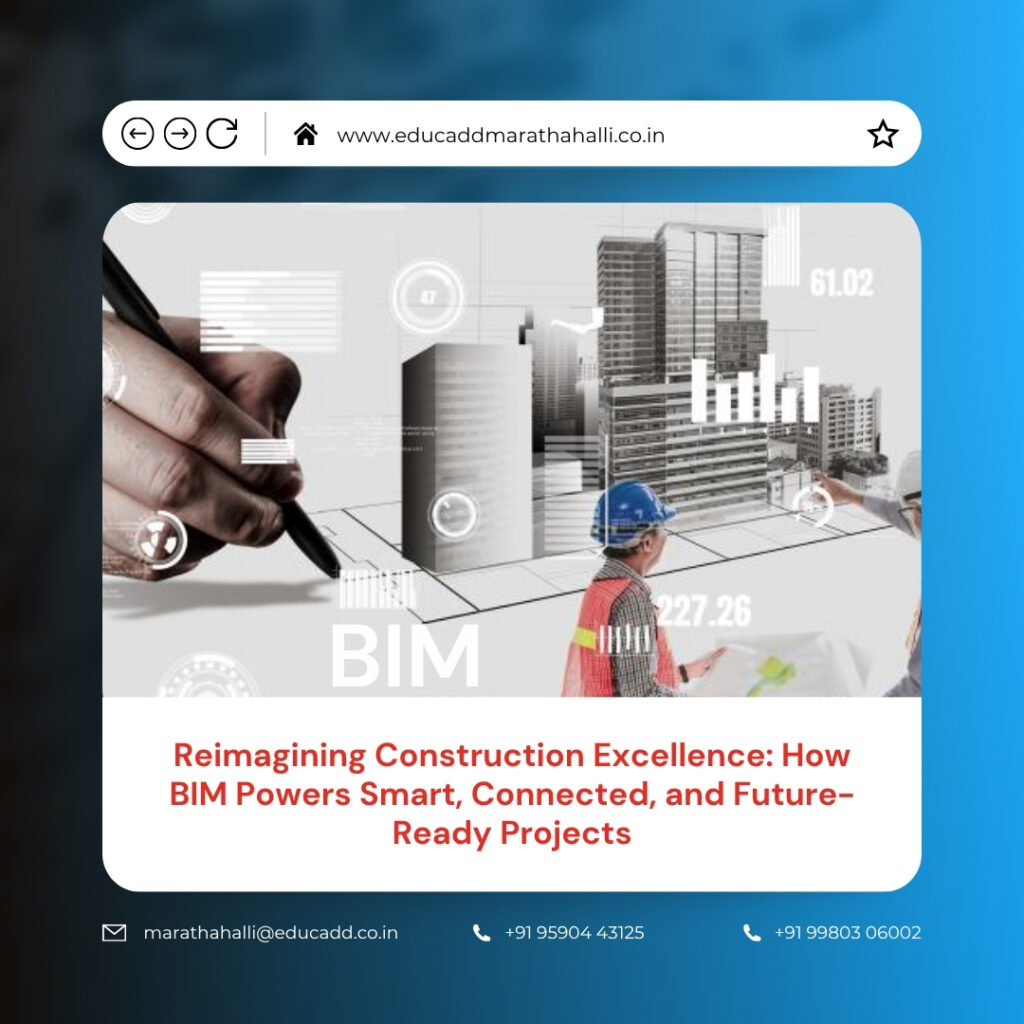
Smart BIM Construction Solutions
It empowers professionals to visualize outcomes, predict challenges, and optimize every phase of a project. As industries push toward digital maturity, BIM has become a cornerstone of innovation. This blog explores how BIM is shaping modern construction practices and why it is essential for building smarter, faster, and more sustainable infrastructure.
1. The Evolution of Construction in the Digital Age
Construction has moved far beyond traditional blueprints and isolated workflows. Today, digital transformation is reshaping how projects are planned and delivered. Smart construction represents this shift, where advanced technologies are integrated into every stage of development.
BIM plays a central role in this transformation by connecting data, people, and processes. Instead of working in silos, teams collaborate within a shared digital environment. This approach reduces inefficiencies and ensures that every decision is backed by accurate information. As a result, construction projects become more predictable and streamlined.
2. Decoding BIM: A Smarter Way to Build
Building Information Modeling is not just a tool; it is a comprehensive process that creates a digital representation of a structure. This model includes detailed information about materials, dimensions, systems, and performance.
Unlike traditional drawings, BIM provides a multi-dimensional view of a project. It allows stakeholders to analyze and simulate different aspects before construction begins. This data-driven approach leads to better planning and improved outcomes. Consequently, BIM has become an essential component of modern construction strategies.
3. Transforming Collaboration Across Teams
One of the most significant advantages of BIM is its ability to enhance collaboration. In conventional construction, miscommunication often leads to delays and errors. However, BIM eliminates these challenges by creating a centralized platform for all project data.
Team members can access updated information in real time, ensuring alignment across departments. Architects, engineers, and contractors work together more effectively, reducing misunderstandings. This collaborative approach improves efficiency and fosters a more cohesive workflow.
4. Precision in Design and Visualization
Accurate design is the foundation of any successful construction project. BIM enables professionals to create detailed 3D models that provide a realistic representation of the final structure.
These models allow stakeholders to explore every aspect of the design before construction begins. Potential issues can be identified and resolved early, preventing costly changes later. As a result, projects benefit from greater accuracy and improved quality.
5. Optimizing Project Planning and Execution
Effective planning is crucial for delivering projects on time and within budget. BIM enhances planning by integrating data related to scheduling, resources, and logistics.
This holistic view enables project managers to make informed decisions. They can anticipate challenges and adjust strategies accordingly. With better planning, construction processes become more efficient, leading to successful project execution.
6. Cost Control and Financial Transparency
Managing costs is one of the biggest challenges in construction. BIM addresses this issue by providing accurate cost estimates based on real-time data.
- Detailed quantity take-offs improve budget accuracy
- Real-time updates help monitor expenses effectively
This level of financial transparency allows stakeholders to control costs and avoid unexpected overruns. Ultimately, BIM contributes to better financial management and increased profitability.
7. Accelerating Project Timelines with Smart Scheduling
Time efficiency is a critical factor in construction success. BIM integrates scheduling data with design models, enabling better timeline management.
- Improved coordination reduces delays
- Faster decision-making enhances project speed
By streamlining workflows and minimizing disruptions, BIM ensures that projects are completed within the planned timeframe. This not only meets client expectations but also improves overall productivity.
8. Detecting Conflicts Before They Occur
Clash detection is one of the most powerful features of BIM. It identifies conflicts between different building systems during the design phase.
By addressing these issues early, teams can prevent costly errors during construction. This proactive approach reduces risks and ensures smoother project execution. As a result, projects are delivered with higher efficiency and fewer complications.
9. Driving Sustainability in Construction
Sustainability has become a key focus in the construction industry. BIM supports environmentally responsible practices by enabling energy analysis and resource optimization.
With better insights into material usage and energy performance, projects can be designed to minimize environmental impact. This leads to reduced waste and improved efficiency. Therefore, BIM plays a crucial role in promoting sustainable construction.
10. Enhancing Lifecycle Management of Buildings
BIM extends beyond the construction phase, offering value throughout the building lifecycle. The data stored in BIM models can be used for maintenance and facility management.
This ensures that buildings operate efficiently over time. Facility managers can access accurate information, making it easier to plan maintenance and upgrades. Consequently, BIM improves the long-term performance of structures.
11. Integrating BIM with Advanced Technologies
The true potential of smart construction is realized when BIM is combined with emerging technologies. Integration with artificial intelligence, IoT, and cloud computing enhances its capabilities.
These technologies enable real-time monitoring, predictive analytics, and automation. As a result, construction processes become more intelligent and adaptive. This integration is paving the way for the next generation of smart infrastructure.
12. Overcoming Challenges in BIM Adoption
Despite its benefits, adopting BIM can be challenging for some organizations. Initial investment costs and the need for skilled professionals can act as barriers.
However, these challenges can be addressed through proper training and strategic planning. Organizations that invest in BIM often experience long-term gains. Therefore, the transition to BIM is a worthwhile investment.
13. The Future Outlook of Smart Construction
The future of construction is closely tied to digital innovation. BIM will continue to evolve, offering more advanced features and capabilities.
As adoption increases, construction processes will become more efficient and sustainable. Smart cities and intelligent infrastructure will become a reality. BIM will remain a key driver of this transformation.
14. Building a Career in BIM and Smart Construction
For professionals, BIM offers exciting career opportunities. The demand for skilled BIM experts is growing across the globe.
Learning BIM equips individuals with the skills needed to succeed in a competitive industry. It opens doors to diverse roles and career growth. As the industry evolves, BIM expertise will become increasingly valuable.
Conclusion
Smart BIM Construction Solutions is revolutionizing the industry by introducing efficiency, accuracy, and sustainability. It transforms traditional workflows into integrated, data-driven processes that deliver better results. From design and planning to execution and maintenance, BIM enhances every stage of a project.
While challenges exist, the benefits of adopting BIM far outweigh the initial efforts. Organizations that embrace this technology position themselves for long-term success. For professionals, mastering BIM is a step toward a promising future in construction. As the industry continues to evolve, BIM will remain at the forefront, shaping a smarter and more connected world.

