
Blueprint to Building Funnels That Truly Convert
In today’s digital landscape, having a funnel is not enough. Businesses are constantly looking for ways to guide potential customers through a journey that ends in sales, sign-ups, or engagement. Yet, many funnels fail because they lack clarity, structure, or strategy. That’s where Sales Funnel Conversion Strategy becomes crucial.
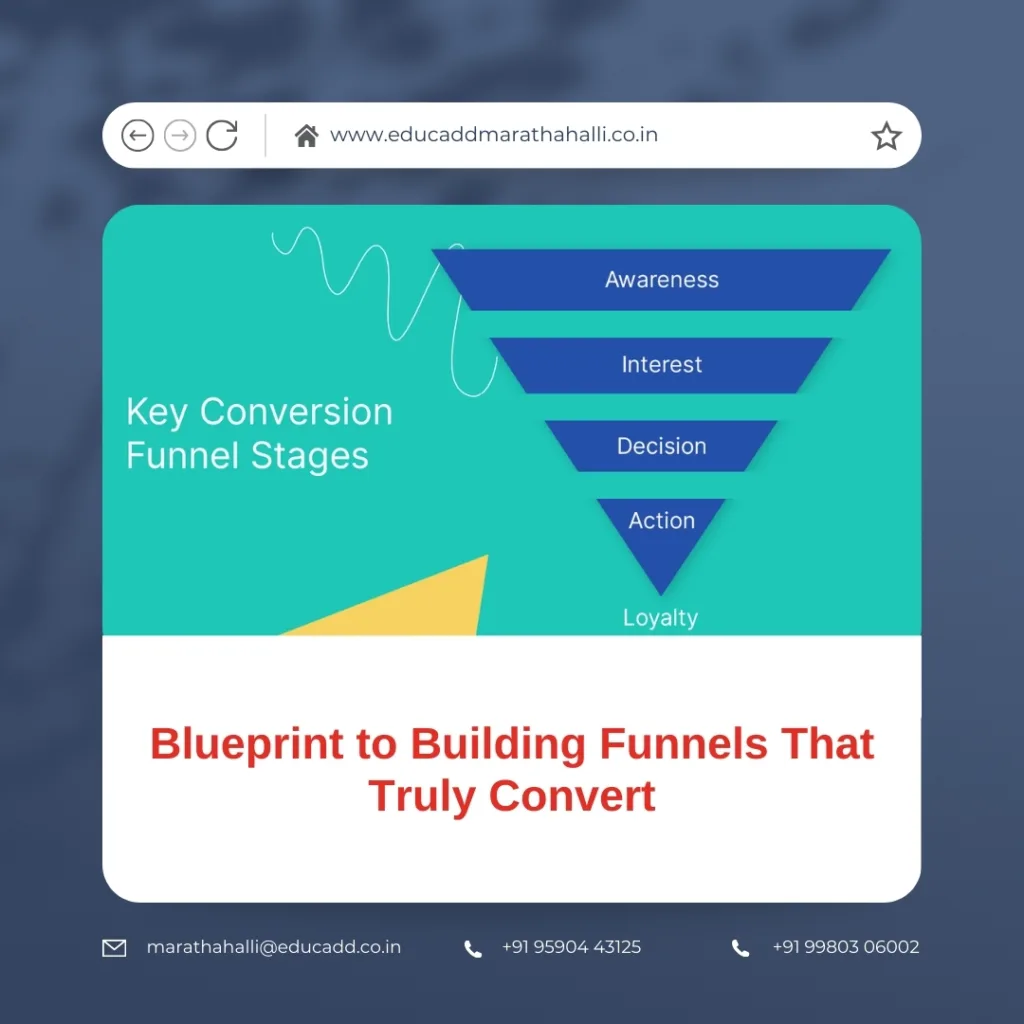
Sales Funnel Conversion Strategy
This blog explores Sales Funnel Conversion Strategy, focusing on actionable steps you can apply right away. Each stage is explained in detail, from understanding audience intent to fine-tuning your funnel for performance. By the end, you’ll know not just the theory but also the practical execution to design funnels that truly deliver results.
1. Understanding the Core of High-Converting Funnels
Before you design a funnel, it’s essential to understand what makes a funnel convert. A funnel is more than just a set of pages—it’s a carefully designed journey.
The Psychology Behind Funnels
Every funnel is built on psychology. People need to feel understood, valued, and motivated to act. This requires aligning funnel steps with customer emotions and behaviors. For example:
-
Awareness funnels capture attention by solving a problem.
-
Consideration funnels educate and build trust.
-
Conversion funnels remove doubts and inspire action.
Why Clarity Matters More Than Creativity
While design elements like visuals and colors matter, clarity is the deciding factor. A customer should instantly know what to do next at each stage. Clear CTAs, concise messaging, and logical navigation ensure no visitor feels lost.
Common Mistakes to Avoid
-
Overloading pages with unnecessary details
-
Using jargon instead of simple benefits
-
Failing to address objections early
Avoiding these pitfalls strengthens your chances of building funnels that convert.
2. Mapping Out the Customer Journey Before Building
Designing funnels that convert starts long before you open a funnel builder tool. You need to map the journey.
Audience Research as the Foundation
Your funnel should reflect your audience’s pain points and desires. Conduct surveys, analyze behavior on social media, and study competitors. The better you understand your audience, the sharper your funnel messaging will be.
Defining Funnel Stages Clearly
Break your funnel into three main sections:
-
Top of Funnel (TOFU): Grab attention with ads, blogs, or lead magnets.
-
Middle of Funnel (MOFU): Nurture with emails, case studies, or webinars.
-
Bottom of Funnel (BOFU): Drive conversions with trials, discounts, or demos.
Example of Funnel Mapping
Suppose you sell an online fitness program:
-
TOFU: Blog post on “10-Minute Home Workouts” leading to a free guide.
-
MOFU: Email sequence educating on nutrition and consistency.
-
BOFU: Free trial class followed by limited-time membership discount.
Mapping ensures consistency and keeps prospects engaged.
3. Crafting Funnel Pages That Drive Action
Your funnel pages are where visitors take action. Each page must serve a specific role in moving people forward.
Landing Pages with Precision
Landing pages should highlight one offer, one goal, and one clear call to action. Remove distractions such as multiple links or irrelevant images. Use persuasive copy and highlight benefits rather than features.
Essential elements for high-converting landing pages:
-
Engaging headline with direct value
-
Short, benefit-driven bullet points
-
Strong visuals that reinforce the offer
-
Social proof such as testimonials or case studies
Email Sequences That Nurture Leads
Emails are the bridge between awareness and conversion. Keep them short, personalized, and solution-focused. Drip campaigns work well because they build trust gradually. Each email should have one purpose: inform, reassure, or convert.
Sales Pages That Close Deals
Your sales page should remove hesitation. Use FAQs to address objections, add testimonials to build credibility, and create urgency with limited-time offers. Ensure the checkout process is seamless with minimal clicks.
4. Testing, Tracking, and Optimizing the Funnel
A funnel is never perfect on the first attempt. Continuous optimization is the secret to higher conversions.
Why Testing Is Essential
Small changes can create big results. Testing different headlines, button colors, or CTAs helps discover what resonates most with your audience.
Types of Testing:
-
A/B Testing: Compare two versions of a page.
-
Multivariate Testing: Try different combinations of elements.
-
Split Testing: Send traffic to different funnels.
Tracking Metrics That Matter
Focus on data that directly impacts conversions:
-
Click-through rate (CTR)
-
Cost per acquisition (CPA)
-
Conversion rate
-
Lifetime customer value (LCV)
Optimization in Practice
If your funnel has high traffic but low conversions, review your offer clarity. If engagement is high but purchases are low, consider adding trust-building elements like guarantees or case studies.
5. Advanced Strategies to Maximize Funnel Success
Once the basics are strong, advanced strategies can supercharge your funnel performance.
Personalization for Higher Engagement
Generic funnels are less effective. By segmenting audiences, you can deliver tailored messages. Example: Send beginner-level tips to new subscribers and advanced strategies to experienced ones.
Integrating Automation Tools
Automation saves time while ensuring consistent nurturing. Tools like HubSpot, ActiveCampaign, or ClickFunnels let you automate follow-ups, track behavior, and trigger offers at the right time.
Retargeting Lost Prospects
Not every visitor converts the first time. Retargeting ads remind them about your offer, keeping your brand top of mind. This strategy often leads to higher ROI compared to first-time ads.
Scaling Beyond Initial Funnels
Once a funnel works, scale it by increasing ad spend, expanding to new platforms, or creating variations for different customer segments.
Conclusion
Designing funnels that convert is both art and science. The process starts with audience understanding, followed by structured mapping, effective page design, testing, and advanced strategies. By applying this Sales Funnel Conversion Strategy, you can transform how leads move through your business and increase conversions significantly.
Every step builds on the last, creating a seamless customer journey. The more clarity, personalization, and testing you implement, the stronger your funnel will perform. Ultimately, funnels that convert are not about tricks or hacks—they’re about delivering value at every stage of the journey.

