
Design Beyond Decoration: Build a Successful Future with a Professional Interior Styling Course
A Professional Interior Styling Course helps individuals understand how to transform ordinary spaces into elegant and functional environments. The course develops creative thinking, design awareness, practical styling knowledge, and technical expertise that are essential in today’s competitive design industry. More importantly, it teaches students how to combine aesthetics with functionality while creating interiors that match client expectations.
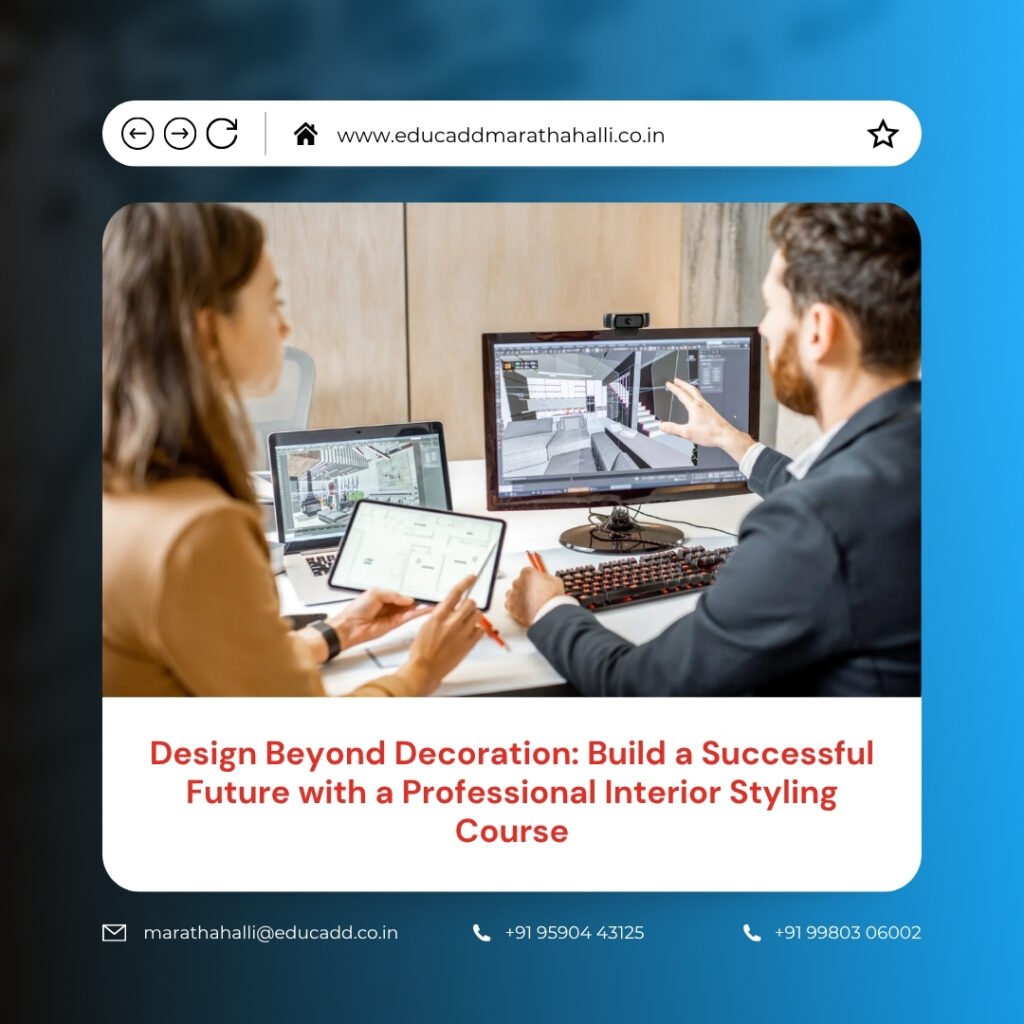
Professional Interior Styling Course
The modern interior industry requires professionals who understand color harmony, furniture placement, décor selection, lighting arrangements, and current design trends. Therefore, proper training becomes extremely important for anyone who wants to build a successful career in interior styling. Through structured learning and practical exposure, students gain the confidence to handle real projects professionally.
This blog explores how a Professional Interior Styling Course shapes creative careers, improves technical skills, and opens exciting opportunities in the rapidly growing design industry.
The Growing Influence of Interior Styling in Modern Living
The importance of interior styling has increased significantly over the last decade. Today, people focus not only on constructing buildings but also on creating spaces that feel luxurious, organized, and visually balanced. As lifestyles continue to evolve, beautifully styled interiors have become essential in both residential and commercial environments.
Interior styling focuses on improving the appearance and atmosphere of a space through thoughtful design elements. These elements include furniture, textures, colors, lighting, fabrics, decorative accessories, and spatial arrangement. Every detail contributes to the overall visual experience of the room.
Moreover, stylish interiors create emotional comfort and improve everyday living experiences. A well-designed office increases productivity, while a beautifully styled home promotes relaxation and positivity. Because of these benefits, professional interior stylists are now highly valued across different industries.
Why Interior Styling Is Becoming a Dream Career
Many young Professional Interior Styling Course because it offers creativity, flexibility, and strong career growth. Unlike conventional professions, interior styling allows individuals to express artistic ideas while working on practical projects. Every assignment brings new challenges and opportunities to create unique designs.
The demand for Professional Interior Styling Course continues to rise due to urban development, luxury housing projects, hospitality expansion, and commercial growth. Additionally, social media platforms have inspired people to invest more in visually appealing interiors for homes, offices, and businesses.
Another major advantage of this career is its versatility. Interior stylists can work independently, collaborate with architects, join design firms, or start their own businesses. Consequently, the profession offers excellent long-term opportunities for creative individuals who want both financial growth and professional satisfaction.
How Professional Training Enhances Creative Thinking
Creativity is the foundation of interior styling, but professional guidance helps transform raw creativity into practical expertise. A professional interior styling course trains students to think strategically while designing beautiful interiors. The course teaches how to balance creativity with functionality and client requirements.
Students learn how to visualize spaces and understand design principles that improve aesthetics and usability. They explore different interior styles, including contemporary, industrial, Scandinavian, minimalist, and luxury themes. This exposure helps learners build versatile design knowledge.
Professional training also improves problem-solving abilities. Students learn how to style small spaces efficiently, work with limited budgets, and create balanced interiors under different conditions. Over time, they develop confidence in presenting unique and innovative design concepts.
Understanding Space Planning and Functional Layouts
One of the most essential skills in interior styling is space planning. Beautiful furniture and décor alone cannot create an effective interior if the layout lacks balance and functionality. Therefore, professional courses focus strongly on space management techniques.
Students learn how to arrange furniture, improve movement flow, and maximize room functionality. They understand how to create comfortable and visually spacious interiors even in compact areas. Additionally, they study proportions, symmetry, and spatial balance.
Important space planning concepts include:
- Creating practical furniture arrangements for daily comfort
- Improving room functionality without reducing visual appeal
These skills help aspiring stylists design interiors that look elegant while remaining highly practical for everyday use.
Learning the Science of Colors and Textures
Colors play a powerful role in shaping the mood and personality of an interior space. Professional interior styling courses teach students how to use color combinations effectively to create different emotional experiences within a room.
Warm shades create energy and vibrancy, while cool tones promote calmness and relaxation. Neutral colors provide sophistication, whereas bold palettes add dramatic visual impact. Students learn how to balance these elements according to the purpose of the space and client preferences.
Textures also contribute significantly to interior styling. Materials such as wood, marble, metal, glass, and fabrics add depth and character to interiors. By understanding color psychology and texture coordination, students gain the ability to create visually harmonious spaces that feel inviting and luxurious.
The Importance of Furniture and Decorative Styling
Furniture and decorative accessories define the character of any interior. A professional interior styling course teaches students how to select, arrange, and combine these elements to create balanced and attractive environments.
Learners understand how furniture styles influence overall aesthetics. They study modern, classic, rustic, industrial, and contemporary furniture concepts while exploring ways to blend functionality with beauty. Additionally, they learn how decorative elements complete the styling process.
Students also gain knowledge about:
- Choosing décor accessories that complement interior themes
- Combining fabrics, lighting, and artwork for visual harmony
These techniques help students create interiors that feel elegant, stylish, and professionally designed.
Mastering Lighting for Beautiful Interior Ambiance
Lighting has a major impact on interior appearance and atmosphere. Even the most expensive interiors can lose their appeal if lighting is poorly planned. Therefore, interior styling courses provide detailed training on lighting concepts and applications.
Students learn the difference between ambient lighting, task lighting, decorative lighting, and accent lighting. They understand how each lighting type influences mood, depth, and visual comfort inside a space.
Additionally, learners explore natural lighting techniques that improve openness and energy efficiency. Modern interiors now focus heavily on sustainable lighting solutions that reduce energy consumption while maintaining elegance. As a result, lighting knowledge has become an essential part of professional interior styling education.
Exploring Current Trends in Interior Styling
The world of interior styling changes continuously as new trends and lifestyle preferences emerge. A professional course helps students stay updated with modern design concepts and industry developments. This awareness allows them to create interiors that feel fresh, stylish, and market-relevant.
Students study trends such as eco-friendly interiors, multifunctional furniture, smart home concepts, open layouts, and biophilic design. They also explore global influences that shape contemporary interior aesthetics.
However, professional training also emphasizes timeless design principles. While trends may change frequently, balanced layouts, quality materials, and functional styling always remain valuable. Therefore, students learn how to combine modern ideas with long-lasting design appeal.
Practical Exposure and Industry-Oriented Learning
Practical experience plays a crucial role in developing professional interior styling skills. A structured course provides hands-on training through assignments, workshops, styling exercises, and live project opportunities.
Students work on real interior concepts that improve their technical understanding and creative confidence. They learn how to prepare mood boards, create presentations, select materials, and coordinate styling elements professionally.
Industry-oriented learning also teaches project management and client handling skills. Through practical exposure, students understand how to manage deadlines, communicate effectively, and execute projects successfully. This real-world training prepares them for professional environments and future career challenges.
Career Opportunities After Completing the Course
A Professional Interior Styling Course creates multiple career opportunities in the expanding design industry. Graduates can work in residential design, commercial interiors, hospitality styling, retail décor, event design, or luxury space planning.
Popular career roles include interior stylist, décor consultant, furniture stylist, visual merchandiser, showroom designer, and freelance interior consultant. Additionally, many professionals specialize in niche sectors such as café styling, home staging, boutique interiors, and workspace design.
The increasing number of real estate projects and lifestyle-focused businesses continues to create demand for skilled interior professionals. Therefore, qualified interior stylists often enjoy excellent career growth and financial stability.
Freelancing Opportunities in Interior Styling
Freelancing has become one of the most attractive career paths for interior styling professionals. Many individuals prefer freelance work because it offers creative independence, flexible schedules, and direct client interaction.
Professional courses help students understand how to build portfolios, market services, and manage projects independently. Freelance stylists can work on home renovations, office interiors, event décor, and commercial styling assignments.
Social media platforms also play a major role in promoting freelance interior businesses. Designers can showcase projects online, connect with potential clients, and build strong personal brands. Consequently, freelancing provides excellent opportunities for creative professionals who want entrepreneurial freedom.
Communication Skills and Professional Presentation
Successful interior stylists require strong communication skills in addition to creative abilities. Professionals must understand client expectations clearly and explain design ideas effectively. Therefore, communication training forms an important part of professional interior styling education.
Students learn how to present concepts professionally through sketches, digital presentations, and mood boards. They also understand how to discuss budgets, timelines, and design revisions confidently.
Good communication improves client trust and strengthens professional relationships. Additionally, interior stylists often collaborate with architects, contractors, vendors, and suppliers. Therefore, teamwork and professional interaction become essential for successful project execution.
Technology and Software Knowledge in Interior Design
Modern interior styling increasingly depends on digital tools and visualization software. Professional courses introduce students to industry-standard software that helps them create layouts, presentations, and realistic interior concepts.
Students commonly learn programs such as AutoCAD, SketchUp, Photoshop, and 3D rendering tools. These technologies improve project accuracy and allow designers to present ideas more effectively to clients.
Digital visualization also helps clients understand the final outcome before implementation begins. As technology continues to evolve, software expertise has become a valuable advantage for aspiring interior styling professionals.
Building Confidence for Long-Term Professional Success
Confidence is one of the most important qualities in the interior styling industry. A professional course helps students build confidence through continuous practice, project experience, and industry exposure. As learners complete assignments and presentations, they become more comfortable handling complex styling challenges.
Professional training teaches students how to approach projects systematically and creatively. They learn how to solve design problems, manage client expectations, and deliver high-quality results within deadlines.
Moreover, exposure to industry standards and practical learning environments prepares students for competitive job markets. By the end of the course, learners gain the confidence to pursue careers independently or work with leading design companies successfully.
Conclusion
A Professional Interior Styling Course provides the perfect foundation for individuals who want to build creative and successful careers in the design industry. The course combines artistic creativity with technical expertise, helping students transform ordinary spaces into visually stunning and functional interiors.
From space planning and color coordination to furniture styling and lighting design, every aspect of training contributes to professional growth. Additionally, practical exposure, software knowledge, and communication skills prepare learners for real-world projects and industry expectations.
The demand for stylish interiors continues to grow across residential, commercial, and hospitality sectors. Therefore, skilled interior stylists have access to excellent career opportunities and long-term professional growth. Whether someone dreams of becoming a freelance stylist, working with leading design firms, or launching a personal interior business, professional training creates the right path toward success.
With dedication, creativity, and proper education, aspiring interior stylists can shape inspiring spaces that improve everyday living experiences while building rewarding careers in one of the world’s most dynamic creative industries.

