
Power Tomorrow with Confidence: No.1 Power System Design Training for Future Electrical Engineers
The electrical engineering industry is experiencing remarkable growth as modern infrastructure, renewable energy projects, smart grids, and industrial automation continue to expand worldwide. Every commercial building, manufacturing plant, utility company, and renewable energy installation depends on well-designed electrical power systems to operate safely and efficiently. This growing demand has created exciting opportunities for professionals who possess specialized design skills. Power System Design Training equips aspiring engineers with practical knowledge, software expertise, and industry-oriented techniques that employers actively seek.
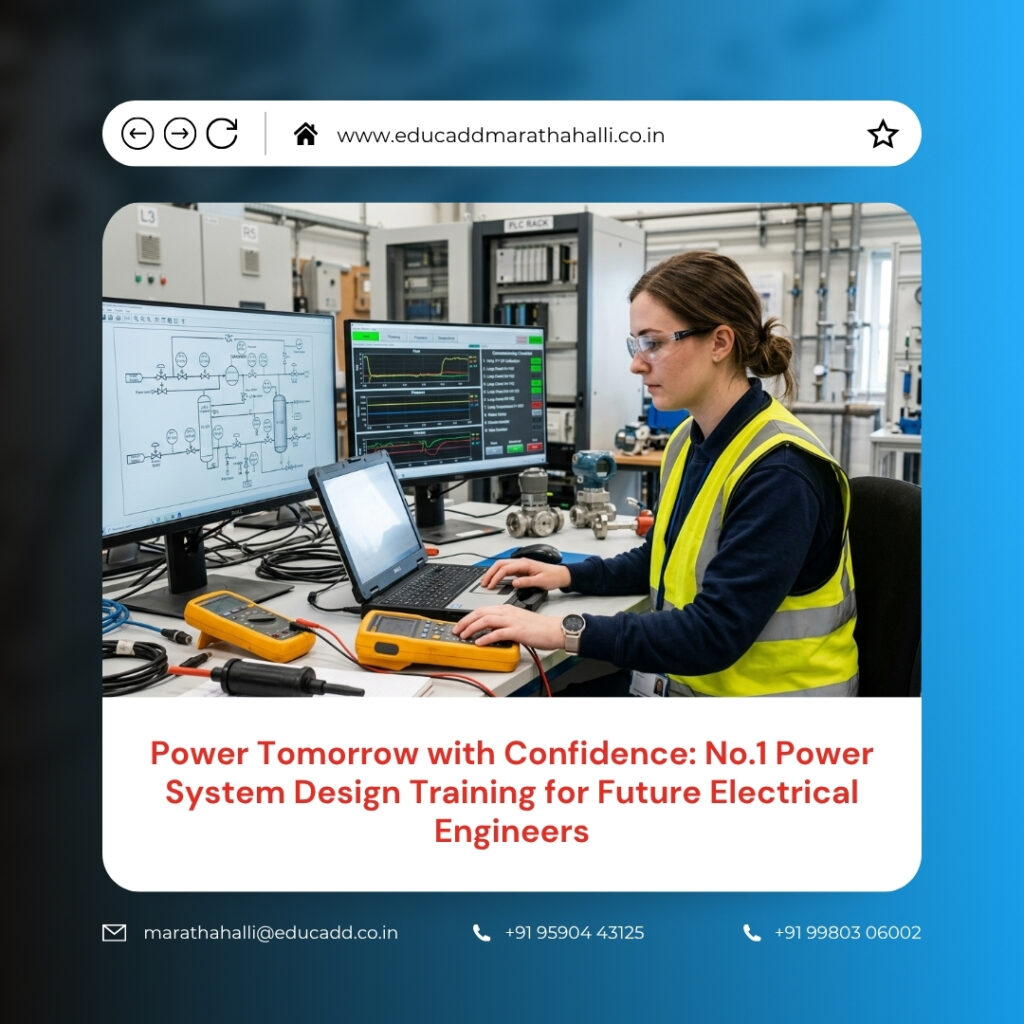
Power System Design Training
Rather than focusing only on classroom theory, this professional training emphasizes real-world applications, allowing learners to understand how electrical systems are planned, analyzed, and implemented across diverse industries. Whether you are a student, diploma holder, graduate, or working professional, mastering power system design can significantly improve your career prospects and prepare you for long-term success in the electrical engineering sector.
Build a Strong Foundation in Electrical Power Engineering
Every successful electrical designer begins by understanding the basic principles that govern electrical power systems. Therefore, quality training programs start by strengthening the learner’s knowledge of electrical circuits, power generation, transformers, distribution networks, transmission systems, switchgear, and protection devices. These concepts form the backbone of every electrical engineering project.
Moreover, instructors explain complex technical topics using practical examples that make learning easier and more engaging. Students gradually develop confidence as they understand how electricity flows through different components within an electrical network. Consequently, they become capable of interpreting engineering drawings, identifying system requirements, and solving technical problems with greater accuracy before progressing toward advanced design concepts.
Understand the Complete Power Distribution Process
Designing reliable electrical systems requires a complete understanding of how electrical energy travels from generation stations to end users. Therefore, Power System Design Training introduces learners to the entire power distribution process, including generation, transmission, substations, distribution networks, and consumer installations. Students explore how voltage levels are managed, how transformers function, and how substations maintain stable electricity supply across industrial and commercial facilities.
Furthermore, they gain valuable insights into power quality, energy losses, and efficient system planning. This comprehensive understanding enables future engineers to create electrical designs that improve operational performance while maintaining safety and regulatory compliance across every stage of the electrical network.
Master Industry Software for Accurate Electrical Design
Modern engineering projects rely heavily on specialized software that simplifies electrical system planning and improves design precision. Consequently, software training has become an essential component of every professional electrical engineering program. Students receive practical exposure to industry-standard applications used for electrical drafting, load calculations, short-circuit analysis, cable sizing, and protection coordination. Working with these advanced tools enhances technical efficiency while reducing design errors during project execution.
Additionally, software-based simulations help learners visualize electrical systems before implementation, allowing them to evaluate system performance under different operating conditions. This practical experience significantly increases confidence and prepares students to contribute effectively in professional engineering environments immediately after completing the course.
Develop Practical Skills Through Real Engineering Projects
Technical knowledge becomes valuable only when it is applied in practical situations. Therefore, leading training institutes emphasize project-based learning throughout the curriculum. Learners work on industrial case studies involving electrical layouts, power distribution networks, transformer selection, switchgear configuration, cable routing, panel schedules, and protection system planning. Each project mirrors real engineering scenarios commonly encountered in industries.
Furthermore, instructors explain project documentation standards, engineering calculations, and quality control procedures followed by professional design teams. This practical exposure allows students to experience the complete design workflow while improving analytical thinking and technical decision-making skills required in today’s competitive engineering industry.
Learn Electrical Protection Systems and Safety Practices
Electrical safety remains one of the highest priorities in every engineering project. A properly designed protection system prevents equipment damage, minimizes downtime, and safeguards both personnel and infrastructure. Therefore, Power System Design Training provides extensive knowledge of protective relays, circuit breakers, grounding techniques, fault analysis, overcurrent protection, and electrical safety standards. Students also understand how different protection devices coordinate during electrical faults to maintain uninterrupted power supply wherever possible.
In addition, the course introduces national and international electrical codes that guide safe engineering practices. As a result, learners develop the confidence to design systems that meet both technical and safety requirements.
Improve Your Expertise in Electrical Calculations
Accurate engineering calculations determine the efficiency and reliability of every electrical installation. Therefore, students receive intensive practice in performing electrical load estimation, transformer sizing, cable selection, voltage drop calculations, short-circuit analysis, motor load evaluation, and power factor improvement. These calculations strengthen technical accuracy while improving engineering judgment during project planning.
Moreover, repeated practical exercises enable learners to solve complex design problems more efficiently under real project conditions. As their confidence grows, students become capable of producing reliable engineering solutions that satisfy operational, economic, and safety objectives simultaneously.
Explore Modern Trends in the Power Industry
The electrical sector continues to transform rapidly due to technological innovations and sustainability initiatives. Engineers must stay updated with emerging technologies to remain competitive in today’s evolving job market. Therefore, Power System Design Training introduces learners to smart grids, renewable energy integration, electric vehicle charging infrastructure, energy management systems, automation technologies, and digital monitoring solutions. Understanding these developments prepares students to participate in future-ready engineering projects.
Furthermore, exposure to modern technologies broadens career opportunities across multiple industries while encouraging continuous professional growth throughout an engineer’s career.
Gain Knowledge of Substation and Electrical Panel Design
Substations and electrical control panels play a vital role in maintaining stable and efficient power distribution systems. Therefore, specialized training includes detailed instruction on substation planning, transformer installation, busbar configurations, switchgear selection, panel board design, and electrical equipment layout. Students also learn how to prepare engineering drawings, single-line diagrams, equipment schedules, and technical documentation according to industry standards.
Practical exercises reinforce theoretical knowledge while improving design precision. Consequently, graduates develop the expertise required to contribute confidently to industrial, commercial, utility, and infrastructure development projects.
Expand Career Opportunities Across Diverse Industries
Electrical engineering professionals with specialized design skills enjoy excellent employment prospects because every sector depends on reliable power systems. After completing Power System Design Training, graduates can pursue rewarding careers in construction companies, power generation plants, renewable energy organizations, manufacturing industries, engineering consulting firms, automation companies, infrastructure developers, utility providers, and EPC contractors.
Moreover, international engineering firms increasingly recruit professionals with practical design expertise and software proficiency. This broad range of opportunities allows certified engineers to choose career paths that match their interests while enjoying strong long-term professional growth.
Learn from Industry Experts with Practical Experience
Experienced trainers contribute significantly to professional development because they combine theoretical knowledge with real industrial experience. Throughout the training, instructors share valuable project insights, practical troubleshooting methods, engineering best practices, and workplace expectations that textbooks often overlook. Students receive continuous mentoring while working on assignments and practical projects, enabling them to improve both technical competence and problem-solving abilities.
Furthermore, expert guidance helps learners understand current industry trends, interview preparation strategies, and professional communication skills that increase employability after course completion.
Earn Certification That Enhances Professional Credibility
Professional certification demonstrates technical competence and practical readiness to employers across the engineering industry. After successfully completing Power System Design Training, students receive an industry-recognized certification that validates their expertise in electrical system design and analysis. This credential strengthens professional resumes while increasing confidence during job interviews and campus recruitment drives.
Additionally, certified candidates often receive preference because employers recognize the value of structured technical training combined with practical project experience. Therefore, certification becomes an important milestone for engineers seeking career advancement and higher-paying opportunities.
Why EduCADD Is the Right Choice for Power System Design Training
EduCADD has established itself as a trusted destination for industry-focused engineering education by combining experienced faculty, advanced laboratories, practical software training, and project-oriented learning. Students benefit from personalized mentoring, flexible batch schedules, placement support, and comprehensive technical guidance throughout the program. Every module has been carefully designed to align with current industrial requirements while helping learners build confidence through continuous practical exposure.
Whether your goal is employment, career advancement, or skill enhancement, EduCADD provides the professional environment necessary to master Power System Design Training and succeed in today’s competitive engineering landscape.
Shape a Successful Future with Advanced Technical Skills
The future of electrical engineering depends on professionals who can design intelligent, reliable, and energy-efficient power systems capable of supporting rapidly evolving industries. Investing in Power System Design Training allows aspiring engineers to acquire practical expertise, software proficiency, analytical thinking, and industry knowledge that remain valuable throughout their careers.
As global demand for qualified electrical design engineers continues to increase, individuals with specialized technical skills will enjoy stronger career stability and greater professional recognition. By choosing high-quality training today, you prepare yourself for tomorrow’s engineering challenges while opening the door to exciting opportunities across national and international industries.
Conclusion
Building a rewarding career in electrical engineering requires practical experience, technical excellence, and continuous learning. Power System Design Training offers the perfect combination of theoretical understanding, hands-on software practice, industrial projects, and professional mentorship needed to succeed in the modern engineering world. From mastering electrical calculations and protection systems to designing substations and power distribution networks, this comprehensive training develops every essential skill expected by employers.
As industries continue investing in smarter, safer, and more sustainable electrical infrastructure, qualified power system designers will remain in high demand. Enrolling in a professionally structured training program at EduCADD is a valuable investment that strengthens your technical capabilities, improves employability, and positions you for long-term success in the rapidly growing electrical engineering industry.

