
Visual Thinking Mastery: The Complete Guide to Building Impactful Mood Boards & Concept Boards
Every creative journey begins with imagination, but imagination alone cannot guide a full project. Ideas become useful only when they can be seen, shaped, and communicated clearly. This is why creative professionals rely on mood boards and concept boards. These tools act as visual anchors that turn abstract thoughts into organized direction. Learning Mood Boards Concept Boards equips you with a structured method to explore inspiration, refine concepts, and present your ideas with confidence.
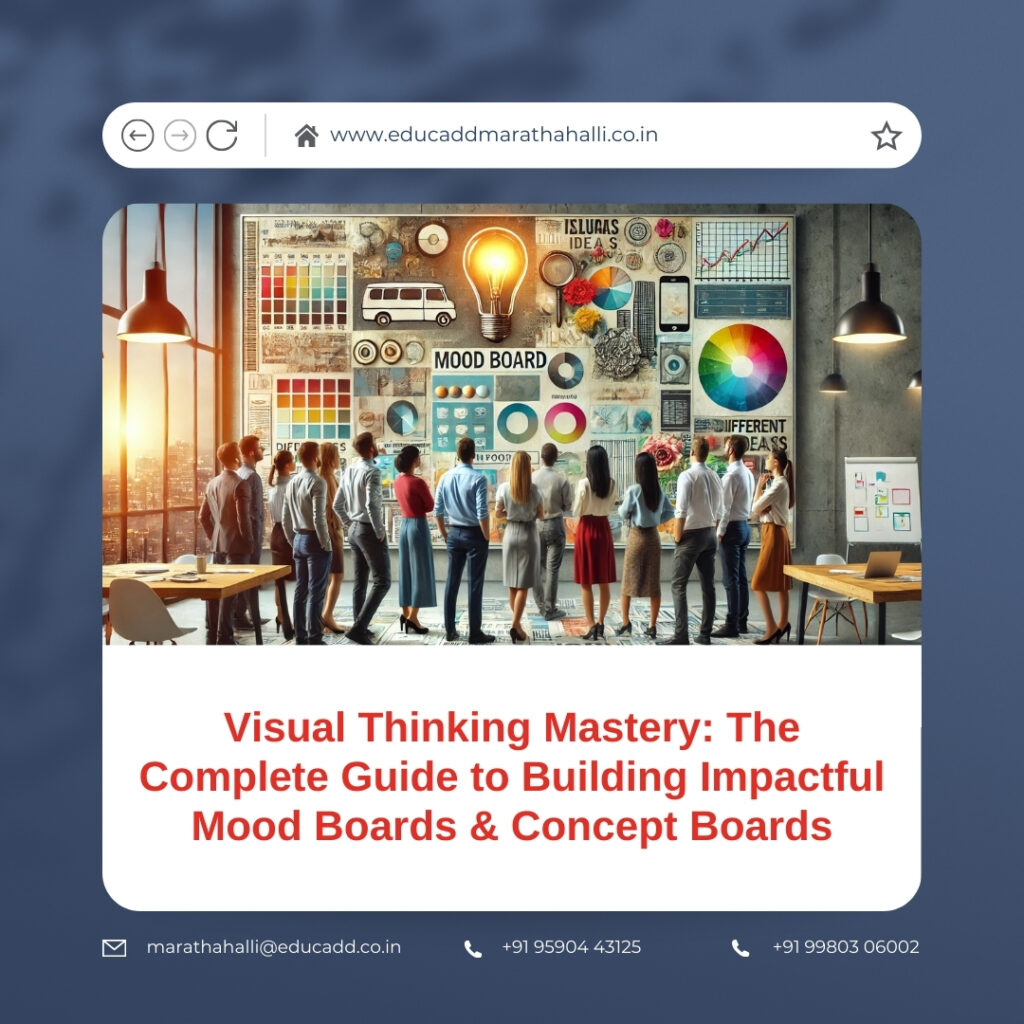
Mood Boards Concept Boards
In design, branding, content production, interior styling, marketing, fashion, and digital creation, visual clarity matters as much as creativity. Mood boards help you identify the feelings you want to convey, while concept boards help you present a refined idea with purpose and strategy. This guide offers a detailed, step-by-step process to help you create both boards from scratch. Through this journey, you’ll understand how to collect references, refine themes, choose visuals, and craft presentations that influence decisions and set creative direction.
Let’s explore a complete system for Mood Boards Concept Boards and elevate your creative thinking.
1. The Creative Purpose of Mood Boards & Concept Boards
Before learning how to build these boards, it helps to understand their individual roles. Both tools work together, yet each one has a distinct purpose in the design process.
What Makes Mood Boards Powerful?
A mood board expresses feeling. It captures the atmosphere of a project before any detailed planning begins. You can collect colors, imagery, shapes, materials, and text to show the emotional essence of a concept. When you want to discover the right tone, style, or vibe, a mood board helps you explore options without limitations. It builds direction by giving the project a visual “soul.”
The Strategic Role of Concept Boards
A concept board is more defined. It represents a specific creative vision shaped from the exploration done in the mood board stage. While a mood board is broad, a concept board is focused. It communicates the chosen idea with clarity, showing how the design should look, feel, and behave. It helps clients, teams, or stakeholders understand the strategy behind your direction.
Why Both Tools Matter
Using both boards brings structure to the creative process. You begin with emotion, then refine emotion into strategy. A mood board encourages discovery. A concept board encourages decision-making. When used together, they create a complete visual story. This is the core reason many professionals master how to create mood boards & concept boards early in their careers. They form the foundation of creative direction in many industries.
2. A Step-by-Step Guide to Crafting an Effective Mood Board
A mood board is your first step toward making your vision tangible. It is flexible, expressive, and often the most exciting part of the creative process. Here’s how to build one that communicates your idea clearly and powerfully.
1. Clarify the Project Goal
Start by defining the purpose of your project. You must know what you’re designing to choose the right references. Whether it is a brand identity, a marketing campaign, a digital interface, a product concept, or an interior space, your goal sets the tone for the mood board.
2. Begin Collecting Inspiration
Gather visuals that resonate with the theme you want to explore. Look for textures, shapes, patterns, photos, magazine clips, illustrations, lighting styles, or even handwritten notes. Popular sources include Behance, Pinterest, Instagram, online portfolios, and photography blogs. At this stage, freedom is important. Collect widely without restricting yourself.
3. Identify Patterns and Emotional Cues
Once you have enough inspiration, start studying your selection. Look for recurring moods—minimal, warm, bold, rustic, elegant, playful, futuristic, organic, or geometric. These patterns reveal the emotional direction that best suits your goal. This step transforms randomness into intention.
4. Establish a Clear Theme
Choose a central mood that reflects the project’s identity. This can be a visual idea like “soft earth tones with natural textures”, or an emotional direction such as “fresh energy with modern contrast.” Your theme becomes the backbone of your mood board.
5. Arrange the Visuals Strategically
A mood board must feel balanced. Group related visuals. Keep spacing consistent. Create visual harmony by arranging elements that support each other. Your board should feel like a cohesive piece, not a collage of unrelated images.
6. Add Short Keywords for Clarity
Simple words can guide interpretation. Terms like “sleek,” “earthy,” “vibrant,” “authentic,” or “serene” help viewers understand the emotional intention. Text should enhance the visuals, not dominate them.
7. Remove Anything That Confuses the Mood
Editing is essential. Remove visuals that distract from the chosen tone. A mood board becomes stronger when you keep only the images that clearly represent your direction.
Learning how to create mood boards & concept boards means understanding how to refine your inspiration until the message becomes unmistakable.
3. Transforming Inspiration into Strategy: Creating a Concept Board
While a mood board explores emotions, a concept board presents a focused visual idea. It takes inspiration and transforms it into a strategic creative direction.
1. Define the Central Concept
Your concept should express what the project stands for. It can be a combination of emotion, purpose, and aesthetic direction. Write it as a short statement that is easy to understand. Examples include:
-
“Timeless elegance designed through soft minimal tones.”
-
“Youthful creativity expressed with bold shapes and high contrast.”
-
“Nature-inspired calm with gentle textures and organic flow.”
This statement becomes the anchor of the concept board.
2. Select Refined, Relevant Visuals
Unlike mood boards, concept boards require fewer images. Choose only the visuals that represent the final direction. These might include color palettes, material samples, typography options, layout references, or product shapes. Each element should strengthen the concept.
3. Build a Defined Color Story
Add a color palette that represents your direction. Use shades that support your emotional tone and creative purpose. A clear palette helps guide styling and design consistency across future project stages.
4. Choose Typography with Meaning
Fonts carry personality. Include typefaces that align with your concept—modern, classic, playful, sharp, luxurious, or minimal. Typography communicates voice, so it must match the mood.
5. Explain the Logic Behind Each Choice
Support your visuals with short descriptions. A concept board is partly visual and partly strategic. When you explain the logic, the project becomes easier for others to understand and approve.
6. Present the Concept with Structure and Flow
Arrange your elements in a clean layout. Place the concept statement at the top. Follow with imagery, color palette, typography, and key elements. The structure should guide the viewer naturally through the idea. Your board must feel purposeful and professional.
This process is key to mastering how to create mood boards & concept boards because it helps move from free exploration toward structured design clarity.
4. Tools, Formats & Techniques to Build Strong Boards
Your board becomes more impactful when you use the right tools, formats, and design techniques. The quality of your presentation influences how others perceive your idea.
Top Digital Tools for Creating Boards
-
Canva – Great for beginners with easy drag-and-drop features.
-
Milanote – Perfect for brainstorming and collecting inspiration.
-
Figma – Functional for UI/UX-focused teams.
-
Adobe Photoshop – Best for precise image editing and layout control.
-
Adobe Illustrator / InDesign – Ideal for professional visual structure.
Choosing the Right Format
The format depends on the purpose:
-
Digital boards work best for virtual meetings, online collaboration, and sharing with remote clients.
-
Printed boards suit workshops, interior design presentations, and physical mood displays.
-
Horizontal layouts give you space to breathe and present visuals evenly.
-
Vertical formats work well for pitch decks and storytelling-driven presentations.
Use High-Quality Visuals
Clarity matters. Crisp, high-resolution images enhance professionalism and maintain consistency. Avoid visuals that look pixelated or mismatched. Quality helps your concept feel trustworthy.
Achieve Balance and Visual Order
Spacing, alignment, and consistency make your board easier to understand. Your layout should lead the viewer’s eye naturally from one element to another. A balanced board leaves a stronger impression.
Tell a Story Through Visual Flow
Effective boards feel like visual narratives. Allow each element to connect to the next. Aim for progression—from mood to theme to concept. Storytelling turns your board into a compelling narrative that others can trust.
Understanding how to create mood boards & concept boards helps you craft visual stories that elevate your creative process and enhance client communication.
5. How Mood Boards & Concept Boards Enhance Real Projects
These boards play a vital role across many industries. They help people understand visual direction before production begins. When used properly, they reduce confusion, save time, and improve creative outcomes.
Brand Development & Visual Identity
Mood boards define brand personality through color, tone, and style. Concept boards show how these elements transform into identity systems. This ensures consistent brand expression.
Marketing Campaign Planning
Marketing teams use boards to align visuals, messaging, and tone. They make campaigns feel cohesive across different platforms.
Product Design & Innovation
Mood boards inspire form and function. Concept boards guide prototypes by showing specific direction.
Interior Design & Architecture
Mood boards highlight ambiance, materials, and lighting. Concept boards shape floor plans, color schemes, furniture styles, and textures.
Fashion Design & Styling
Designers use mood boards to explore seasonal stories. Concept boards help finalize prints, patterns, silhouettes, and color direction.
Digital & UI/UX Design
Mood boards express interface feeling. Concept boards refine grid systems, layout inspiration, icon styles, and user experience tone.
Content Creation & Social Media Branding
Content creators use boards to maintain a consistent visual language across posts, videos, and brand communication.
Professionals who know how to create mood boards & concept boards gain an advantage because they communicate visions clearly, reducing misunderstandings and creating stronger outcomes.
Conclusion
Mood boards and concept boards are essential for turning ideas into clear, strategic direction. Mood boards help you explore emotions and discover the right creative tone. Concept boards refine that tone into a structured, meaningful idea that guides the entire project. When you learn Mood Boards Concept Boards, you gain a powerful system for organizing inspiration, communicating vision, and presenting ideas with professionalism.
These boards are more than design tools—they are creative thinking tools. They sharpen clarity, improve collaboration, and make your concepts easier to understand. No matter the industry, a strong visual foundation makes every project stronger. When you embrace this process, you elevate your creative skills and build confidence in presenting your vision to teams, clients, and audiences.

