
Design Your Future Locally: The Ultimate Guide to Mechanical Design Software Training Near Me
Mechanical engineering has entered a digital-first era where innovation depends heavily on software-driven design. From automobiles to consumer products, almost every engineered item begins as a digital model before becoming a physical reality. This shift has made mechanical design software training an essential skill for students, graduates, and working professionals who want to stay competitive in today’s job market. If you’ve ever searched for “Mechanical Design Training Near Me,” you are already on the right path toward a rewarding and future-proof career.
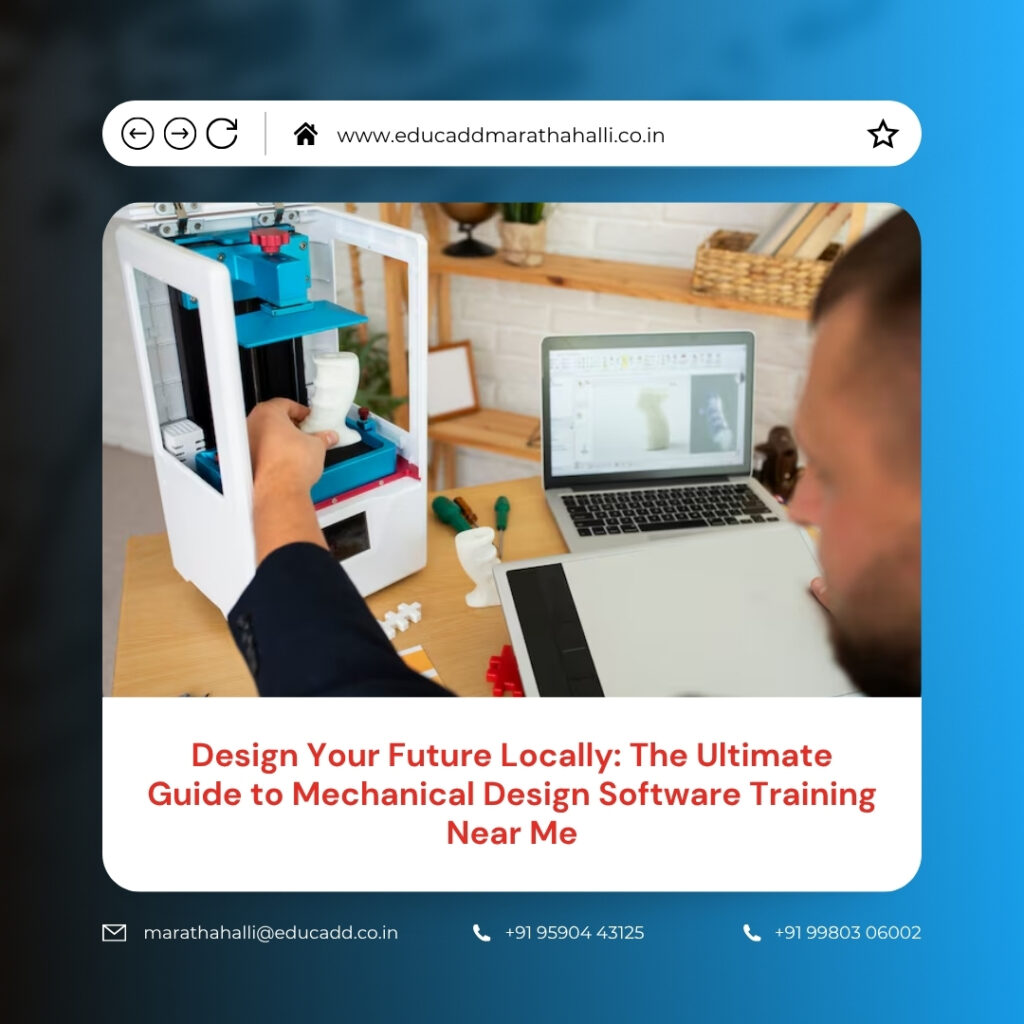
Mechanical Design Training Near Me
However, finding the right training program requires more than just choosing the closest institute. It involves understanding course quality, practical exposure, certification value, and long-term career benefits. This detailed guide will walk you through every important aspect of mechanical design software training, helping you make a smart and informed decision.
1. What Mechanical Design Software Training Really Means
Mechanical Design Training Near Me focuses on teaching digital tools used to create, modify, and analyze engineering designs. These tools replace manual drafting methods and allow engineers to build accurate models with high efficiency. The training equips learners with the ability to visualize ideas and convert them into technical drawings and 3D models.
In most programs, you will learn how to create sketches, develop parts, assemble components, and generate detailed drawings. This process ensures that designs are not only visually appealing but also technically correct and ready for manufacturing. As a result, students gain both conceptual clarity and practical expertise.
2. Growing Importance of Mechanical Design Skills
Industries across the world are rapidly adopting automation and digital workflows. As a result, the need for skilled professionals who can work with design software has increased significantly. Mechanical design is no longer limited to engineers; it is now a core requirement in multiple technical roles.
Companies are constantly looking for professionals who can reduce errors, improve efficiency, and speed up production processes. With the rise of advanced manufacturing technologies, trained designers play a critical role in ensuring product quality and performance. This demand makes mechanical design training a valuable career investment.
3. Key Software Covered in Training Programs
Most mechanical design courses include training on industry-standard software tools that are widely used across different sectors. These tools help in designing, analyzing, and optimizing mechanical components with precision.
Some commonly included software tools are:
- AutoCAD
- SolidWorks
- CATIA
- Creo
Learning these tools not only improves your technical skills but also increases your chances of getting hired in top companies.
4. Advantages of Choosing Training Near Your Location
Searching for mechanical design software training near your location offers several practical benefits. One of the biggest advantages is convenience. You can attend classes regularly without spending too much time on travel, which improves consistency in learning.
Another benefit is better interaction with instructors and peers. Local institutes often provide classroom-based training, allowing you to ask questions, participate in discussions, and collaborate on projects. This interactive environment enhances understanding and retention.
5. What Makes a Training Institute Stand Out
Not every training institute delivers the same level of quality. Choosing the right one requires careful evaluation of multiple factors. A strong institute focuses on both theoretical knowledge and practical implementation.
Look for institutes that offer experienced trainers, updated course content, and real-time project work. Infrastructure, lab facilities, and software availability also play an important role. A good institute ensures that students are trained according to current industry standards.
6. Course Structure and Learning Methodology
A well-designed course structure is essential for effective learning. It should start with basic concepts and gradually move toward advanced topics. This step-by-step approach helps students build confidence and master complex tools.
Training programs usually include modules such as 2D drafting, 3D modeling, assembly design, and simulation. Interactive teaching methods, including live demonstrations and assignments, make the learning process more engaging and practical.
7. Role of Practical Exposure in Skill Development
Practical training is the backbone of mechanical design education. Without hands-on experience, it becomes difficult to understand how software tools work in real-world scenarios. This is why good training programs emphasize practice.
Working on projects allows students to apply their knowledge and develop problem-solving skills. It also helps them understand industry requirements and improve their accuracy. Practical exposure builds confidence and prepares learners for professional roles.
8. Career Opportunities After Completing Training
Mechanical design software training opens doors to a wide range of career opportunities. Industries such as automotive, aerospace, manufacturing, and construction actively hire skilled professionals.
Some popular career options include:
- Mechanical Design Engineer
- CAD Technician
- Product Design Engineer
- Design Analyst
These roles offer excellent growth opportunities, and with experience, professionals can move into senior positions or specialized domains.
9. Importance of Certification in Career Growth
Certification is an important part of mechanical design training. It serves as proof of your skills and knowledge, making your resume more attractive to employers. Many companies prefer candidates who have completed certified training programs.
A recognized certification not only validates your expertise but also increases your credibility. It shows that you have undergone structured training and are capable of handling real-world design challenges.
10. Course Duration and Flexible Learning Options
Mechanical design courses are available in different formats to suit various learning needs. Some programs are short-term and focus on specific tools, while others are comprehensive and cover multiple software applications.
Flexible learning options such as weekend batches, evening classes, and online sessions make it easier for students and working professionals to enroll. This flexibility ensures that learning can continue without affecting other commitments.
11. Understanding Course Fees and Value
The cost of training can vary depending on the institute, course duration, and software covered. While affordability is important, it is equally important to focus on the value offered by the program.
A good training course provides quality education, practical exposure, and placement support. Instead of choosing the cheapest option, it is better to invest in a program that offers long-term benefits and career growth.
12. Placement Assistance and Career Support
Many training institutes offer placement assistance to help students start their careers. This support includes resume building, interview preparation, and job referrals.
Institutes with strong industry connections can provide better job opportunities. They often conduct workshops and mock interviews to prepare students for real hiring processes. This guidance increases confidence and improves job prospects.
13. How to Choose the Right Training Institute
Selecting the right institute requires research and careful comparison. You should consider factors such as course content, faculty experience, infrastructure, and student reviews before making a decision.
Here are a few helpful tips:
- Visit the institute to check facilities and learning environment
- Speak with current or past students to understand their experience
Making an informed choice ensures that you receive quality training and achieve your career goals.
14. Future Trends in Mechanical Design Training
The future of mechanical design is evolving with advancements in technology. New tools and techniques are being introduced to improve efficiency and accuracy. Professionals who stay updated with these trends will have a competitive advantage.
Technologies such as automation, simulation, and artificial intelligence are shaping the future of design. Training programs are also adapting to include these advancements, ensuring that students are prepared for upcoming challenges.
Conclusion
Mechanical Design Training Near Me is a powerful step toward building a successful and stable career in engineering and design. It provides the technical skills, practical knowledge, and industry exposure needed to excel in today’s competitive job market. While searching for mechanical design software training near you is a great starting point, choosing the right institute is what truly makes a difference.
By focusing on quality education, hands-on experience, and recognized certification, you can set yourself apart from the competition. The demand for skilled mechanical designers continues to grow, and those who invest in the right training today will benefit greatly in the future. Take the time to explore your options, evaluate your goals, and enroll in a program that aligns with your aspirations. A strong foundation in mechanical design can open doors to endless opportunities and long-term professional success.

