
Master Mechanical Design Skills Near You: Your Complete Guide to Building a High-Growth Engineering Career
The world of engineering is evolving rapidly, and mechanical design has become one of the most in-demand skill sets across industries. From manufacturing and automotive to aerospace and product innovation, every sector relies heavily on precise and efficient mechanical design. If you are actively searching for a Mechanical Design Course Near Me, it means you are ready to step into a career filled with innovation, stability, and long-term growth.
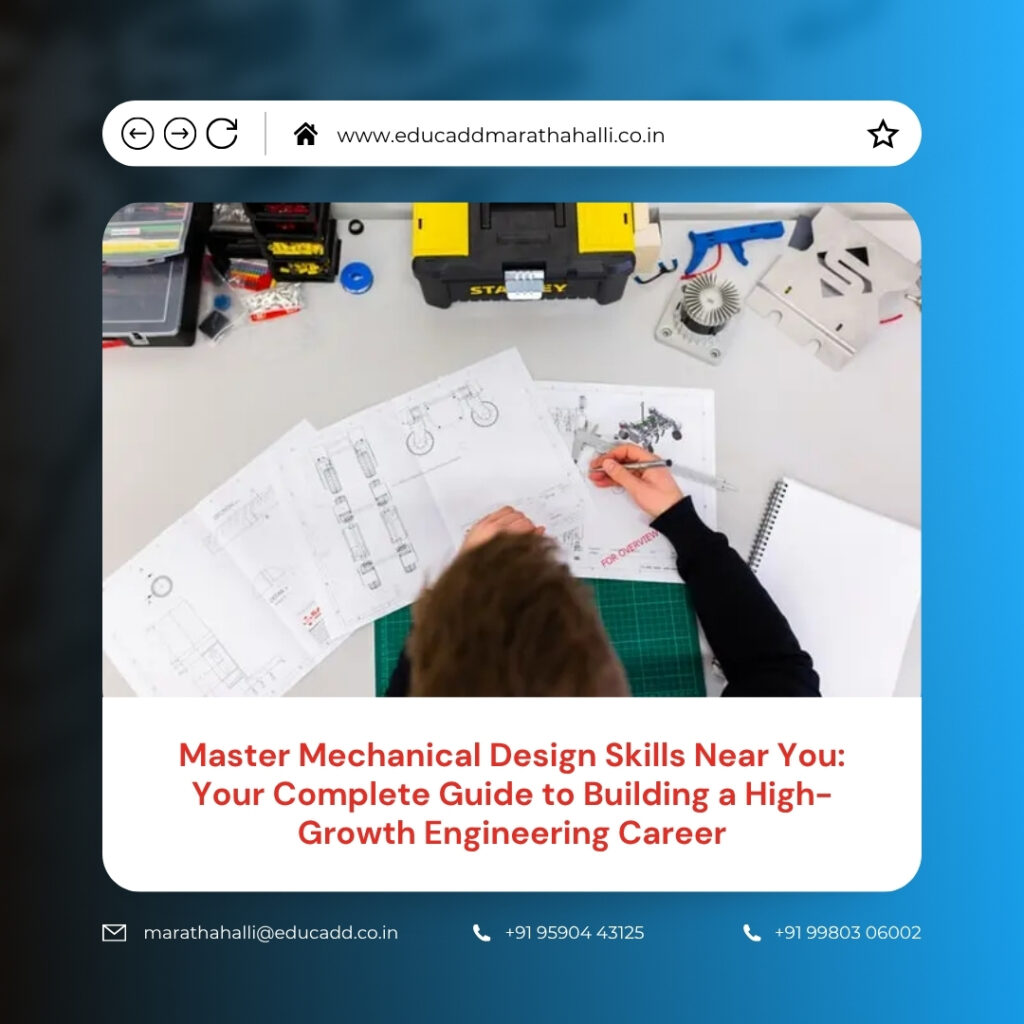
Mechanical Design Course Near Me
However, choosing the right course is more than just selecting a nearby institute. It requires understanding the value of practical training, industry-relevant tools, and expert guidance. A well-chosen course can shape your future by equipping you with the right technical knowledge and hands-on experience. In this detailed guide, you will explore everything you need to know about selecting the best mechanical design course near you and how it can transform your career path.
1. The Growing Demand for Mechanical Design Professionals
Mechanical design has become a core function in modern engineering industries. As companies strive to create better products with improved efficiency, the need for skilled designers continues to rise. Engineers who understand design principles and can use advanced tools are highly valued in the job market.
Industries today are focusing on innovation, cost reduction, and faster production cycles. As a result, mechanical designers play a key role in ensuring that products are not only functional but also optimized for performance. This growing demand makes enrolling in a mechanical design course near you a smart career decision.
Moreover, companies prefer candidates who can contribute immediately. Therefore, having practical knowledge gives you a strong advantage over others. This is why specialized training has become essential rather than optional.
2. Why Enrolling in a Local Mechanical Design Course Is Beneficial
Choosing a nearby institute offers convenience and accessibility. You can attend classes regularly without spending excessive time on travel. This allows you to stay consistent and focused on your learning journey.
In addition, local institutes often collaborate with nearby industries. These connections can help students gain exposure to real-world projects and job opportunities. Networking becomes easier when you are part of a local professional community.
Another advantage is the ability to access in-person support. You can interact directly with trainers, clarify doubts instantly, and participate in practical sessions more effectively. This improves overall learning outcomes.
3. Essential Skills You Develop During the Course
A mechanical design course helps you build a strong skill set that is required in the engineering field. These skills are not limited to software usage but also include analytical thinking and problem-solving.
Some of the key competencies include:
- Creating detailed 2D drawings and 3D models using design software
- Applying engineering concepts to develop efficient mechanical systems
Additionally, students learn how to analyze designs, identify errors, and improve functionality. Communication and teamwork skills are also enhanced, as designers often collaborate with different departments.
These abilities make you job-ready and capable of handling real industry challenges with confidence.
4. Software Tools That Shape Your Design Expertise
In today’s digital era, mechanical design relies heavily on software tools. Learning these tools is a crucial part of any professional course. Institutes usually provide training in widely used applications such as AutoCAD, SolidWorks, CATIA, and Creo.
Each software serves a unique purpose. For example, AutoCAD is commonly used for drafting, while SolidWorks is preferred for 3D modeling and simulations. Understanding multiple tools increases your versatility as a designer.
Furthermore, knowledge of simulation software helps you test designs before production. This reduces errors and improves efficiency. Therefore, mastering these tools can significantly boost your career prospects.
5. What a Comprehensive Course Curriculum Looks Like
A well-structured curriculum ensures that students gain both theoretical knowledge and practical experience. The course typically begins with basic engineering drawing concepts and gradually progresses to advanced design techniques.
Students are introduced to design standards, material selection, and manufacturing processes. These topics provide a complete understanding of how designs are created and implemented.
Practical sessions are integrated into the curriculum to reinforce learning. Assignments and projects help students apply concepts in real scenarios. This balanced approach ensures a deeper understanding of mechanical design.
6. The Role of Hands-On Training in Skill Development
Practical training plays a vital role in mastering mechanical design. While theoretical knowledge builds a foundation, hands-on experience helps you apply what you have learned.
Working on real-time projects allows students to understand industry requirements. It also helps them develop problem-solving skills and creativity. By handling actual design challenges, learners become more confident.
Moreover, practical exposure prepares students for workplace environments. They become familiar with tools, workflows, and project expectations. This makes the transition from training to employment much smoother.
7. Importance of Certification in Mechanical Design
Certification is an important factor when it comes to career growth. It acts as proof of your skills and knowledge. Employers often look for certified candidates because it assures them of your capabilities.
A recognized certification adds value to your resume and increases your chances of getting hired. It also reflects your commitment to professional development.
In addition, certifications can open doors to better job opportunities and higher salary packages. Therefore, it is essential to choose a course that offers a credible certificate upon completion.
8. Career Paths After Completing a Mechanical Design Course
After completing a mechanical design course, a wide range of career opportunities becomes available. You can work in industries such as automotive, aerospace, manufacturing, and construction.
Some popular roles include:
- Design Engineer
- CAD Engineer
With experience, you can move into advanced roles such as product development engineer or project manager. Freelancing is also an option for those who prefer flexible work arrangements.
The demand for skilled designers ensures long-term career stability and growth. Therefore, investing in the right course can lead to a rewarding professional journey.
9. Factors to Consider When Choosing the Right Institute
Selecting the right institute is crucial for your success. While searching for a mechanical design course near you, it is important to evaluate several factors carefully.
Look for institutes that offer updated course content and experienced trainers. Infrastructure and availability of modern tools are also important considerations.
Student reviews and testimonials can provide valuable insights into the quality of training. Placement assistance is another key factor that should not be overlooked.
By considering these aspects, you can choose an institute that aligns with your career goals.
10. Learning from Industry Experts: A Game Changer
Experienced trainers bring valuable industry knowledge into the classroom. They share real-world insights that help students understand practical applications of design concepts.
Learning from professionals allows students to stay updated with current trends and technologies. It also helps them understand industry expectations and standards.
Moreover, trainers can provide personalized guidance based on individual strengths and weaknesses. This improves learning efficiency and overall performance.
11. Industry-Oriented Learning for Better Career Outcomes
An industry-focused approach ensures that students are prepared for real job roles. Courses designed with industry input include relevant tools, techniques, and case studies.
Students gain exposure to real-time projects, which enhances their understanding of practical challenges. This makes them more confident and job-ready.
Employers prefer candidates who can adapt quickly to workplace requirements. Therefore, industry-oriented training provides a significant advantage in the job market.
12. Flexible Learning Options for Modern Students
Training institutes now offer multiple learning formats to suit different needs. Students can choose classroom training, online courses, or hybrid models.
Flexible schedules make it easier for working professionals to upgrade their skills. Evening and weekend batches provide convenience without affecting work commitments.
Online learning options also offer access to recorded sessions and study materials. This allows students to learn at their own pace and revisit topics whenever needed.
13. Placement Support and Career Guidance
Placement assistance is an essential part of professional training. Institutes that offer career support help students prepare for job opportunities effectively.
Services such as resume building, mock interviews, and job referrals increase the chances of getting hired. Career counseling sessions provide clarity on different job roles and career paths.
Additionally, institutes often have tie-ups with companies, which helps students secure placements. This support plays a crucial role in starting a successful career.
14. Future Trends in Mechanical Design Engineering
The future of mechanical design is driven by technological advancements. Fields such as automation, robotics, and sustainable engineering are creating new opportunities for designers.
Advanced tools and technologies are transforming the way designs are created and tested. Engineers who stay updated with these trends will have a competitive edge.
Moreover, industries are focusing on innovation and efficiency. This increases the demand for skilled mechanical designers who can contribute to modern engineering solutions.
Conclusion
Choosing the right Mechanical Design Course Near Me can be a life-changing decision for aspiring engineers. With the right training, you can develop strong technical skills, gain practical experience, and unlock diverse career opportunities.
By selecting a reputed institute, focusing on hands-on learning, and staying updated with industry trends, you can build a successful career in mechanical design. This field not only offers stability but also provides a platform for creativity and innovation.
Take the initiative today, invest in quality education, and move one step closer to becoming a skilled mechanical design professional ready to excel in the modern engineering world.

