
Mechanical CADD: The Digital Backbone of Modern Engineering Innovation
Engineering design has evolved dramatically over the past several decades. Traditional drafting methods that once depended on drawing boards, manual sketches, and physical prototypes have gradually been replaced by advanced digital design technologies. One of the most influential tools in this transformation is Mechanical CADD Engineering Design. Today, Mechanical CADD plays a central role in modern engineering projects by enabling engineers to design complex mechanical systems with exceptional precision, speed, and clarity.
In contemporary industries, engineering teams must manage increasingly complicated products that require accurate dimensions, efficient manufacturing processes, and seamless integration of multiple components. Mechanical CADD provides a powerful digital environment where engineers can create detailed technical drawings, develop 3D models, test mechanical behavior, and optimize designs before they reach production. This ability has significantly improved the way engineering teams plan, visualize, and execute projects.
Modern engineering also requires close collaboration between designers, manufacturers, analysts, and project managers. Mechanical CADD platforms allow professionals from different departments to work with the same digital models, ensuring that everyone involved understands the design structure clearly. As a result, communication becomes more effective and costly misunderstandings are reduced.
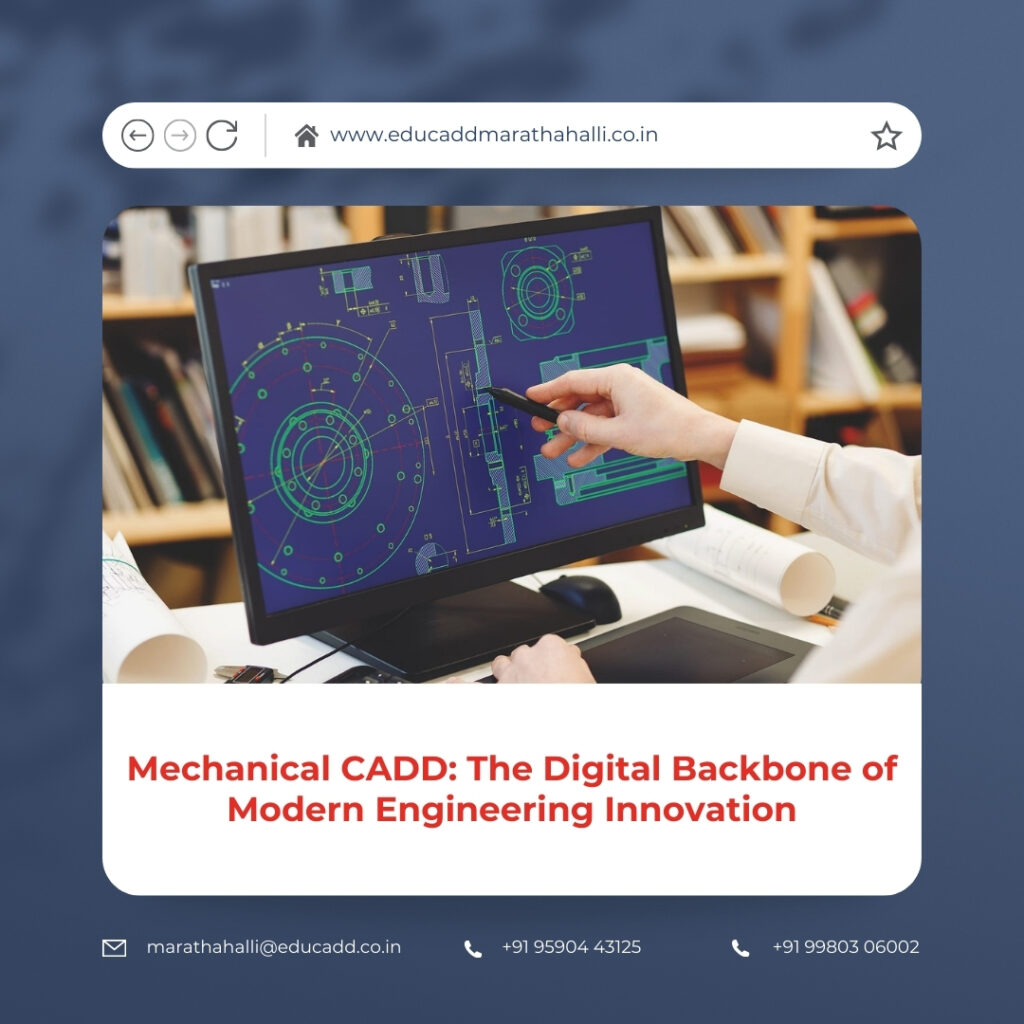
Mechanical CADD Engineering Design
Because of these advantages, Mechanical CADD has become a fundamental component of engineering practices across industries such as automotive, aerospace, manufacturing, robotics, heavy machinery, and energy systems. The following discussion explores the expanding role of Mechanical CADD in modern engineering projects and explains how this technology enhances design accuracy, improves productivity, and drives innovation in the engineering world.
Understanding the Fundamentals of Mechanical CADD
Mechanical CADD Engineering Design refers to the use of specialized computer software to create precise engineering drawings and three-dimensional mechanical models. Unlike manual drafting, where every line must be drawn individually, Mechanical CADD systems allow engineers to build digital models using intelligent design tools that automatically maintain accuracy and consistency.
Engineers use Mechanical CADD software to define component geometry, specify dimensions, assign materials, and describe mechanical relationships between parts. These digital models act as virtual representations of real-world mechanical components. Because the models contain detailed design information, engineers can easily modify, analyze, and share them throughout the project lifecycle.
Another important advantage is the ability to produce both 2D technical drawings and 3D design models from the same digital dataset. The 2D drawings provide the precise manufacturing details required by production teams, while the 3D models help engineers visualize the final product more clearly.
Mechanical CADD software also simplifies documentation. Bills of materials, assembly diagrams, and detailed specifications can be generated automatically from the design model. This capability reduces manual documentation work and ensures consistency across all engineering records.
By integrating these functions within a single digital platform, Mechanical CADD significantly improves the overall design process and supports efficient engineering project management.
Achieving Superior Design Accuracy
Precision is one of the most important factors in mechanical engineering. Even a minor design error can lead to performance issues, mechanical failure, or expensive production delays. Mechanical CADD Engineering Design provides tools that ensure extremely accurate design outputs.
Engineers can define exact measurements, geometric constraints, and tolerance limits directly within the software. Once these parameters are established, the system maintains them consistently throughout the design. If any dimension changes, related components update automatically to maintain alignment and compatibility.
This feature is particularly useful in assemblies that contain dozens or even hundreds of interconnected parts. Instead of adjusting each component manually, engineers can rely on parametric relationships that automatically maintain design integrity.
Mechanical CADD also supports standardized drafting methods. Engineers can apply globally recognized engineering symbols, annotations, and dimensioning techniques directly within the software environment. These standards help ensure that drawings are interpreted correctly by manufacturers and quality control teams.
By maintaining high levels of precision, Mechanical CADD significantly reduces the risk of manufacturing defects and improves the reliability of engineering designs.
Increasing Efficiency in the Engineering Workflow
Modern engineering projects demand rapid development cycles and efficient resource management. Mechanical CADD contributes greatly to productivity by automating many time-consuming design tasks.
Engineers can access extensive libraries of standard components such as bolts, gears, bearings, and fasteners. Instead of designing these parts repeatedly, they can simply insert them into the model and customize them as needed. This approach saves valuable design time and ensures consistency across projects.
Parametric modeling is another feature that enhances efficiency. Engineers define relationships between design features, allowing the software to adjust the model automatically when a parameter changes. This capability makes it easy to test multiple design alternatives without rebuilding the model from scratch.
Mechanical CADD also provides automated dimensioning and annotation tools. These features reduce repetitive drafting work and help engineers focus on solving complex design challenges.
Because of these productivity improvements, engineering teams can complete projects faster while maintaining high quality standards.
Advancing 3D Modeling and Visualization Capabilities
One of the most transformative aspects of Mechanical CADD is its advanced 3D modeling functionality. Traditional 2D drawings often require engineers to interpret complex geometries mentally. In contrast, 3D models present mechanical systems in a realistic and interactive format.
Engineers can rotate, zoom, and examine models from any angle. This interactive visualization helps them understand how different components interact within an assembly. It also allows designers to identify potential issues such as collisions or misalignment before manufacturing begins.
Exploded assembly views further enhance visualization. These views show how individual components fit together and reveal the sequence required for assembly. This information is extremely valuable for production teams and maintenance personnel.
In addition, 3D visualization improves communication with stakeholders who may not have technical engineering backgrounds. Clients, investors, and project managers can easily understand the design concept when they see a detailed digital model.
Through enhanced visualization, Mechanical CADD improves design clarity and supports better decision-making throughout engineering projects.
Enabling Digital Simulation and Engineering Analysis
Mechanical CADD has expanded beyond simple drafting and modeling. Many modern systems integrate powerful simulation tools that allow engineers to analyze product performance within the design environment.
Engineers can simulate mechanical stress, thermal behavior, vibration, and motion directly on digital models. These simulations reveal how components will behave under real operating conditions.
Stress analysis helps engineers determine whether a component can withstand the loads it will encounter during operation. Motion analysis evaluates how moving parts interact and ensures that mechanisms operate smoothly without interference.
Thermal simulations are particularly important in industries where temperature changes affect material properties. Engineers can study heat distribution within a system and make design adjustments to prevent overheating.
These analysis capabilities allow engineers to refine their designs before manufacturing begins. By identifying problems early, Mechanical CADD reduces development costs and improves product reliability.
Strengthening Collaboration Across Engineering Teams
Engineering projects rarely involve a single individual. Designers, analysts, manufacturers, and managers all contribute to the development of a mechanical product. Mechanical CADD platforms support collaboration by providing shared digital design environments.
Team members can access the same models and drawings regardless of their physical location. Cloud-based systems allow engineers to review designs, provide feedback, and implement changes in real time.
Version control features ensure that everyone works with the most recent design files. Engineers can track modifications, review earlier versions, and maintain a complete history of project development.
Clear digital models also improve communication between design and manufacturing teams. Production engineers can examine the models and understand assembly requirements without relying solely on written instructions.
This collaborative approach helps engineering teams work more efficiently and reduces the risk of costly miscommunication.
Bridging the Gap Between Design and Manufacturing
Mechanical CADD serves as a vital link between engineering design and production processes. Once the design is finalized, the digital models become the foundation for manufacturing operations.
Many manufacturing systems use Computer-Aided Manufacturing (CAM) software that reads CADD models directly. These systems generate precise tool paths for CNC machines, ensuring that parts are produced exactly according to the design specifications.
Mechanical CADD also supports the creation of detailed assembly instructions and production documentation. These documents guide technicians through the manufacturing process and ensure consistent product quality.
By connecting design and manufacturing through digital models, Mechanical CADD helps organizations reduce errors and streamline production workflows.
Reducing Development Risks and Project Costs
Engineering mistakes can be extremely expensive, particularly when they occur late in the production process. Mechanical CADD minimizes these risks by allowing engineers to detect design issues early.
Design validation tools automatically identify potential conflicts such as overlapping components or incorrect dimensions. Engineers can correct these problems during the design phase before they affect production.
Digital prototyping also reduces the need for multiple physical prototypes. Engineers can evaluate performance through simulations, which significantly lowers material and testing costs.
As a result, Mechanical CADD helps organizations maintain project schedules while controlling development expenses.
Encouraging Innovation in Mechanical Design
Mechanical CADD Engineering Design encourages engineers to experiment with new ideas and explore innovative design approaches. Because digital models can be modified quickly, designers can test various configurations without significant time or financial investment.
Advanced tools such as generative design allow software algorithms to suggest optimized design structures based on performance requirements. These solutions often produce lightweight yet strong components that would be difficult to design manually.
By enabling rapid experimentation, Mechanical CADD supports creative problem-solving and technological advancement across engineering industries.
Integrating with Smart Manufacturing Technologies
The rise of smart factories and Industry 4.0 technologies has transformed the manufacturing landscape. Mechanical CADD plays a critical role in this digital ecosystem.
Digital design models can connect with Product Lifecycle Management systems that track product data throughout its lifespan. Engineers can monitor design updates, production details, and maintenance records within a unified digital framework.
Mechanical CADD also contributes to digital twin technology. Engineers can create virtual representations of physical machines and monitor their performance in real time.
These integrations allow organizations to improve product performance, predict maintenance needs, and optimize manufacturing efficiency.
Supporting Compliance with Engineering Regulations
Many engineering industries operate under strict regulatory guidelines. Mechanical CADD helps engineers meet these requirements by supporting standardized drafting practices and comprehensive documentation.
Design software includes built-in tools that apply engineering standards for dimensioning, annotations, and tolerances. These features ensure that technical drawings follow accepted industry guidelines.
Maintaining accurate digital records also helps organizations demonstrate compliance during inspections or certification processes.
By simplifying regulatory documentation, Mechanical CADD helps companies maintain safety standards and avoid legal complications.
Managing the Complete Product Lifecycle
Mechanical CADD does not end with the design stage. The digital models created during product development continue to provide value throughout the entire product lifecycle.
Engineers can reference original design data when updating products or introducing improvements. Maintenance teams can also use these drawings to understand equipment structures and perform repairs efficiently.
Over time, companies build extensive digital libraries of mechanical designs. These libraries become valuable knowledge resources that support future engineering projects.
Expanding Career Opportunities in Mechanical Design
The widespread adoption of Mechanical CADD has created strong demand for skilled professionals who understand digital design technologies. Engineers who master CADD tools are highly valued across industries such as automotive, aerospace, energy, and manufacturing.
Mechanical designers, drafting specialists, and product development engineers all rely on these tools to perform their work. Many educational institutions now offer specialized training programs that focus on Mechanical CADD software and engineering drawing standards.
As engineering projects continue to adopt digital workflows, professionals with Mechanical CADD expertise will enjoy strong career prospects.
Conclusion
Mechanical CADD Engineering Design has become one of the most powerful tools shaping modern engineering practices. By transforming traditional drafting into an intelligent digital design environment, Mechanical CADD enables engineers to develop complex mechanical systems with exceptional accuracy and efficiency.
From conceptual design and 3D modeling to simulation, manufacturing integration, and lifecycle management, Mechanical CADD supports every stage of product development. It improves collaboration, reduces design errors, and accelerates innovation across multiple engineering industries.
As manufacturing continues to evolve through digital transformation and smart technologies, the importance of Mechanical CADD will only increase. Engineers will rely on these tools not only to create precise designs but also to develop advanced mechanical solutions that drive industrial progress.
In the future, organizations that embrace Mechanical CADD and digital engineering practices will be better positioned to innovate, compete globally, and deliver high-quality mechanical products that meet the demands of an ever-changing technological world.

