
From First Click to Final Conversion: Advanced Marketing Automation Workflows for Smarter Lead Nurturing
Capturing attention in the digital marketplace is easier than ever, but converting that attention into meaningful business outcomes requires a more strategic approach. Modern consumers are informed, selective, and often hesitant to make quick decisions. Because of this, businesses must go beyond simple outreach and adopt structured systems that build relationships over time. Marketing Automation Lead Nurturing provide exactly that advantage. They allow brands to engage leads consistently, deliver personalized experiences, and guide prospects through a well-defined journey. Instead of relying on manual follow-ups, companies can automate interactions while still maintaining relevance and value. As competition intensifies, organizations that leverage intelligent workflows gain a clear edge in nurturing leads efficiently and converting them into long-term customers.
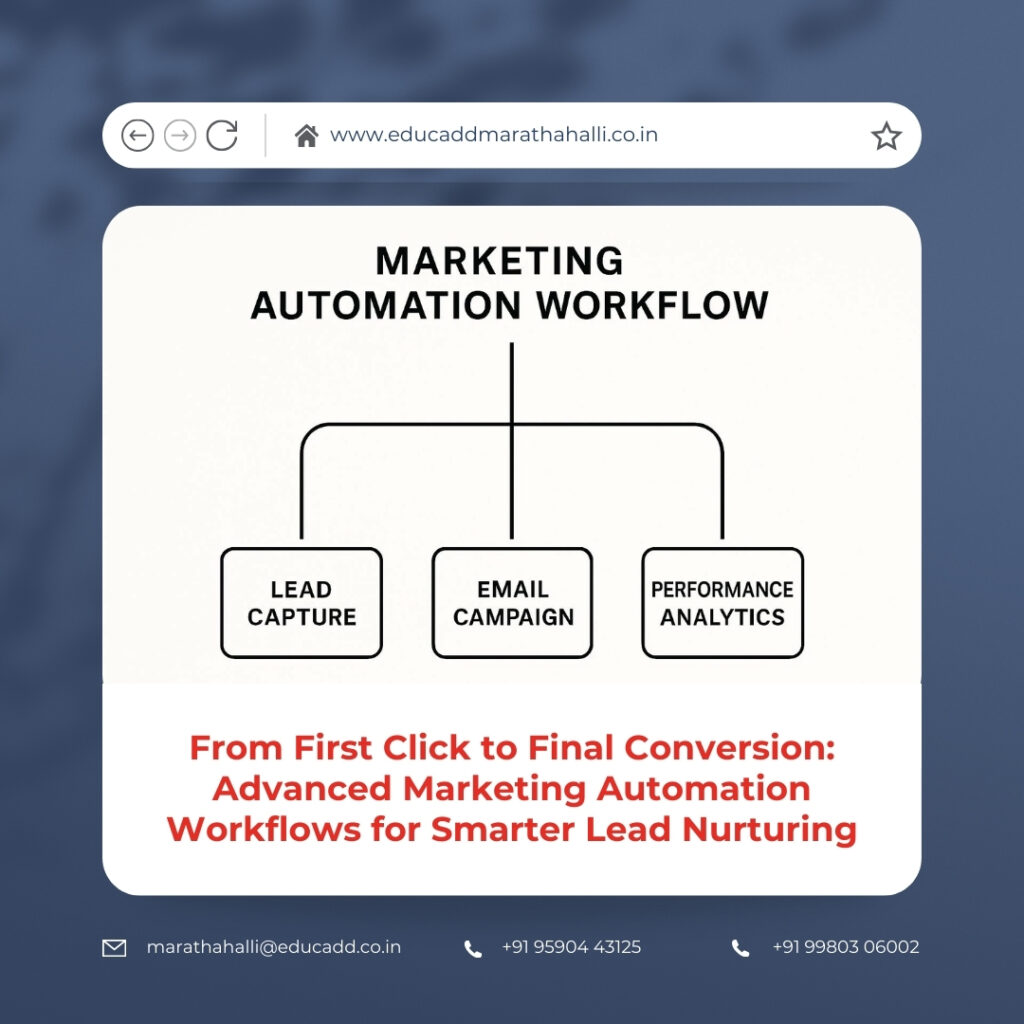
Marketing Automation Lead Nurturing
What Marketing Automation Workflows Really Mean
Marketing Automation Lead Nurturing are systematic processes designed to execute marketing tasks automatically based on predefined rules and triggers. These workflows operate behind the scenes, ensuring that every lead receives timely and relevant communication without requiring constant human involvement. Rather than sending generic messages, workflows deliver tailored experiences shaped by user behavior.
For example, when a visitor signs up for a newsletter, a workflow can instantly send a welcome email, followed by educational content over the next few days. This sequence builds engagement gradually. Moreover, workflows can adapt dynamically. If a lead clicks on a specific link, the system can trigger a new set of actions aligned with that interest.
In addition, these workflows extend across multiple channels, including email, SMS, and social platforms. This integrated approach ensures that communication remains consistent, regardless of where the lead interacts with the brand.
The Importance of Lead Nurturing in Today’s Landscape
Lead nurturing has become a cornerstone of successful marketing strategies. Most potential customers do not convert immediately after their first interaction. Instead, they require time, information, and reassurance before making a decision. Without a proper nurturing process, many of these opportunities are lost.
When businesses nurture leads effectively, they build trust and credibility. Consistent communication helps prospects understand the value of a product or service. As a result, they feel more confident moving forward.
Furthermore, nurturing keeps your brand relevant. In a crowded market, staying visible is crucial. Regular touchpoints ensure that when a prospect is ready to buy, your brand is at the top of their mind. This continuous engagement significantly increases conversion chances.
Essential Elements That Shape High-Performing Workflows
A successful marketing automation workflow is built on a strong foundation of key elements. Each component must work together seamlessly to create an effective system.
To begin with, clearly defined objectives provide direction. Whether the goal is to increase sales, boost engagement, or improve retention, having clarity ensures better execution. Next, audience segmentation allows marketers to divide leads into specific groups based on behavior and preferences.
Content alignment is another critical factor. Different stages of the buyer journey require different types of messaging. Informational content works best in the early stages, while persuasive content becomes essential later.
Finally, triggers and conditions determine how the workflow behaves. These include user actions such as clicks, downloads, or time delays. When configured correctly, they ensure that communication remains relevant and timely.
Exploring Different Workflow Models
Marketing Automation Lead Nurturing are not one-size-fits-all. Various models serve different purposes, and understanding them helps businesses design better strategies.
Welcome workflows introduce new subscribers to your brand and set expectations. These workflows create a strong first impression and establish a connection early. Lead nurturing workflows, on the other hand, focus on building relationships over time through consistent engagement.
Re-engagement workflows target inactive users who have stopped interacting. These workflows aim to revive interest and bring leads back into the funnel. Post-purchase workflows are equally important, as they help retain customers and encourage repeat business.
Each model addresses a unique stage of the customer lifecycle. When used together, they create a comprehensive system that supports long-term growth.
Designing a Strategic Lead Nurturing Framework
Building an effective lead nurturing system requires a deep understanding of your audience. Businesses must analyze customer behavior, identify pain points, and map out the buyer journey carefully.
Once this foundation is established, the focus shifts to content creation. Content must provide value at every stage. Educational blogs, informative videos, and detailed guides help prospects learn and grow.
Timing is equally important. Sending messages too frequently can overwhelm users, while infrequent communication may lead to disengagement. Therefore, finding the right balance ensures better results.
Personalization adds another layer of effectiveness. By tailoring messages based on user data, businesses can create more meaningful interactions that resonate with their audience.
Why Segmentation Drives Better Results
Segmentation plays a vital role in the success of marketing automation workflows. It allows businesses to categorize leads into smaller groups based on shared characteristics. This approach ensures that communication remains relevant and targeted.
When messages are tailored to specific segments, engagement improves significantly. Leads are more likely to respond to content that aligns with their interests. As a result, conversion rates increase.
Segmentation also helps prioritize efforts. High-intent leads can be identified and targeted with more focused campaigns. This improves efficiency and maximizes returns.
Key advantages of segmentation include:
-
Delivering highly relevant and personalized communication
-
Increasing engagement and improving conversion outcomes
Overall, segmentation ensures that no lead is treated as just another number.
Creating Content That Connects and Converts
Content is the backbone of any successful lead nurturing strategy. Without valuable content, even the most advanced workflows will fail to deliver results. Therefore, businesses must focus on creating meaningful and engaging material.
Personalized content has a stronger impact than generic messaging. When leads receive information tailored to their needs, they feel understood. This connection builds trust and encourages further interaction.
Additionally, content should evolve as the lead progresses through the funnel. Early-stage content should educate, while later-stage content should persuade and convince. This progression ensures a smooth transition toward conversion.
By leveraging user data, businesses can refine their content strategy continuously. This leads to better engagement and improved outcomes.
Leveraging Email Automation for Consistent Engagement
Email automation remains one of the most effective tools for lead nurturing. It allows businesses to maintain regular communication without manual effort. Automated sequences ensure that leads receive the right message at the right time.
Drip campaigns are a popular form of email automation. These campaigns deliver a series of emails over a defined period. Each message builds on the previous one, guiding the lead through the journey.
Moreover, email automation provides valuable insights. Metrics such as open rates and click-through rates help measure performance. These insights enable marketers to optimize their strategies.
Two essential elements of effective email automation are:
-
Attention-grabbing subject lines that encourage opens
-
Clear and compelling calls-to-action that drive clicks
When executed properly, email automation can significantly enhance engagement and conversions.
The Power of CRM Integration in Workflows
Integrating Marketing Automation Lead Nurturing with a Customer Relationship Management system enhances overall efficiency. This connection ensures seamless data flow between marketing and sales teams.
With shared data, both teams gain better visibility into lead behavior. Sales representatives can access detailed insights about interactions, making their approach more informed. This alignment improves communication and increases success rates.
CRM integration also supports lead scoring. By assigning scores based on engagement, businesses can identify high-potential leads بسهولة. This helps prioritize follow-ups and allocate resources effectively.
Ultimately, integration bridges the gap between marketing and sales, creating a unified approach that drives better results.
Understanding Lead Scoring and Qualification
Lead scoring is a systematic way to evaluate how ready a prospect is to make a purchase. By assigning numerical values to different actions, businesses can measure engagement levels accurately.
For instance, visiting key pages, downloading resources, or clicking emails can increase a lead’s score. Higher scores indicate stronger interest and intent. This helps marketers focus on leads that are more likely to convert.
Qualification ensures that only relevant leads move forward in the process. This reduces wasted effort and improves efficiency. Additionally, it allows sales teams to focus on high-quality prospects.
Together, lead scoring and qualification create a more structured and effective nurturing process.
Tracking and Improving Workflow Performance
Monitoring performance is essential for maintaining effective marketing automation workflows. Without proper tracking, it becomes difficult to identify what works and what needs improvement.
Key metrics such as conversion rates, engagement levels, and response times provide valuable insights. By analyzing these metrics, businesses can make informed decisions.
A/B testing is another powerful method for optimization. Testing different elements helps identify the most effective approach. Over time, these improvements lead to better performance.
Continuous evaluation ensures that workflows remain relevant and effective in a changing market environment.
Overcoming Common Workflow Challenges
While Marketing Automation Lead Nurturing offers numerous benefits, it also presents certain challenges. One common issue is poor data quality. Inaccurate data can lead to ineffective targeting and reduced engagement.
Another challenge is excessive automation. When communication becomes too robotic, it can reduce the human touch. Therefore, balancing automation with personalization is crucial.
Complex workflows can also create difficulties. Overly detailed systems are harder to manage and may lead to errors. Simplifying workflows ensures better performance and easier maintenance.
By addressing these challenges proactively, businesses can maximize the effectiveness of their automation efforts.
Emerging Trends Shaping the Future of Automation
The future of marketing automation is being shaped by rapid technological advancements. Artificial intelligence is playing a major role in enhancing workflow capabilities. It enables smarter decision-making and improved personalization.
Predictive analytics is another game-changer. It allows businesses to anticipate customer behavior and respond proactively. This leads to more effective nurturing strategies.
Additionally, omnichannel marketing is gaining importance. Businesses are integrating multiple platforms to create a seamless experience. This ensures consistent communication across all touchpoints.
As these trends continue to evolve, marketing automation will become even more powerful and essential.
Conclusion
Marketing Automation Lead Nurturing workflows have redefined how businesses approach lead nurturing. By combining technology with strategy, companies can create structured systems that guide prospects from initial interest to final conversion. These workflows enable consistent communication, personalized engagement, and efficient resource utilization.
However, success requires more than just implementation. Businesses must continuously refine their strategies, analyze performance, and adapt to changing trends. From segmentation and content creation to CRM integration and lead scoring, every element contributes to the overall effectiveness.
Organizations that invest in well-designed workflows position themselves for long-term success. By nurturing leads thoughtfully and strategically, they can build lasting relationships, improve conversions, and achieve sustainable growth in an increasingly competitive digital world.

