
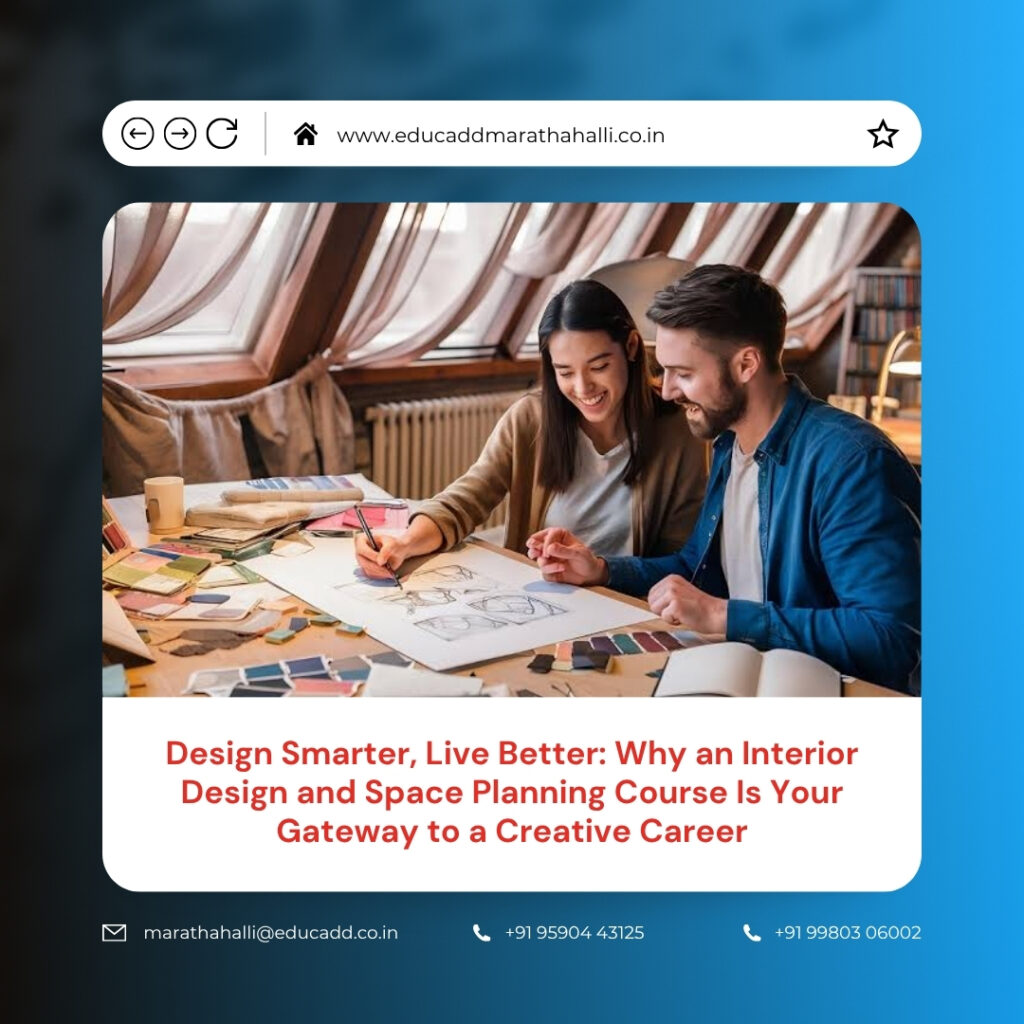
Design Smarter, Live Better: Why an Interior Design and Space Planning Course Is Your Gateway to a Creative Career
Interior spaces are no longer designed only for appearance. Modern homes, offices, hotels, retail stores, healthcare centers, and educational institutions require interiors that combine beauty with functionality. This growing demand has created exciting opportunities for skilled professionals who understand how to plan and design spaces effectively. An Interior Design Space Planning Course equips aspiring designers with the creative vision and technical expertise needed to transform empty areas into practical and visually engaging environments.
Interior Design Space Planning
Whether someone dreams of designing luxurious homes or innovative commercial spaces, professional training provides the right foundation. As urban development continues to accelerate, interior designers are becoming essential contributors to creating spaces that improve comfort, productivity, and overall quality of life.
Discovering the True Purpose of Interior Design
Interior design goes far beyond choosing attractive furniture or decorating walls. It is a structured process that focuses on improving the way people experience indoor spaces while balancing functionality, safety, comfort, and aesthetics. Every successful design begins with understanding the client’s lifestyle, preferences, and practical requirements. An Interior Design Space Planning Course introduces students to the complete design process, from concept development to project execution. Learners understand how every design decision influences movement, lighting, comfort, and usability. Consequently, they begin viewing interiors as carefully planned environments rather than simply decorated rooms.
Building a Strong Foundation in Design Principles
Every professional designer relies on fundamental design principles to create balanced and attractive interiors. Concepts such as proportion, harmony, rhythm, contrast, scale, emphasis, and unity help designers organize spaces in a visually pleasing manner. Without these essentials, even expensive interiors may appear unorganized or uncomfortable. Through an Interior Design Space Planning Course, students gain detailed knowledge of these principles and learn how to apply them in practical projects. Additionally, they explore the relationship between colors, textures, patterns, shapes, and materials. This comprehensive understanding helps learners develop creative confidence while maintaining professional design standards.
Learning the Science Behind Effective Space Planning
Space planning is one of the most valuable skills an interior designer can possess. Every square foot should serve a meaningful purpose while allowing smooth movement and maximum functionality. Poor layouts often create clutter, discomfort, and inefficient use of available space. An Interior Design Space Planning teaches students how to evaluate room dimensions, analyze circulation paths, prepare zoning layouts, and organize furniture effectively. Furthermore, learners discover techniques for maximizing compact spaces without sacrificing comfort or visual appeal. These practical skills enable designers to create interiors that perfectly suit both residential and commercial environments.
Understanding Colors, Textures, and Material Selection
The choice of colors and materials significantly influences the mood and personality of an interior. Warm shades create welcoming environments, while cool tones promote calmness and relaxation. Similarly, flooring, wall finishes, fabrics, and decorative materials contribute to the overall design experience. An Interior Design Space Planning explains color psychology, material properties, surface finishes, and texture combinations in detail. Students also understand how to balance durability with aesthetics when selecting materials for different projects. As a result, they learn to create interiors that are attractive, practical, and long-lasting.
Creating Comfortable Interiors Through Smart Lighting Design
Lighting is one of the most powerful tools in interior design because it affects visibility, comfort, productivity, and ambiance. Even beautifully designed interiors can lose their appeal if lighting is poorly planned. Therefore, professional designers carefully combine natural and artificial lighting to achieve the desired atmosphere. During an Interior Design and Space Planning Course, students study lighting techniques for homes, offices, hospitality spaces, and retail environments. They learn about ambient lighting, task lighting, accent lighting, decorative fixtures, and energy-efficient solutions. Consequently, they gain the ability to enhance every interior through strategic illumination.
Exploring Furniture Planning and Interior Styling
Furniture forms the backbone of every interior environment. However, selecting furniture involves much more than matching colors or styles. Designers must consider dimensions, comfort, accessibility, durability, and space efficiency before making decisions. An Interior Design and Space Planning Course trains students to prepare professional furniture layouts that support daily activities while maintaining visual balance. Moreover, learners discover how accessories, artwork, rugs, indoor plants, curtains, and decorative elements complete an interior concept. These styling techniques allow designers to transform ordinary rooms into elegant and inviting living spaces.
Understanding Residential and Commercial Design Requirements
Residential and commercial interiors require different planning strategies because they serve unique purposes. Homes prioritize personal comfort, privacy, and lifestyle preferences, whereas commercial spaces focus on productivity, branding, customer experience, and operational efficiency. An Interior Design and Space Planning Course exposes students to a wide variety of project types, including apartments, villas, offices, restaurants, hotels, educational institutions, and retail stores. Additionally, they learn how building regulations, accessibility standards, and client expectations vary across industries. This practical exposure prepares graduates to confidently handle diverse interior design assignments.
Developing Expertise with Modern Design Software
Technology has transformed the interior design profession by making visualization more accurate and presentations more impressive. Clients now expect realistic three-dimensional views before approving any project. Therefore, software proficiency has become an essential skill for every designer. An Interior Design and Space Planning Course introduces industry-standard design applications used for drafting, modeling, rendering, and presentation. Students create detailed floor plans, furniture layouts, ceiling designs, sectional views, and realistic visualizations that accurately represent their ideas. These digital skills increase productivity while making graduates more competitive in today’s design industry.
Embracing Sustainable and Eco-Friendly Interior Design
Sustainability continues to shape modern architecture and interior design because environmental responsibility has become increasingly important. Clients now seek interiors that reduce energy consumption while promoting healthier living conditions. An Interior Design and Space Planning Course introduces sustainable design concepts, environmentally friendly materials, energy-efficient lighting systems, water-saving solutions, and responsible material sourcing. Students also understand how natural ventilation, daylight utilization, and recyclable materials contribute to greener interiors. Consequently, they become capable of designing spaces that support both environmental conservation and long-term client satisfaction.
Strengthening Communication and Project Coordination Skills
Successful interior designers do much more than prepare drawings. They communicate with clients, contractors, architects, engineers, suppliers, and project managers throughout every stage of a project. Strong communication skills ensure that ideas are clearly understood and correctly executed. An Interior Design and Space Planning Course develops presentation techniques, client consultation methods, budgeting knowledge, project scheduling, and teamwork abilities. Furthermore, students learn how to manage revisions, solve design challenges, and maintain productive professional relationships. These interpersonal skills play a crucial role in building trust and delivering successful projects.
Understanding Construction Methods and Technical Knowledge
Interior designers frequently work alongside construction professionals during renovation and new building projects. Therefore, understanding structural systems and construction techniques is extremely valuable. An Interior Design and Space Planning Course introduces students to ceiling systems, flooring installation, partition construction, plumbing coordination, electrical layouts, HVAC planning, and finishing processes. They also gain knowledge of safety standards and building codes that influence interior projects. This technical understanding allows designers to create practical solutions that can be successfully implemented without unnecessary complications during construction.
Expanding Career Opportunities in the Interior Design Industry
The interior design profession offers excellent career prospects across multiple industries because every modern building requires thoughtful interior planning. Graduates can pursue opportunities with architecture firms, interior design studios, furniture manufacturers, construction companies, retail organizations, hospitality businesses, and real estate developers. After completing an Interior Design and Space Planning Course, professionals may work as interior designers, space planners, furniture consultants, visual merchandisers, lighting specialists, project coordinators, residential designers, commercial designers, or freelance consultants. Many experienced professionals also establish successful design firms and work with clients across different sectors, creating rewarding careers with continuous growth potential.
Conclusion
Creativity becomes truly valuable when it is supported by professional knowledge, technical expertise, and practical experience. An Interior Design Space Planning Course helps aspiring designers develop every essential skill required to succeed in today’s competitive design industry. From understanding design principles and space planning to mastering software, sustainability, lighting, materials, and project management, the course prepares students for real-world challenges. As demand for innovative interiors continues to increase across residential and commercial sectors, trained professionals will remain highly sought after. Investing in an Interior Design Space Planning is more than learning a creative discipline—it is the beginning of a fulfilling career where imagination, functionality, and innovation come together to create inspiring spaces for people to live, work, and thrive.

