
Designing the Future: Interior Design Career Opportunities in 2026 and Beyond
Interior Design Career Opportunities has transformed into a multidimensional profession that blends creativity, psychology, engineering awareness, sustainability, and advanced technology. As 2026 approaches, the industry is expanding rapidly due to urban growth, evolving lifestyle patterns, digital transformation, and rising expectations for functional yet inspiring spaces. Today, interior designers do far more than decorate rooms. They analyze spatial efficiency, improve user experience, integrate smart technologies, and contribute to environmental responsibility.
Because of these changes, Interior Design Career Opportunities in 2026 are broader and more dynamic than ever before. Organizations seek professionals who can align aesthetics with business strategy. Homeowners demand personalized, tech-enabled living environments. Hospitality brands invest heavily in immersive design experiences. Moreover, governments promote sustainable construction practices, which increases the need for environmentally conscious designers.
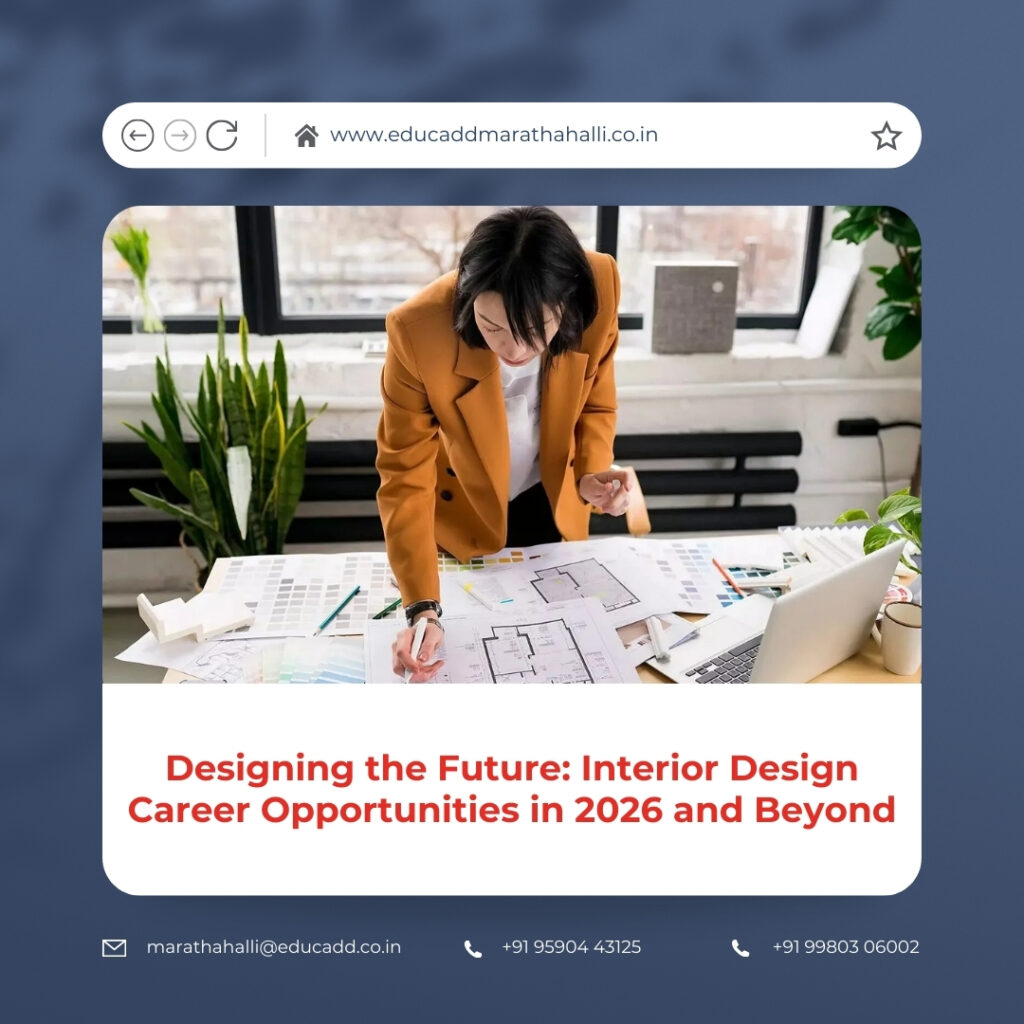
Interior Design Career Opportunities
This detailed guide explores interior design career opportunities in 2026 from every angle. It examines emerging sectors, required skills, global demand, income potential, specialization areas, entrepreneurial prospects, and long-term industry outlook. If you are planning to enter the profession or advance your expertise, this comprehensive overview will help you understand how to prepare for success in a competitive yet promising landscape.
1. The Rapid Evolution of Interior Design as a Profession
Interior design has evolved significantly over the last decade. Earlier, the profession primarily focused on furniture selection, color coordination, and decorative enhancements. However, Interior Design Career Opportunities in 2026 reflect a deeper integration of functionality, wellness, sustainability, and digital innovation. Designers now collaborate with architects, engineers, contractors, and technology consultants to create cohesive environments that enhance everyday life.
Urbanization continues to reshape residential and commercial demands. Cities are expanding vertically, which creates compact living spaces that require intelligent design solutions. Designers must optimize every square foot without compromising comfort. Additionally, the global shift toward remote and hybrid work has altered how people use interior spaces. Homes now double as offices, learning centers, and relaxation zones. This transition has expanded the professional responsibilities of interior designers.
Furthermore, the influence of global design trends has intensified through digital platforms. Clients stay informed about international aesthetics and expect similar quality in their projects. Therefore, professionals who remain updated with global styles, material innovations, and construction technologies enjoy better career prospects. The rapid evolution of the field ensures that interior design career opportunities in 2026 extend far beyond traditional expectations.
2. Residential Design: Personalized and Smart Living Spaces
Residential design remains a dominant segment within interior design career opportunities in 2026. However, the modern homeowner seeks more than visual appeal. Clients expect functionality, sustainability, comfort, and technological integration. As smart home systems become affordable, designers must incorporate automated lighting, climate control, and security solutions into their concepts.
Open-plan layouts continue to gain popularity because they encourage social interaction and flexibility. However, privacy considerations require thoughtful zoning strategies. Designers who balance openness with acoustic solutions and modular partitions deliver practical results. In addition, demand for energy-efficient interiors is rising steadily. Homeowners prefer sustainable materials, natural lighting strategies, and eco-friendly finishes that reduce long-term costs.
Luxury housing projects also contribute significantly to interior design career opportunities in 2026. High-end clients seek exclusive materials, customized furniture, and artistic installations. Designers who understand global luxury trends and premium craftsmanship command higher fees. At the same time, mid-income housing markets are expanding rapidly in developing economies. This diversity ensures consistent work opportunities across multiple residential segments.
3. Commercial and Corporate Workspace Innovation
Commercial interiors represent one of the most lucrative domains in interior design career opportunities in 2026. Businesses increasingly recognize that workplace design influences productivity, creativity, and employee satisfaction. As a result, companies invest heavily in modern office concepts that promote collaboration and wellness.
Hybrid work models require flexible seating arrangements, multifunctional meeting rooms, and informal discussion areas. Designers analyze employee workflows before finalizing layouts. Consequently, spatial planning has become data-driven rather than purely aesthetic. Ergonomic furniture, acoustic control, and natural lighting are prioritized to enhance comfort.
Corporate branding also shapes interior strategies. Offices reflect company values and culture through color schemes, material choices, and layout design. Retail environments follow a similar principle. Store interiors are carefully planned to influence purchasing behavior and customer engagement. Designers who understand consumer psychology thrive in this competitive segment. Therefore, commercial and corporate projects significantly expand interior design career opportunities in 2026.
4. Hospitality and Experiential Design Growth
The hospitality sector continues to evolve rapidly, creating new interior design career opportunities in 2026. Hotels, restaurants, cafes, and resorts focus on immersive experiences rather than basic functionality. Guests expect visually appealing environments that offer comfort and memorable aesthetics.
Boutique hotels emphasize storytelling through thematic interiors. Designers create cohesive narratives using textures, lighting, and artwork. Meanwhile, restaurants rely on layout psychology to influence customer flow and dining comfort. Lighting design plays a critical role in setting the desired atmosphere.
Social media visibility also drives hospitality design decisions. Eye-catching interiors attract online engagement, which translates into business growth. Therefore, designers who create visually distinctive spaces gain strong industry recognition. Additionally, wellness tourism is expanding, which encourages the use of natural materials and biophilic elements. These trends reinforce the importance of hospitality design within interior design career opportunities in 2026.
5. Sustainable and Eco-Conscious Design Careers
Sustainability stands at the forefront of interior design career opportunities in 2026. Environmental awareness has increased globally, and clients now prioritize green solutions. Designers must understand energy efficiency, waste reduction, and sustainable sourcing practices.
Eco-friendly materials such as reclaimed wood, recycled metals, and low-emission finishes are widely preferred. Designers also integrate natural ventilation systems and daylight optimization strategies to reduce energy consumption. Certification standards encourage environmentally responsible construction.
Moreover, businesses seek green certifications to enhance brand credibility. Interior designers play a critical role in achieving these standards. Professionals who specialize in sustainable design often secure long-term contracts with environmentally conscious organizations. As environmental regulations become stricter, sustainability expertise will continue to elevate career prospects.
6. Technology Integration and Digital Visualization
Technological advancement has reshaped interior design career opportunities in 2026 dramatically. Digital tools allow designers to present realistic 3D renderings and immersive walkthroughs. Clients can visualize spaces before construction begins, which reduces misunderstandings and revisions.
Virtual reality and augmented reality enhance presentation quality. Designers can demonstrate lighting effects, material textures, and spatial flow interactively. This capability improves client confidence and accelerates project approvals.
Building Information Modeling enables precise coordination with architects and engineers. Errors decrease because data is integrated across disciplines. Furthermore, artificial intelligence tools assist in layout optimization and cost estimation. Designers who embrace these innovations gain competitive advantages and higher income potential. Technology has become an essential component of modern interior practice.
7. Healthcare and Educational Facility Design
Healthcare interiors demand careful attention to hygiene, comfort, and patient psychology. Therefore, interior design career opportunities in 2026 include specialized roles in hospital and clinic planning. Designers focus on infection control materials, calming color palettes, and intuitive navigation systems.
Similarly, educational institutions seek flexible learning environments. Modern classrooms incorporate collaborative zones and technology integration. Designers must consider acoustics, lighting, and ergonomic furniture to enhance learning outcomes.
These sectors require a deep understanding of user behavior and regulatory guidelines. Professionals who specialize in healthcare or educational design often secure stable and impactful career paths.
8. Retail and Experiential Brand Spaces
Retail design continues to evolve due to changing consumer habits. Physical stores must compete with online shopping platforms. Consequently, interior design career opportunities in 2026 emphasize experiential retail environments.
Designers create interactive zones that encourage exploration. Strategic product placement and lighting enhance customer engagement. Pop-up stores and temporary installations also provide short-term yet high-impact opportunities.
Brands rely on interior designers to translate identity into physical form. Therefore, creativity combined with marketing awareness strengthens professional value in retail sectors.
9. Freelancing and Studio Ownership
Entrepreneurship remains a powerful pathway within interior design career opportunities in 2026. Many designers establish independent studios to gain creative freedom and financial control. Digital marketing platforms help professionals showcase portfolios and attract clients worldwide.
Freelancers benefit from flexible schedules and project selection autonomy. However, business management skills are essential for long-term success. Designers must manage budgets, negotiate contracts, and coordinate vendors effectively.
Studio owners often diversify services to include consultancy, turnkey execution, and furniture customization. This strategic expansion increases revenue streams. Entrepreneurship, therefore, offers both creative satisfaction and financial growth potential.
10. Global Opportunities and Cross-Border Projects
International development projects generate substantial interior design career opportunities in 2026. Rapid urban expansion in emerging markets creates demand for skilled professionals. Designers with cross-cultural understanding adapt easily to diverse client preferences.
Remote collaboration tools allow professionals to manage overseas projects without relocation. International certifications enhance credibility and expand employment prospects.
Luxury hospitality developments in global cities require experienced designers. As globalization continues, cross-border interior design services will become increasingly common.
11. Income Potential and Financial Growth
Earning potential within interior design career opportunities in 2026 varies depending on specialization and location. Entry-level designers typically begin with competitive salaries. However, experience and reputation significantly influence income progression.
Luxury residential projects, sustainable design consultancy, and corporate contracts often yield higher compensation. Freelancers may scale income by handling multiple projects simultaneously.
Moreover, designers who build strong client networks secure repeat business. Financial growth aligns closely with skill enhancement and strategic positioning.
12. Essential Skills for 2026 Professionals
To thrive in interior design career opportunities in 2026, professionals must balance creativity with technical proficiency. Strong spatial visualization skills remain fundamental. Knowledge of materials, lighting, and color psychology enhances design quality.
Digital literacy is equally important. Designers must master 3D modeling software and project management platforms. Communication skills facilitate client understanding and team coordination.
Time management and adaptability ensure project efficiency. Continuous learning helps designers stay aligned with industry trends and technological advancements.
13. Overcoming Industry Challenges
Although interior design career opportunities in 2026 are abundant, competition remains intense. Designers must differentiate themselves through unique portfolios and niche expertise.
Budget constraints may limit creative choices. However, innovative material sourcing and strategic planning can maintain design quality within financial limits.
Client expectations sometimes shift during execution. Clear communication and documented agreements reduce misunderstandings. Adaptability and professionalism remain critical for sustainable growth.
14. The Future Outlook Beyond 2026
Looking beyond 2026, the future of interior design appears promising. Smart cities, sustainable housing, and wellness-centered environments will shape upcoming trends. Designers will continue integrating technology with human-centric design principles.
Interior design career opportunities in 2026 represent a transitional phase toward more intelligent and responsible built environments. Professionals who invest in innovation and skill development will lead the industry into the next decade.
Conclusion
Interior design has entered a transformative era defined by sustainability, digital innovation, and experiential value. Interior Design Career Opportunities in 2026 are diverse, spanning residential, commercial, hospitality, healthcare, and retail sectors. Technology integration and environmental responsibility are redefining professional standards.
Designers who embrace continuous learning and adapt to emerging trends will secure rewarding and future-ready careers. Whether working independently or within large organizations, professionals have multiple pathways to success. Ultimately, the opportunities available in 2026 reflect a vibrant and evolving industry that values creativity, strategic thinking, and technical excellence.

