
Designing Dreams and Building Futures: Why Interior Design Is Emerging as a Powerful Career Path in India
Career decisions shape not only professional journeys but also personal identity and long-term satisfaction. In recent years, creative industries have gained strong momentum in India, and among them, Interior Design Career India has evolved into a respected and rewarding profession. With rapid urban expansion, rising lifestyle aspirations, and growing awareness about well-planned spaces, the relevance of this field has increased significantly.
Today, homes are no longer viewed as mere shelters, and offices are no longer treated as simple workstations. People seek comfort, functionality, efficiency, and aesthetics in every environment they occupy. As a result, trained professionals who understand space planning, color psychology, materials, lighting, and spatial functionality are in high demand. This shift has sparked an important question among students and parents alike: can interior design truly offer long-term growth and stability in India?
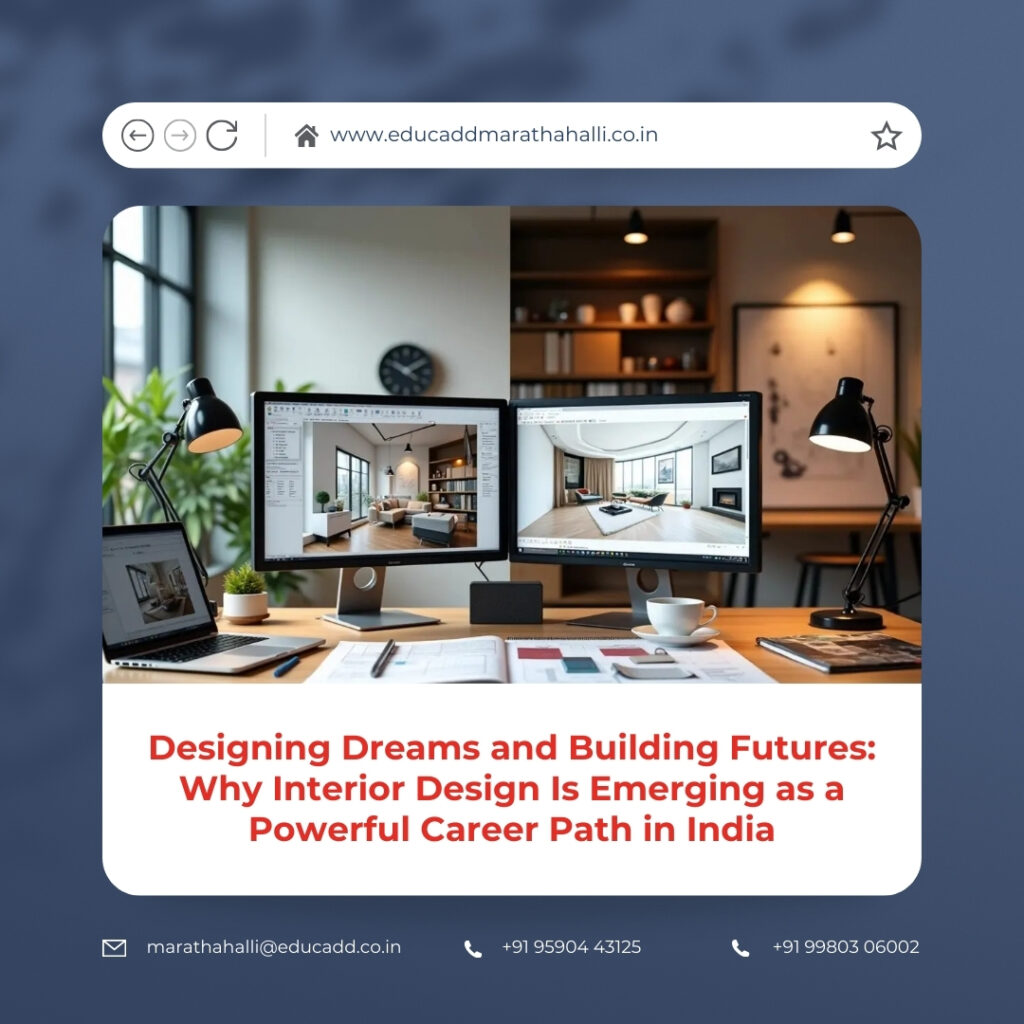
Interior Design Career India
This comprehensive guide explores the realities of this profession in depth. It examines industry expansion, educational pathways, income potential, work culture, specialization options, technological impact, and future prospects. By the end of this detailed discussion, you will gain clarity about whether interior design aligns with your ambitions and whether it stands as a sustainable career option in India’s evolving economy.
1. The Expanding Landscape of Interior Design in India
Interior Design Career India has transformed from a niche service into a mainstream necessity. Earlier, only luxury homeowners and five-star hotels hired professional designers. However, modern consumers across income groups now value well-designed spaces. This cultural shift has significantly expanded the industry’s reach.
India’s urban population continues to grow steadily. As cities expand and new residential complexes emerge, the demand for space optimization increases. Apartments are becoming more compact, which makes intelligent planning essential. Designers help homeowners maximize limited square footage without compromising comfort.
At the same time, commercial sectors such as retail, hospitality, healthcare, and information technology rely heavily on well-planned interiors. Workspaces now emphasize employee well-being and productivity. Retail stores depend on strategic layouts that influence buying behavior. Hospitals require calming environments that promote patient comfort. These varied applications demonstrate the wide scope available within the Indian market.
The growing appreciation for professional design services suggests that this industry will continue expanding. Therefore, aspiring designers can explore opportunities across multiple sectors instead of limiting themselves to residential projects alone.
2. Urbanization and Infrastructure Growth as Key Drivers
India is witnessing unprecedented infrastructure development. Government initiatives supporting housing schemes, smart cities, and urban redevelopment have accelerated construction across metropolitan regions as well as tier-two cities. Every construction project requires thoughtful interior planning once structural work concludes.
Developers increasingly integrate design elements during early project stages. Buyers expect ready-to-move-in homes with modular kitchens, efficient storage systems, and aesthetically pleasing layouts. Consequently, builders often collaborate with interior professionals to enhance property value and market appeal.
Commercial real estate also contributes significantly to industry growth. Co-working spaces, start-up offices, shopping malls, and entertainment centers require innovative spatial concepts. Designers who understand ergonomics and branding principles can add substantial value to such projects.
This consistent expansion in infrastructure directly supports career opportunities within interior design. As long as construction activity continues, design services will remain essential.
3. Creative Expression Combined with Practical Application
One of the strongest attractions of interior design lies in its blend of creativity and functionality. Unlike purely artistic professions, this field requires practical problem-solving alongside aesthetic innovation. Designers must create spaces that look appealing while also serving specific purposes efficiently.
Each assignment introduces unique challenges. A family home may demand warmth and personalization, whereas a corporate office requires structured layouts that enhance workflow. Restaurants must combine ambiance with seating optimization. Retail stores need eye-catching displays without obstructing movement.
This diversity keeps the profession intellectually stimulating. Designers continuously explore new materials, color palettes, textures, and lighting techniques. They transform abstract ideas into tangible environments that influence daily experiences. Seeing a finished space reflect one’s creative vision offers deep professional satisfaction.
Because the work merges imagination with real-world impact, many professionals find lasting fulfillment in this career path.
4. Educational Qualifications and Skill Development
Formal education plays an important role in shaping competent interior designers. Many institutes across India offer diploma programs, bachelor’s degrees, and advanced certifications in interior design. These courses typically cover design theory, drafting techniques, construction materials, furniture design, and computer-aided design software.
Practical exposure forms a core component of most programs. Students participate in live projects, internships, and workshops that simulate real-world scenarios. This hands-on experience builds confidence and technical understanding.
Software proficiency has become essential in modern practice. Designers commonly use digital tools for drafting layouts, creating 3D models, and presenting visual walkthroughs. Familiarity with visualization technology enhances client communication and minimizes execution errors.
Beyond technical skills, interpersonal abilities significantly influence success. Designers frequently interact with clients, contractors, carpenters, and suppliers. Clear communication, negotiation skills, and time management ensure smooth project execution. When education combines technical training with soft skill development, graduates enter the industry well-prepared.
5. Financial Prospects and Income Potential
Financial growth remains a decisive factor when evaluating any profession. Interior Design Career India offers varied income levels depending on experience, location, specialization, and business model. Entry-level designers may begin with moderate salaries while building portfolios and client networks. However, earnings typically increase with expertise and project scale.
Designers working in metropolitan cities often receive higher compensation due to larger project budgets and premium clientele. Those who specialize in luxury residences, hospitality design, or commercial interiors can command significant fees.
Freelancing also presents strong earning potential. Independent professionals usually charge based on project size, percentage of total cost, or per-square-foot rates. Successful designers who establish their own studios often achieve substantial financial growth over time.
Although income progression requires patience and dedication, the long-term financial outlook remains promising for committed professionals.
6. Career Diversity Across Multiple Sectors
Interior design offers more than residential assignments. Professionals can explore diverse sectors that demand specialized expertise. Hospitality design focuses on hotels, resorts, and restaurants, where ambiance plays a crucial role in customer experience. Retail design emphasizes strategic layouts that encourage purchases.
Corporate interior planning addresses workspace efficiency, employee comfort, and brand identity. Healthcare design ensures safety, hygiene, and psychological comfort for patients and staff. Exhibition and event design involves temporary installations for trade shows and promotional activities.
Some designers move into furniture design, lighting consultancy, or sustainable material research. Others collaborate with architects and real estate developers on large-scale projects. This diversity allows individuals to align their careers with personal interests and strengths.
Such flexibility enhances job satisfaction and long-term growth prospects within the industry.
7. Influence of Sustainability and Eco-Conscious Design
Environmental awareness has reshaped consumer expectations. Clients increasingly seek energy-efficient lighting, sustainable materials, and environmentally responsible construction practices. Interior designers play a vital role in implementing these principles.
Eco-friendly paints, recycled materials, and smart ventilation systems are becoming common features in modern projects. Designers must stay informed about green certifications and sustainable sourcing options.
This shift toward responsible design practices not only benefits the environment but also creates new specialization opportunities. Professionals who understand sustainable concepts gain competitive advantages in the market.
As sustainability becomes a long-term priority, designers equipped with green expertise will remain highly relevant.
8. Entrepreneurship and Independent Practice
Many interior designers eventually establish independent studios. Entrepreneurship offers creative freedom and higher income potential. Designers who build strong portfolios and networks can attract consistent clients through referrals and digital marketing.
Running a design firm requires business acumen. Professionals must manage budgets, marketing strategies, vendor relationships, and team coordination. Although entrepreneurship introduces risks, it also provides autonomy and brand-building opportunities.
Social media platforms and online portfolios have simplified client acquisition. Designers can showcase completed projects and attract inquiries from different regions. With dedication and strategic planning, independent practice can become highly rewarding.
9. Professional Challenges and How to Overcome Them
Despite its advantages, interior design involves challenges. Project delays, cost fluctuations, and client revisions may create stress. Designers must balance creativity with practicality while adhering to budgets.
Site visits require physical presence and attention to detail. Coordination with contractors demands patience and problem-solving skills. Effective planning and clear documentation help minimize conflicts.
Over time, experience builds resilience. Professionals learn to anticipate issues and implement preventive strategies. While challenges are inevitable, they also contribute to skill development and professional maturity.
10. Technology’s Transformative Impact
Digital advancements have revolutionized interior design practices. Three-dimensional modeling software enables realistic visualizations before construction begins. Clients can explore virtual walkthroughs and suggest modifications early in the process.
Online collaboration tools facilitate communication with remote clients. Designers can manage projects across cities without constant travel. Digital marketing platforms also help professionals build personal brands and expand reach.
Technological integration increases efficiency, accuracy, and presentation quality. Designers who continuously upgrade their technical skills maintain a competitive edge in the evolving marketplace.
11. Networking and Industry Exposure
Professional growth often depends on strong networks. Interior designers collaborate with architects, contractors, material suppliers, and real estate agents. Building reliable partnerships enhances project efficiency and reputation.
Industry exhibitions and design expos provide exposure to new materials, technologies, and global trends. Participation in workshops and seminars supports continuous learning.
Satisfied clients frequently generate referrals, which contribute significantly to business expansion. Maintaining positive relationships strengthens long-term success within the industry.
12. Work Environment and Lifestyle Considerations
Interior Design Career India combines office work with on-site involvement. Designers spend time drafting plans, meeting clients, and supervising installations. Work schedules may become demanding during project deadlines.
However, professionals often enjoy flexibility in managing assignments. Freelancers can choose project timelines and workload distribution. Remote consultations further enhance schedule control.
With effective time management, designers can maintain work-life balance while pursuing creative ambitions.
13. Long-Term Career Advancement and Specialization
As experience accumulates, professionals may specialize in high-end residential projects, commercial complexes, or hospitality spaces. Some transition into project management roles or consultancy positions. Others choose academic careers, teaching design principles to aspiring students.
Continuous skill development ensures sustained growth. Designers who stay updated with trends, materials, and technologies remain competitive. The industry rewards innovation and adaptability.
Over time, experienced designers often build strong reputations that attract premium clientele and larger projects.
14. Evaluating Personal Suitability for This Profession
While industry prospects appear promising, personal inclination plays a crucial role. Individuals who appreciate aesthetics, enjoy problem-solving, and communicate effectively often thrive in this field.
Patience, adaptability, and attention to detail support long-term success. A genuine passion for transforming spaces provides motivation during challenging phases.
Those who combine creativity with discipline and technical understanding can build fulfilling careers within India’s growing design ecosystem.
Conclusion
Interior Design Career India has evolved into a dynamic and expanding profession supported by urban growth, lifestyle changes, and technological innovation. The industry offers creative satisfaction, diverse career paths, financial progression, and entrepreneurial potential. Although challenges exist, professionals who develop strong skills and maintain dedication can achieve substantial success.
For individuals seeking a career that blends imagination with tangible impact, interior design stands as a compelling option. With proper education, strategic networking, and continuous learning, it can provide both personal fulfillment and long-term professional stability in India’s evolving economy.

