
Beyond Aesthetics: Complete Guide to Interior Design Careers, Roles and Responsibilities
Interior Design Career Guide is often misunderstood as a profession focused only on decoration and styling. In reality, it is a dynamic career that combines creativity, engineering awareness, psychology, business management, and communication skills. Professionals working in this industry handle complex tasks that shape the way people live, work, and interact within built environments. From residential apartments to corporate offices, retail stores, hospitality spaces, and healthcare facilities, interior designers influence comfort, efficiency, safety, and brand identity.
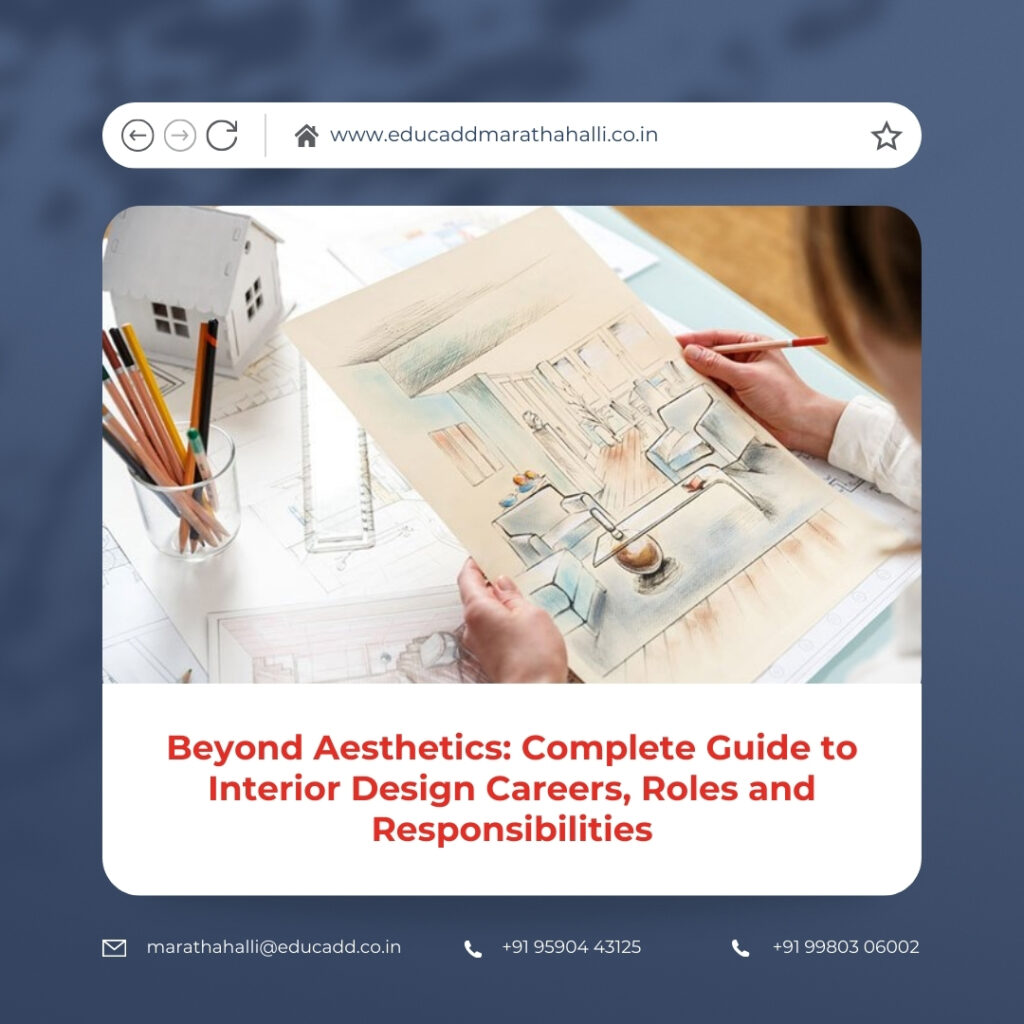
Interior Design Career Guide
Understanding Interior Design Career Guide and Responsibilities is essential for aspiring designers, employers, and clients alike. Each project demands structured planning, technical precision, and thoughtful execution. Designers must transform ideas into practical solutions while managing budgets, deadlines, and stakeholder expectations. This detailed guide explores the full spectrum of Interior Design Job Roles and Responsibilities in fourteen comprehensive sections. Each section explains a key function that defines success in this profession.
1. Client Discovery and Strategic Brief Development
The journey of every successful project begins with a deep understanding of the client’s vision. One of the most critical Interior Design Job Roles and Responsibilities involves conducting thorough discovery sessions. Designers organize structured meetings to gather information about lifestyle preferences, operational requirements, aesthetic tastes, and financial constraints. They ask focused questions to clarify goals and identify potential challenges.
During this stage, professionals analyze how the space will function daily. For example, a family home requires different planning compared to a corporate workspace. Designers also assess the existing site conditions, measure dimensions accurately, and study architectural drawings if available. They document all requirements in a formal design brief that outlines scope, timelines, deliverables, and estimated costs.
Clear documentation reduces confusion and ensures alignment between all stakeholders. Effective listening skills play a major role here. Designers must interpret both spoken expectations and unspoken concerns. By establishing transparency from the beginning, they set a strong foundation for fulfilling Interior Design Job Roles and Responsibilities throughout the project lifecycle.
2. Site Evaluation and Feasibility Assessment
Before developing any concept, designers conduct a detailed site evaluation. This stage forms an essential part of Interior Design Career Guide and Responsibilities because it determines what is practically achievable. Professionals examine structural elements, ceiling heights, window placements, plumbing points, and electrical systems.
They identify constraints that may affect layout changes or design enhancements. For renovation projects, designers inspect load-bearing walls and check building regulations. They ensure compliance with local codes and safety standards. If structural alterations are required, they coordinate with architects or civil engineers for approval.
Feasibility assessment helps avoid costly mistakes during execution. It ensures that creative ideas remain realistic and buildable. Designers also evaluate environmental factors such as natural lighting and ventilation. Through systematic analysis, they strengthen their approach to Interior Design Job Roles and Responsibilities and prevent unnecessary delays.
3. Conceptual Design and Creative Direction
Concept creation represents the artistic core of the profession. However, it demands structured thinking rather than random inspiration. Within Interior Design Job Roles and Responsibilities, designers develop a cohesive theme that aligns with client expectations and spatial constraints.
They prepare mood boards featuring textures, materials, colors, and furniture references. These boards communicate the overall vision effectively. Designers may also create 3D visualizations or digital renderings to help clients visualize the final outcome.
Each concept must reflect functionality and emotional appeal. For example, a luxury hotel lobby requires a grand atmosphere, while a clinic demands calmness and cleanliness. Designers refine their proposals based on feedback and present alternatives when necessary. This collaborative approach ensures that the final direction satisfies both creativity and practicality, reinforcing professional Interior Design Job Roles and Responsibilities.
4. Detailed Space Planning and Functional Zoning
Space planning stands at the heart of Interior Design Job Roles and Responsibilities. It determines how effectively a space serves its intended purpose. Designers analyze movement patterns and circulation flow to create layouts that enhance comfort and efficiency.
They position furniture and fixtures strategically to avoid congestion. In commercial settings, designers consider employee productivity and customer experience. In residential projects, they focus on comfort, privacy, and storage optimization.
Functional zoning divides spaces into purposeful areas without compromising visual harmony. Designers evaluate ergonomic standards to ensure usability. Every decision must balance proportion, scale, and accessibility. Well-planned layouts increase long-term satisfaction and minimize operational challenges. Therefore, space planning demonstrates both analytical thinking and creative problem-solving within Interior Design Job Roles and Responsibilities.
5. Material Research and Specification Documentation
Selecting appropriate materials requires technical understanding and aesthetic awareness. This responsibility forms a significant component of Interior Design Job Roles and Responsibilities. Designers evaluate flooring options, wall treatments, ceiling finishes, upholstery fabrics, and decorative elements.
Durability, maintenance, sustainability, and cost efficiency influence decisions. Designers compare samples and consult vendor catalogs to ensure quality standards. They prepare detailed specification sheets that include product codes, dimensions, finishes, and installation methods.
Accurate documentation prevents procurement errors and ensures consistency during execution. Designers also consider climate conditions and user habits before finalizing materials. By combining research with design sensitivity, professionals fulfill crucial Interior Design Job Roles and Responsibilities that impact project longevity.
6. Budget Structuring and Financial Oversight
Financial planning is an unavoidable part of professional practice. Among Interior Design Job Roles and Responsibilities, budget preparation holds strategic importance. Designers estimate expenses for materials, labor, transportation, and contingencies.
They present cost breakdowns transparently to clients and adjust selections to meet financial constraints. Negotiation skills become valuable when dealing with suppliers and contractors. Designers track ongoing expenses to prevent budget overruns.
Unexpected changes may arise during construction. Therefore, maintaining a contingency reserve is essential. Responsible financial oversight builds client confidence and protects business sustainability. Effective cost management strengthens the credibility of Interior Design Job Roles and Responsibilities in competitive markets.
7. Vendor Management and Procurement Coordination
Interior designers rarely work alone. Collaboration with vendors and contractors defines another critical aspect of Interior Design Job Roles and Responsibilities. Designers source materials from reliable suppliers and confirm product availability before placing orders.
They coordinate delivery schedules to align with project timelines. Timely procurement ensures uninterrupted workflow at the site. Designers inspect products upon arrival to verify quality and specifications.
Strong vendor relationships often result in better pricing and priority service. Clear communication prevents misunderstandings and costly reorders. By maintaining organized procurement systems, professionals uphold the operational efficiency required in Interior Design Job Roles and Responsibilities.
8. Technical Drawings and Construction Documentation
Ideas must be translated into precise instructions for execution. Preparing technical drawings forms a vital component of Interior Design Job Roles and Responsibilities. Designers create floor plans, reflected ceiling plans, electrical layouts, and detailed joinery drawings.
Accurate measurements ensure flawless installation. Contractors rely on these documents to execute work correctly. Designers use specialized drafting software to enhance precision and efficiency.
Revision tracking becomes essential when changes occur. Clear documentation reduces on-site confusion and rework. By maintaining high technical standards, designers strengthen the professional integrity of Interior Design Job Roles and Responsibilities.
9. Lighting Planning and Environmental Comfort
Lighting influences mood, functionality, and energy efficiency. Designers treat lighting design as a specialized responsibility within Interior Design Career Guide and Responsibilities. They plan ambient, task, and accent lighting layers to create balanced illumination.
Natural light integration enhances sustainability and well-being. Designers select fixtures that complement the overall theme while meeting performance requirements. They collaborate with electricians to ensure safe installation and compliance with regulations.
Environmental comfort extends beyond lighting. Designers also consider acoustics, air circulation, and thermal conditions. Attention to these elements elevates user experience and reflects comprehensive Interior Design Job Roles and Responsibilities.
10. Custom Furniture and Interior Detailing
Furniture selection defines comfort and character. In many projects, designers create custom pieces tailored to spatial dimensions. This task forms a creative yet technical part of Interior Design Job Roles and Responsibilities.
Designers prepare detailed sketches and supervise fabrication processes. Ergonomics remains a priority during development. Materials and finishes must align with overall aesthetics.
Attention to detailing enhances visual harmony. From door handles to decorative trims, every element contributes to the final impression. Through careful supervision, designers ensure quality craftsmanship and reinforce professional Interior Design Job Roles and Responsibilities.
11. Regulatory Compliance and Safety Assurance
Adhering to building codes and safety standards protects both clients and designers. Compliance represents a serious dimension of Interior Design Job Roles and Responsibilities. Professionals must understand fire safety regulations, accessibility requirements, and structural guidelines.
They coordinate with local authorities when approvals are required. Documentation must be accurate and complete. Designers also educate clients about safety considerations and long-term maintenance responsibilities.
Ignoring compliance can lead to penalties and reputational damage. Therefore, responsible practice strengthens trust and ensures ethical fulfillment of Interior Design Job Roles and Responsibilities.
12. Sustainable Design and Environmental Responsibility
Modern clients increasingly prioritize eco-conscious solutions. Sustainable planning has become an integral part of Interior Design Job Roles and Responsibilities. Designers recommend energy-efficient lighting systems and environmentally friendly materials.
They promote the use of recycled or low-emission products to improve indoor air quality. Water-saving fixtures and waste reduction strategies contribute to environmental protection.
Sustainable practices also reduce operational costs over time. Designers stay informed about green certifications and evolving environmental standards. By integrating sustainability, they add long-term value to Interior Design Job Roles and Responsibilities.
13. Project Supervision and Quality Control
Execution requires active involvement from designers. Among Interior Design Job Roles and Responsibilities, site supervision ensures that the design vision translates accurately into reality. Designers conduct regular inspections and address discrepancies immediately.
They coordinate multiple teams including carpenters, electricians, painters, and installers. Clear instructions prevent delays and maintain quality standards.
Quality control involves checking finishes, alignments, and installation accuracy. Designers document progress and update clients consistently. Effective supervision protects project timelines and reinforces accountability within Interior Design Job Roles and Responsibilities.
14. Post-Completion Evaluation and Client Relationship Management
Professional responsibility continues even after project handover. Designers conduct final walkthroughs to verify that every detail meets expectations. This stage forms the concluding segment of Interior Design Job Roles and Responsibilities.
They address minor corrections promptly and provide warranty information when applicable. Gathering client feedback helps improve future projects.
Maintaining long-term relationships often leads to repeat business and referrals. Designers who prioritize after-service support enhance their professional reputation. Through dedication and consistent communication, they demonstrate a comprehensive understanding of Interior Design Job Roles and Responsibilities from start to finish.
Conclusion
Interior Design Career Guide is a multidimensional profession that extends far beyond visual styling. It demands structured planning, technical precision, financial discipline, and creative vision. Each phase, from client consultation to post-completion evaluation, involves distinct Interior Design Job Roles and Responsibilities that shape project outcomes.
Designers must balance innovation with practicality. They manage people, resources, and expectations while delivering inspiring environments. Continuous learning remains essential as technologies and design trends evolve. By mastering the diverse Interior Design Job Roles and Responsibilities outlined in this guide, aspiring professionals can build sustainable and rewarding careers in this dynamic industry.

