
Master Industrial Electrical Design Skills for a High-Growth Engineering Career
Industrial sectors now depend heavily on advanced electrical systems. Manufacturing plants, automation units, power stations, and smart factories require skilled professionals who can design safe and efficient electrical layouts. As industries continue to adopt automation and digital technologies, the demand for Industrial Electrical Design Skills keeps rising. Because of this trend, industrial electrical design training has become one of the most valuable career-oriented programs for engineering students and working professionals.
This training helps learners understand electrical circuits, panel design, industrial wiring, load calculations, control systems, safety standards, and electrical drafting software. Moreover, it develops practical skills that companies expect from modern electrical engineers. Students gain exposure to real-time projects, which improves their confidence and technical ability. As a result, trained professionals can secure better opportunities in manufacturing, construction, infrastructure, automation, and energy industries.
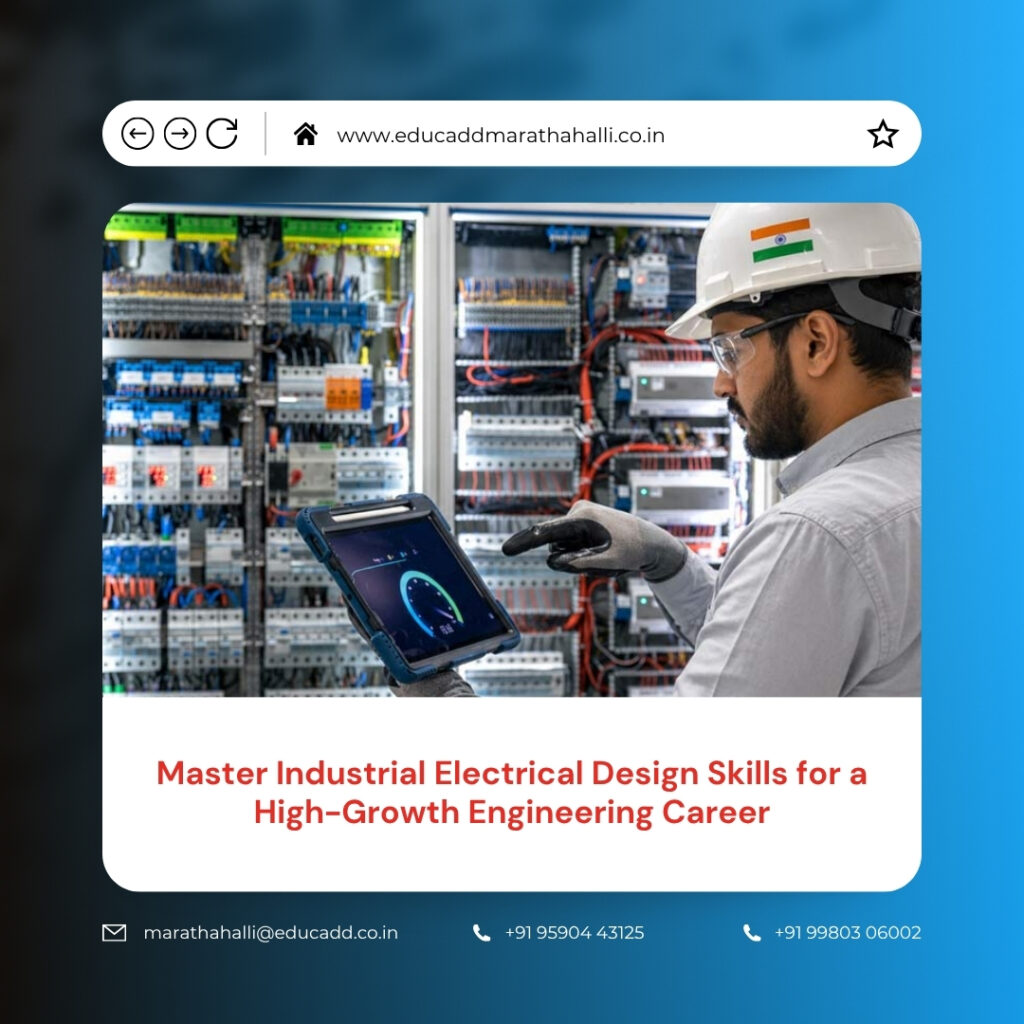
Industrial Electrical Design Skills
Today, industries prefer candidates who possess both theoretical knowledge and practical experience. Therefore, enrolling in industrial electrical design training can create strong career opportunities in India and abroad. This blog explains the importance of the training, core modules, software tools, career benefits, and future opportunities in detail.
Understanding the Importance of Industrial Electrical Design Skills
Industrial electrical systems form the backbone of every production facility. Machines, automation systems, lighting networks, transformers, and control panels all depend on proper electrical design. A small mistake in design can cause power failure, equipment damage, or serious safety issues. Therefore, industries always require trained professionals who can handle electrical planning accurately.
Industrial electrical design training teaches students how to create safe and reliable systems for industrial applications. The course introduces concepts such as electrical distribution, motor control, circuit protection, and industrial standards. In addition, learners understand how electrical systems operate inside factories and large industrial environments.
Another major advantage involves understanding industry standards and safety regulations. Professionals learn how to follow electrical codes and safety practices while designing systems. This knowledge helps companies reduce operational risks and improve efficiency.
Core Concepts Covered in Industrial Electrical Design Skills
Industrial Electrical Design Skills covers multiple technical subjects that prepare students for industrial projects. Each module builds strong technical knowledge and practical understanding.
The training usually begins with electrical fundamentals. Students learn about voltage, current, resistance, power, transformers, and circuit theory. Once they understand the basics, they move toward industrial applications.
The course then focuses on industrial wiring systems, cable sizing, earthing methods, and load calculations. These concepts help students design efficient electrical systems for factories and commercial buildings. Moreover, trainers explain short circuit calculations and protection methods to improve system safety.
Another important topic includes motor control systems. Students learn how motors operate in industrial environments. They also study star-delta starters, direct online starters, relays, and control circuits.
Most institutes also provide detailed training in:
- Electrical panel design and schematic drawing
- Power distribution and lighting system design
Role of Electrical Design Software in Modern Industries
Technology has transformed industrial electrical engineering significantly. Today, companies use advanced design software to create electrical layouts, wiring diagrams, and control systems. Therefore, industrial electrical design training includes software-based learning to meet industry expectations.
Students commonly learn tools such as AutoCAD Electrical, EPLAN, ETAP, and PLC programming platforms. These applications help engineers design systems quickly and accurately. Furthermore, software reduces human error and improves project efficiency.
AutoCAD Electrical allows engineers to create electrical schematics, panel layouts, and circuit diagrams. It simplifies drafting work and increases productivity. On the other hand, ETAP helps professionals analyze power systems and calculate electrical loads.
Another important benefit involves project visualization. Engineers can simulate electrical systems before installation. As a result, industries save time and reduce operational costs.
Practical Training Enhances Real-Time Industry Skills
Practical exposure plays a crucial role in technical education. Although theoretical concepts are important, industries expect engineers to solve real-time challenges confidently. Therefore, industrial electrical design training emphasizes hands-on learning.
Students work on live projects, industrial case studies, and electrical simulations. This approach helps them understand how electrical systems function in actual industrial environments. Moreover, they gain confidence while handling technical tasks.
Practical sessions also help learners understand electrical faults and corrective measures. Trainers explain how to identify issues and improve system performance. Consequently, students develop problem-solving abilities that industries value highly.
Additionally, project-based learning improves teamwork and communication skills. Students collaborate with peers during assignments and practical sessions. These experiences prepare them for professional workplace environments.
Industrial Automation and Electrical Design Integration
Modern industries increasingly rely on automation technologies. Manufacturing companies use automated systems to improve productivity, reduce errors, and increase efficiency. Therefore, industrial electrical design training now includes automation concepts.
Students learn about programmable logic controllers, sensors, human-machine interfaces, and industrial communication systems. These technologies help engineers design intelligent control systems for industries.
Automation training also introduces PLC programming and SCADA systems. Engineers use these technologies to monitor and control industrial processes efficiently. As industries adopt smart manufacturing, automation knowledge becomes highly valuable.
Furthermore, automation improves industrial safety and operational efficiency. Engineers design systems that minimize manual intervention and enhance process reliability. Consequently, industries prefer trained professionals who can manage automated operations effectively.
Career Opportunities After Industrial Electrical Design Training
Industrial electrical design training opens doors to multiple career paths. Industries across manufacturing, construction, energy, infrastructure, and automation sectors require skilled electrical professionals.
After completing the course, students can apply for roles such as electrical design engineer, control panel designer, electrical drafting engineer, automation engineer, and maintenance engineer. These positions offer stable career growth and attractive salary packages.
Popular employment sectors include:
- Manufacturing industries and automation companies
- Power plants, construction firms, and infrastructure projects
Additionally, multinational companies prefer candidates with industrial design knowledge and software expertise. Therefore, trained professionals often receive better opportunities in domestic and international markets.
Freelancing opportunities also exist for experienced professionals. Engineers can work independently on electrical drafting and industrial project design assignments. This flexibility creates additional income opportunities and career growth.
Importance of Safety Standards in Electrical Design
Safety remains one of the most critical aspects of industrial electrical engineering. Poorly designed systems can lead to accidents, equipment damage, and production failures. Therefore, industrial electrical design training strongly focuses on safety practices and standards.
Students learn about electrical protection systems, circuit breakers, grounding methods, and overload protection. These concepts help engineers design safe industrial systems that minimize operational risks.
Moreover, industries prefer professionals who prioritize safety during system design. Companies value engineers who can maintain operational reliability while ensuring employee protection.
Industrial Electrical Design Training for Engineering Students
Engineering students often struggle to gain practical exposure during college education. Although academic programs provide theoretical knowledge, industries expect technical expertise and practical understanding. Therefore, industrial electrical design training becomes highly beneficial for students.
The training helps students strengthen core electrical concepts and understand industrial applications. They gain hands-on experience with electrical software, industrial equipment, and live projects. Consequently, they become more confident during interviews and technical assessments.
Industrial training also improves employability. Recruiters prefer candidates who possess practical knowledge and industry-oriented skills. Therefore, certified training programs can increase placement opportunities significantly.
Another advantage includes exposure to industry experts. Trainers often share practical insights and real-world experiences that help students understand current industrial trends.
Benefits for Working Professionals and Career Switchers
Industrial Electrical Design Skills does not benefit students alone. Working professionals can also upgrade their technical skills through specialized programs. Many engineers join these courses to improve career growth and salary opportunities.
Professionals from maintenance, production, and electrical backgrounds often pursue advanced design training. The course helps them understand modern industrial technologies and software tools. Consequently, they can move into higher technical positions.
Career switchers also benefit greatly from industrial electrical design programs. Mechanical engineers, diploma holders, and technicians can transition into electrical design roles with proper training.
Additionally, updated technical skills increase professional credibility. Companies prefer employees who continuously improve their knowledge and adapt to industry advancements.
Growing Demand for Industrial Electrical Design Professionals
Industrial development continues to expand rapidly across the world. Smart factories, renewable energy projects, infrastructure development, and automation technologies require skilled electrical engineers. Therefore, the demand for industrial electrical design professionals remains strong.
India’s manufacturing and infrastructure sectors are growing steadily. Government initiatives and industrial investments have increased the need for technically trained professionals. Consequently, electrical design engineers now enjoy excellent career prospects.
As technology evolves further, industrial electrical design training will become even more important. Professionals with updated technical skills and software knowledge will remain highly valuable in the job market.
Importance of Certification in Industrial Electrical Design
Certification adds credibility to technical skills and professional expertise. Therefore, many training institutes provide recognized certification programs in industrial electrical design.
Certified professionals often gain better career opportunities because employers trust industry-oriented certifications. These credentials validate technical knowledge and practical competency.
Certification programs also improve confidence during interviews. Students can demonstrate their skills through project work and software expertise. Consequently, recruiters consider certified candidates more reliable.
Furthermore, certification helps professionals stay updated with industry trends and technologies. Continuous learning improves technical capability and long-term career success.
How to Choose the Right Industrial Electrical Design Training Institute
Selecting the right training institute plays a major role in career development. Students should evaluate multiple factors before enrolling in any program.
A good institute must provide experienced trainers, practical lab facilities, updated software training, and live project exposure. These features improve learning quality and industrial understanding.
Additionally, students can review previous placement records and learner feedback before making a decision. A reputed institute helps students gain better technical exposure and career opportunities.
Future Trends in Industrial Electrical Design
The future of industrial electrical engineering looks highly promising. Industries continue adopting smart technologies, renewable energy systems, and automation solutions. Therefore, electrical design professionals must stay updated with emerging trends.
Artificial intelligence and industrial IoT technologies now influence modern manufacturing systems. Engineers increasingly design intelligent electrical networks that improve efficiency and monitoring capabilities.
Moreover, electric vehicles and renewable energy projects create additional demand for electrical design expertise. Engineers with specialized industrial training will benefit greatly from these expanding sectors.
As industrial transformation continues, professionals with advanced technical knowledge and practical experience will remain highly successful in the evolving engineering landscape.
Building Long-Term Success Through Technical Expertise
Technical expertise forms the foundation of a successful engineering career. Industrial electrical design training helps students and professionals build strong technical capabilities that industries value highly.
The training improves analytical thinking, troubleshooting skills, and system design knowledge. These abilities help professionals handle complex industrial challenges confidently.
Furthermore, industrial experience combined with technical certification increases career stability and professional growth opportunities. Companies always prefer skilled professionals who contribute effectively to industrial operations.
With proper training and dedication, electrical design professionals can achieve rewarding careers in various industrial sectors worldwide.
Conclusion
Industrial Electrical Design Skills has become an essential pathway for engineering students and professionals who want strong career growth in modern industries. The training combines theoretical knowledge, practical exposure, software expertise, and industrial applications to create job-ready professionals. Moreover, it helps learners understand industrial systems, automation technologies, safety standards, and electrical design processes effectively.
As industries continue expanding toward automation and smart manufacturing, the demand for skilled electrical design engineers will increase further. Therefore, pursuing industrial electrical design training can provide excellent career opportunities, higher salary potential, and long-term professional growth. Students and professionals who invest in technical skill development today can build successful careers in tomorrow’s rapidly evolving industrial world.

