
Designing High-Performance Workspaces: Smart Office Interiors That Elevate Focus, Energy, and Team Productivity
Work environments strongly influence how people think, feel, and perform throughout the day. A thoughtfully planned workspace can encourage clarity, reduce stress, and help teams achieve better results with less effort. Modern organizations now treat High Performance Office Interiors as a strategic investment rather than a decorative afterthought. Every design element, from layout structure to lighting tone, contributes to how efficiently employees complete tasks and collaborate with others. When a workplace feels comfortable and inspiring, people naturally stay engaged for longer periods and produce higher-quality work. An intelligently designed office also communicates professionalism, strengthens brand identity, and supports employee well-being. Companies that prioritize interior planning often notice improvements in morale, teamwork, and operational efficiency.
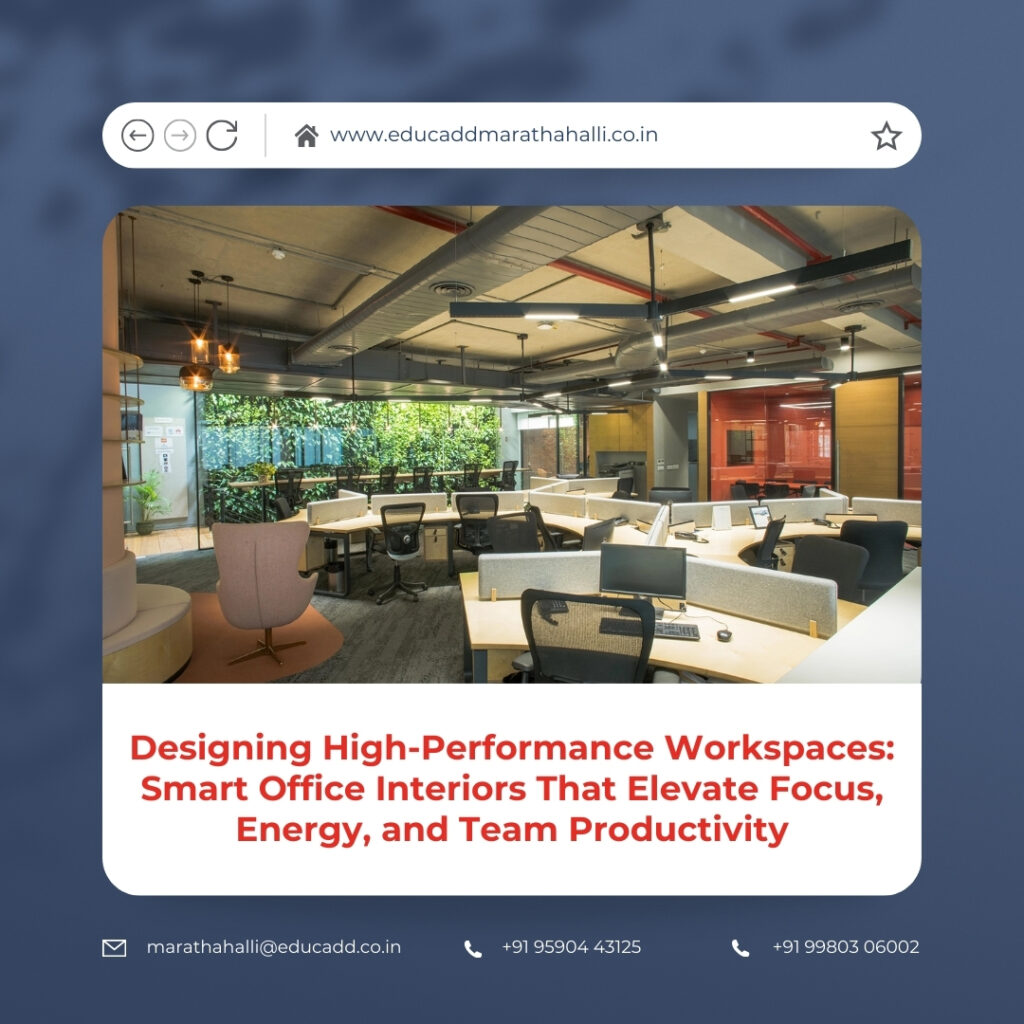
High Performance Office Interiors
A well-organized environment reduces unnecessary movement, limits distractions, and creates a positive rhythm for daily work activities. As business models evolve and hybrid work becomes common, offices must support flexibility while maintaining comfort and focus. By aligning aesthetics with functionality, organizations can create productive ecosystems where individuals and teams consistently perform at their best. Strategic design transforms offices into environments that energize minds, foster innovation, and support sustainable performance.
1. Understanding How Workspace Design Affects Human Behavior
The High Performance Office Interiors subtly shapes employee behavior, emotional responses, and cognitive performance. Environmental psychology explains how spatial arrangements influence concentration, stress levels, and motivation. When offices feel crowded or disorganized, workers may experience mental fatigue that reduces efficiency. Clear layouts, balanced spacing, and visual harmony promote calmness and improve focus. People respond positively to environments that feel structured yet comfortable, allowing them to navigate spaces effortlessly.
Natural movement paths and well-defined zones make daily routines smoother and less mentally exhausting. Organized environments also reduce decision fatigue because employees spend less time adjusting to distractions. A thoughtfully arranged office encourages positive work habits and supports sustained attention. Different personality types respond uniquely to space, so designs should provide both energetic collaborative areas and peaceful focus zones. When workplaces are designed with human psychology in mind, they naturally enhance efficiency without forcing rigid routines.
2. Strategic Layout Planning for Efficient Workflow
Layout planning plays a vital role in shaping how smoothly daily operations unfold. A poorly structured office forces employees to move excessively, which wastes time and interrupts concentration. Efficient layouts group related teams together to encourage communication while minimizing noise conflicts. Designers evaluate workflow patterns carefully before positioning workstations, meeting rooms, and common areas. Smooth circulation pathways prevent congestion and ensure safe movement across departments. Flexible layouts help organizations adapt to changing team sizes and evolving project needs.
Zoning techniques separate collaborative spaces from quiet work areas, ensuring that both functions operate without interference. Breakout spaces placed between departments support quick discussions while preserving overall workflow. Thoughtful layout design reduces unnecessary interruptions and helps employees remain task-focused. When spatial planning supports daily responsibilities, productivity improves naturally and consistently.
3. Comfortable Ergonomic Furniture for Long Work Hours
Employee comfort significantly affects concentration, especially during extended working hours. Ergonomic furniture reduces physical strain and allows workers to maintain healthy posture throughout the day. Chairs with adjustable height, lumbar support, and flexible armrests prevent back and shoulder discomfort. Sit-stand desks encourage movement, which improves blood circulation and reduces fatigue. Proper monitor placement minimizes neck strain and supports better visual alignment. Keyboard trays designed for natural wrist positioning prevent repetitive strain injuries.
Comfortable furnishings allow employees to work longer without experiencing physical exhaustion. Adaptable furniture accommodates diverse body types and personal preferences, ensuring inclusivity. When individuals feel physically supported, their mental energy remains stable and focused. Investing in ergonomic solutions also demonstrates that organizations value employee well-being and long-term performance.
4. Lighting Solutions That Support Alertness and Visual Comfort
Lighting conditions strongly influence mood, focus, and overall energy levels. Insufficient illumination causes eye strain and reduces mental alertness, while overly harsh lighting creates discomfort. Natural daylight remains the most effective source of illumination because it regulates biological rhythms and improves cognitive function. Large windows, glass panels, and skylights help distribute sunlight evenly across interiors. Artificial lighting should complement daylight and maintain consistent brightness throughout the workspace.
Layered lighting systems combine ambient, task, and accent lights to create balanced illumination. Adjustable LED fixtures allow employees to customize brightness levels according to their tasks. Warm lighting tones create welcoming environments, while cooler shades enhance focus in work zones. Proper lighting design reduces fatigue, supports visual clarity, and maintains employee alertness. Balanced illumination creates a comfortable atmosphere that promotes sustained productivity.
5. The Influence of Color Schemes on Workplace Atmosphere
Colors influence emotions, behavior, and energy levels more than most people realize. Calm shades such as blue and green encourage focus and reduce mental stress, making them ideal for concentration areas. Energetic tones like yellow and orange inspire creativity and enthusiasm when applied thoughtfully. Neutral palettes provide visual balance and prevent overstimulation in busy work environments. Accent colors can guide navigation and emphasize important zones within large office layouts. Harmonized color combinations create consistency that supports mental clarity and aesthetic appeal.
Overly intense contrasts may lead to restlessness and reduced concentration. Cultural context and organizational branding should also guide color selections. Balanced color schemes create inviting environments where employees feel comfortable and motivated. Strategic use of color transforms offices into visually engaging yet calming spaces.
6. Managing Acoustics to Minimize Workplace Distractions
Noise remains one of the most common productivity barriers in shared office environments. Conversations, equipment sounds, and phone alerts can easily disrupt concentration. Acoustic solutions reduce sound travel and maintain peaceful surroundings. Sound-absorbing ceiling panels, wall treatments, and fabric partitions help control echo and background noise. Carpets and upholstered furniture further dampen sound reflections. Designated quiet zones provide peaceful areas for deep concentration.
Enclosed meeting pods prevent discussions from disturbing nearby workstations. White noise systems mask sudden disturbances without becoming distracting. Separating collaborative hubs from focus areas also reduces acoustic conflicts. Balanced sound management supports mental clarity and reduces stress. Quiet and controlled environments help employees sustain attention and complete tasks efficiently.
7. Integrating Natural Elements for Healthier Workspaces
Incorporating nature into office interiors promotes emotional well-being and mental refreshment. Indoor plants improve air quality while adding calming visual elements. Natural materials such as wood and stone create warmth and comfort within professional environments. Access to outdoor views provides mental relaxation that supports creative thinking. Water features introduce soothing ambient sounds that reduce stress levels. Living walls add vibrant greenery and enhance visual appeal. Nature-inspired textures and patterns create tranquil atmospheres even in urban office settings. Exposure to greenery improves mood and cognitive performance. Natural light combined with organic elements creates refreshing work environments. Biophilic design strengthens employee satisfaction and fosters long-term productivity.
8. Flexible Work Areas for Evolving Workstyles
Modern teams require adaptable environments that support changing responsibilities and hybrid schedules. Modular furniture allows spaces to be rearranged quickly for meetings or collaborative sessions. Movable partitions create temporary rooms without permanent structural changes. Hot-desking zones accommodate employees who work remotely part-time. Multipurpose rooms function as training centers, brainstorming zones, or event spaces as needed. Lounge-style collaboration areas promote relaxed discussions and creative interactions. Flexible environments empower employees to choose work settings that match their tasks. Adaptable designs future-proof offices against evolving operational needs. Dynamic spaces encourage mobility and prevent monotony in daily routines. Versatile interiors support both independent work and team collaboration efficiently.
9. Seamless Technology Integration for Modern Offices
Technology should enhance workflows without creating visual clutter. Organized cable systems maintain tidy desks and prevent hazards. Wireless presentation tools simplify meetings and save preparation time. Smart boards and digital displays enable interactive discussions and brainstorming sessions. Convenient charging stations ensure devices remain powered throughout the day. Soundproof booths support uninterrupted virtual meetings in hybrid setups. Automated climate control systems maintain consistent indoor comfort levels. Smart lighting solutions improve energy efficiency while enhancing visual comfort. Integrated technology reduces operational delays and supports smooth communication. Clean digital infrastructure complements modern aesthetics and improves workplace functionality.
10. Designing Collaborative Spaces That Inspire Teamwork
Team interaction drives innovation and strengthens workplace relationships. Dedicated collaboration zones encourage brainstorming and problem-solving sessions. Comfortable seating arrangements make discussions more engaging and productive. Writable walls and interactive boards support idea visualization. Transparent partitions maintain openness while controlling sound transfer. Informal lounges encourage spontaneous conversations that spark creativity. Shared tables promote teamwork and collective engagement. Clearly defined collaboration areas prevent disturbances in focused work zones. Inviting team spaces build stronger interpersonal connections. Well-designed collaboration environments stimulate innovation and collective productivity.
11. Creating Private Areas for Concentrated Work
Employees need distraction-free zones for tasks requiring deep concentration. Quiet rooms, focus pods, and enclosed cabins provide peaceful environments. Sound-insulated booths allow confidential calls without interruptions. Privacy panels around desks reduce visual distractions in open layouts. Minimal décor and soft lighting create calming atmospheres for focused tasks. A balance between openness and privacy supports diverse working preferences. Dedicated quiet areas reduce stress caused by constant background activity. Employees complete detailed assignments more accurately in peaceful settings. Private zones help individuals manage demanding workloads effectively. Focus-friendly spaces support consistent performance and mental clarity.
12. Smart Storage Systems for Organized Work Environments
Organized workspaces enhance clarity and reduce time wasted searching for materials. Built-in cabinets maintain clean and professional appearances. Modular shelving systems allow flexible storage arrangements. Personal lockers reduce clutter around workstations. Efficient filing systems enable quick access to important documents. Concealed storage solutions maintain minimalist desk setups. Labeling systems improve organization across departments. Tidy environments promote mental focus and structured workflows. Clean desks create visually calming spaces that reduce stress. Effective storage planning supports operational efficiency and professional aesthetics.
13. Reflecting Brand Identity Through Interior Design
High Performance Office Interiors can communicate organizational values and culture effectively. Brand colors and visual themes create cohesive workplace aesthetics. Logo placements reinforce corporate identity in subtle ways. Inspirational wall graphics remind teams of shared goals and missions. Consistent design language builds a professional impression for visitors. Thematic décor elements strengthen emotional connections with employees. Branded interiors foster pride and belonging among staff members. Visually aligned workplaces create memorable client experiences. Identity-driven spaces reinforce corporate storytelling and credibility. Purposeful branding enhances motivation and team engagement.
14. Wellness-Focused Spaces That Support Employee Balance
Employee well-being significantly influences overall performance and job satisfaction. Relaxation lounges offer spaces to recharge during breaks. Fitness rooms encourage physical activity that boosts mental alertness. Recreational zones provide stress relief and promote social bonding. Comfortable cafeteria areas support healthy eating habits and informal interactions. Meditation rooms create peaceful retreats for mental relaxation. Wellness-oriented spaces prevent burnout and maintain emotional balance. Supportive environments show organizational commitment to employee care. Balanced work settings improve morale and long-term retention. Restorative spaces help individuals return to tasks with renewed focus. Wellness-driven design strengthens sustainable productivity.
Conclusion
High Performance Office Interiors requires a thoughtful blend of comfort, functionality, aesthetics, and adaptability. Strategic interior planning shapes how employees interact, collaborate, and concentrate throughout the day. Well-planned layouts reduce disruptions, while ergonomic furniture supports physical comfort and sustained focus. Balanced lighting, calming color palettes, and acoustic control create environments that minimize stress and enhance clarity. Natural elements refresh the mind, while flexible spaces adapt to evolving workstyles. Seamless technology integration simplifies communication and workflow management.
Collaborative zones encourage innovation, while private areas support deep concentration. Organized storage systems maintain tidy surroundings that enhance efficiency. Brand-aligned interiors strengthen identity and employee pride. Wellness-focused amenities ensure emotional balance and long-term engagement. When all these elements work together, offices become high-performance environments that inspire creativity, strengthen teamwork, and maximize productivity. Thoughtfully designed workplaces empower individuals to perform consistently while fostering a culture of innovation and professional excellence.

