
Electrical Drafting in the Digital Age: Why Human Expertise Still Powers Every Successful Electrical Design
The engineering world has changed dramatically over the last few decades. Traditional drafting boards have given way to sophisticated Computer-Aided Design (CAD) software, enabling professionals to create detailed technical drawings with greater speed and precision. Because of these advancements, many people assume that electrical drafting has become outdated or less important. However, the reality is quite different. While technology has transformed the drafting process, it has not eliminated the need for skilled Electrical Drafting Human Expertise. Instead, it has elevated their role and expanded their responsibilities across multiple industries.
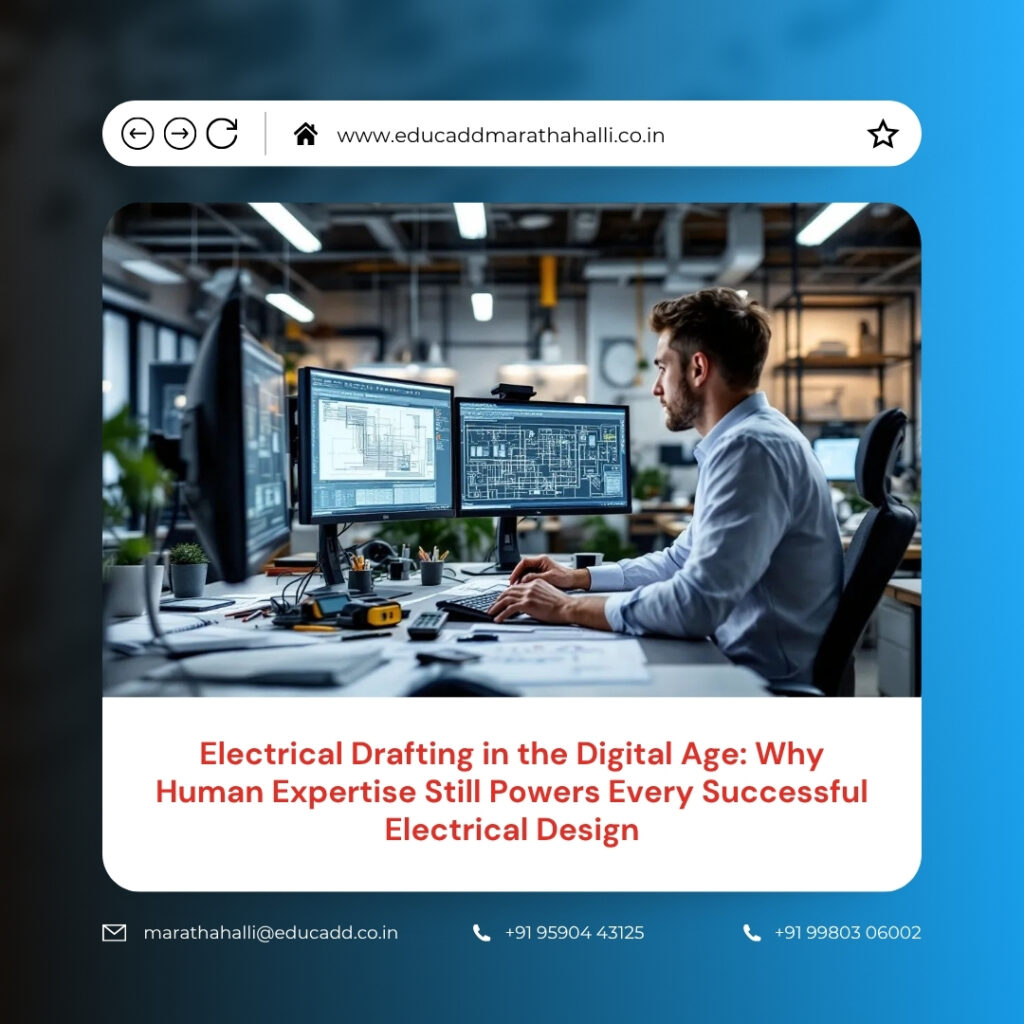
Electrical Drafting Human Expertise
Today, electrical systems are more complex than ever before. Modern buildings, industrial plants, renewable energy facilities, and smart infrastructure projects require highly detailed electrical documentation. Engineers, contractors, technicians, and project managers depend on these drawings to ensure successful project execution. CAD software may create the platform for drafting, but it is the expertise of trained professionals that transforms digital tools into practical engineering solutions. As industries continue embracing automation and digital technologies, electrical drafting remains a cornerstone of effective Electrical Drafting Human Expertise and project management.
Understanding What Electrical Drafting Really Means
Electrical Drafting Human Expertise involves creating detailed technical drawings that illustrate electrical systems and components within a project. These drawings communicate vital information regarding wiring layouts, electrical circuits, power distribution systems, control panels, lighting arrangements, and equipment installations. Every line, symbol, and annotation within a drawing serves a specific purpose that helps project teams understand how electrical systems should function.
Unlike general drafting, electrical drafting requires specialized technical knowledge. Professionals must understand electrical principles, safety requirements, design standards, and installation practices. They must also ensure that drawings remain clear and understandable for various stakeholders. Whether a project involves a residential apartment complex or a large manufacturing facility, accurate electrical drawings provide the roadmap that guides successful implementation. Without these documents, even the most advanced engineering concepts would be difficult to translate into functioning systems.
CAD Technology Has Enhanced, Not Replaced, Electrical Drafting
One of the most common misconceptions surrounding modern engineering is that CAD software has made electrical drafting obsolete. In reality, CAD technology has simply changed the methods used to create drawings. The software improves productivity, accuracy, and efficiency, but it does not possess the decision-making ability that skilled drafters bring to a project.
Electrical Drafting Human Expertise use CAD tools to create detailed and organized designs, but they remain responsible for interpreting engineering requirements and ensuring technical accuracy. Software can generate symbols and automate repetitive tasks, yet it cannot determine the best electrical layout or identify potential design conflicts without human guidance. As projects become increasingly sophisticated, organizations require professionals who can combine technical expertise with advanced software proficiency. Consequently, CAD technology has strengthened the profession rather than replacing it.
The Expanding Need for Electrical Documentation in Construction
Construction projects continue to grow in size and complexity across the globe. Residential developments, commercial towers, hospitals, educational institutions, and industrial facilities all depend on comprehensive electrical planning. Before construction can begin, project teams require detailed electrical drawings that outline every aspect of the electrical infrastructure.
Electrical drafting serves as the communication bridge between engineers and construction teams. Accurate drawings reduce misunderstandings, improve coordination, and minimize costly rework during installation. Furthermore, detailed documentation helps contractors estimate materials, schedule activities, and allocate resources effectively. As urban development accelerates and infrastructure investments increase, the demand for high-quality electrical drafting services remains consistently strong across the construction industry.
Why Electrical Drafters Play a Vital Role in Safety
Electrical systems carry inherent risks when they are not designed and documented correctly. Improper installations can lead to equipment failures, fire hazards, power disruptions, and serious safety incidents. Therefore, electrical drafting contributes directly to creating safe and reliable systems that comply with industry regulations and engineering standards.
Electrical drafters carefully prepare schematics, wiring diagrams, and installation drawings that clearly communicate safety requirements. They ensure that protective devices, grounding systems, circuit arrangements, and emergency provisions are accurately represented. This attention to detail helps electricians and contractors perform installations correctly while reducing the likelihood of operational issues. As safety regulations become increasingly stringent, the role of electrical drafting in maintaining compliance continues to grow in importance.
Smart Buildings Have Increased the Complexity of Electrical Design
Modern buildings are no longer limited to basic electrical systems. Today’s structures incorporate advanced technologies such as automated lighting, intelligent climate control, access management systems, security networks, and energy monitoring platforms. These integrated systems require extensive coordination and detailed documentation to function effectively.
Electrical drafters play a crucial role in organizing and documenting these interconnected technologies. They create drawings that illustrate how various systems interact within a building environment. Additionally, they help ensure that equipment placement, wiring pathways, and control networks are properly coordinated with architectural and mechanical designs.
Key smart building systems that rely heavily on electrical drafting include:
- Building automation and energy management systems
- Security surveillance and access control networks
As demand for intelligent buildings continues to rise, electrical drafting professionals remain essential contributors to successful project development.
Renewable Energy Projects Depend on Detailed Drafting
The global shift toward sustainable energy solutions has created significant opportunities for electrical drafting professionals. Solar farms, wind energy installations, battery storage systems, and electric vehicle charging networks all require comprehensive electrical documentation before implementation can begin.
Electrical Drafting Human Expertise assist engineers by creating detailed layouts, wiring diagrams, equipment schedules, and power distribution plans. These drawings help project teams understand how renewable energy systems will operate and connect with existing infrastructure. Since renewable energy facilities often involve complex electrical networks, accurate drafting becomes critical for ensuring performance and reliability.
As governments and private investors continue supporting clean energy initiatives, the demand for qualified electrical drafting professionals within the renewable energy sector is expected to remain strong for many years.
Human Expertise Remains Irreplaceable in Electrical Drafting
Although software capabilities continue advancing, human expertise remains the most valuable component of electrical drafting. Technology can assist with drawing creation, but it cannot replace the judgment, experience, and problem-solving abilities of skilled professionals.
Electrical drafters evaluate design requirements, anticipate installation challenges, and identify potential issues before construction begins. They understand practical considerations that software algorithms may overlook. Additionally, they collaborate with engineers, architects, and contractors to ensure project objectives are achieved efficiently.
Successful projects depend on informed decisions rather than automated outputs. Therefore, organizations continue investing in professionals who possess both technical knowledge and software proficiency. The combination of these skills creates value that technology alone cannot provide.
Building Information Modeling Has Expanded Career Opportunities
Building Information Modeling, commonly known as BIM, has revolutionized the way construction projects are planned and executed. BIM allows multiple disciplines to collaborate within a shared digital environment, improving coordination and reducing project conflicts.
Electrical drafters have become integral participants in BIM workflows. Rather than working solely with two-dimensional drawings, they now contribute to intelligent three-dimensional models that contain detailed project information. This expanded role has created new career opportunities and increased demand for professionals who understand both electrical systems and digital modeling technologies.
Benefits of BIM integration include:
- Improved coordination between electrical, structural, and mechanical teams
- Reduced design conflicts and construction delays
As BIM adoption continues expanding throughout the industry, electrical drafting professionals with BIM expertise enjoy enhanced career prospects and greater professional value.
Industrial Automation Has Strengthened the Need for Drafting
Manufacturing facilities increasingly rely on automation technologies to improve productivity, quality, and operational efficiency. Modern factories use programmable controllers, robotics, sensors, communication networks, and advanced control systems to manage complex production processes.
Every automated system requires accurate documentation for installation, operation, and maintenance. Electrical drafters create detailed control schematics, panel layouts, wiring diagrams, and instrumentation drawings that support these activities. Their work helps technicians troubleshoot problems, perform upgrades, and maintain equipment throughout its lifecycle.
Without proper documentation, maintaining automated systems would become significantly more challenging. Consequently, industrial automation has reinforced the importance of electrical drafting rather than diminishing its relevance.
Electrical Drawings Support Long-Term Facility Management
The value of electrical drafting extends far beyond the completion of a project. Once a facility becomes operational, accurate drawings serve as essential references for maintenance teams, engineers, and facility managers.
Electrical documentation helps organizations identify system components, locate wiring routes, and understand equipment configurations. When maintenance personnel need to perform repairs or upgrades, detailed drawings provide critical information that reduces downtime and improves efficiency. Furthermore, facility expansions often rely on existing documentation to integrate new systems successfully.
Because electrical systems continue evolving throughout a facility’s lifespan, maintaining accurate drawings remains a vital part of effective asset management and operational planning.
Career Prospects Remain Strong Across Multiple Industries
Electrical drafting offers diverse career opportunities across numerous sectors. Construction companies, engineering consultancies, manufacturing organizations, utility providers, telecommunications firms, and renewable energy developers all require skilled drafting professionals.
As industries adopt new technologies, employers increasingly seek candidates who possess a combination of electrical knowledge, CAD expertise, and BIM capabilities. Professionals who continuously update their skills can access rewarding positions with strong growth potential.
Moreover, the increasing complexity of modern infrastructure projects ensures that organizations will continue requiring qualified individuals capable of producing high-quality electrical documentation. This sustained demand contributes to long-term career stability and advancement opportunities.
Emerging Technologies Are Creating New Possibilities
Technological innovation continues reshaping engineering workflows. Artificial intelligence, cloud-based collaboration platforms, digital twins, and advanced simulation tools are becoming standard features within modern project environments. Rather than threatening electrical drafting careers, these technologies are creating new opportunities for growth and specialization.
Electrical drafters now participate in data-rich project environments where drawings connect directly with operational information and digital models. This evolution allows professionals to contribute more strategically throughout the project lifecycle. Those who embrace emerging technologies position themselves for greater success in an increasingly digital industry.
The profession continues adapting to technological change while maintaining its core responsibility of creating accurate and effective technical documentation.
Why Electrical Drafting Will Continue to Matter in the Future
Looking ahead, electrical drafting remains firmly positioned as a critical component of engineering and construction projects. The increasing adoption of smart infrastructure, renewable energy systems, industrial automation, and intelligent buildings will only increase the need for detailed electrical documentation. While software will continue evolving, projects will always require professionals who understand how to transform engineering concepts into practical and buildable designs.
Future electrical drafters will likely work with more advanced tools, greater automation, and increasingly integrated project environments. However, their expertise in system design, documentation, coordination, and problem-solving will remain indispensable. Organizations will continue valuing professionals who can bridge the gap between technology and real-world implementation.
Conclusion
Electrical Drafting Human Expertise has successfully evolved alongside technological advancement rather than being replaced by it. CAD software, BIM platforms, and digital engineering tools have enhanced productivity and improved drawing quality, but they have not removed the need for skilled professionals. In fact, growing project complexity has increased the importance of knowledgeable electrical drafters who can ensure accuracy, compliance, coordination, and safety.
From construction and manufacturing to renewable energy and smart infrastructure, electrical drafting continues to support every stage of project development. The profession remains highly relevant because successful electrical systems depend on more than software—they depend on human expertise. As industries continue embracing innovation, electrical drafting will remain a valuable, dynamic, and future-ready career that plays a central role in shaping the modern world.

