
Mastering Electrical CADD: Transforming MEP & Infrastructure Design for the Modern Era
Electrical design forms the backbone of every modern building and infrastructure project. From towering commercial complexes to sprawling industrial plants, robust electrical systems ensure safety, efficiency, and uninterrupted functionality. In this evolving landscape, mastering Electrical CADD MEP Design & infrastructure projects has become indispensable. Electrical Computer-Aided Design and Drafting (CADD) provides engineers with the tools to convert complex concepts into precise, actionable designs. This transformation allows seamless coordination among architectural, mechanical, and plumbing disciplines while reducing errors and enhancing productivity.
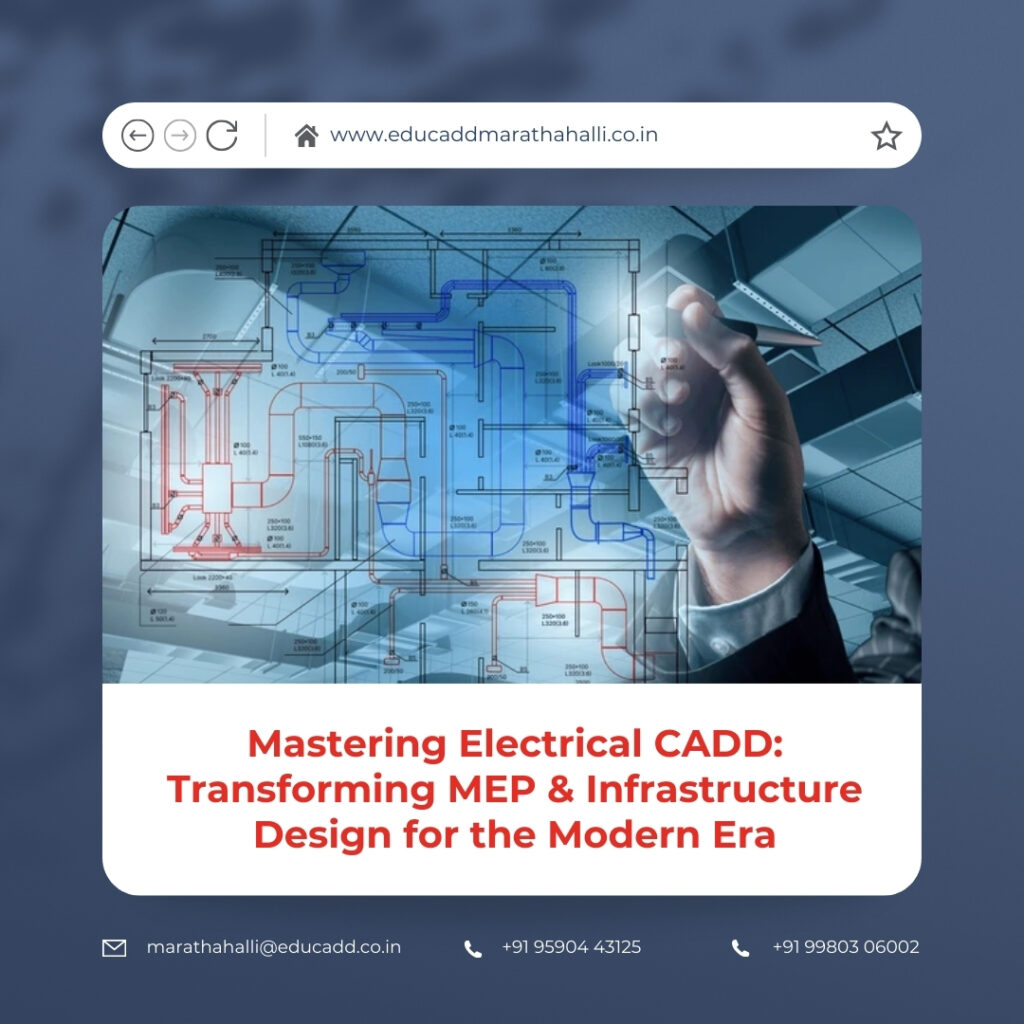
Electrical CADD MEP Design
Electrical CADD is not merely about creating schematics or layout drawings. It encompasses detailed planning, load calculations, system integration, and compliance with national and international standards. Professionals skilled in Electrical CADD streamline workflows, save time, and improve project outcomes, bridging the gap between design intent and constructible reality. This blog explores Electrical CADD in-depth, covering essential systems, tools, standards, workflows, career potential, and emerging trends. Whether you are a budding engineer, an MEP professional, or an organization aiming to optimize electrical design, this guide provides practical insights into leveraging Electrical CADD effectively.
Understanding Electrical CADD in Modern Construction
Electrical CADD MEP Design represents the intersection of technology and engineering. By converting traditional hand-drawn schematics into precise digital models, it revolutionizes design accuracy, collaboration, and documentation. In MEP projects, electrical systems must integrate with mechanical ventilation, plumbing networks, and structural elements. Electrical CADD ensures that all components coexist harmoniously without clashes or redundancies.
In large-scale infrastructure projects, such as airports, railways, and industrial facilities, Electrical CADD takes on a strategic role. It facilitates planning of power distribution networks, high-voltage systems, and automation controls. Engineers can model systems, simulate performance, and anticipate construction challenges long before ground is broken. By providing detailed, coordinated drawings, Electrical CADD allows stakeholders to reduce cost overruns, minimize delays, and maintain safety standards across the project lifecycle.
Core Electrical Systems in CADD Design
Electrical CADD encompasses a variety of essential systems, each with its unique design challenges. Power distribution forms the foundation of any project. Designers must plan transformers, switchgear, panels, and feeders with precision, ensuring adequate load distribution, redundancy, and safety. CADD tools simplify cable sizing, load calculations, and panel scheduling, delivering accurate layouts for complex installations.
Lighting systems also play a critical role. Electrical CADD helps engineers design layouts that balance illumination, energy efficiency, and architectural aesthetics. Emergency lighting, motion sensors, and automated control systems can be integrated seamlessly.
Earthing and lightning protection systems safeguard both people and assets. Properly drafted grounding grids, earth pits, and bonding details ensure regulatory compliance and operational safety. Low-voltage systems, including fire alarms, CCTV, access control, and public address networks, further highlight the versatility of Electrical CADD. By modeling these subsystems in detail, engineers avoid conflicts and improve installation efficiency.
Essential Electrical CADD Software Tools
Proficiency in software tools defines the effectiveness of Electrical CADD. AutoCAD remains a foundational tool for 2D drafting, enabling engineers to produce detailed layouts and schematics with precision. AutoCAD Electrical enhances traditional drafting by automating wire numbering, symbol libraries, and panel schedules, minimizing errors and boosting productivity.
Revit MEP has transformed 3D electrical modeling. By creating intelligent BIM models, designers can plan circuits, generate load calculations, and detect clashes efficiently. Advanced tools such as ETAP, Dialux, and Relux enable power flow analysis, lighting simulations, and system optimization. Electrical CADD professionals often integrate outputs from these tools into their final construction documents, ensuring a seamless transition from design to execution.
Electrical Drafting Standards and Regulatory Compliance
Accurate Electrical CADD work requires strict adherence to codes and standards. Symbols, line types, and annotations must comply with national and international regulations. In building projects, standards such as the National Electrical Code (NEC) or IEC guidelines dictate design practices.
Infrastructure projects often involve additional specifications from government bodies and utility authorities. Electrical CADD professionals must interpret these codes accurately, ensuring drawings meet approval requirements and safeguard construction teams. Consistency and compliance in drafting reduce project delays, rework, and safety risks, enhancing overall project quality.
MEP Coordination: The Role of Electrical CADD
Modern buildings and infrastructure projects demand precise coordination among disciplines. Electrical systems must coexist with mechanical ducts, plumbing pipelines, and structural elements in constrained spaces. Electrical CADD skills enable designers to identify conflicts early, adjust layouts, and maintain accessibility for installation and maintenance.
Coordination through layered drawings or BIM models ensures that electrical pathways, cable trays, and panels do not interfere with other services. Proper planning minimizes costly on-site changes, prevents installation errors, and improves efficiency. Electrical CADD professionals collaborate closely with mechanical and plumbing teams to ensure smooth project execution and long-term reliability.
Electrical CADD Workflows from Concept to Completion
Electrical CADD workflows are structured and methodical. Projects begin with requirements analysis, architectural review, and load estimation. Conceptual layouts define zones, main feeder routes, and equipment locations, providing a roadmap for detailed design.
During the detailed design phase, Electrical CADD drawings include precise panel schedules, circuit layouts, conduit routing, and system specifications. Collaboration with other disciplines intensifies to prevent clashes. The final construction documentation phase produces complete, accurate, and ready-to-build drawings. Through this structured approach, Electrical CADD ensures that the design intent is effectively translated into reality, reducing on-site errors and project delays.
Electrical CADD in Large-Scale Infrastructure
Infrastructure projects, such as metros, highways, airports, and industrial facilities, present unique electrical design challenges. They involve extensive power networks, high-capacity systems, and multi-stakeholder coordination. Electrical CADD enables scalable designs and modular documentation to meet these demands.
In metro and railway systems, Electrical CADD supports traction power, signaling, tunnel lighting, and substations. Airports require precise modeling for terminal power, airfield lighting, and emergency backup systems. Industrial projects demand high-voltage planning, control networks, and safety zone coordination. Electrical CADD ensures clarity, efficiency, and adherence to stringent operational requirements across all these applications.
Integrating Electrical CADD with BIM and Digital Workflows
Digital workflows are redefining Electrical CADD. With BIM integration, electrical systems become intelligent, data-rich models rather than static drawings. BIM-enabled CADD allows automatic scheduling, quantity takeoffs, and load validation, streamlining the design process.
Digital collaboration enhances transparency, enabling multiple teams to review models, detect clashes, and manage revisions simultaneously. For smart cities and large infrastructure, Electrical CADD evolves into a tool for digital twin modeling, supporting operations, maintenance, and asset management long after construction is complete.
Quality Assurance in Electrical CADD Documentation
Quality control is a central responsibility for Electrical CADD professionals. Accurate and well-organized documentation protects budgets, schedules, and safety standards.
Quality practices include verifying circuit designs, confirming load calculations, and ensuring symbol consistency. Clear notes, legends, and annotations facilitate comprehension by contractors and site teams. Rigorous quality control reduces errors, supports regulatory approvals, and improves construction efficiency, reflecting the professionalism and reliability of the electrical design team.
Career Opportunities with Electrical CADD Skills
Electrical CADD MEP Design expertise opens numerous career avenues. Professionals can pursue roles as electrical designers, draftsmen, BIM coordinators, or project engineers. MEP consulting firms, infrastructure developers, and industrial organizations actively seek skilled Electrical CADD personnel.
Experienced professionals advance into project leadership, BIM management, or technical coordination roles. Global demand for Electrical CADD expertise also enables international mobility, making it a highly valuable skill set for long-term career growth and specialization.
Importance of Training and Continuous Learning
Electrical CADD skills require structured education and hands-on practice. Formal training provides knowledge of drafting principles, electrical systems, software tools, and industry workflows. Real-world project exposure prepares professionals to handle diverse challenges effectively.
Continuous learning is crucial due to technological evolution. Tools, software, and design practices are constantly advancing. Engineers must stay updated to maintain relevance and contribute meaningfully to complex projects. Organizations investing in Electrical CADD training benefit from higher quality designs, reduced errors, and improved project delivery timelines.
Emerging Trends in Electrical CADD for MEP and Infrastructure
The future of Electrical CADD aligns closely with digital construction, automation, and sustainability. Parametric design, AI-assisted drafting, and data-driven workflows are gaining prominence. Energy-efficient electrical systems, renewable integration, and intelligent control networks are becoming standard expectations.
As smart cities expand, Electrical CADD professionals are increasingly involved in integrated infrastructure projects with connected lighting, monitoring systems, and resilient power grids. These trends highlight the ongoing evolution of Electrical CADD into a strategic enabler of intelligent, sustainable, and future-ready infrastructure.
Conclusion
Electrical CADD skills are indispensable for designing efficient, safe, and reliable Electrical CADD MEP Design and infrastructure projects. They translate engineering concepts into precise, constructible designs while enabling coordination, compliance, and quality assurance.
As infrastructure projects grow in scale and complexity, Electrical CADD expertise becomes a differentiator, offering career growth for professionals and operational excellence for organizations. Mastery of these skills ensures that modern buildings, industrial complexes, and smart infrastructure projects are not only functional but also resilient, sustainable, and aligned with future demands.

