
Data Commanders of the Digital Era: How Database Administrators Power Modern IT Infrastructure
Data drives every modern enterprise. From customer transactions and financial records to analytics dashboards and artificial intelligence models, information fuels daily operations and long-term strategy. However, raw data alone does not create value. Organizations must store, secure, organize, and optimize that data within reliable systems. At the heart of this responsibility stands the database administrator. In today’s complex technology landscape, the role of Database Administrators Modern Infrastructure has expanded into a mission-critical function that directly influences business continuity, security, scalability, and innovation.
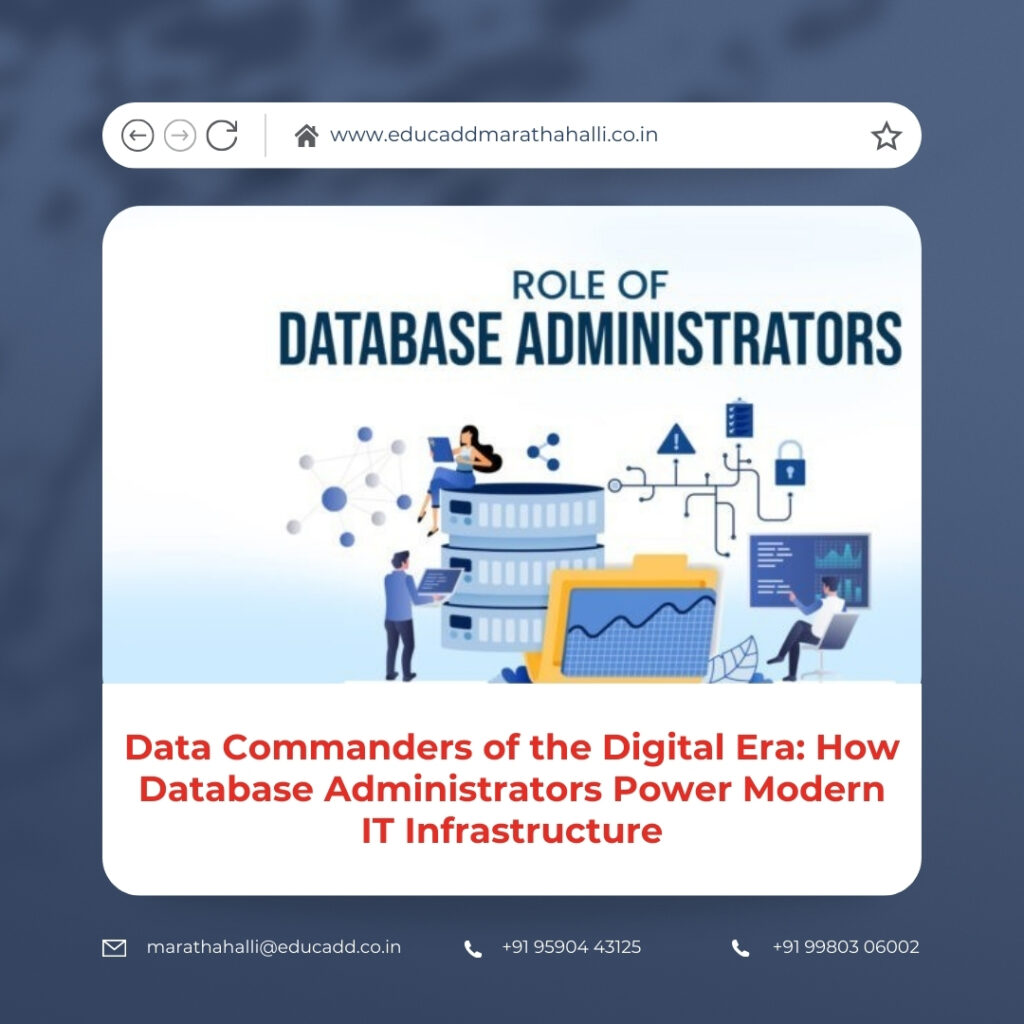
Database Administrators Modern Infrastructure
The modern enterprise operates across hybrid environments that combine on-premises servers, cloud platforms, distributed systems, and real-time applications. These ecosystems demand continuous uptime and rapid performance. Even a short disruption can cause financial loss and reputational damage. Therefore, organizations depend on database professionals who can maintain stability while adapting to evolving technologies. The role of DBAs in modern IT infrastructure now extends beyond routine maintenance into strategic planning, automation, cybersecurity, compliance management, and digital transformation initiatives. This comprehensive discussion explores how database administrators shape today’s IT environments and why their expertise remains indispensable.
1. Building and Maintaining the Core Data Architecture
Every digital application relies on a structured backend system. Databases store customer records, transaction histories, product catalogs, operational metrics, and internal communications. Without a strong architecture, businesses face data inconsistency, slow application performance, and system failures. Consequently, the role of DBAs in modern IT infrastructure begins with designing and maintaining robust database environments that support enterprise applications.
Database Administrators Modern Infrastructure systems according to organizational requirements. They design schemas that reflect business processes and ensure logical data relationships. Proper indexing strategies enable quick data retrieval and reduce query execution time. In addition, DBAs monitor storage allocation and system resources to maintain stability.
A well-structured database architecture allows organizations to scale confidently. It supports application growth, analytics expansion, and integration with other systems. Through careful planning and execution, DBAs create the structural foundation that allows technology ecosystems to operate smoothly.
2. Protecting Organizational Data from Threats
Cybersecurity concerns have intensified across industries. Hackers often target databases because they contain valuable information such as financial records, intellectual property, and personal data. As a result, the role of DBAs in modern IT infrastructure includes implementing strong security frameworks that prevent unauthorized access and data breaches.
DBAs manage authentication mechanisms, define user roles, and enforce strict access controls. They ensure that sensitive information remains accessible only to authorized personnel. Encryption strategies protect data both at rest and in transit. Additionally, database administrators monitor activity logs to detect unusual behavior.
Regular vulnerability assessments and timely patch updates strengthen defenses against emerging threats. By collaborating with cybersecurity teams, DBAs reduce risk exposure and safeguard critical digital assets. Their proactive measures help organizations maintain trust with customers and stakeholders.
3. Ensuring High Performance Across Systems
Modern applications must deliver instant responses. Customers expect seamless experiences when shopping online, transferring funds, or accessing digital services. Slow database performance directly impacts user satisfaction and business revenue. Therefore, performance optimization forms a central aspect of the role of Database Administrators Modern Infrastructure.
Database administrators analyze execution plans, refine queries, and optimize indexing strategies to eliminate inefficiencies. They adjust memory parameters and fine-tune system configurations to maintain optimal performance levels. Continuous monitoring enables them to detect bottlenecks before they disrupt operations.
Furthermore, DBAs collaborate closely with developers to ensure that application code interacts efficiently with the database layer. This partnership improves overall system performance and enhances user experience. By maintaining speed and reliability, DBAs contribute significantly to competitive advantage.
4. Guaranteeing High Availability and Business Continuity
Downtime can cost organizations millions of dollars. In sectors such as healthcare, banking, and e-commerce, even brief service interruptions can have severe consequences. For this reason, the role of DBAs in modern IT infrastructure includes designing systems that ensure continuous availability.
DBAs implement replication mechanisms and clustering solutions that allow systems to continue operating during hardware failures or network disruptions. Failover configurations automatically redirect workloads to backup servers when necessary. Additionally, database administrators create comprehensive disaster recovery strategies.
Regular backup testing confirms that recovery processes function effectively. By preparing for unexpected incidents, DBAs protect organizational resilience and reduce operational risk. Their efforts enable businesses to maintain uninterrupted service delivery even in challenging circumstances.
5. Navigating Cloud and Hybrid Infrastructure
Cloud computing has transformed enterprise technology strategies. Many organizations now adopt hybrid models that combine on-premises infrastructure with public and private cloud services. Consequently, the role of DBAs in modern IT infrastructure includes managing cloud-based databases and orchestrating seamless migrations.
Database Administrators Modern Infrastructure evaluate workload requirements and determine the most suitable hosting environment. They oversee migration projects, ensuring data integrity throughout the transition process. Once systems operate in the cloud, DBAs optimize performance and manage cost efficiency through resource scaling.
Cloud platforms introduce new security considerations and configuration complexities. Database professionals must understand cloud-native services, storage options, and automation capabilities. By bridging traditional systems and cloud solutions, DBAs support agile and scalable IT strategies.
6. Collaborating Within DevOps Ecosystems
Modern development environments prioritize speed and collaboration. Agile methodologies and DevOps practices encourage continuous integration and deployment. In this dynamic context, the role of DBAs in modern IT infrastructure involves active participation in cross-functional teams.
DBAs contribute to application planning sessions and review proposed database changes. They ensure that schema modifications align with long-term architectural goals. Through automation tools, they integrate database updates into CI/CD pipelines, reducing deployment risks.
This collaborative approach improves communication between developers and operations teams. It accelerates innovation while preserving stability. As a result, database administrators become strategic partners rather than isolated technical specialists.
7. Leveraging Automation for Operational Efficiency
Automation has become a defining feature of modern IT operations. Manual processes consume time and increase the likelihood of errors. Therefore, the role of DBAs in modern IT infrastructure increasingly involves implementing automated solutions.
Database administrators deploy monitoring systems that track key performance indicators and generate alerts for unusual activity. Automated backup schedules reduce human intervention and ensure consistency. Patching and maintenance tasks can also run through scripted workflows.
By embracing automation, DBAs enhance efficiency and reliability. They free up valuable time to focus on strategic initiatives rather than repetitive tasks. This shift strengthens overall infrastructure management and supports business agility.
8. Managing Big Data and Distributed Systems
The explosion of digital interactions has produced massive volumes of data. Organizations collect information from mobile applications, IoT devices, social media platforms, and transactional systems. As a result, the role of DBAs in modern IT infrastructure extends beyond traditional relational databases into big data and distributed environments.
Database administrators manage NoSQL databases, data lakes, and distributed storage frameworks. They ensure scalability and maintain performance across geographically dispersed systems. Data replication and synchronization become critical in these environments.
Moreover, analytics and machine learning initiatives depend on reliable data storage. DBAs prepare structured datasets and optimize pipelines for high-speed processing. Their expertise enables advanced data-driven insights that support innovation.
9. Enforcing Data Governance and Integrity
Reliable decision-making depends on accurate and consistent data. Without governance standards, organizations face duplication, inconsistencies, and compliance risks. Thus, the role of DBAs in modern IT infrastructure includes establishing data governance frameworks.
Database administrators define naming conventions and enforce validation rules. They eliminate redundant entries and maintain referential integrity. Data audits help identify discrepancies and maintain quality standards.
Through governance initiatives, DBAs ensure that reporting systems generate trustworthy insights. This reliability strengthens executive decision-making and fosters confidence in analytics platforms.
10. Planning for Scalability and Future Growth
Growing enterprises require infrastructure that adapts to expanding workloads. Capacity limitations can hinder innovation and customer satisfaction. Consequently, the role of DBAs in modern IT infrastructure involves proactive scalability planning.
DBAs analyze system metrics to forecast storage needs and processing demands. They recommend hardware upgrades or cloud scaling strategies before bottlenecks occur. Anticipating growth prevents performance degradation and service interruptions.
Strategic capacity planning allows businesses to expand operations smoothly. It supports product launches, market expansion, and digital transformation initiatives. Database administrators play a vital role in sustaining long-term growth.
11. Strengthening Organizational Cyber Defense
Cyber threats continue to evolve in sophistication. Attackers develop advanced methods to exploit vulnerabilities within database systems. Therefore, the role of DBAs in modern IT infrastructure includes reinforcing cybersecurity defenses through layered protection strategies.
Database administrators implement encryption protocols, configure firewalls, and monitor intrusion attempts. They collaborate with security teams to identify potential weaknesses. Regular security assessments help mitigate emerging risks.
Through constant vigilance, DBAs reduce the likelihood of data breaches. Their expertise strengthens organizational resilience against cyberattacks and safeguards sensitive information.
12. Supporting Business Intelligence and Reporting
Business intelligence platforms rely heavily on structured and optimized databases. Executives use dashboards to track performance metrics and guide strategic decisions. In this context, the role of DBAs in modern IT infrastructure directly supports analytics capabilities.
DBAs design and maintain data warehouses that consolidate information from multiple sources. They optimize ETL processes to ensure accurate data transformation. Efficient database design improves reporting speed and reliability.
By enabling seamless analytics, database administrators contribute to strategic planning and competitive positioning. Their work empowers organizations to transform raw data into actionable insights.
13. Developing Modern Skills and Continuous Learning
Technological advancements reshape IT landscapes rapidly. Cloud computing, containerization, artificial intelligence, and automation redefine infrastructure management. Consequently, the role of DBAs in modern IT infrastructure demands continuous professional development.
Modern database administrators must understand scripting languages, container orchestration platforms, and cloud services. Soft skills such as communication and problem-solving also hold importance. Effective collaboration enhances project success.
Continuous learning ensures that DBAs remain adaptable and relevant. Their evolving skill sets enable organizations to navigate emerging technologies confidently.
14. Driving Strategic Digital Transformation
Digital transformation initiatives require stable and scalable infrastructure. Organizations modernize legacy systems, adopt cloud platforms, and integrate advanced analytics tools. In each of these efforts, the role of DBAs in modern IT infrastructure proves indispensable.
Database administrators guide migration strategies and optimize architecture for innovation. They ensure that new technologies integrate smoothly with existing systems. Their strategic insight aligns database management with broader business objectives.
By supporting transformation projects, DBAs move beyond operational maintenance into strategic leadership. Their expertise helps organizations achieve resilience, agility, and sustained growth in an increasingly competitive environment.
Conclusion
The responsibilities of database administrators have evolved dramatically in recent years. Today, the role of Database Administrators Modern Infrastructure encompasses architecture design, performance optimization, cybersecurity, compliance, cloud management, automation, and strategic planning. They safeguard critical information while enabling innovation and scalability.
As digital ecosystems grow more complex, organizations depend on skilled database professionals who can maintain stability and anticipate change. Their contributions extend beyond technical maintenance into enterprise-wide impact. Ultimately, the role of DBAs in modern IT infrastructure represents a cornerstone of operational excellence and long-term success in the digital age.

