
Strategic Corporate Interior Design Planning for Future-Ready, High-Impact Workplaces
Modern organizations no longer view offices as simple physical locations where employees complete daily tasks. Workspaces now act as strategic tools that influence performance, brand perception, collaboration, and employee well-being. Smart Corporate Interior Design Planning ensures that every part of a workplace contributes to efficiency, creativity, and long-term organizational goals. When planning is approached thoughtfully, offices become environments that inspire innovation, strengthen corporate culture, and support evolving business operations.
As companies adopt hybrid work models, digital tools, and employee-centric policies, workspace expectations have changed significantly. Static layouts and outdated infrastructure often fail to support flexible teams and fast-growing departments. Forward-thinking organizations focus on adaptable layouts, ergonomic solutions, sustainable materials, integrated technology, and visual branding elements to create modern professional environments.
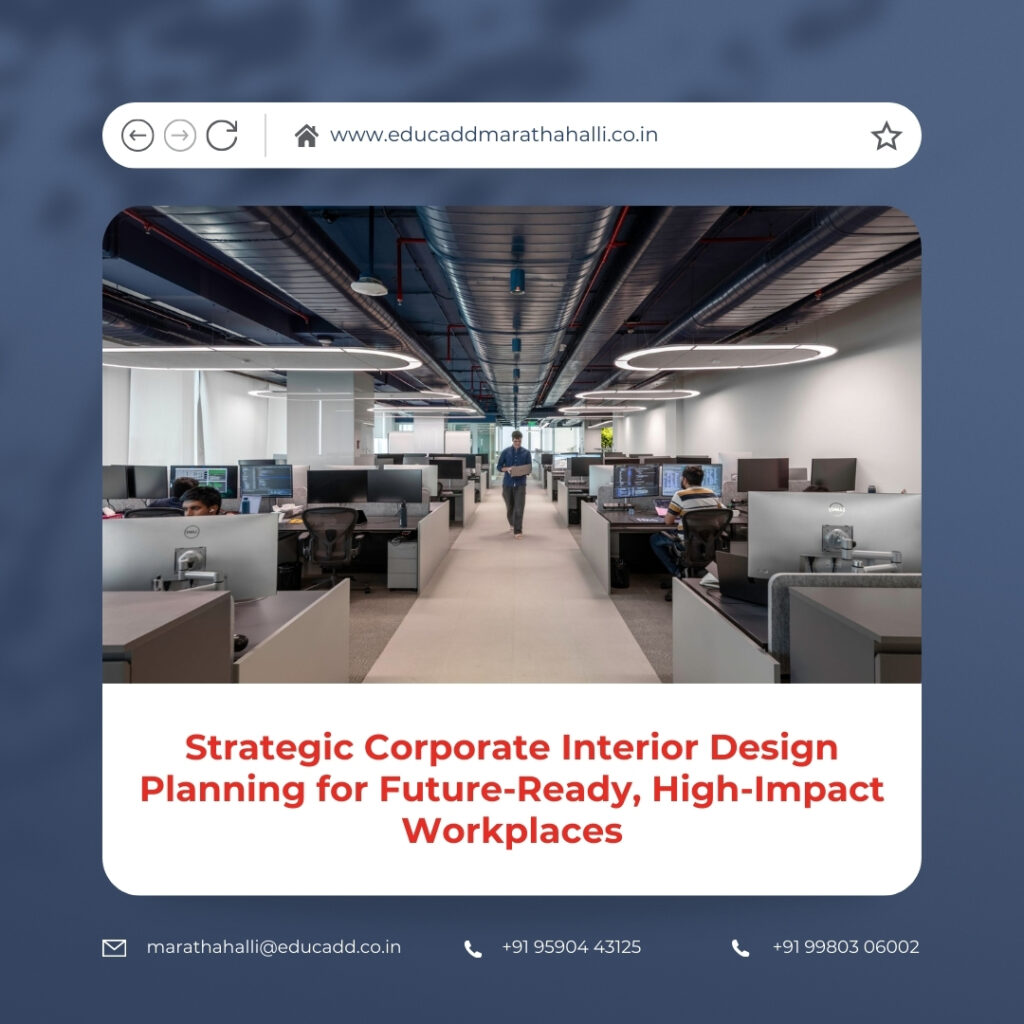
Corporate Interior Design Planning
This comprehensive guide explains how Corporate Interior Design Planning shapes efficient workplaces that balance aesthetics with functionality. It covers planning fundamentals, layout structuring, brand integration, wellness strategies, furniture systems, acoustic comfort, sustainability, smart technology, safety compliance, cost control, project execution, and long-term evaluation. Each section offers practical insights that help businesses design productive spaces aligned with operational objectives and employee expectations.
1. Defining Organizational Vision and Spatial Requirements
Successful Corporate Interior Design Planning begins with a clear understanding of a company’s operational model, workforce behavior, and growth ambitions. Every organization has distinct workflows, communication patterns, and space expectations. Designers must analyze these factors before making layout decisions.
A thorough needs assessment helps identify how departments interact and what types of spaces are required for daily activities. For example, creative teams often need collaborative areas, while legal or finance departments prefer quieter, private settings. When planning reflects these functional differences, the workspace supports productivity rather than hindering it.
Key factors to evaluate include staff strength, visitor frequency, departmental dependencies, and storage requirements. Companies must also forecast future expansion so the office does not become restrictive within a few years. Planning for scalability allows smooth transitions during team growth or structural changes.
Important aspects of workplace assessment:
• Department-wise workflow patterns
• Communication frequency between teams
• Equipment and technology usage
• Privacy requirements for sensitive tasks
• Client interaction zones
• Document and asset storage capacity
• Space for training and internal events
Aligning spatial planning with organizational vision ensures the workplace evolves as the business grows.
2. Intelligent Space Allocation and Layout Structuring
Efficient space allocation forms the structural core of Corporate Interior Design Planning. A well-organized office layout minimizes movement barriers, supports smooth operations, and improves employee convenience.
Different office formats suit different industries. Open layouts encourage teamwork and communication, while structured cabin systems provide privacy and hierarchy. Hybrid models combine collaborative spaces with enclosed rooms, offering flexibility for diverse work styles.
Activity-based planning has gained popularity because it provides customized zones for specific tasks. Instead of assigning permanent desks, companies create areas dedicated to focused work, discussions, brainstorming, and informal meetings.
Common layout configurations include:
• Open workstation clusters for teamwork
• Glass-partition cabins for leadership roles
• Huddle rooms for quick discussions
• Boardrooms for strategic meetings
• Flexible hot-desking stations
• Reception lounges for visitors
Effective zoning improves navigation and ensures optimal space utilization. Circulation paths must remain clear so employees move freely without disruption.
Strategic layouts reduce wasted space, enhance coordination, and create a logical workplace structure.
3. Harmonizing Practical Utility with Visual Sophistication
A professional workspace must perform efficiently while presenting a refined visual identity. Corporate Interior Design Planning achieves this balance by blending practical utility with design elegance.
Functional planning focuses on ease of movement, ergonomic comfort, accessible utilities, and task efficiency. Visual planning shapes atmosphere through colors, materials, lighting effects, and decorative elements.
When aesthetics complement usability, offices feel inviting rather than mechanical. Thoughtful color palettes energize employees, while well-chosen textures add warmth to corporate settings.
Functional priorities include:
• Comfortable workstation dimensions
• Easy access to shared resources
• Logical seating arrangements
• Smart storage solutions
• Minimal clutter through organized layouts
Visual enhancement elements include:
• Brand-aligned color themes
• Modern material finishes
• Statement décor pieces
• Coordinated furniture styles
• Balanced lighting arrangements
This dual approach ensures the workspace supports productivity while leaving a positive impression on employees and clients.
4. Reflecting Corporate Identity through Interior Expression
Office interiors serve as tangible representations of organizational values and brand personality. Effective Corporate Interior Design Planning incorporates branding elements that communicate identity consistently.
Visitors often judge professionalism based on office aesthetics. A visually cohesive environment builds credibility and reinforces trust. Employees also feel more connected when surroundings reflect company culture.
Brand integration can be subtle or expressive depending on corporate tone. Minimalist companies may prefer elegant neutral palettes, while creative brands often embrace bold graphics and vibrant color schemes.
Brand expression techniques include:
• Logo installations in reception areas
• Signature color themes across interiors
• Motivational wall graphics
• Timeline displays of company milestones
• Thematic meeting room designs
• Branded signage systems
Consistent brand storytelling through design strengthens emotional engagement and market positioning.
5. Designing for Employee Comfort and Workplace Wellness
Human-centric design plays a vital role in Corporate Interior Design Planning because employee well-being directly affects performance. Offices must promote physical comfort and mental relaxation.
Ergonomic furniture prevents posture-related strain and improves long-term health. Natural lighting boosts mood and regulates biological rhythms, reducing fatigue. Comfortable breakout areas allow employees to recharge during demanding schedules.
Biophilic elements introduce nature-inspired features that reduce stress and enhance emotional balance.
Wellness-oriented planning includes:
• Adjustable ergonomic seating
• Sit-stand desks for flexibility
• Access to daylight and ventilation
• Indoor plants and green walls
• Relaxation lounges
• Quiet focus rooms
Benefits of wellness-centered design:
• Increased productivity levels
• Lower absenteeism rates
• Better employee retention
• Reduced workplace stress
• Improved cognitive performance
A healthy workspace fosters motivation and strengthens organizational culture.
6. Strategic Lighting Systems for Enhanced Efficiency
Lighting significantly influences workplace effectiveness. Corporate Interior Design Planning incorporates layered lighting systems that support various tasks and moods.
Natural light remains the most beneficial source because it improves concentration and reduces eye strain. Artificial lighting should complement daylight through ambient, task, and accent layers.
Balanced lighting prevents fatigue and enhances visual clarity across different zones.
Key lighting categories include:
• Ambient lighting for overall brightness
• Task lighting for desks and meeting tables
• Accent lighting for decorative highlights
• Motion-sensor lighting for energy savings
Smart lighting systems adjust brightness based on occupancy and daylight availability.
Advantages of optimized lighting:
• Enhanced employee alertness
• Reduced power consumption
• Comfortable visual environments
• Elevated aesthetic appeal
Thoughtful illumination improves both productivity and spatial ambiance.
7. Flexible Furnishing and Adaptable Workspace Systems
Workplace flexibility has become essential for evolving organizations. Corporate Interior Design Planning incorporates modular furniture systems that adapt to changing needs.
Traditional fixed setups limit expansion and redesign possibilities. Modern offices favor movable components that enable quick reconfiguration without major renovation expenses.
Adaptable furnishings support hybrid schedules and collaborative teamwork.
Flexible workspace solutions include:
• Modular desks with adjustable layouts
• Movable acoustic partitions
• Foldable training tables
• Stackable seating systems
• Multi-functional collaborative furniture
Benefits of adaptable interiors:
• Quick layout modifications
• Cost-effective scalability
• Improved team interaction
• Space optimization
Dynamic furniture systems help companies remain agile in fast-changing business environments.
8. Acoustic Comfort and Workplace Sound Management
Noise disturbances reduce concentration and affect employee well-being. Corporate Interior Design Planning addresses these challenges through acoustic optimization.
Open offices often amplify sound reflections, creating distractions. Acoustic materials absorb excess noise and improve speech clarity.
Balanced sound environments encourage collaboration without disturbing focused work.
Effective acoustic measures include:
• Sound-absorbing ceiling panels
• Fabric-covered wall treatments
• Carpets and soft flooring materials
• Enclosed meeting pods
• Acoustic workstation dividers
Advantages of noise-controlled environments:
• Better focus and efficiency
• Enhanced communication clarity
• Reduced stress levels
• Improved meeting confidentiality
Acoustic planning creates peaceful, productivity-driven workplaces.
9. Integrating Smart Technology and Digital Infrastructure
Modern enterprises depend heavily on digital systems. Corporate Interior Design Planning must support advanced technology integration for seamless operations.
Technology-friendly environments reduce cable clutter and improve connectivity. Infrastructure must accommodate present tools and future upgrades.
Essential technology components include:
• High-speed structured cabling
• Wireless connectivity systems
• Smart conference room equipment
• Interactive digital display panels
• Centralized control systems
Automation enhances convenience through intelligent lighting, climate regulation, and security monitoring.
Technology-enabled interiors offer:
• Faster communication systems
• Efficient meeting experiences
• Reduced operational disruptions
• Streamlined workflow processes
Digital readiness ensures businesses stay competitive in modern markets.
10. Sustainable Design Practices for Responsible Workspaces
Environmental responsibility has become a key focus of Corporate Interior Design Planning. Sustainable interiors reduce ecological impact while promoting healthier workplaces.
Green materials and energy-efficient systems support long-term cost savings and environmental stewardship.
Eco-conscious planning strategies include:
• Energy-saving LED lighting
• Recycled and renewable materials
• Efficient HVAC installations
• Water-saving plumbing fixtures
• Low-emission paints and finishes
Indoor plants enhance air purification and aesthetic appeal.
Benefits of sustainable offices:
• Lower utility expenses
• Improved indoor air quality
• Stronger corporate reputation
• Compliance with green standards
Responsible design choices demonstrate commitment to environmental sustainability.
11. Workplace Safety and Regulatory Compliance
Safety remains a fundamental priority in Corporate Interior Design Planning. Offices must comply with structural regulations and occupational safety guidelines.
Risk-free environments protect employees and visitors while ensuring business continuity.
Critical safety provisions include:
• Fire alarm and sprinkler systems
• Clearly marked emergency exits
• Slip-resistant flooring surfaces
• Secure electrical wiring systems
• Adequate ventilation and air circulation
Ergonomic setups also prevent repetitive strain injuries.
Advantages of safety-focused planning:
• Reduced accident risks
• Regulatory compliance
• Enhanced employee confidence
• Protection from legal liabilities
Secure work environments promote operational stability and trust.
12. Budget Structuring and Financial Efficiency
Financial planning ensures Corporate Interior Design Planning remains practical and sustainable. Organizations must allocate budgets strategically to balance aesthetics, durability, and operational requirements.
Cost estimation begins with understanding project scope and prioritizing essential features.
Budget management steps include:
• Detailed requirement analysis
• Vendor quotation comparisons
• Material quality assessment
• Allocation of contingency reserves
• Continuous expense monitoring
Long-term value should outweigh short-term savings.
Cost-efficiency techniques include:
• Phased execution planning
• Investing in durable materials
• Modular furniture adoption
• Energy-efficient infrastructure
Structured budgeting prevents overspending and maximizes return on investment.
13. Coordinated Project Execution and Timeline Management
Proper execution transforms design concepts into functional workspaces. Corporate Interior Design Planning requires strong coordination among designers, contractors, and stakeholders.
Without structured management, projects may face delays and budget overruns.
Key implementation stages include:
• Conceptual design development
• Stakeholder approval processes
• Material procurement scheduling
• Construction and installation phases
• Quality assurance inspections
Transparent communication keeps teams aligned and prevents misunderstandings.
Benefits of efficient execution:
• Timely project completion
• Controlled expenditure
• Consistent design quality
• Smooth operational transitions
Organized execution ensures design goals translate into real-world functionality.
14. Performance Evaluation and Future-Ready Improvements
Workplace planning continues even after project completion. Corporate Interior Design Planning includes performance reviews to ensure spaces meet operational expectations.
Post-occupancy evaluations identify improvement opportunities and evolving requirements.
Assessment techniques include:
• Employee satisfaction surveys
• Workspace utilization analysis
• Energy efficiency tracking
• Workflow performance reviews
Continuous upgrades maintain workplace relevance in changing business landscapes.
Future-ready planning strategies include:
• Flexible expansion provisions
• Technology infrastructure updates
• Reconfigurable furniture systems
• Sustainable material replacements
Adaptive improvements keep offices efficient, modern, and aligned with business growth.
Conclusion
Strategic Corporate Interior Design Planning transforms ordinary offices into dynamic environments that foster innovation, collaboration, and efficiency. Thoughtful planning aligns spatial design with organizational objectives while enhancing employee well-being and brand representation.
From intelligent layouts and ergonomic furnishings to sustainable materials and smart technologies, every design element contributes to a cohesive and productive workspace. Businesses that invest in purposeful planning benefit from improved workflow efficiency, stronger corporate identity, and long-term operational savings.
A well-designed office is more than a workplace. It becomes a strategic asset that empowers employees, impresses clients, and supports continuous growth. Organizations that prioritize adaptive, employee-focused, and future-ready design create environments prepared to meet the evolving demands of modern business.

