
Mastering Content Marketing: Frameworks That Transform Leads Into Loyal Customers
In today’s fast-paced digital marketplace, simply publishing content is no longer enough to drive meaningful results. Businesses churn out blogs, videos, social media posts, and newsletters daily, but only a fraction of this content attracts qualified leads—prospects who have a genuine interest and intent to purchase. The difference between scattered content and high-performing content lies in strategy and structure. This is where Content Marketing Lead Framework that transform leads into loyal customers come into play.
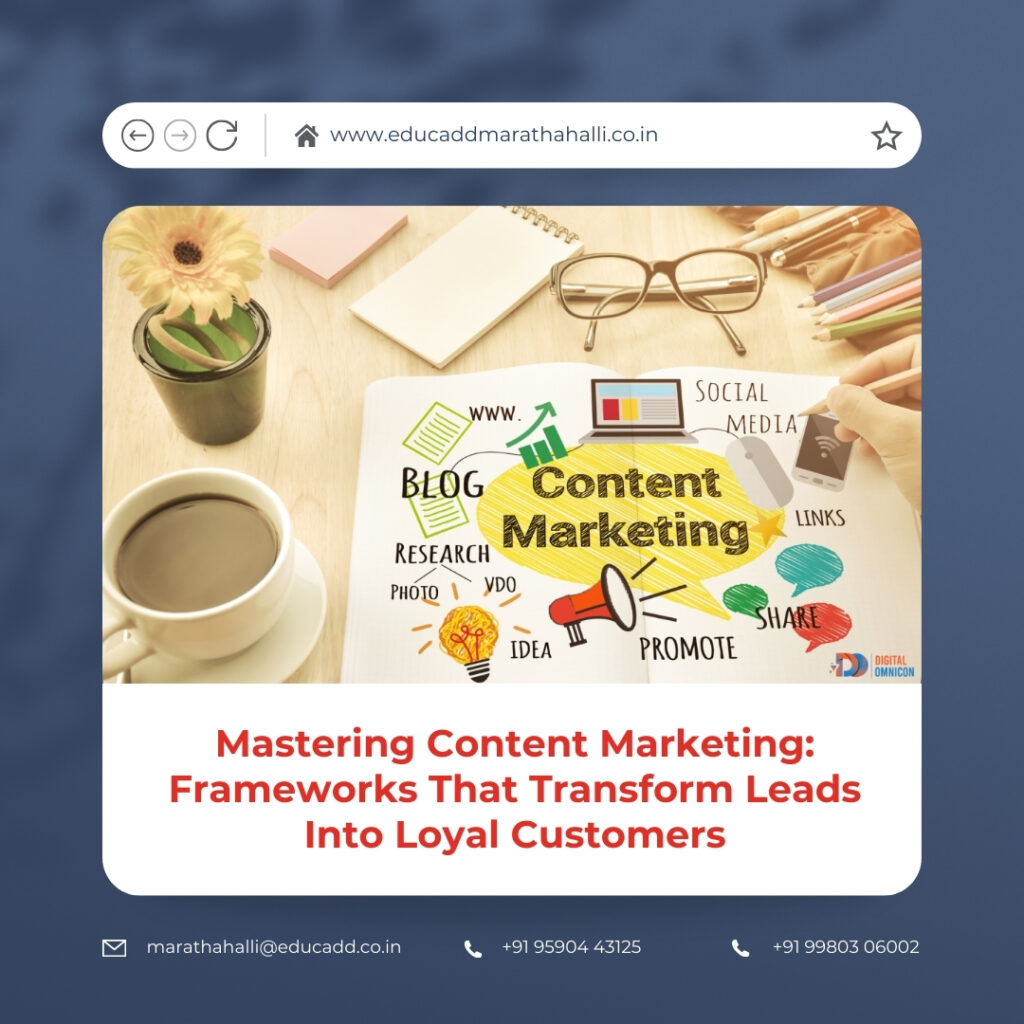
Content Marketing Lead Framework
A framework gives purpose and direction to content, ensuring every blog, video, or email resonates with the target audience at the right stage of their journey. Without a clear framework, content risks being random, inconsistent, or irrelevant. When frameworks guide content creation, every piece aligns with the audience’s needs, business goals, and measurable results. In this blog, we explore fourteen proven content marketing frameworks designed to attract, nurture, and convert high-quality leads, offering actionable insights for marketers looking to elevate their strategy.
1. Mapping the Buyer’s Journey: Aligning Content With Intent
The Buyer’s Journey framework is foundational in driving qualified leads. It focuses on understanding the stages a prospect moves through before making a purchase: awareness, consideration, and decision.
At the awareness stage, prospects are just recognizing their problems. Content such as informative blogs, educational videos, and infographics helps them identify and understand these challenges. The consideration stage involves comparing solutions. Here, case studies, product comparisons, and webinars position your brand as a viable option. Finally, the decision stage is where high-intent leads take action, influenced by product demos, free trials, or detailed testimonials.
Using this framework ensures content is purpose-driven and meets buyers where they are. Qualified leads are more likely to engage with decision-stage content because it directly addresses their needs and intent, making the sales process smoother and more efficient.
2. Pillar-Cluster Strategy: Organizing Content for Authority
The Pillar-Cluster framework is a strategic approach to content creation that boosts search visibility while guiding leads through your expertise. It involves creating a pillar page that covers a broad topic comprehensively and cluster content that dives deeper into subtopics, all linked back to the main pillar.
For example, a pillar page on “Content Marketing Strategies” could include clusters like lead nurturing, SEO optimization, social media campaigns, and analytics. This interlinked structure not only improves SEO rankings but also demonstrates authority on the subject.
From a lead generation perspective, pillar pages attract high-intent readers. When combined with downloadable resources like templates or guides, this approach encourages engagement and converts visitors into qualified leads over time.
3. TOFU-MOFU-BOFU: Funnel-Based Lead Qualification
The TOFU-MOFU-BOFU model is one of the most practical frameworks for converting interest into action. It divides content into top-of-funnel (TOFU), middle-of-funnel (MOFU), and bottom-of-funnel (BOFU) categories, each serving a unique purpose.
TOFU content focuses on awareness, attracting large audiences through blogs, social media, and SEO-driven articles. MOFU content nurtures interest with emails, whitepapers, and in-depth guides, helping leads evaluate solutions. BOFU content, such as case studies, demos, and pricing comparisons, drives the final conversion.
Following this framework ensures a lead doesn’t encounter sales messaging prematurely. Nurtured leads progress naturally, increasing the likelihood of conversion and reducing friction in the decision-making process.
4. Jobs-to-Be-Done Framework: Addressing True Motivations
The Jobs-to-Be-Done (JTBD) framework shifts focus from traditional demographics to understanding why customers seek solutions. It encourages brands to identify the real problems prospects aim to solve, rather than just highlighting product features.
Content designed around JTBD is problem-focused. For example, instead of promoting a software’s dashboard features, the messaging would highlight how it saves time, reduces errors, or increases revenue. This relevance fosters stronger engagement, as leads feel the solution directly addresses their real-life needs.
By empathizing with the customer’s goals and challenges, this framework attracts leads who are genuinely interested and ready to take action, improving overall lead quality and alignment with sales objectives.
5. Content Flywheel: Creating Momentum and Compounding Results
The Content Marketing Lead Framework emphasizes continuous growth rather than one-off campaigns. Each piece of content feeds into a broader ecosystem, creating momentum that compounds over time. Blogs attract visitors, emails nurture leads, webinars educate audiences, and case studies build advocacy.
Unlike linear funnels, flywheels focus on retention and long-term engagement. Current customers consume advanced content, share insights with peers, and bring in new leads. This continuous cycle reduces acquisition costs and strengthens the quality of leads entering the pipeline.
By repurposing and leveraging existing content, marketers can maintain consistency and efficiency. Over time, the flywheel builds a self-sustaining engine that continuously drives qualified leads and reinforces brand authority.
6. StoryBrand Framework: Clarity Through Storytelling
The StoryBrand framework applies storytelling principles to marketing. It positions the customer as the hero and the brand as a guide that helps them overcome challenges.
Clear, story-driven content helps prospects quickly understand the value your brand provides. When the message is straightforward, leads self-identify. Those who don’t fit the target profile naturally filter out, leaving higher-quality prospects.
By crafting narratives that resonate with the audience’s journey and aspirations, this framework builds trust and strengthens engagement. It’s particularly effective for landing pages, email sequences, and social content that aims to nurture leads into loyal customers.
7. Problem–Agitate–Solution: Driving Action With Emotional Triggers
The Problem–Agitate–Solution (PAS) framework is a tried-and-tested approach that taps into emotional triggers to motivate action. First, the content highlights a problem. Then, it intensifies the urgency or consequences of ignoring it. Finally, it presents the solution clearly.
PAS content captures attention because readers immediately recognize their pain points. When the solution aligns with their needs, the probability of conversion rises sharply. This framework is highly effective in sales emails, landing pages, and case studies where immediate action is desired.
By combining empathy with practical solutions, PAS ensures that content doesn’t just inform—it inspires leads to act.
8. Educational Authority Framework: Teaching Before Selling
The Educational Authority framework positions a brand as a credible teacher rather than a salesperson. By offering tutorials, in-depth blogs, webinars, and courses, a brand demonstrates expertise while providing tangible value to its audience.
Prospects who learn from a brand are more likely to trust its recommendations. Qualified leads emerge naturally because they recognize the authority and competence of the company.
This approach also supports long-term SEO success. High-quality, educational content attracts backlinks, shares, and repeat visits, creating a reliable flow of informed leads.
9. Data-Driven Content Framework: Optimizing for Measurable Results
The Data-Driven framework relies on performance metrics to guide content creation and distribution. It prioritizes topics, formats, and channels based on insights such as engagement rates, click-throughs, and conversion data.
By analyzing these metrics, marketers can refine their content strategy to target high-value leads effectively. Poor-performing content is either optimized or phased out, ensuring resources are used efficiently.
This framework allows scalability. Over time, the content becomes increasingly precise, consistently attracting leads with higher intent and greater alignment with business goals.
10. Personalization Framework: Delivering Tailored Experiences
Personalization in content marketing creates relevance and strengthens engagement. By leveraging behavioral data, segmentation, and automated workflows, marketers can deliver content that adapts to each prospect’s preferences and interactions.
Personalized emails, landing pages, and recommendation engines ensure leads receive information that matches their interests and stage in the journey. This approach enhances engagement, nurtures relationships, and increases conversion rates.
Personalization reduces friction in decision-making. When content resonates personally, prospects move faster through the funnel, improving the overall quality and readiness of leads for sales outreach.
11. Community-Led Framework: Leveraging Social Proof and Belonging
Content Marketing Lead Framework results by building trust and authenticity. User-generated content, testimonials, discussions, and peer recommendations create a sense of belonging that attracts like-minded leads.
Brands that nurture active communities gain access to prospects who already align with their values and messaging. Engagement within these spaces signals strong intent, increasing the likelihood of conversions.
Community-led frameworks also provide continuous feedback. Insights from group interactions help shape content, making it more relevant and effective for current and potential leads.
12. Repurposing Framework: Maximizing Content Value Across Channels
Repurposing existing content extends its lifespan and reach. A single blog post can evolve into a video, infographic, podcast, or social snippet, ensuring consistent messaging across multiple touchpoints.
This approach increases visibility, helping attract qualified leads who consume content on various platforms. It also enhances efficiency, allowing marketers to produce more value without significantly increasing effort.
Repurposing keeps messaging fresh and top-of-mind for prospects, increasing engagement and nurturing leads more effectively over time.
13. Trust-Building Framework: Reducing Friction in Decision Making
Trust is a cornerstone of lead generation. This framework emphasizes transparency, credibility, and social proof. Customer reviews, certifications, case studies, and behind-the-scenes insights reassure prospects and address objections.
When leads feel confident in a brand’s reliability, they are more willing to engage and convert. Trust-focused content reduces hesitation, strengthens loyalty, and encourages advocacy.
By prioritizing trust in every content piece, businesses improve the overall quality of leads and create long-term relationships that extend beyond the first conversion.
14. Conversion-Focused Framework: From Attention to Action
The Conversion-Focused framework prioritizes clear, actionable pathways for prospects. Every content piece is designed to guide readers toward the next step, whether it’s downloading a resource, booking a demo, or subscribing to an email list.
Strategic calls-to-action, optimized landing pages, and lead magnets ensure attention converts into measurable business outcomes. This framework balances value and direction, providing both information and an actionable next step.
When integrated with nurturing and trust-building strategies, the conversion-focused framework ensures that engagement translates into qualified leads, boosting both immediate and long-term ROI.
Conclusion
Content Marketing Lead Framework transform random content efforts into a systematic, measurable lead generation engine. Each framework discussed—from the Buyer’s Journey to Conversion-Focused strategies—plays a unique role in attracting, nurturing, and converting high-quality prospects.
When used together strategically, these frameworks create a cohesive ecosystem that drives awareness, builds trust, nurtures relationships, and converts leads efficiently. Businesses that invest in structured, framework-driven content marketing see sustainable results, higher-quality leads, and measurable growth.
By moving away from reactive content creation and embracing these frameworks, brands can turn content into a predictable engine for attracting, converting, and retaining the right customers, ensuring long-term success in a competitive digital landscape.

