
Living Large in Less Space: Innovative Interior Design Solutions for Compact Apartments
City lifestyles continue to evolve, and with them, the size of our homes. Small apartments have become the norm rather than the exception. While limited square footage can feel restrictive at first, it also opens the door to smarter, more intentional design. When planned correctly, compact homes can feel spacious, functional, and visually striking. This is the true power of Compact Apartment Interior Design.
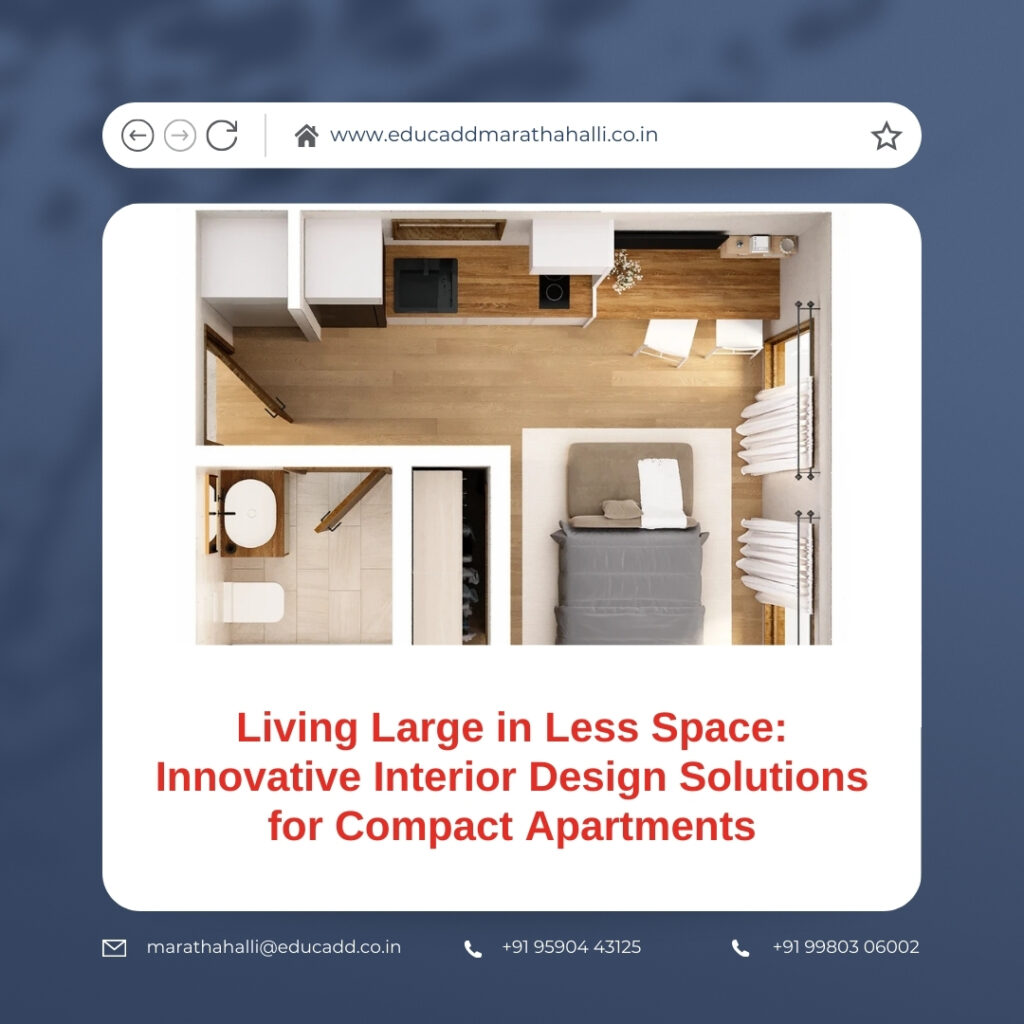
Compact Apartment Interior Design
Rather than focusing on what is missing, modern interior design focuses on maximizing what is available. Every corner, wall, and surface holds potential. By combining intelligent layouts, adaptable furniture, efficient storage, and thoughtful visual design, small apartments can support comfortable and stylish living. This blog explores practical and creative ways to transform compact spaces into homes that feel open, organized, and inviting.
1. Thoughtful Layout Planning: The Foundation of Compact Living
A successful small apartment design always begins with a clear plan. Without structure, limited spaces can quickly feel chaotic. Purpose-driven layouts bring order, clarity, and flow to compact homes.
The first step is identifying daily activities. Living, working, dining, and resting should each have a designated zone. Even in studio apartments, visual zoning helps define purpose. Rugs, lighting placement, and furniture orientation can subtly separate spaces without using walls.
Open floor plans benefit greatly from minimal obstruction. Furniture should guide movement rather than block it. Clear pathways make rooms feel larger and easier to navigate. Keeping circulation areas open instantly improves comfort.
Proportion is equally important. Furniture that is too large overwhelms small rooms. Slim-profile sofas, armless chairs, and compact tables maintain balance. Pieces with visible legs also create a lighter visual effect.
Vertical planning enhances spatial efficiency. Tall shelving units, wall-mounted cabinets, and overhead storage reduce floor usage. This approach draws the eye upward, creating a sense of height. Smart layout planning forms the backbone of Compact Apartment Interior Design and ensures long-term functionality.
2. Flexible and Multifunctional Furniture for Modern Lifestyles
In compact homes, furniture must do more than look good. It should adapt, transform, and serve multiple purposes. Multifunctional furniture reduces clutter while increasing usability.
Convertible sofas remain a popular choice. During the day, they act as seating. At night, they transform into comfortable beds. Storage beds offer similar benefits by hiding belongings beneath the mattress.
Dining solutions have also evolved. Foldable or extendable tables adjust based on need. When not in use, they take up minimal space. Nesting tables provide flexibility and can be easily stored away.
Work-from-home needs have increased demand for compact desks. Wall-mounted desks and fold-down workstations provide functionality without permanent footprint. Once folded, the room regains openness.
Seating options can also double as storage. Ottomans, benches, and stools with hidden compartments store essentials while providing comfort. Custom-built furniture further enhances efficiency by fitting perfectly into available spaces. These solutions define Compact Apartment Interior Design, where adaptability is key.
3. Smart Storage Strategies That Reduce Visual Clutter
Storage often determines how spacious a small apartment feels. Poor storage leads to clutter, while smart storage creates calm and order. The goal is to store more while showing less.
Hidden storage works best in compact homes. Beds, sofas, and seating with built-in compartments keep items out of sight. This reduces visual noise and maintains a clean look.
Combining open and closed storage creates balance. Open shelves display décor and books, adding personality. Closed cabinets hide daily-use items. This mix keeps spaces functional and visually pleasing.
Kitchens benefit from vertical storage solutions. Tall cabinets, pull-out drawers, and corner units maximize every inch. Hanging rails for utensils free up drawer space and improve accessibility.
Bathrooms often lack storage, but solutions exist. Floating vanities keep floors visible. Mirror cabinets provide discreet storage. Over-the-door organizers add space without renovations.
Even small entryways can offer storage potential. Slim shoe racks, wall hooks, and overhead shelves keep essentials organized. These thoughtful solutions support Space-Saving Interior Design for Small Apartments by making storage effortless and invisible.
4. Visual Design Techniques That Expand Perceived Space
Beyond physical planning, visual design plays a powerful role in small interiors. The right choices can dramatically change how a space feels.
Color selection matters greatly. Light shades reflect natural light and make rooms feel open. Whites, soft greys, and warm neutrals work well. Accent colors should be used sparingly to avoid overwhelming the space.
Mirrors create depth and brightness. Large mirrors reflect light and visually expand rooms. Placing mirrors across from windows enhances natural illumination.
Lighting design should remain layered. Ceiling lights provide general illumination. Wall-mounted lights and pendants save floor space. Task lighting improves functionality without clutter.
Curtain placement also affects perception. Hanging curtains from ceiling to floor increases the sense of height. Sheer fabrics allow light to flow freely.
Minimal décor completes the look. Too many decorative items shrink visual space. Instead, focus on a few statement pieces. These visual techniques strengthen Space-Saving Interior Design for Small Apartments by expanding space without structural changes.
5. Personal Expression Within Compact Interiors
Small apartments should still feel like home. Space-saving design does not mean sacrificing personality or warmth. Instead, it encourages intentional choices.
A consistent design theme creates harmony. Whether modern, minimalist, or cozy, sticking to one style reduces visual clutter. Matching materials and colors enhance cohesion.
Wall-mounted elements allow personalization without using floor space. Floating shelves, framed art, and hanging plants add character. Greenery improves mood and softens interiors.
Technology also supports compact living. Smart lighting systems reduce the need for multiple fixtures. Compact appliances free up valuable space while improving efficiency.
Regular decluttering remains essential. Keeping only what is useful or meaningful maintains openness. A well-organized home feels larger and calmer. This approach aligns perfectly with Space-Saving Interior Design for Small Apartments, where simplicity enhances daily life.
Conclusion
Small apartments present unique challenges, but they also inspire creativity and innovation. With thoughtful layout planning, adaptable furniture, efficient storage, and smart visual design, compact spaces can feel surprisingly spacious. Compact Apartment Interior Design is not about compromise. It is about intention, efficiency, and intelligent choices.
When every element serves a purpose, small homes become comfortable, stylish, and functional. By embracing smart design strategies, compact apartments can deliver big experiences. Living large is not about square footage. It is about how wisely the space is designed and used.

